Year: 2015

CHRISTMAS MYSTERY: A B17 Bomber from Ottawa loaded with Christmas cargo disappeared without a trace on December 15th 1944

b17

(This story originally appeared as part of an earlier post from December 2013 HERE)

During World War 2, Ottawa’s Rockcliffe air base operated a total of six B17 Flying Fortress aircraft that were outfitted as transport “mailbirds” ferrying thousands of letters and packages between Canada and the fighting forces overseas in Europe. Tracing the serial numbers of each of the B17s I was able to uncover what happened to each of these mailbirds during their wartime mail missions. Most were eventually either damaged or scrapped, but one in particular, B17 Serial#9203, went mysteriously missing. This is the story of Ottawa’s lost B17…a MailBird Mystery.

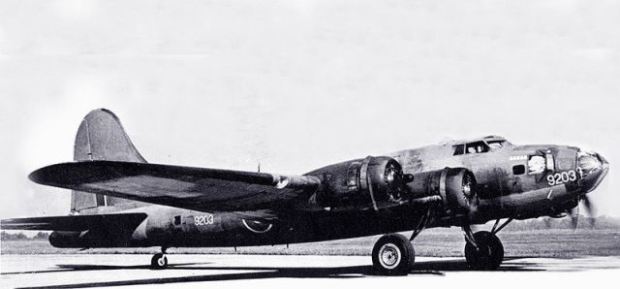
B17-9203 from Ottawa's Rockcliffe 168 Squadron and its insignia crest patch worn by crew during World War 2. (Patch image CC-SY)

B17-9203 from Ottawa’s Rockcliffe 168 Squadron and its insignia crest patch worn by crew during World War 2. (Patch image CC-SY)

In October of 1943 Rockcliffe airport became the site of 168 Heavy Transport Squadron which was formed to handle the large quantities of mail that needed to be delivered to personnel serving in the European and North African campaigns during World War Two. 168 Squadron became the site of a bustling hub of mail from across Canada that needed to be delivered to the troops and service personnel overseas. Love letters, family correspondence, birthday and holiday gifts as well as freight were all transported to the men and women far from home, boosting morale and keeping them connected to loved ones back home. B17-9203 had just delivered a load of Christmas mail to Canadian troops serving in North Africa through a Royal Canadian Air Force base in Morocco.

USAF file photo of Hillcoat’s B17-9203 from Rockcliffe painted in RCAF markings. Note serial number “9203” painted on the nose. It was on its way home when it disappeared over the Atlantic Ocean in 1944.

USAF file photo of Hillcoat’s B17-9203 from Rockcliffe painted in RCAF markings. Note serial number “9203” painted on the nose.

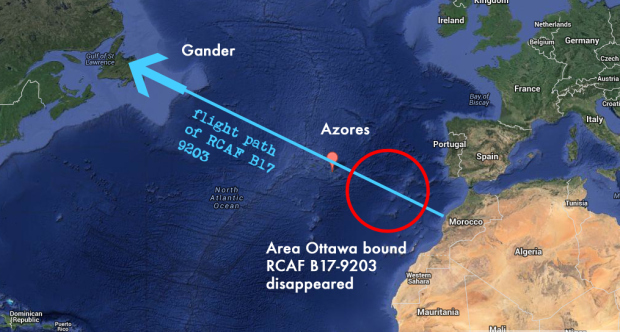
On December 15 1944 the aging B17 Flying Fortress from Ottawa, handed down from the United States Air Force, was loaded up with return Christmas mail bound for the Nation’s Capital. Pilot Horace Hillcoat and his crew of eight prepared the B17 to return home for the holidays with their precious Christmas cargo. Throttling up the four radial engines of the B17, Hillcoat lifted the mailbird into the Moroccan skies, heading for the Azores, a small group of islands in the North Atlantic Ocean. After a brief stop there, Hillcoat would then fly to Newfoundland before reaching his destination at Rockcliffe, Ottawa. Leaving the African shoreline, Hillcoat took the B17 across the Atlantic headed for the island airstrip some 1,500 km away. As they lost sight of the African coast, B17-9203 and its crew were never heard from again.

azores-map

When contact was lost with Hillcoat’s B17, a search and rescue mission scoured the area of the ocean where the plane may have disappeared. Some mailbags were found floating on the surface of the ocean, but no other signs of wreckage, survivors or debris were ever found. No distress calls or radio contact was made before the plane disappeared. B17-9203 had simply vanished. Hillcoat and the crew were classified as “Missing”.

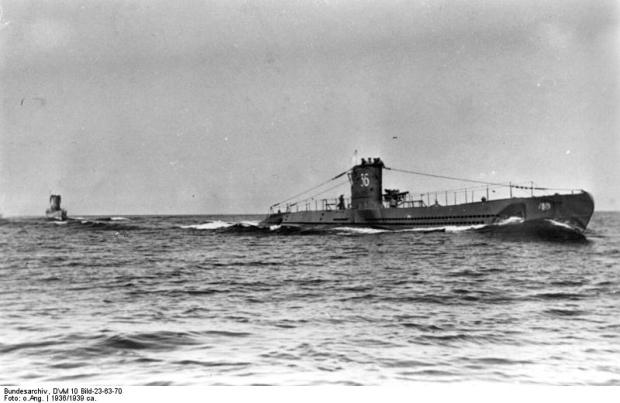
Was Hillcoat and his crew ambushed by attacking German Luftwaffe aircraft, sending them to a watery grave? Did the well-used B17 suffer a mechanical malfunction and Hillcoat unsuccessfully ditched his plane in the Atlantic? Another theory is that the ill-fated B17 was shot down by anti-aircraft guns aboard a German U-boat prowling the waters below the B17. A number of German U-boats shot down Allied aircraft in the vicinity of the Azores, a fate that could have taken down Hillcoat’s aircraft. Numerous U-boats were also sunk by Allied anti-submarine patrols in that area with their sub crews taking their secrets and records to watery depths. It is quite possible Hillcoat’s B17 was shot down by one of these sunken U-boats with the story submerged along with it.

Did a lurking German Uboat down Ottawa's Christmas Cargo over the Atlantic?

Did a lurking German Uboat down Ottawa’s Christmas Cargo over the Atlantic? (photo Wikipedia)

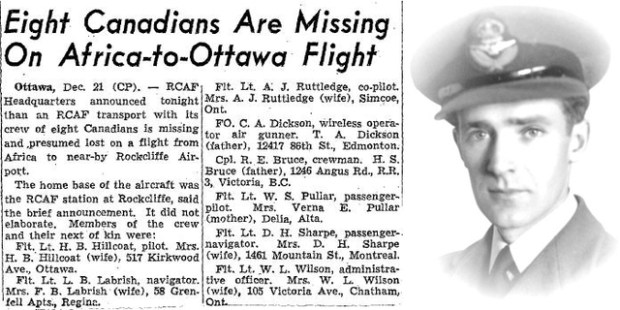
A 1944 newspaper clipping from December 21 reports the missing plane with a listing of all those on board. It turns out that the pilot, Horace Hillcoat was actually the only crew member of the eight aboard that was from Ottawa. He and his wife lived on Kirkwood Ave. in Westboro, and the house is still there today.

photo16

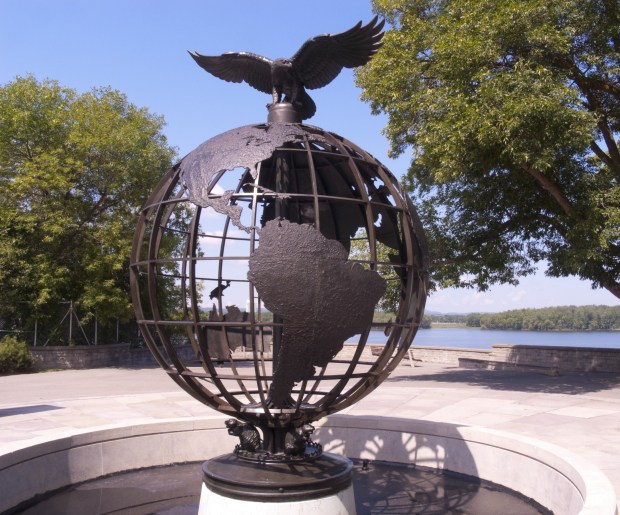
Hillcoat and the rest of the crew aboard the ill-fated Christmas B17 are part of the Commonwealth AirCrew Memorial on Sussex Drive.

Hillcoat and the rest of the crew aboard the ill-fated Christmas B17 are part of the Commonwealth Aircrew Memorial on Sussex Drive.

Hillcoat’s plane and its Christmas cargo were never found and with its crew still deemed missing, they join hundreds of other missing aircrew from World War Two on the Commonwealth Aircrew Memorial on Sussex Drive. The lost Christmas B17 from Ottawa continues to be an enduring mystery that may never be solved.

Vikings In Canada: Part 2 – They’re here.

vikingsSPLASHPART 2 of a two part series examining the mystery of Norse settlements in Canada

The idea of Norsemen exploring towards the interior of Canada is probably met with the same scepticism as the idea of them once crossing the Atlantic Ocean. Yet that idea was finally proven fact by the Ingstads in the 1960s after what was I’m sure was much controversy. The Ingstads hard work and determination paid off and legend soon became fact. The excavation of the ruins at L’Anse Aux Meadows proved that it was not a permanent settlement, but rather a staging ground for further ventures elsewhere and the out-of-province butternut illustrates something was indeed happening. Whether the butternut was from a far distant land and arrived through trade with the indigenous peoples or that the Norse brought it back with them after a another trip elsewhere into Canada illustrates a deeper interaction within our country than first thought.

OLYMPUS DIGITAL CAMERA

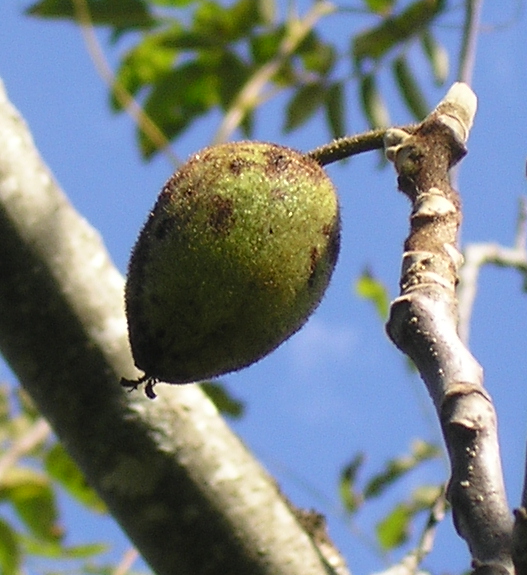
A butternut like the one found at L’Anse Aux Meadows.

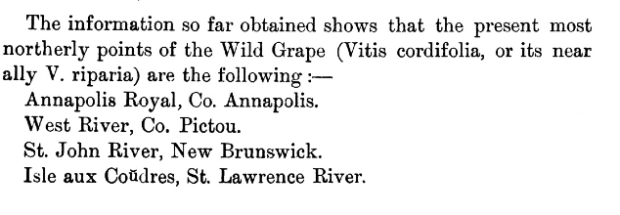
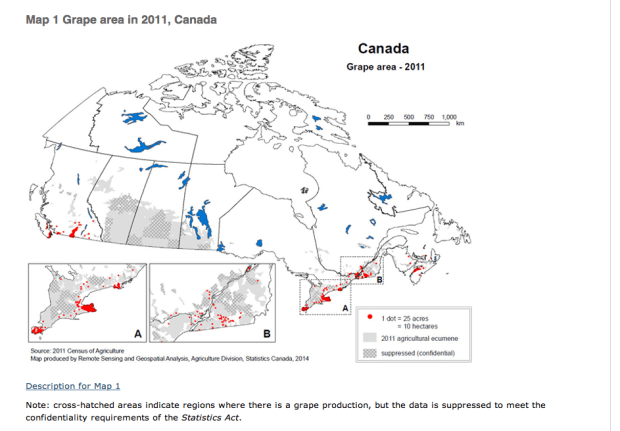
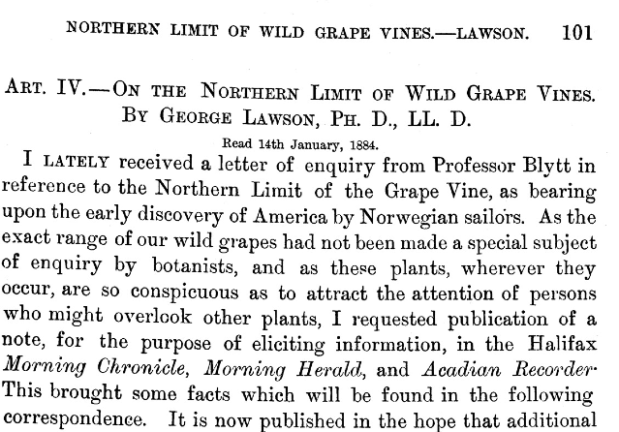
The earliest Canadian document I could find exploring the idea of further Norse exploration was Dr. George Lawson’s article from 1884. (see previous post: PART 1) Lawson concluded that the wild grapes that could describe “Vinland” were present on the shores of Lake Ontario west of Kingston (Prince Edward County, currently a popular wine region) the banks of the St. Lawrence in the 1000 islands up to Trois Riviere, QC and the St.John River region in New Brunswick. (we will talk more about the grape regions later)

Screen Shot 2015-11-16 at 11.12.34 PM

Dr. George Lawson describes the northern extent of wild grapes in Canada for Norwegian scholars in 1884.

Screen Shot 2015-11-16 at 11.10.24 PM

A current map showing extent of wild grapes in Canada.

A 2011 map showing extent of wild grapes in Canada.

STONE COLD

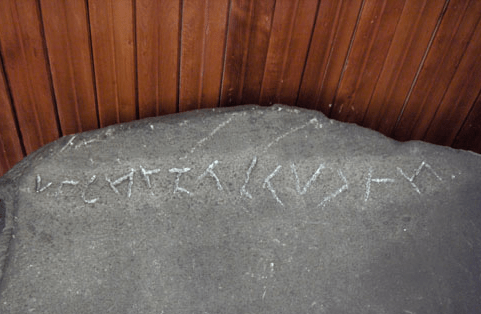
In 1812, a stone weighing almost 600 pounds was discovered by a Dr. Fletcher on his property at the mouth of Yarmouth harbour Nova Scotia. Inscribed on the stone were odd carvings that resembled old Norse runic writing. The stone was found near the ruins of an old stone dock and moved to a hotel, then the local library. Then stone then was taken to Norway before WW1 to be admired by the descendants of the stone’s author, later stored in a warehouse in London, England as it was deemed too unsafe to travel across the ocean with it during wartime. After the war ended it returned to Yarmouth where it was put in the local library and later moved to the local Yarmouth Museum where it remains today. It sits in the little museum and it remains to be studied further as authentic evidence the Norse made their way to Yarmouth, Nova Scotia.

Screen Shot 2015-11-24 at 2.34.52 PM

The Yarmouth Stone found in 1812 inscribed in what is thought to be Norse runes. (photo posted with permission of  Yarmouth County Museum and Archives)

Screen Shot 2015-11-24 at 2.34.41 PM

I contacted the Curator of the museum in Yarmouth to ask permission to publish photos of the rune stone, which they have graciously allowed and it is shown above. Nadine Gates, the Director/Curator of Yarmouth County Museum and Archives (direct link HERE ) emphasized that the museum remains neutral on the stone’s authenticity and states “Please understand that this is NOT a confirmed “Viking” stone. This is but one of several theories surrounding the rune stone found by Dr. Fletcher in 1812.” The stone currently remains in the county museum and has yet to be verified as authentic evidence of Norse visitation to the region.

SPEAR OF DESTINY

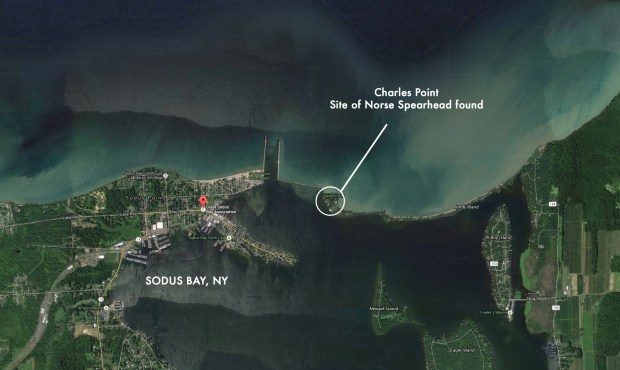
In 1929 the owner of a summer home near Sodus Bay, NY was repairing his breakwater after a heavy storm washed away some of his property and was trying to find a suitable place to rebuild his boathouse. The property owner, Augustus Hoffman, was excavating his land and unearthed an object found about twenty feet from shore.

Location of where an authentic Norse spearhead was found.

Location of where an authentic Norse spearhead was found. (Bing Maps)

sodus1marked

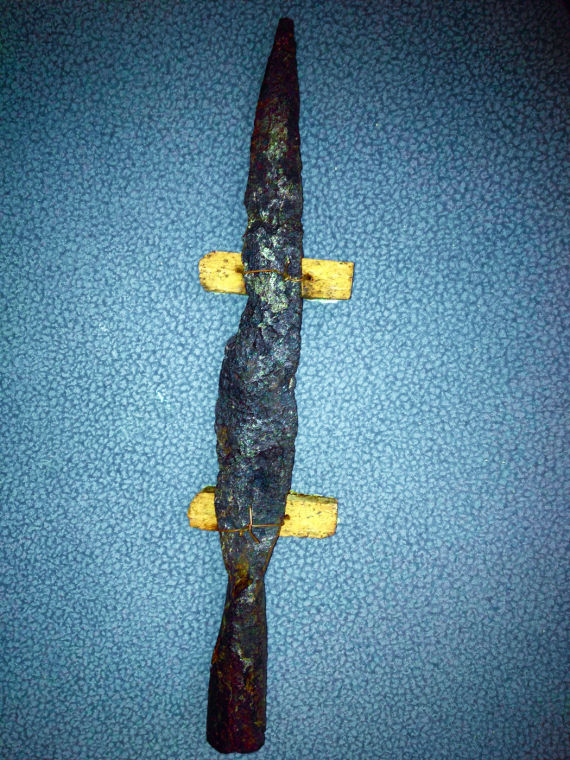
Hoffman picked up the iron object that he assumed was an old Indian tool and tossed it aside. A year later Hoffman showed the iron object to a friend who in turn contacted the Royal Ontario Museum in Toronto across the Lake Ontario. The object was confirmed to be an authentic Norse iron spearhead with an age that ranged from the ninth century to the fourteenth century. The Norse spearhead now resides in the Museum of Wayne County History, NY where it rests as an authentic Viking spear with its reasons for being there unknown.

The iron spear head of Norse origin dated to the century.

The iron spear head of Norse origin dated to 9th-14th century now in Wayne County Museum

Sous Bay (red) due south of Prince Edward County on the shore of Lake Ontario.

Sodus Bay (red) due south of Prince Edward County on the shore of Lake Ontario where the spear was found.

Was it a lost relic from a a Norse exploration party who traversed the St. Lawrence river into Lake Ontario to Sodus Bay on the south shore? Or was it a traded item through indigenous tribes that somehow made it all the way from LAM? Its location is almost due south of Prince Edward County.

MORE BEARDS

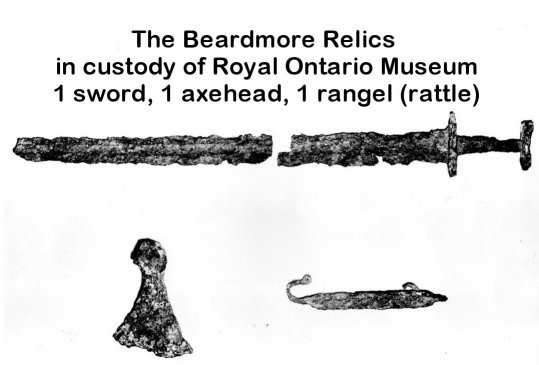
Almost at the same time as the Sodus Spear discovery, James Dodd, a CNR trainman in Port Arthur was prospecting near Beardmore, ON and uncovered something that continues to be a controversial piece of Viking lore . While prospecting for gold in 1931 Dodd claims he unearthed some old metal and like Hoffman of Sodus Bay, thought they were some “old Indian relics” and took them home where they sat for five years. Dodd later contacted the Royal Ontario Museum and the curator at the time took a closer look at them with great interest as they resembled not ‘Indian” relics” but that of the Norse. The curator, Charles Currelly bought the items for $500 off of Dodd and sent photos of the relics to Europe for analysis to see if they resembled anything from the Norse culture. They were indeed authenticated as genuine Norse articatcts: A Viking Sword, A Viking axe and a Viking Shield handle. 100% legitimate Norse artifacts.

IMG_4004

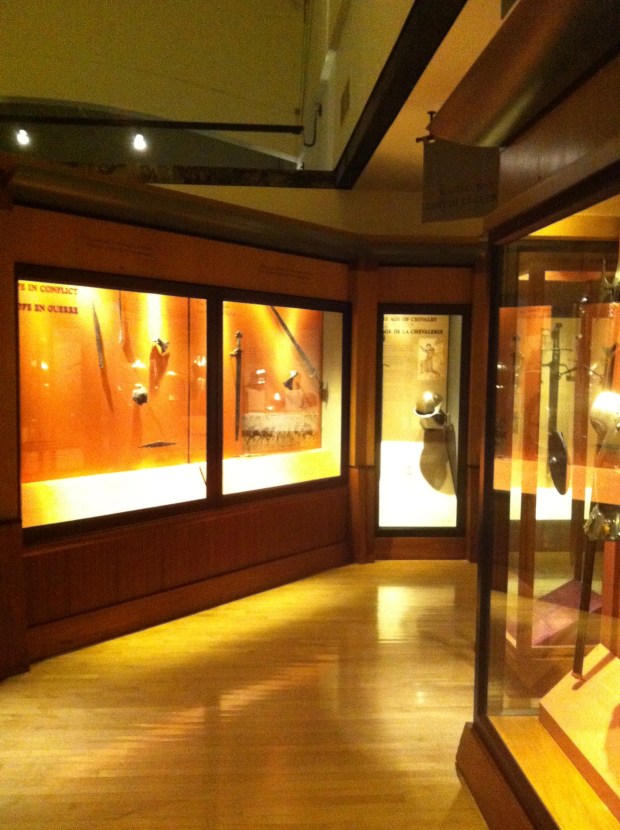
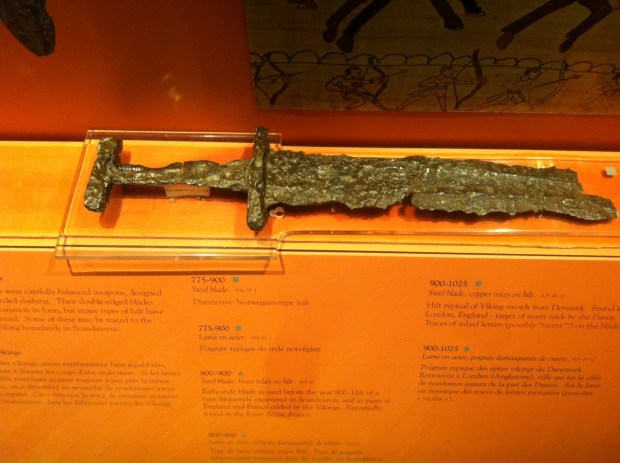
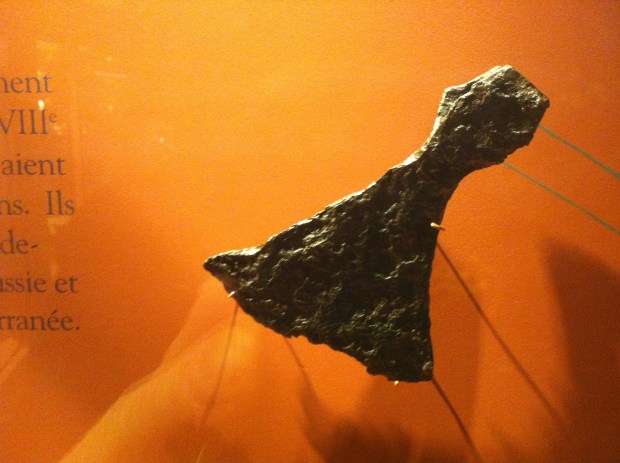
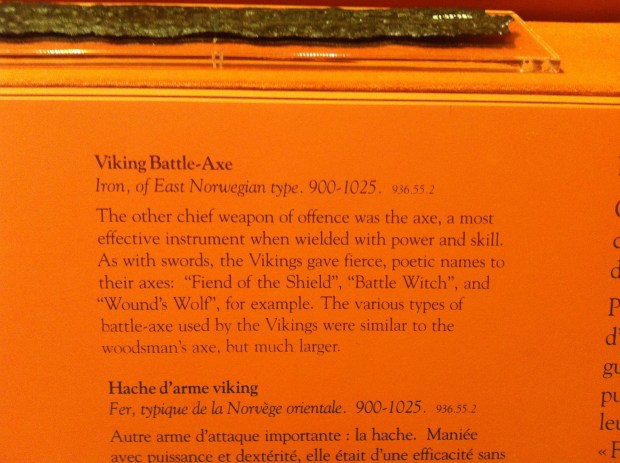
The museum proudly displayed them soon afterwards as genuine proof of Vikings visiting Ontario but soon academics and archeologists questioned the provenance of the artefacts and accused Dodd of planting the objects. The museum, in an effort to avoid controversy removed the Viking relics from their display and put them in storage for almost 30 years. No one was allowed to photograph them. Dodd’s son, Walter, later was told to give a sworn statement in 1957 that the objects were planted by his father and they remained in storage until about the 1990s when they reappeared in the museum with no mention of their checkered past. They remain in the museum to this day in the “weapons” wing, and last winter I had an opportunity to see them in person. They are indeed heavily corroded iron artifacts on display without any of the history behind them, but using previously published photos of the relics I was able to identify them in the display case. They are shown below.

The Beardmore relics are displayed in ROM without mention of their discovery or how they got there.

The Beardmore relics are displayed in ROM without mention of their discovery or how they got there.

The actual Beardmore Viking Sword deemed a hoax item as displayed at Rom. No mention of its illustrious past is shown.

The actual Beardmore Viking Sword as displayed at ROM. No mention of its illustrious past described, marked only with “Distinctive Norwegian Blade 775-900AD”

The Viking axe from the Beardmore relics on display with any mention of its past noticably absent.

The Viking axe from the Beardmore relics on display with mention of its past noticably absent.

Description of the Beardmore axe.

Description of the Beardmore axe in the ROM display case.

1950s FINDS

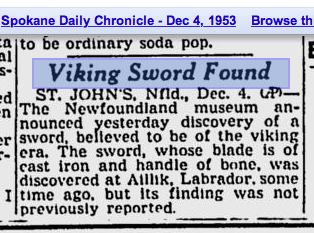
Another Norse discovery was made in Aillik, Labrador when a Viking sword was found in a remote outpost on the coast of Labrador in 1953. A newspaper article of the time reports the find but I have been unable to determine what happened to the sword and whether or not it was authenticated. Perhaps it still lies in storage somewhere.

Newspaper article describing a Viking sword found in Aillik, Labrador.

Newspaper article describing a Viking sword found in Aillik, Labrador.

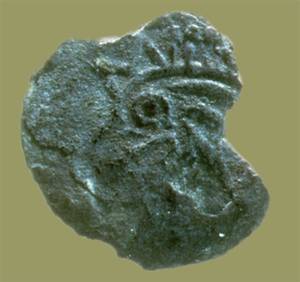
A few years later in 1957 Guy Mellgren, a local resident and amateur archaeologist, found a coin on August 18, 1957 in Brooklin, Maine. At first, like the previous finds, it was not thought to be Norse. It was thought to be a British penny from the 12th century. In 1978, experts from London considered that it might be of Norse origin. Today the identity of the Maine Penny was been authenticated by Kolbjorn Skaare of the University of Oslo who determined the coin had been minted between 1065 and 1080 AD. The penny was discovered with a hole in it that indicates it was probably used as a pendant of some sort, most likely by the indigenous people of Maine at the time it was being circulated by the Norse. The Norse penny currently resides in the Maine State Museum.

The Maine Penny. (photo Maine State Museum)

The Maine Penny. (photo Maine State Museum)


The Norse coin is thought to have ended up in Maine through native trading channels, coming down the coast from the Norse settlement at LAM. No Norse pennies have ever been found at LAM.

MOUNDS OF MYSTERY

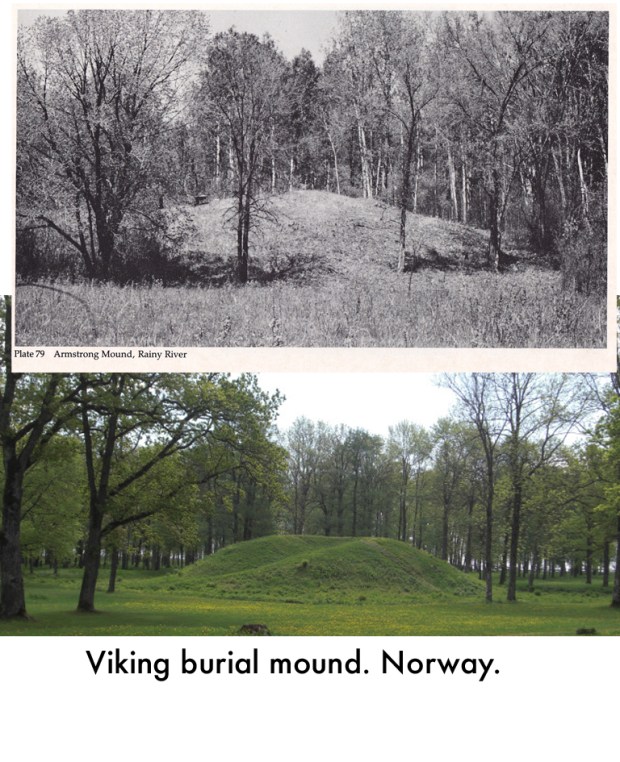
In the same year the Maine Penny was discovered an archeologist from ROM travelled to Rainy Lake, Onatrio where he excavated a series of unusual mounds. Walter Kenyon visited the mounds and I was able to acquire his complete report on the 1957 excavation of the mounds that are located 250 km west of Thunder Bay on the border of Minnesota and Ontario. Of particular interest is Kenyon’s excavation of a large mound structure on Oak Point Island. Kenyon in his report on the find explains the mound showed evidence of intrusive burials, that is, someone had dug into an existing mound and put their own own bodies and items into it. As Kenyon unearthed the mound he discovered large angular rocks positioned with two burials and a number of items that present a curious collection of artefacts.

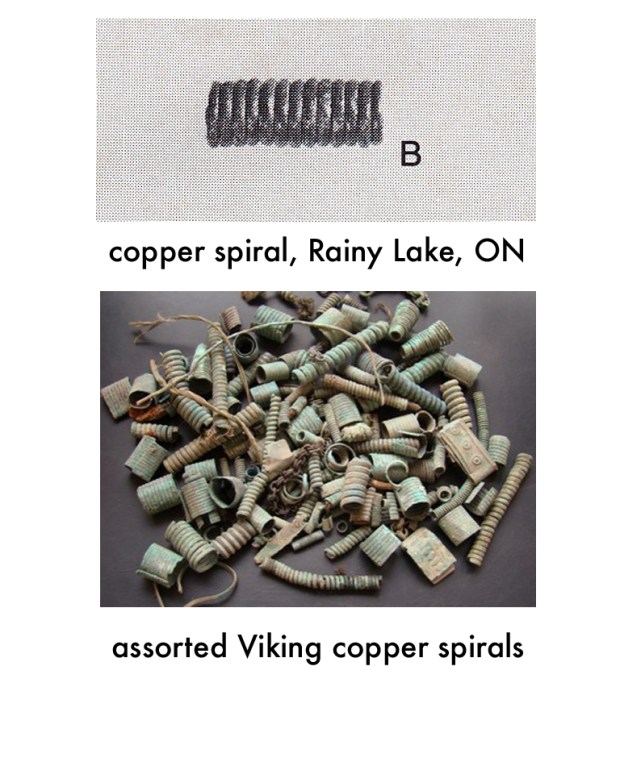
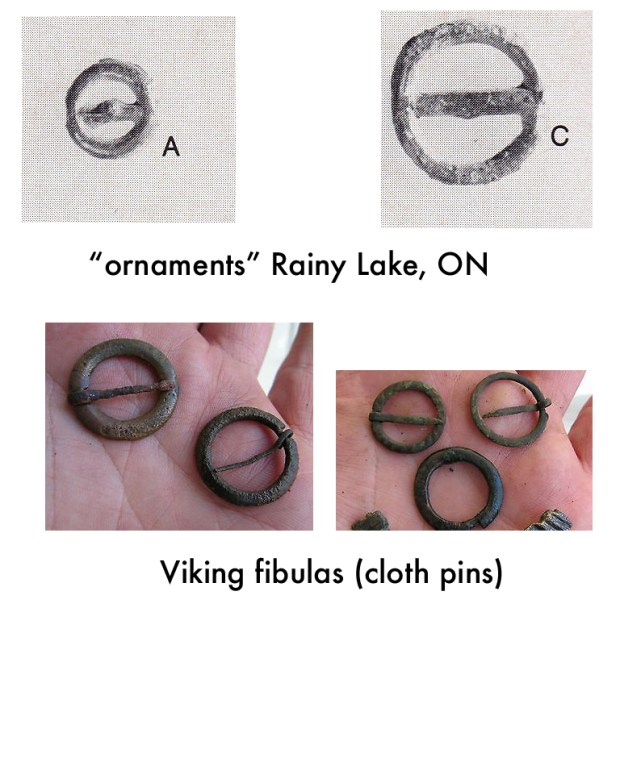
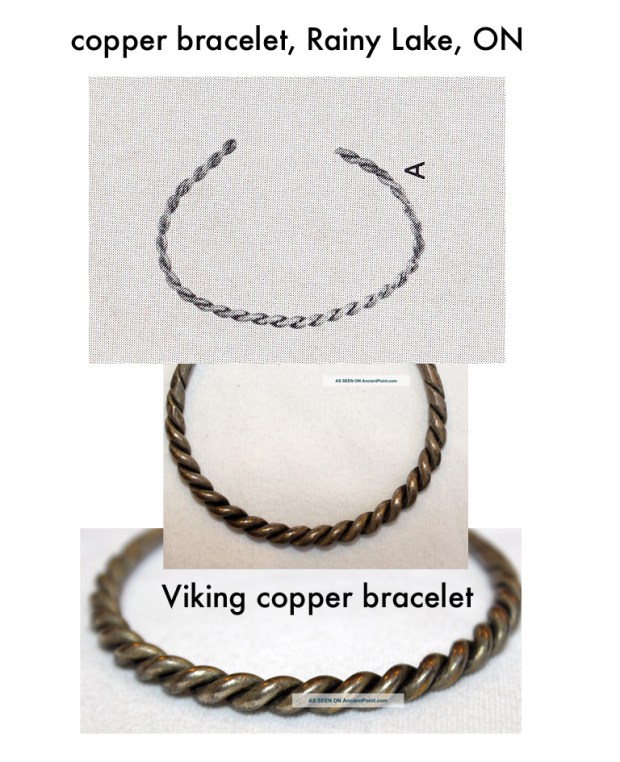
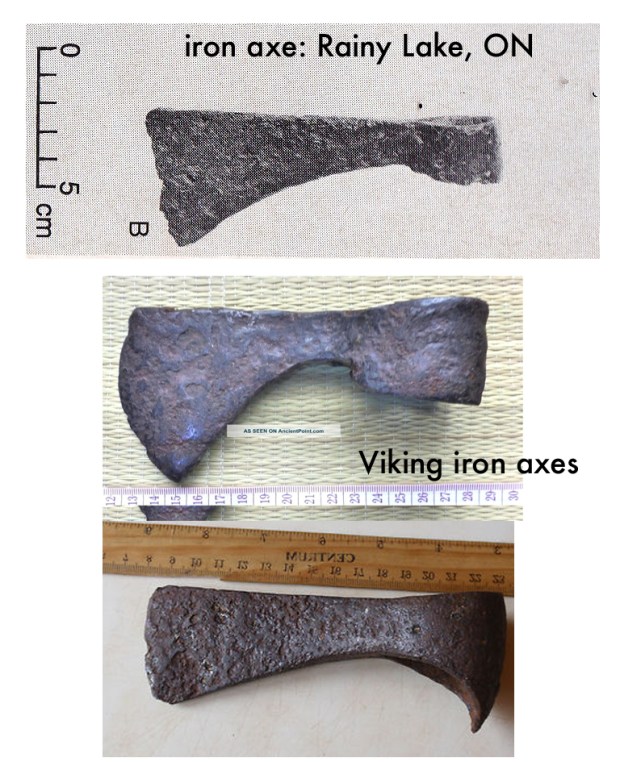
moundcompKenyon uncovered an iron axe, that was used as a hammer at some point, its head being distorted. Also uncovered were a finger ring, a twisted strand copper bracelet, thirteen thimbles, a copper spring, metal “ornaments” and a variety of other artifacts that included glass beads of various designs. Kenyon photographed and documented each item which was included in the archeological report but he gives no indication of their origin or why they are in a mound other than the fact there were a number of skeletal remains also discovered within. With the L’anse Aux Meadows site yet to be discovered, perhaps Kenyon wanted to play it safe and not make any speculation.

Examining these artifacts Kenyon unearthed I noticed some odd similatires to artifacts I had seen while visiting the Viking exhibit at the Museum Of History. There were strikingly similar details so I have placed them side by side in comparison for you to review for yourself and come to your own conclusions. This could be pure coincidence, and represent items from a different time period. It is also unknown where these artifacts are today. Do they rest in some storage container in the ROM warehouse, shoved away to never again be displayed for the public to see? It would seem logical to try and date these items and figure out their origins. Until then, we will have to settle for the accepted view that they are of native origin or from a much later date.

spiralcompfibulacompbraceletcompaxecomp

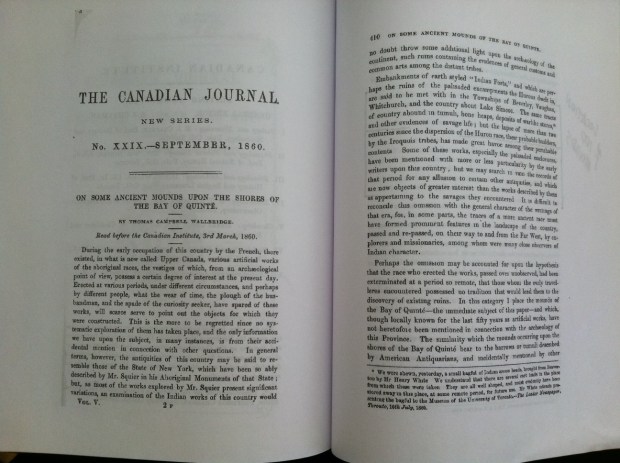
Kenyon also includes in his report a mention of the mounds in Prince Edward County discovered and studied by Thomas Wallbridge in 1860. Acquiring a copy of Wallbridge’s 1860 report on his findings of odd mounds in “The Canadian Journal Of Industry, Science and Art- 1860″ as part of the Smithsonian Institution collection, Wallbridge notes that before the native Iroquois that once roamed the region, there were “traces of a more ancient race”.

The 1860 archeological report of Wallbridge's examination of unusual mounds in Prince Edward County.

The 1860 archeological report describing Wallbridge’s examination of unusual mounds in Prince Edward County.

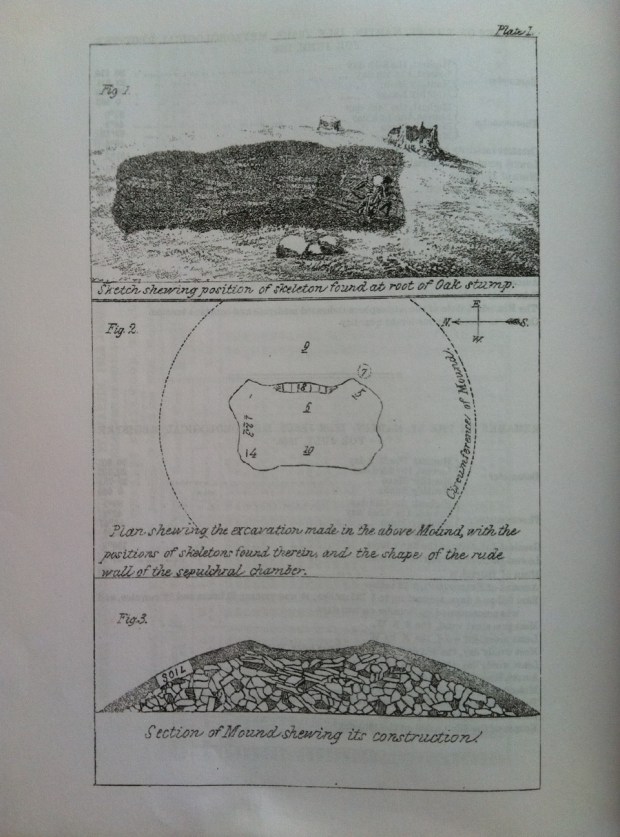
The fascinating entry in the journal remarks on how some “race” had erected works in Prince Edward County unnoticed, which became the subject of the first documented archaeological report in Ontario. Wallbridge noted that 100 mounds existed in Prince Edward County, and they occurred in groups of two on the shores of water. Upon excavating one of the mounds Wallbridge discovered a limestone box made up of flat stones, within which skeletons were found sitting in an upright position with folded arms.

IMG_6768

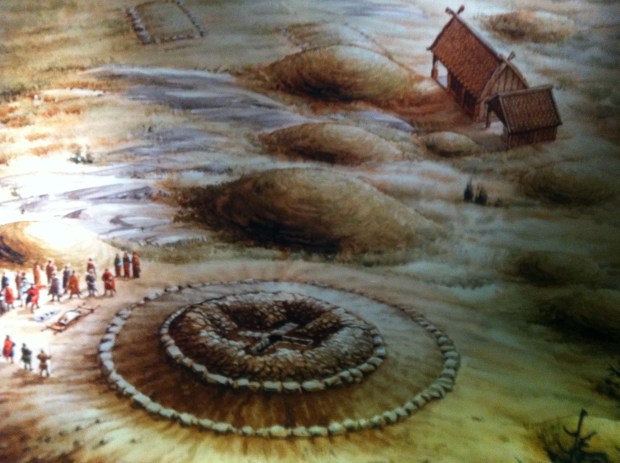
Viking burial mounds as shown at the Viking exhibit at the Museum Of History.

Viking burial mounds in Scandanavia as shown at the Viking exhibit at the Museum Of History.

Wallbridge concludes his report by saying “Whatever be the origin of these remains, it is clear that the Massassaga Indians were not the builders of the works which they are entombed, since this tribe, it is well known, buried their dead in wrapped birch bark, and laid them at full length a few inches beneath the surface of the soil,” Wallbridge is perplexed at the whole series of mounds, and insists “the skeletons found in the sitting posture belong to some other and far earlier race.”

Wall bridge's sketches of his examination of the ancient mounds in Prince Edward County.

Wallbridge’s sketches of his examination of the ancient mounds in Prince Edward County.

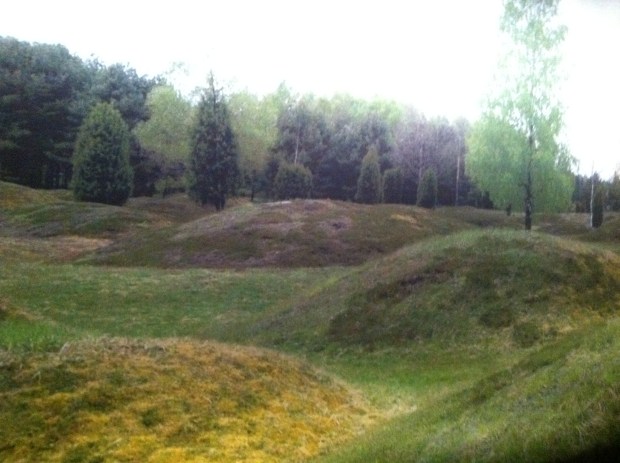
Curious to view these mounds that lie within a short distance of my family’s home, I visited the Prince Edward County site to see for myself what characteristics they may have to give up some possible clues as to their purpose. The Ontario Archeology Report, 2001, Number 72, Page 38  has a thorough analysis of the mounds and striking similarities between those in PEC and mounds in Europe are given along with a comprehensive look at their possible function. Mapping out where the mounds may be located, I indeed came across the unusual mounds and recorded my finds. They are situated in close proximity to the shore of Lake Ontario facing east in groups of two. The mounds are about 20-ft in diameter and are about 8ft in height. The pair of mounds with their centre points connected with a line align to the rising sun in the east. Without permission or proper tools to investigate the mounds further, no other evidence was uncovered but these fascinating ancient structures demand further investigation by the proper institutions of historical research.

I explored the area Wallbridge described the mounds to be located in PEC and I came across the unusual mounds.

I explored the area Wallbridge described the mounds to be located in PEC and came across unusual mound shapes.

Kenyon then concludes his report on the mounds he found in an almost similar tone, noting most of the mounds were near water, the same situation in western Europe. Burial mounds in Europe were arranged around fjords or bays on high ground with views of the sea. The mounds found in Ontario share the same characteristics with Bronze Age burial mounds in Europe and those on the Orkney Islands off the United Kingdom. Is it pure coincidence that two entirely different cultures shared an almost identical mound building practice separated by the Atlantic Ocean? Perhaps they met and exchanged cultural practices that carried on for generations to come. It remains a curious mystery that the mounds generally contain another type of inner burial chamber with an outer indigenous intrusive burial on the top layer of the mound. One wonders if visitors of a different race at a different time as Wallbridge speculates first built the mounds and then they were later used for other burials practices by a future society. Again, without proper analysis that seems to be absent this can never be determined.

CURRENT DISCOVERIES

With most of the aforementioned Viking and related remnants having been discovered in the mid 20th century, it seems the whole Norse exploration mystery has remained on a simmering back burner for years. As our attention turns towards a more colonial French and Bristish occupation history of early Canada, these earlier visitations seem to go unnoticed and lack any further investigation. More recently the discovery of the butternut at LAM again opened the debate that Norse visitors ventured elsewhere in Canada and in 2012 the National Geographic published an article about the Norse in Canada after the curator of Arctic archeology at The Canadian Museum Of History (then called the Canadian Museum of Civilization) Patricia Sutherland discovered what is thought to be a Norse outpost on Baffin Island. Sutherland was abruptly fired for what was stated to be “harassment issues” in April 2012, (Ottawa Citizen article HERE) just months before her Arctic research was featured in National Geographic magazine, but her research is still available for viewing on the museum website HERE.

Another National Geographic Magazine article describes scientists found more than 80 living Icelanders with a genetic variation similar to one found mostly in Native Americans after analyzing a type of DNA passed only from mother to child. This would mean that a Native American joined someone from Iceland in North America, hopped aboard their ship and returned with them to procreate within Iceland. Brigitta Wallace who has written much about the Norse in Canada and is an archaeologist for Parks Canada has said that in the The Saga of Erik the Red four Skraeling boys (a Norse term for Native Americans) were captured by an Icelandic expedition and taken back to Greenland. This does not make it implausible a female was also brought back with the Vikings on their expeditions into Canada and has resulted in a DNA variation that combines Native American with Icelandic genes. It is interesting to note that no Inuit DNA shares any Norse DNA.

BUTTERNUTS AND BOOZE

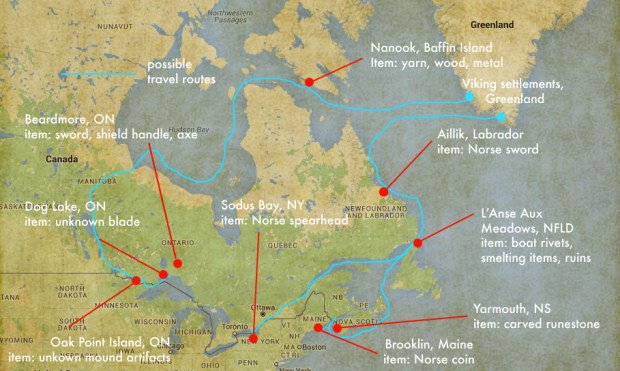
With evidence mounting that Norse explorers ventured elsewhere in Canada other than LAM, we can start to piece together a picture of what may have happened and the possible routes they may have taken. Compiling the locations of known relics (hoaxes or not) and the known areas where butternuts and wild grapes do indeed grow and have grown, we can create a map of possible exploration by our Norse visitors.

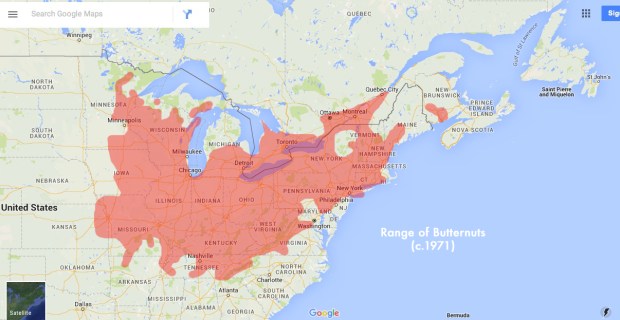
Range of butternuts.

Range of butternuts.

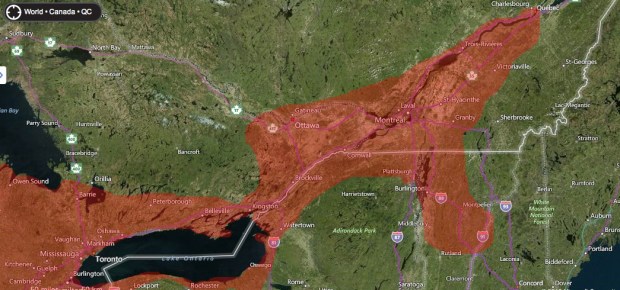
Extent of butternuts along the St. Lawrence River and Lake Ontario.

Extent of butternuts along the St. Lawrence River and Lake Ontario.

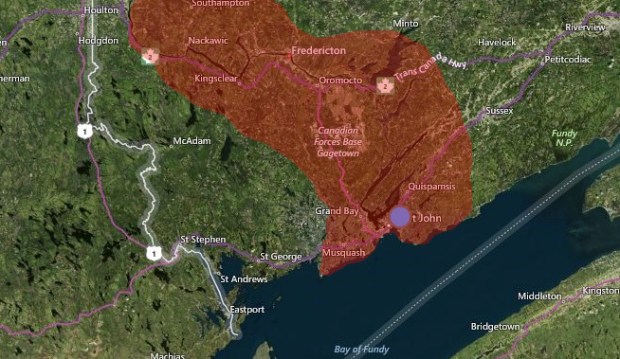
Butternuts also occur along the St. John river in New Brunswick.

Butternuts also occur along the St. John river in New Brunswick.

With butternuts occurring along the southern part of the St. Lawrence River and into the shore regions of Lake Ontario as well as the interior of New Brunswick along the St. John River, and matching that with the area of wild grapes, a map of possibilities can be constructed. With projected exploration areas outlined, we can then “connect the dots” on certain routes and plot them out to determine where, if any, remains of Viking outposts or visitations may lie.

Possible Norse exploration routes.

Possible Norse exploration routes.

This narrows down the areas to either be in New Brusnwick or along the St. Lawrence River, areas where the Norse acquired the butternuts and grapes they took back to LAM. The existence of authentic Norse artifacts can not be denied, it is just figuring out how they got there that remains a mystery. trading with the indigenous tribes of the time is the accepted theory, but it seems odd these Norse items would make their way inland while none of these same items were ever found at LAM. It is not common practice for the Vikings to trade their weapon items with the native population, so how would they acquire them? Through conflict? Norse visitors may have come into Ontario further than we had thought possible. It is hard to request an investigation into these areas unknown without concrete evidence but if we look back on the speculation of the Ingstads in 1960 they proved to the world that legend can indeed be fact. Perhaps with the directed research and investigation into these projected areas we can prove once again an important part of Canadian, and ultimately, world history.

Vikings In Canada: A Mystery Revealed

vikingsSPLASHThis is a two part series that looks at the mystery of the Vikings lost settlements in Canada.

PART 1: Vikings Cometh

This week the Canadian Museum of History opened a special exhibit called “Vikings” described in the promotional material as “engaging interactive displays and 500 outstanding artifacts from The Swedish History Museum”. It only seems natural the Canadian Museum of History would host such an exhibit that explores the fabled Scandinavian culture since Vikings have now been proven to be the first Europeans to land in Canada one thousand years ago. The exhibit displays artifacts and information that seeks to tell the truth about Viking lore and the various myths associated with them. (no they did not wear helmets with horns on them)

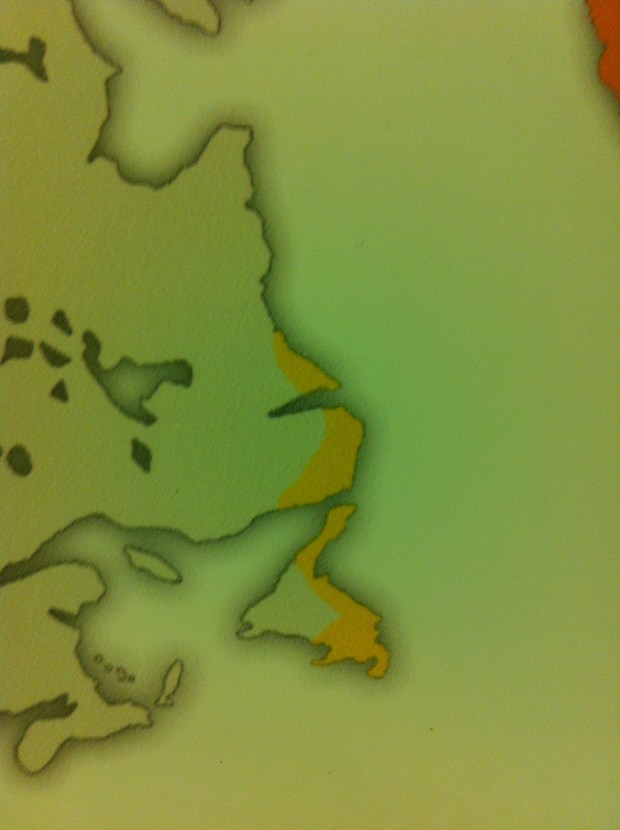
I was able to preview the exhibition before it opened and study the details of the exhibit to see if this collaboration between the Swedish History Museum in Sweden and MuseumsPartner in Austria would touch on the mystery surrounding Norse settlement in Canada. Many are skeptical about the Norse exploration of North America and I had hoped this exhibit would shed some light on the subject, but alas the only mention was a world map showing parts of Newfoundland where the only verified Viking settlement was unearthed in the 1960s.

The only Viking-Canada connection is this small map detail showing where Vikings may have settled in Canada.

The only Viking-Canada connection is this small map detail showing where Vikings may have settled in Canada.

I asked to speak with Gunnar Andersson, Senior Curator of the Viking exhibition from the Swedish History Museum about the Canadian Viking connection and he too had hoped the Canadian Museum of History would have contributed some material to exhibit. Andersson emphasized there is a rich Viking heritage in Canada which could have been tied into the exhibit.

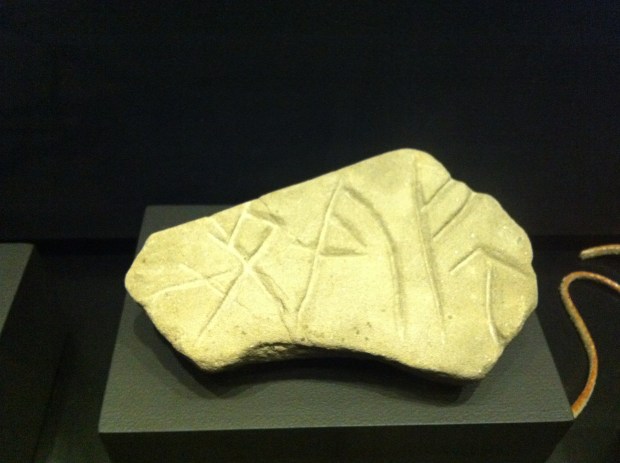
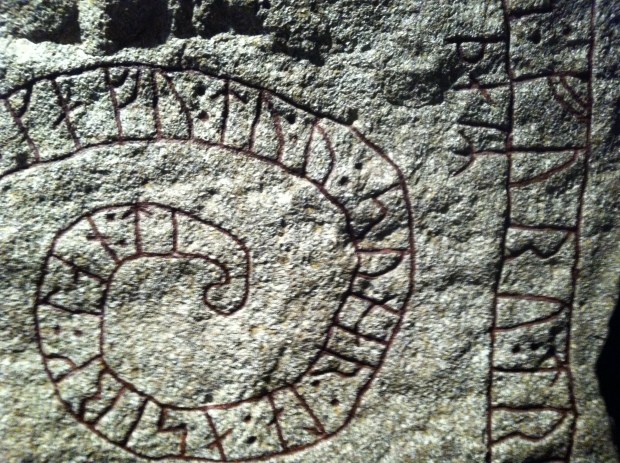
A stone with Viking rune carvings inscribed.

A stone with Viking rune carvings inscribed.

Contacting Stephanie Verner, Media Relations Officer for the Canadian Museum of History about the absence of a Canadian Viking connection, Verner responded “The exhibition does mention the Viking expansion westward to Iceland and Greenland, but does not significantly address activities in North America. As this was a borrowed exhibition intended to help debunk modern myths concerning the Vikings, the Canadian Museum of History did not add content from its own collections.” Verner did however state that in 2017 “The Viking/Norse presence in North America will be covered in the new Canadian History Hall which will open on July 1, 2017. The new Canadian History Hall will tell the story of Canada and its people from the dawn of human habitation to the present day.”

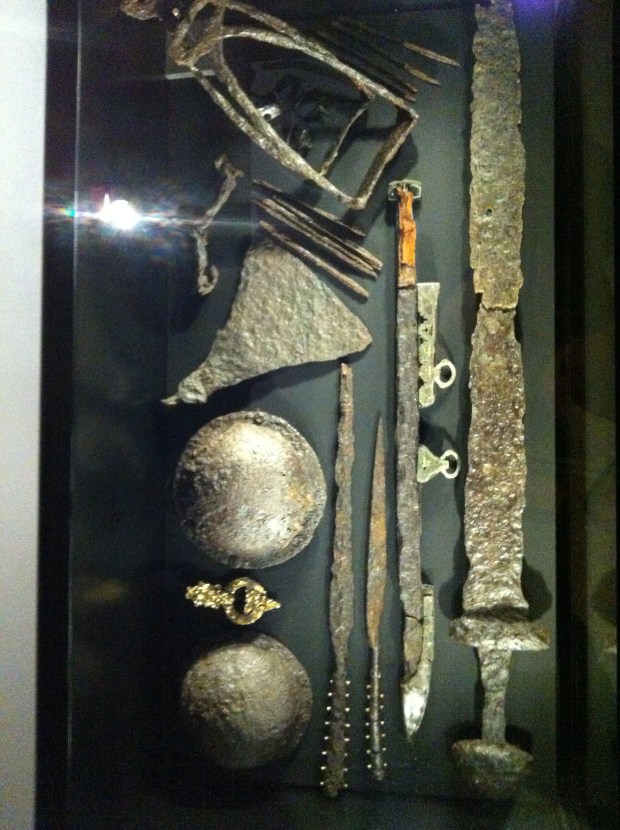
An assortment of unearthed Viking weaponry on display at the exhibit.

An assortment of unearthed Viking weaponry on display at the exhibit.

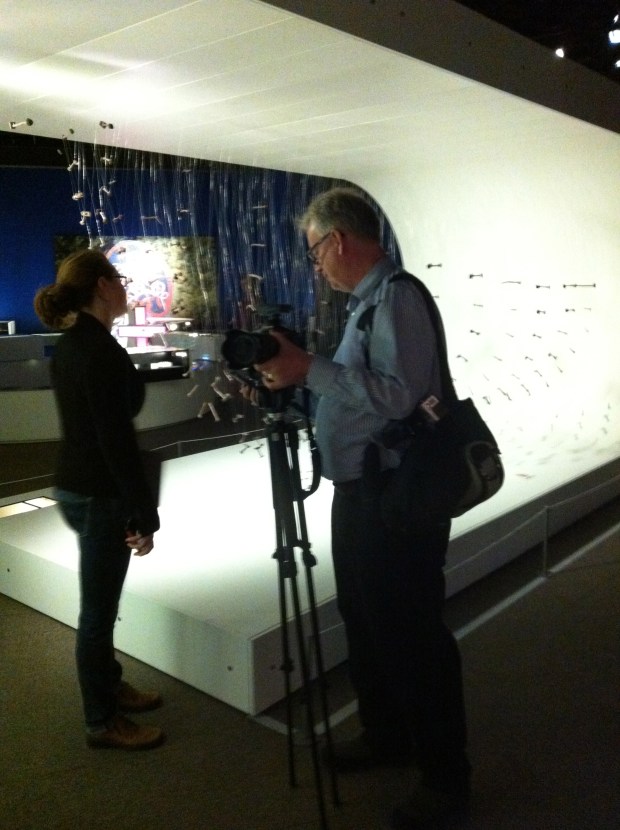
Regardless, the exhibit explores the lifestyle of the Vikings, a term they used to describe themselves during the Viking Age, an era between 750 and 1100AD. Fascinating artifacts are well displayed including weapons, household/cultural items and of course the Viking technological prowess in metallurgy and ship building. The most stunning part of the exhibit is a Viking “ghost ship” that exhibits hundreds of original iron rivets that would have held a ship’s long decomposed planks in place, suspended from the air by fishing line to form the shape of the ship’s hull.

Iron rivets that once held together the wooden planks of a Viking ship are suspended by fishing line to reveal a "Ghost Ship" hull shape.

Iron rivets that once held together the wooden planks of a Viking ship are suspended by fishing line to reveal a “Ghost Ship” hull shape.

Other noteworthy items are rune stones that show the cryptic carvings left by Vikings on rocks during their journeys across lands in Europe and the North Atlantic. After wandering the exhibit I felt like I was teleported back in time, completely immersed in the life and times of a Viking, which is an amazing feat for a temporary exhibit. I highly recommend checking it out and the IMAX film “Vikings” that runs until April 17 2016 at the Museum Of History.

Viking rune stone inscribed with Norse writing.

Viking rune stone inscribed with Norse writing on exhibit.

Leaving the exhibit one wonders if these daring adventurers from Scandanavia made it into Canada further than we have discovered. The idea of the Norse coming to Canada is nothing new, it was first the subject of legend, a tale of folklore in Scandanvia through the “Saga of Erik the Red” a tale preserved in two manuscripts; Hauksbók (14th century) and Skálholtsbók (15th century). In both there is a story describing the Norse exploration of North-America. This tale chronicled the events that led to Erik the Red’s banishment to Greenland as well as Leif Ericson’s discovery of a place called “Vinland” after his longship was blown off course and he journeyed to a distant land with trees, fish, grapes and riches beyond belief. It remained a fairytale for hundreds of years because how could anyone believe a bunch of barbaric warriors in wooden sailboats could ever cross the Atlantic ocean to another continent? Preposterous! The tales of Vinland and the journey made by the Viking explorers was long considered a myth.

The Norse traveling great distances was given credence when Viking settlements were found in Greenland. If they could make it to Greenland, then perhaps they could also make it to Canada. Ridiculous! said scholars of the time. Their wooden “Knarr” sailboats could never make the journey across the Atlantic to Canada! That was a task best left to explorers like Christopher Colombus, Jacques Cartier and Henry Hudson. Yet many did believe in the legend, and many tried to prove it true since most legends are usually based on a slice of fact.

In 1884 Dr. Lawson published an article in the Halifax Herald asking about Norwegians requesting information on the extent of wild grapes in Canada

In 1884 Dr. Lawson published an article in a Halifax newspaper about Norwegians requesting information on the extent of wild grapes in Canada. (Photo: google news)

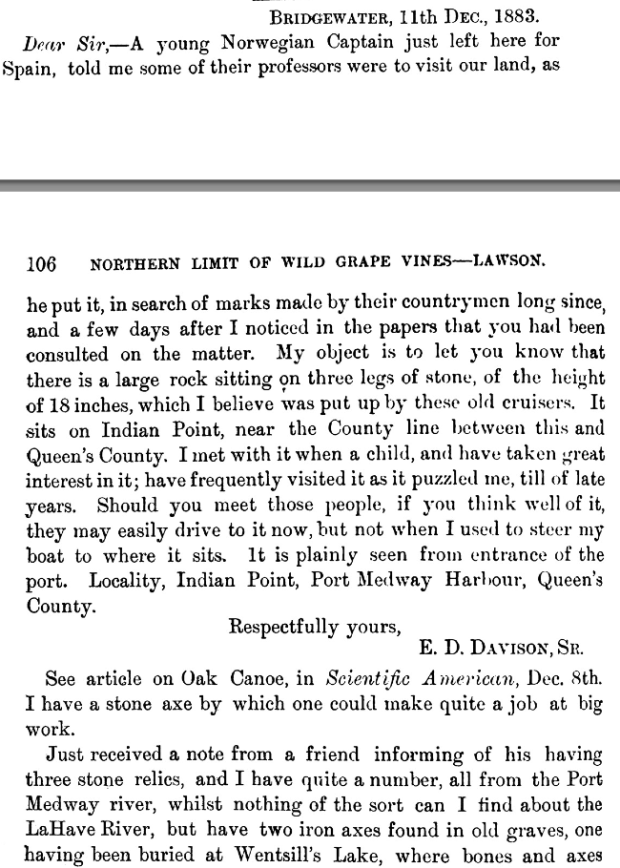
I managed to find some newspaper clippings that showed Norwegian scholars tried to prove the fable as fact in 1884 when a Dr. George Lawson of Halifax was asked by Norwegian professors on the extent of wild grapes in Canada, since that would reveal some information on where possible Norse explorers found the grapes needed to call their newly discovered land “Vinland”: land of the grape vine. The old saga described a land of wild grapes from which the Norse made wine, a very important ingredient to any rowdy Norse explorer meal plan. Dr. Lawson placed an article in the Halifax newspapers of the time, and was soon inundated with replies about odd ruins, stones with carvings in them, old axes and burial sites, that may reveal the existence of Norse explorers in the Nova Scotia region.

readers replied to Dr. Lawson about odd ruins, burial sites and artifacts in Nova Scotaia.

Many readers replied to Dr. Lawson about odd ruins, burial sites and artifacts in Nova Scotaia.

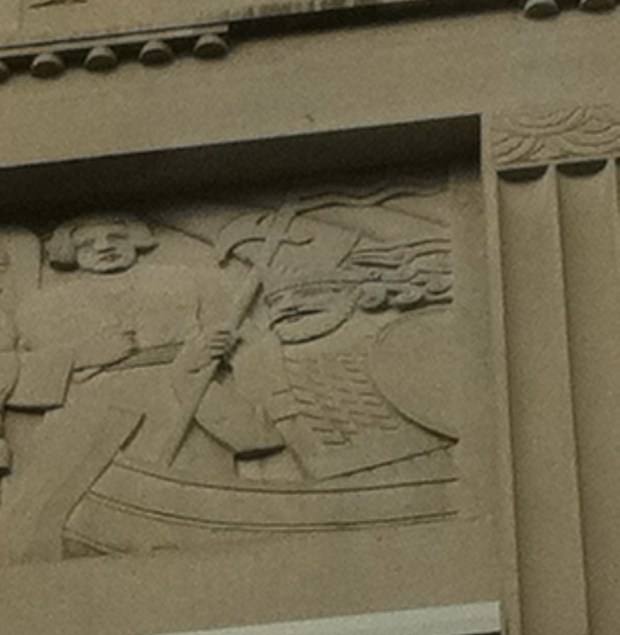
The idea of the Norse coming to Canada conjured up grand fantasies and “Viking Fever” swept the nation into the 1920s and 1930s, with many Viking artifacts being uncovered, their origin and provenance unknown. Viking relics in the Maritimes, Ontario, New York State, and the New England Coast started popping up and even a Bank Of Montreal building constructed here in Ottawa in 1930 on Sparks Street got in on the action with a relief sculpture depicting a Viking first discovering Canada.

A 1930 relief carving of a Viking first discovering Canada is depicted on the Bank Of Montreal on Sparks, St. Ottawa.

A 1930 relief carving of a Viking first discovering Canada is depicted on the Bank Of Montreal on Sparks, St. Ottawa.

The conjecture and speculation continued for almost another hundred years until the legend was finally proven to be fact. In 1960 the seemingly impossible became possible: archaeological remains of a Norse village were discovered in Newfoundland by two Norwegians, the explorer Helge Ingstad and the archaeologist Anne Stine Ingstad, a husband and wife team who once and for all proved the enduring legend was actually real.

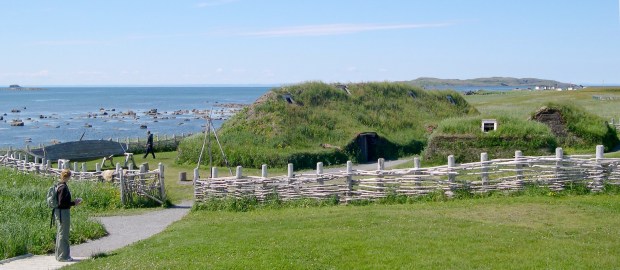
A site in northern Newfoundland was unearthed after the Ingstads asked local residents if there were any unusual ruins or features in the area. They had been studying old Norse maps that showed a peninsula labelled “Vinland” that seemed to match the shape of the upper peninsula of Newfoundland. The local residents pointed the Ingstad’s to some odd features that were once considered to be “old Indian ruins” but after excavation under the direction of Parks Canada in the 1970s a genuine Norse settlement at L’Anse aux Meadows was authentically dated to approximately 1,000 years ago, (carbon dating estimate 990 – 1050 CE). The Vikings were here.

The only verified Viking settlement discovered in Canada is in L'Anse Aux Meadows Newfoundland.

The only verified Viking settlement discovered in Canada is in L’Anse Aux Meadows Newfoundland. (photo: wikipedia)

Of particular interest in the excavation were many artifacts discovered that proved the Vikings had indeed landed, and stayed in Canada for about ten years. Iron smelting tools, household items, and dwellings were all found and verified to be those of the Vikings. Also found was an unusual nut, a butternut. Butternuts have not, and never did grow in Newfoundland. They exist only in regions much farther south than the LAM site. So how did a butternut get there?

A butter nut was found at the LAM site but they are, and have never been found in Newfoundland. Where did it come from?

A butternut was found at the LAM site but they are, and have never been found in Newfoundland. Where did it come from?

One would assume the Viking explorers ventured elsewhere and brought it back to the LAM site which was determined to be a temporary base camp for further explorations. LAM was not a permanent settlement, but rather a place to repair their boats and re-supply expeditions venturing elsewhere. But where was “elsewhere”? Why haven’t we found evidence that shows where the additional Norse adventures took them? Why haven’t we as a country looked more into this important piece of our history? Why have we stopped at LAM and not explored the possibilities Vikings carried onward to other places yet to be discovered? It seems like the one site was enough for our history books to handle and that is enough. Case closed.

However, this is what we are going to do now…look at possible explorations further inland that took our Norse visitors into North America and objects discovered that could show these explorations existed. So buckle up, we are heading to uncharted territory, a place filled with skepticism, hoaxes and of course a mystery that is long overdue to be solved. I must also note that I am not in anyway an expert on any form of archeology, but as an artist I am a curious thinker whose job it is to have a creative mind which I will utilize to provide my own analysis on what I think is a Great Canadian Viking Mystery. Using two years of collected research that includes overlooked artifacts sitting in small museums, old newspaper articles and current technological applications, let’s uncover more information and solve the great Viking mystery.

NEXT WEEK: Part 2 – Viking Evidence in Canada or an elaborate network of hoaxes?

Avro Arrow Test Negatives from 1958 Surface on Kijiji

The legend of the Avro Arrow endures after almost 60 years since it’s untimely demise in 1959. Images of the iconic Canadian designed and built advanced fighter jet being cut to pieces on the tarmac after cancellation of the Arrow program still leaves a bitter impression on many Canadians.

Not much survived that government ordered destruction of our beloved Arrow, a few pieces were whisked away by Avro employees before they were fired from the company, and the blow-torch scarred nose section and wings rest in the Aviation Museum in Ottawa.  These scraps are all that’s left to remind us of this unique part of Canadian history…until now…something new has arisen from the Avro ashes: Unpublished film negatives of a 1958 Avro Arrow test flight found for sale on Kijiji.

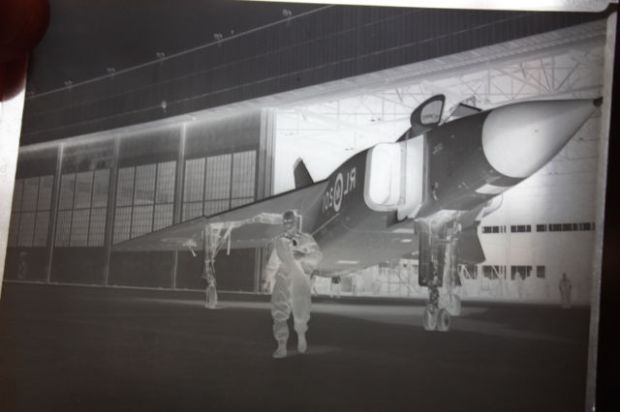
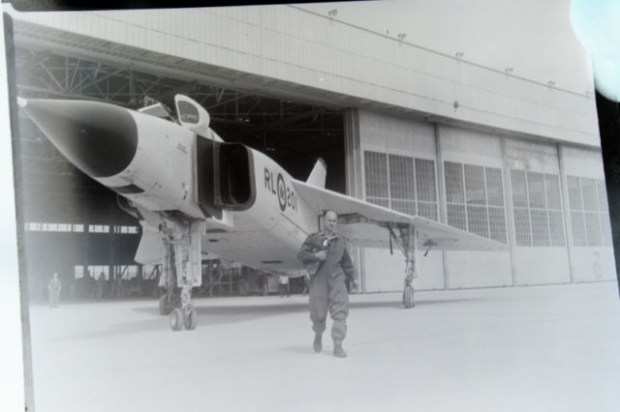
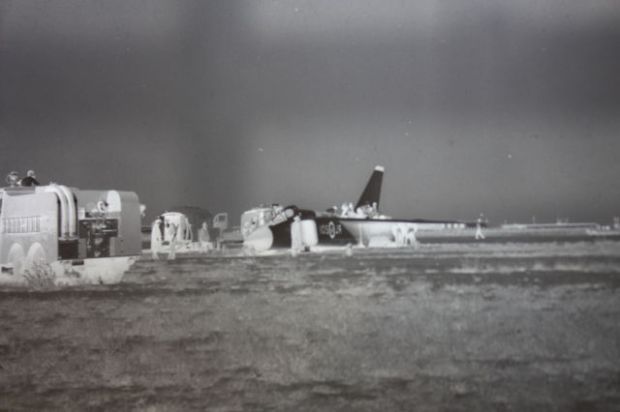
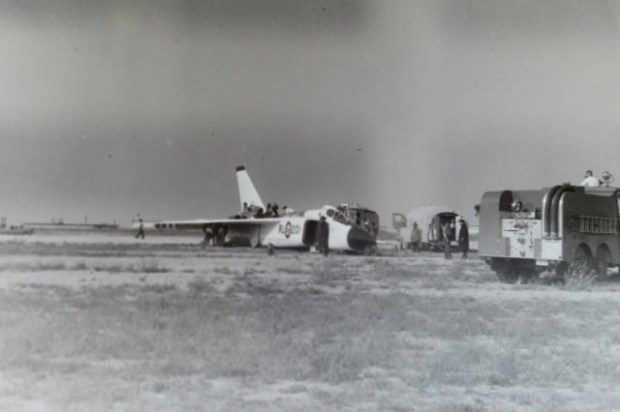
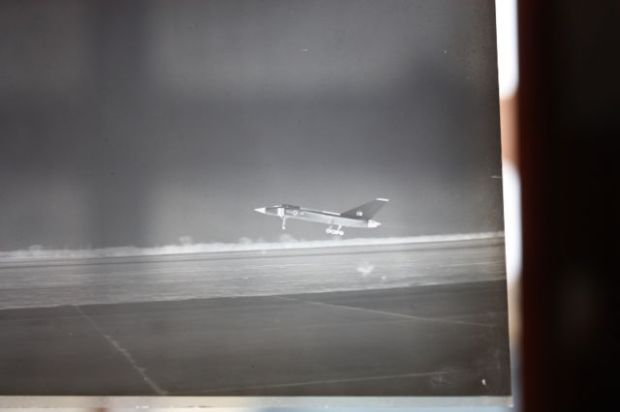
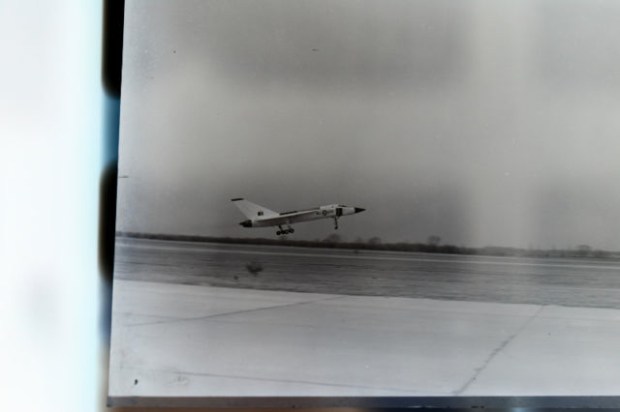
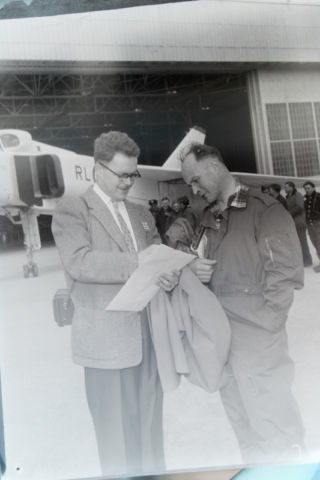
These are extremely rare, and the seller claims they are unpublished negatives from the June 11 1958 test run of the first Arrow prototype, “RL-201”.  The shots were taken by the seller’s father, who was a freelance photographer in 1958 and snapped these pics of the Arrow in Malton, On. The unpublished photos show the prototype Avro Arrow during a test flight, then sitting off a runway with its landing gear collapsed. Research shows that this particular incident occurred on June 11th 1958 when a malfunction resulted in main landing gear failure with the prototype Arrow skidding off the runway.

The Kijiji ad originates from Burlington, On, and after contacting the seller I was informed they are owned by the son of the original photographer, an inheritance after his father passed away. A direct link to the ad is HERE . Owning this rare piece of history comes with  $50,000 price tag for the 14 original film negatives. The ad photos show 6 of the 14 original negatives.  I used Photoshop to invert and flip them, providing us with the “positive” image as the Arrow test would have appeared on June 11th 1958 when this flight was captured on film.

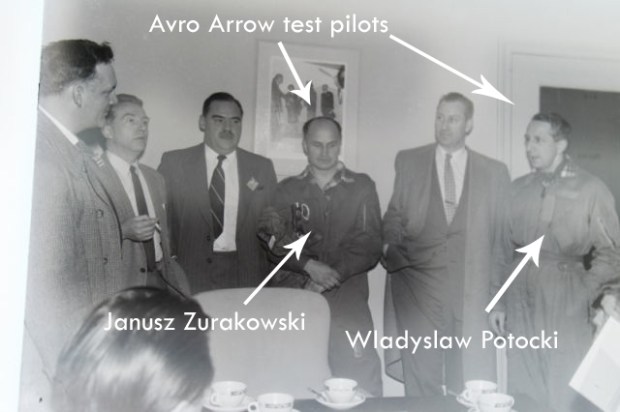
The photos also capture the two Polish-Canadian test pilots who flew the Arrow, Janus Żurakowski and Wladyslaw “Spud” Potocki chatting in an office, positively identified in the photos negatives once I had inverted them. Zurakowski is from Barry’s Bay north-west of Ottawa where there is a town memorial commemorating his historic test flight in the Avro Arrow.

These remarkable photos speak for themselves but I have done my best to provide some explanatory captions below each negative and inversion image. I have contacted Canada Aviation and Space Museum who are now aware of the existence of these negatives..

Below are the original negatives and underneath each my reversal (positive) image and caption.

Enjoy this flight back in time.

NEGATIVE 1

NEGATIVE 1

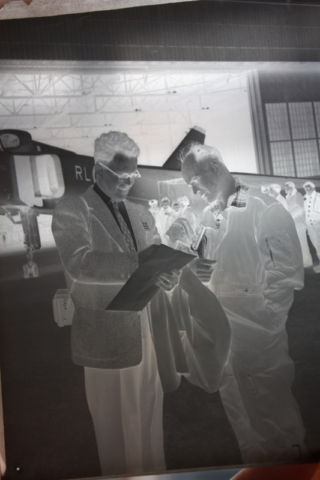
NEGATIVE 1 INVERSION: This shows test pilot Janus kazolski in front of the first Arrow prototype RL 201

NEGATIVE 1 INVERSION: This shows test pilot Janus Zurakowski  in front of the first Arrow prototype RL 201

NEGATIVE 2

NEGATIVE 2

NEGATIVE 2 INVERSION: RL201 skidded off the runway after the landing gear collapsed.

NEGATIVE 2 INVERSION: RL201 skidded off the runway after the landing gear collapsed.

NEGATIVE 3

NEGATIVE 3

NEGATIVE 3 INVERSION: RL201, the first Avro Arrow prototype on take off.

NEGATIVE 3 INVERSION: RL201, the first Avro Arrow prototype on take off.

NEGATIVE 4

NEGATIVE 4

avro4A

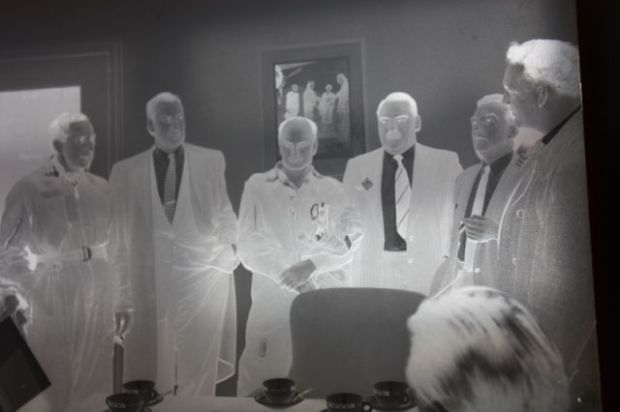
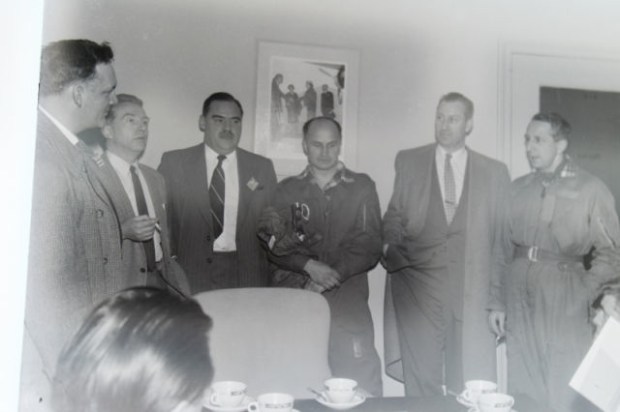
NEGATIVE 4 INVERSION: Looks to be a scene from the Avro offices, with both Arrow test pilots, Zurakowski and Potocki. John Plant, President and GM of Avro is 3rd from left. Fred Smye, Avro Exec, Vice President is 2nd from right.

avro4Amarked

NEGATIVE 5

NEGATIVE 5

NEGATIVE 5 INVERSION: Arrow test pilot Zurakowski chatting with someone.

NEGATIVE 5 INVERSION: Arrow test pilot Zurakowski chatting with person unknown.

NEGATIVE 6

NEGATIVE 6

NEGATIVE 6 INVERSION: The prototype Arrow RL 201with landing gear collapsed on the Malton runway, June 11th, 1958.

NEGATIVE 6 INVERSION: The prototype Arrow RL 201with landing gear collapsed on the Malton runway, June 11th, 1958.

NEGATIVE 6

NEGATIVE 7

NEGATIVE 7 INVERSION: The two chase planes used by Avro to fly alongside the Arrow on its test flights, a Cf-100 Canuck and Cf-86 Sabre.

NEGATIVE 7 INVERSION: The two chase planes used by Avro to fly alongside the Arrow on its test flights, a Cf-100 Canuck and Cf-86 Sabre.


BEING ERNEST: The Untold Story Of Ottawa’s Korean War Ace

ernest

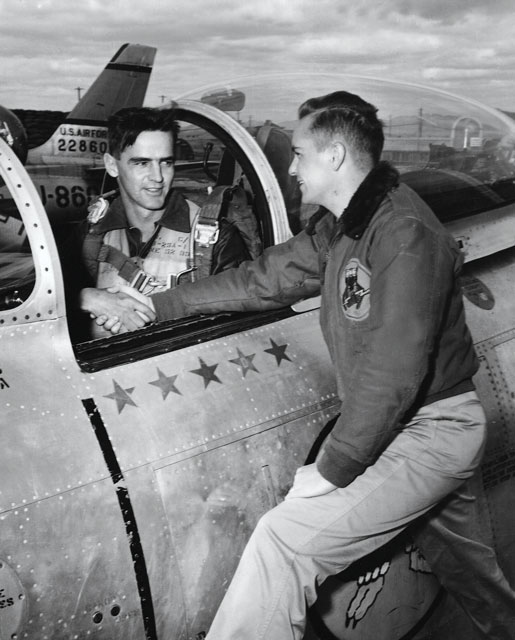
Ernie Glover, an Ottawa based pilot flying American Sabre jets during the Korean War.

As another Remembrance Day approaches we reflect on those that served our country and sacrifices made throughout history’s conflicts. Yet often quietly and unintentionally overlooked are those that served in what has been dubbed The Forgotten War. A ghastly war that raged in the cold mountains of Korea from 1950 to 1953, it involved United Nations forces led by the United States against Communist forces of China and the Soviet Union. Almost 26,000 Canadians participated in the Korean War under UN command in both ground and naval combat roles with air combat limited to transport and supply missions. Well, sort of. It turns out that some Canadian fighter pilots with the Royal Canadian Air Force volunteered their services to the United States Air Force flying Canadian made Sabre jets against Soviet MIGs. One of these pilots was an Ottawa based fellow by the name of Ernest Glover, a man with a fascinating life story that I think needs to be told, a story that unfolds like a Hollywood film.

BEING ERNEST.

Ernest Arthur Glover grew up in Toronto and in 1940 at the age of 18 enlisted in the RCAF to serve his country during World War II, training near Hamilton to become a pilot. Ernie soon got a taste of the war beingshipped to England where he was strapped into Hawker Hurricanes for night fighter missions.

Ernie Glover entered air combat during World War II flying night fighter missions in a Hawker Hurricane.

Ernie Glover entered air combat during World War II flying night fighter missions in a Hawker Hurricane. (Photo: Wikipedia)

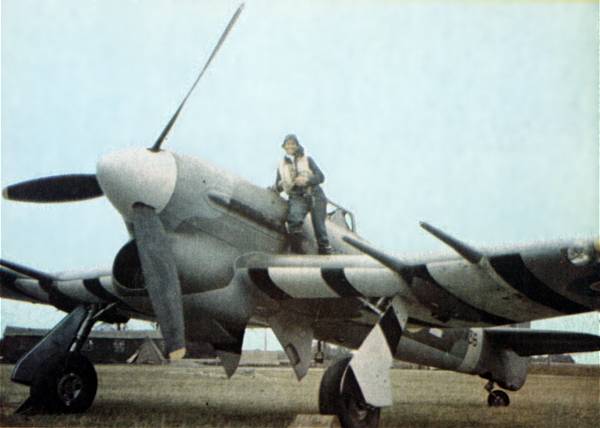
Gaining valuable combat experience in Hurricanes, Ernie soon moved into the more powerful and formidable Hawker Typhoon, flying fighter missions into occupied Europe. On one such mission in 1943 over France, Ernie was blasted by German flak that downed his Typhoon forcing him into the hands of the Germans and a Prisoner Of War.

Ernie Glover then moved into the more formidable Hawker Typhoon, but was peter shot down over France.

Ernie Glover advanced into the more formidable Hawker Typhoon, but in 1943 was shot down over France and became a PoW.

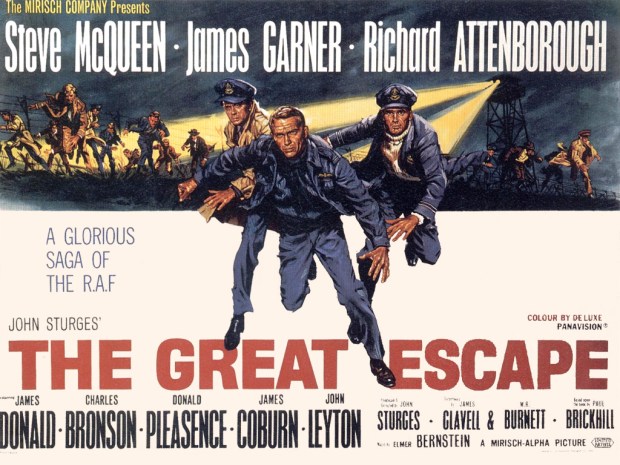
Ernie found himself a PoW at a place called Stalag Luft III. This German PoW camp is better known as the site of The Great Escape and contained captured Allied airmen who worked tirelessly to tunnel their way out of the prison camp. Their exploits were made into a 1963 film starring Steve McQueen, “The Great Escape”. Ernie was present during the Great Escape but remained confined at Stalag Luft III until the end of the war.

Glover was a prisoner at Stalag Luft III, the prison camp that was the scene of the Great Escape, later made into a Hollywood film.

Glover was a prisoner at Stalag Luft III, the prison camp that was the scene of the Great Escape, later made into a Hollywood film.

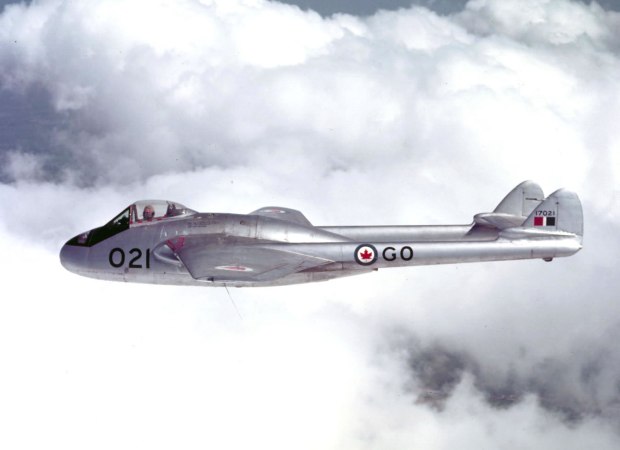
After being liberated from Stalag Luft III Ernie returned to Canada where he worked for Dominion Bridge in Montreal. Ernie could not seem to keep his feet on the ground and in 1948 re-enlisted back into the RCAF and in 1951 came to Ottawa to fly the new Vampire jets stationed at Ottawa’s Uplands Air Force Base.

Upon being freed from prison camp in Germany, Ernie returned to Canada and in 1951 flew Vampire jets in Ottawa.

Upon being freed from prison camp in Germany, Ernie returned to Canada and in 1951 flew Vampire jets in Ottawa.

Mastering these new jet engined fighter craft, Ernie volunteered with 22 other RCAF pilots to join the Americans fighting in the skies above Korea. You see, the best fighter jet in the world at the time was the F-86 Sabre, and Canada was producing their own variant called the Canadair CF-86 built in Montreal, of which many were being sent to Korea for service with the USAF. RCAF pilots were unable to join the air battles over Korea in their own Canadian Sabres, but in 1952 as volunteers fighting under the American flag these 22 Canadian pilots got their wish to experience the mighty Sabre in combat. Ernie Glover was one of these eager pilots, and he joined the USAF 334th Fighter Squadron in Korea.

Ernie Glover in the cockpit of a Sabre jet in Korea flying for the USAF. (photo:Legion Magazine)

Ernie Glover (left) in the cockpit of a Sabre jet in Korea flying for the USAF. (photo:Legion Magazine)

Now in the Sabre, Ernie soon engaged Soviet made MIG fighters on an almost daily basis under treacherous flying conditions. Dog fighting in “MIG Alley”, a dangerous zone of air combat where the Sabres and MiGs would battle it out in what was to be the first large scale jet to jet aerial combat scenario, RCAF pilots in USAF marked Sabres flew over 900 combat missions with 9 confirmed MIG kills. Ernie happened to down 3 of those nine MIGs, the highest score of any RCAF pilot in Korea making him a distinguished combat pilot.

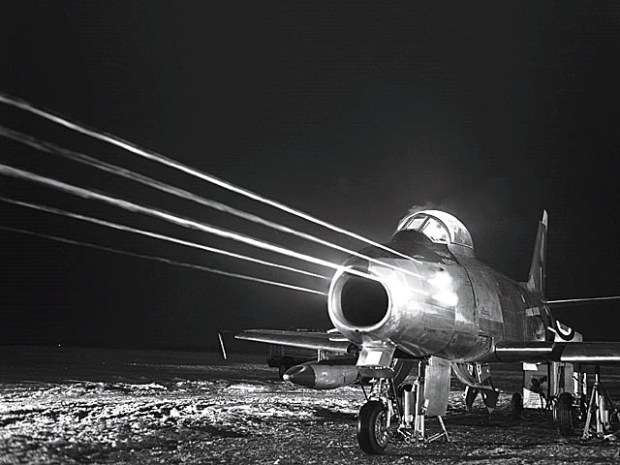
F-86 Sabre jet of the 334th Squadron in Korea of which Glover flew 58 combat missions.

F-86 Sabre jet of the USAF 334th Squadron in Korea of which Glover flew 58 combat missions.

Ernie flew a total of 58 combat missions and the Americans recognized Ernie’s air combat skills in the Sabre and awarded him the American Distinguished Flying Cross, a medal reserved for those with “the Air Corps of the Army of the United States, who distinguishes himself, or herself by heroism or extraordinary achievement while participating in an aerial flight.” Ernie shared his American DFC with the likes of Jimmy Doolittle, Amelia Earhart, Buzz Aldrin, and John Glenn. Ernie was also awarded the Commonwealth Distinguished Flying Cross, the very last RCAF pilot to do so for his service in the skies over Korea.

ERnie Glover shot down 3 MiG fighters and was awarded the Distingusihed Flying Cross by the Americans for his service in Korea.

Ernie Glover shot down 3 MiG fighters and was awarded the Distingusihed Flying Cross by the Americans for his service in Korea.

After completing his 58 missions in the American Sabres, Ernie returned to Ottawa to fly Canadian Sabres now outfitted to 422 Fighter Squadron at Uplands RCAF Air Base south of the city.

A Canadair CF-86 Sabre at Uplands Air Base in Ottawa.

A Canadair CF-86 Sabre at Uplands Air Base in Ottawa.

Returning to the familiar cockpit of the Sabre in Ottawa, and almost 20 years after he was last there, Ernie re-visted the skies over Europe with the RCAF in Germany.  Also flying other aircraft, Ernie was later stationed in Trenton, On where he finally retired from the RCAF in 1970 after 30 years of service.

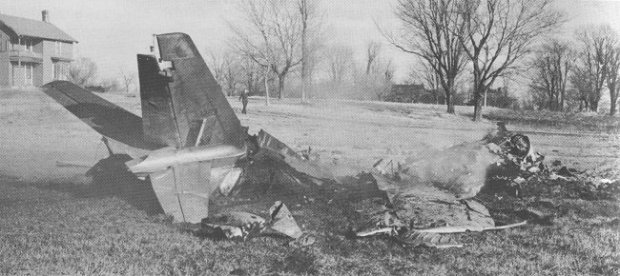
A crashed CF-86 Sabre from Uplands that exploded after hitting the ground near Manotick.

A crashed CF-86 Sabre from Uplands that exploded after hitting the ground near Manotick.

Ernie left fighter jets to take on small town life in Frankford just north of Trenton. Having been a fighter pilot in World War II, shot down in Europe, a PoW in the Great Escape prison camp and a decorated Canadian Korean War air ace flying with the Americans, Ernie seemed almost invincible. Almost. Having survived all these battles, Ernest had one last battle to fight but was later admitted to hospital in 1991. Ernie Glover, the little known Ottawa ace, made a final flight to other skies on September 9th in a Belleville Hospital. His life’s journey was most definitely an earnest one.

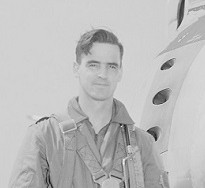
Ernie Glover, the air ace from Ottawa.

Ernie Glover, the air ace from Ottawa.

SOURCES

Air Crew Remembered

Canada’s Veterans Hall Of Honour

Canadian Warplanes, 2009, Harold Skaarup

Legion Magazine

Wikipedia: “Korean War”, “Distinguished Flying Cross”


Stone Tower Could Be Ontario’s Oldest Remaining Windmill

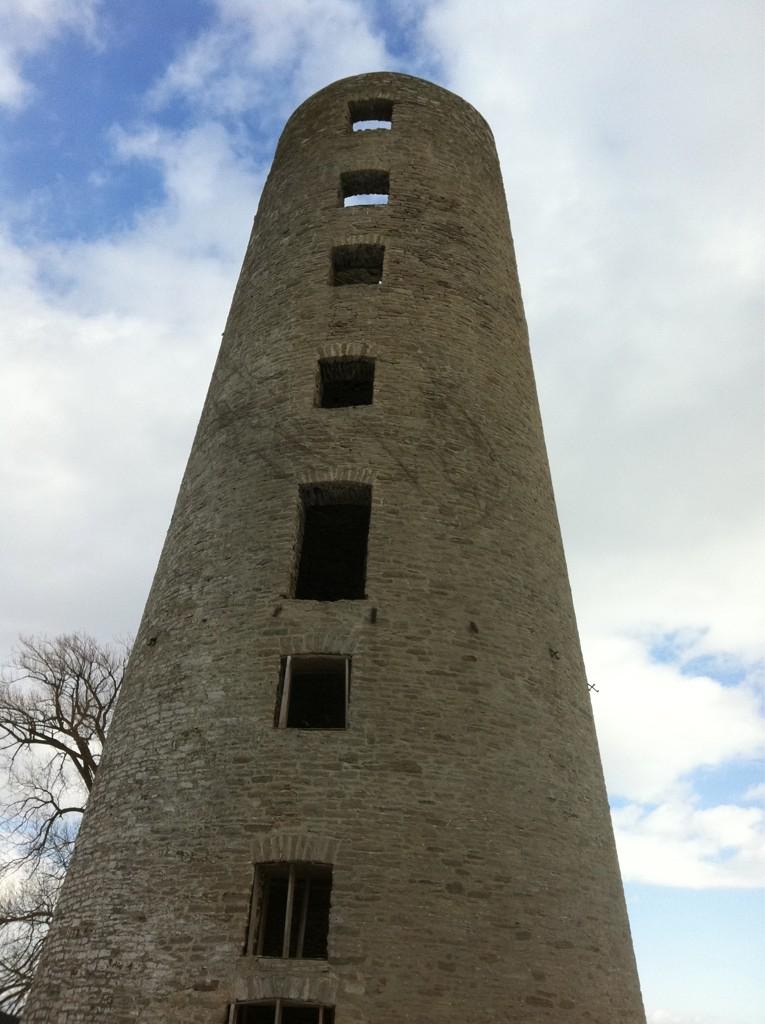
This old stone tower near Maitland, Ont. could very well be the ruins of Ontario's Oldest Windmill.

This old stone tower near Maitland, Ont. could very well be the ruins of Ontario’s Oldest Windmill. (Source: Google Maps)

One of the nicest drives in the region has to be the scenic cruise along Highway 2 that parallels the mighty St. Lawrence River between Gananoque and Prescott. The meandering old highway follows the shores of the St. Lawrence and along with panoramic views you are also treated to a ride through time. For thousands of years the St. Lawrence has been an important waterway and during the early days of European exploration and settlement it was a crucial area for industry, trade, and strategic military importance. While driving along this highway of history one day I spotted an unusual stone tower at the side of the road near the river. Resembling a lookout tower from some old abandoned medieval castle, I noted its position and snapped a few pics for future research. Upon further investigation it seems this was no medieval lookout tower but rather the ruins of what could be the oldest standing windmill in Ontario.

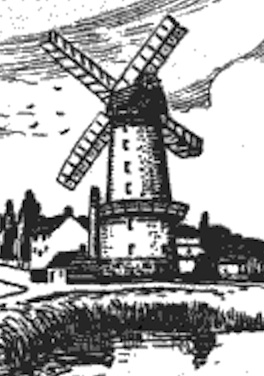
An sketch of an early 1800s windmill that would have been almost identical to the stone tower on Highway2.

An sketch of an early 1800s windmill that would have been almost identical to the stone tower on Highway2.

The first windmill in Upper Canada was a cylindrical tower of stone built in the 1790s near Prince Edward County on the shores of Lake Ontario to pump water from the lake to a Loyalist homestead, but nothing remains of this structure after it was abandoned and demolished in 1877. There’s the old stone windmill that is a National Historic Site near Prescott that was constructed in 1832 and was later converted into a lighthouse after it served as a fort during a failed rebellion attack from the United States. This stone tower has been restored and cared for by Parks Canada which lies about 20 minutes east of our forgotten tower of wind.

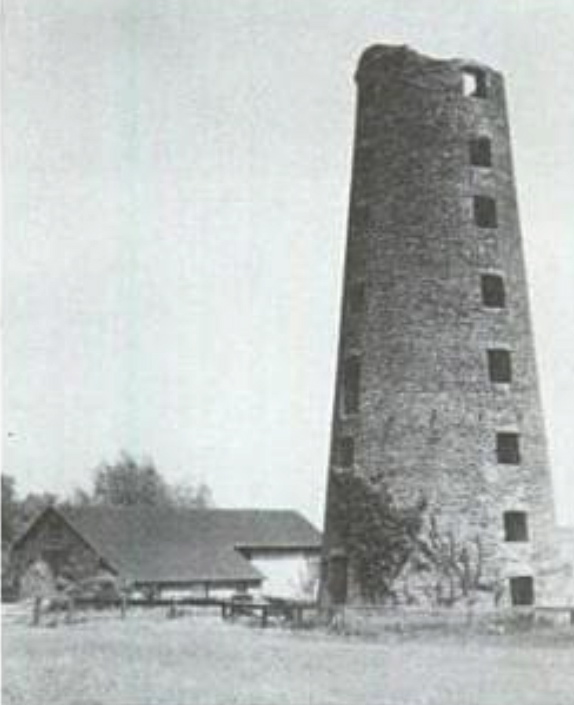
An early 20th century photo of the tower. It was abandoned in

An early 20th century photo of the tower. It was abandoned as a windmill in 1837.

Originally built in 1827 by George Longley who arrived in the town of Maitland a year earlier, this structure predates the Prescott mill by 5 years and towers 80 feet to the top with a base circumference of 34 feet. A wooden cap was added to the tower with wooden sails that measured almost 100ft long from tip to tip. These were made of cloth spread over a lattice that could be adjusted to regulate the speed and rate of rotation. A wooden balcony at the 30ft high mark surrounded the tower, of which you can still see the remains of iron brackets from where it was attached.

The iron brackets used to fasten the wooden balcony that surrounded the tower can clearly be seen.

The iron brackets used to fasten the wooden balcony that surrounded the tower can clearly be seen.

I’m not sure if this windmill was to mill wheat or to pump water up from the river like the one near Prince Edward County. It seems Mr.Longley only operated the windmill for about ten years when rotation of its massive sails were ceased and it was converted into a grain silo. A steam powered mill was built alongside it to grind flour and oats. Longley died in 1842 and soon the whole place closed down in 1854. Sitting vacant until 1863, the new owners of the property decided it would be a great place to build a distillery, of which they did, and the Halladay Family made over 275,000 gallons of whisky a year. It was shut down for some “irregularities” in 1865.

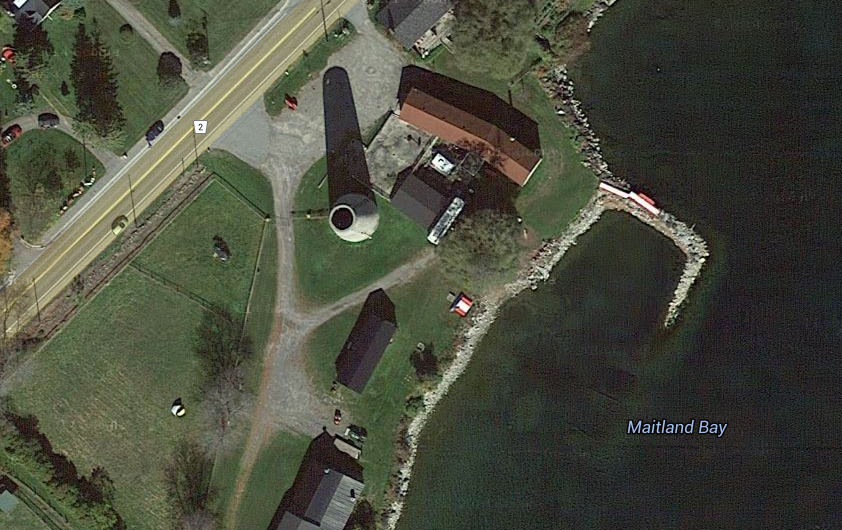
Google Maps Satellite image of the stone tower ruins.

Google Maps Satellite image of the stone tower ruins.

At the beginning of the 20th century, the old windmill still remained, and almost a hundred years after it was built, the new property owner, Peter Webster took an interest in saving the stone tower and repaired it for Canada’s Centennial. In 1936 Webster and his partner formed “Maitland Charts” that produced rolled nautical charts and sonar paper for the Royal Navy. In 1973, the chart company business literally went off the charts and the company moved to a bigger space leaving the tower to stand alone where it still stands today.

The current owners of the tower seem to have taken a keen interest in keeping it standing as best they can, maintaining this forgotten sentinel of the St. Lawrence. If this really is Ontario’s oldest standing windmill sitting at he side of the road it might be worth the 45minute drive from Ottawa to take a look at the old tower of power, a lost relic from a time when wind and sail ruled the land and sea.

SOURCES

“Maitland: A Very Neat Village Indeed” by Stephen Otto, Richard Dumbrille, 1985

Google Maps

Wikipedia “List Of Windmills in Canada”


TRACKING CHAMPLAIN: Plotting the explorer’s epic journey on the 400th anniversary

400 years ago this week one of the world’s most renowned explorers set out on an epic journey…This autumn marks the Quadricentennial of Samuel de Champlain’s adventurous voyage through Central-Eastern Ontario along its many waterways and through its forests. With a team of Huron warriors on a mission to defeat the Iroquois in what is now Upper New York state, Champlain walked and paddled through our own backyard. Using current mapping technology and Champlain’s very own detailed journal entries we can plot the famous explorer’s 400 year old expedition…

CHAMP-title card

In 1615 on another exploration of the new frontier, Champlain made his way down the St. Lawrence River and was greeted by a large contingent from the Huron and Algonquin nations. The explorer met these aboriginal nations before on one of his earlier journeys, and now they asked Champlain to help them defeat the Onondaga and Oneida nations to the south in what is now Upper New York state. Champlain knew these opposition tribes to the south posed a great threat to the French fur trade routes along the upper St. Lawrence and Ottawa rivers. He realized that by allying with the Hurons and Algonquins, they may be able to defeat this threat to the south and clear the way for French trade on Lake Ontario, Ottawa River and St. Lawrence River.

In an agreement to help his allies, Champlain returned to Quebec to plan an attack and make the necessary equipment preparations for the journey that would take him and his native companions deep into enemy territory. That summer of 1615 his French contingent traveled by a flotilla of canoes along the Ottawa River to Morrison Island then along the Mattawa River and through Lake Nipissing. Working to promote strong alliances with the French between the aboriginal people he met en route, Champlain and company made their way along the French River into Lake Huron across Georgian Bay to a site near what is now Penetanguishene. He arrived in “Huronia” in August of 1615 and began to sit down with members of the Huron nation to plan their attack of the Iroquois at their large fortification across Lake Ontario in New York State. With the necessary preparations having been made, Champalin embarked in September 1615 with a massive war party outfitted with canoes laden with tribal warriors, armed Frenchmen, and the supplies needed to make the bold journey to defeat the powerful Iroquois to the south.

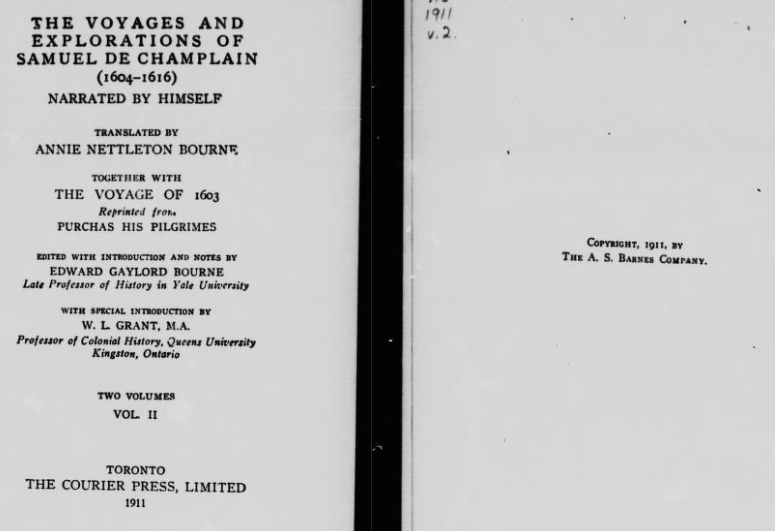
Thankfully for history’s sake, Champlain made a very detailed journal of this adventure, and in 1907, “Champlain’s Voyages et Descouvertures” was translated and printed by the American Historical Association  into a book titled “VOYAGES and Explorations of Samuel De Champlain narrated by himself”

A translated copy of Champlain's journal used to plot out his 1615 adventure.

A translated copy of Champlain’s journal used to plot out his 1615 adventure.

Obtaining a scanned version of a Canadian 1911 version of the journal and isolating the journey Champlain made through Central-Eastern Ontario in 1615 we can re-create the trip. His entries are detailed, and the translation helps pinpoint exact locations that I was able to match to current existing landmarks. Having grown up in the same area in my teenage years and having sailed some of the exact same waters traversed by Champlain, I believe I was able to map out this epic journey as it happened 400 years ago.

MEASURING CHAMPLAIN’S DISTANCES

Before we begin we must first start deciphering this 400 year old  adventure with an analysis of the original journal and how it translates into present day terms. The first mention Champlain makes about the start his journey is on Page 76 where he mentions they gathered two canoes with 12 of the strongest “savages”, continuing his way towards the enemy. Champlain then  uses the term “lieue”or “league” to measure distance on his journey. But what is a league, how far is that in today’s modern measurement of distance? This of course is crucial to tracking Champlain properly and is a key element to matching his distances on today’s maps for an accurate plotting of his route.

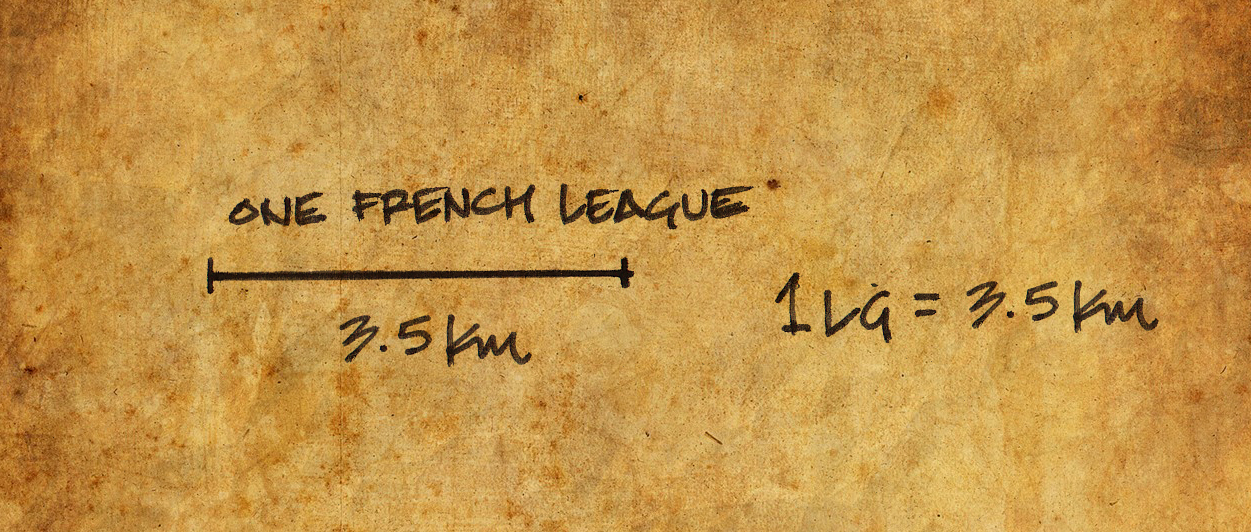
A conversion of a French league to modern kilometres was necessary to accurately plot his journey.

A conversion of a 1600’s French league to our modern kilometres was necessary to accurately plot his journey.

The “old French league” was a measurement used by the French up until 1674 and was defined as 10,000ft. With Champlain traveling in 1615 and his journal of his exploits being published soon after, this falls into the right unit of measurement for that time. 10,000 feet converts into a modern metric measurement of 3.25km. The French League however differed with Champlain depending on what type of surface he was traveling on. A French Land League ranged between 3.25km-4.68km, (an average of 4km). Champlain used a different measure of league at different points of his adventures, on the open sea and St. Lawrence River he used a league that was 4.0-4.5km compared to the approximate 3.4km league he used for inland travel. Because Champlain was traveling over both land and water on this 1615 journey which makes it almost impossible to pinpoint an EXACT measurement of his mentioned league. So I will be using the average of 3.5km=one Champlain league.

THE JOURNEY

After leaving Huronia on September 1 1615, Champlain travels across Lake Simcoe and entered what is now the Trent-Severn Waterway where his journal mentions travelling south and entering Sturgeon Lake. From Sturgeon lake Champlain mentions:

“From it flows a river that empties into the great lake of the Entouhonorons”

The “Lake of the Entouhonorons” is Lake Ontario. Champlain describes the journey down the Otanabee and Trent rivers which empty into Lake Ontario from Sturgeon Lake as being “about 64 leagues-that is to the entrance to of this lake of the Entouhonorons”

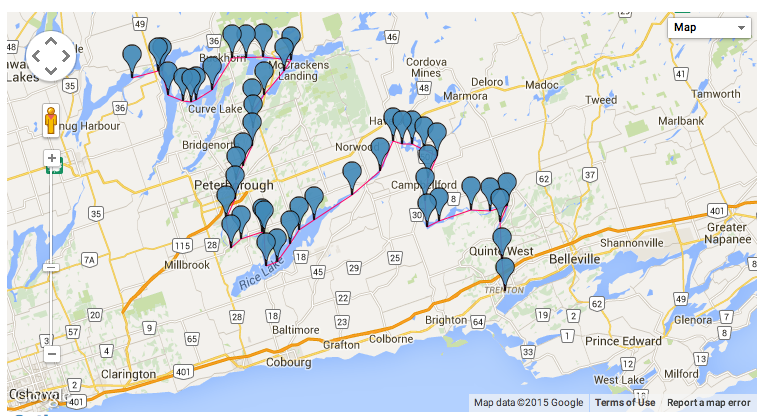
Now we can utilize our measurement of a league (3.5km) which calculates 64leagues x 3.5km=224km. This distance mapped out on a current map where the Trent flows from Sturgeon Lake to Lake Ontario at Trenton is almost a perfect match.

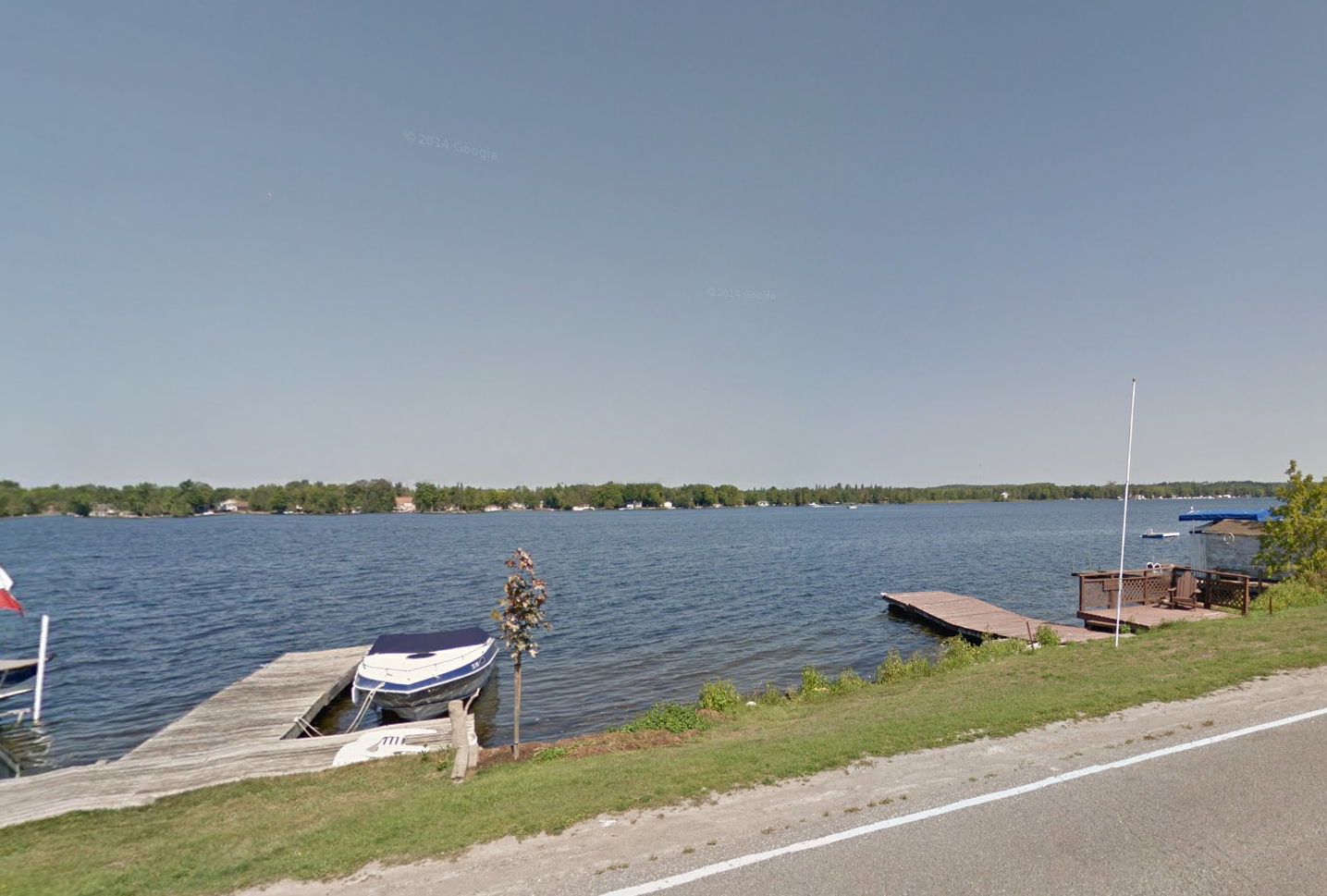
Using a mapping program we are able to track the '64 leagues" Champlain mentions it took to go from Sturgeon Lake to where the Trent River empties into Lake Ontario at Trenton.

Using a mapping program we are able to track the “64 leagues” or 224Km Champlain mentions it took to go from Sturgeon Lake to where the Trent River empties into Lake Ontario at Trenton.


Our journey begins on at Sturgeon Lake where Champlain passed through in September 400 years ago.

Our journey begins on at Sturgeon Lake where Champlain passed through in September 400 years ago. (GoogleMaps)

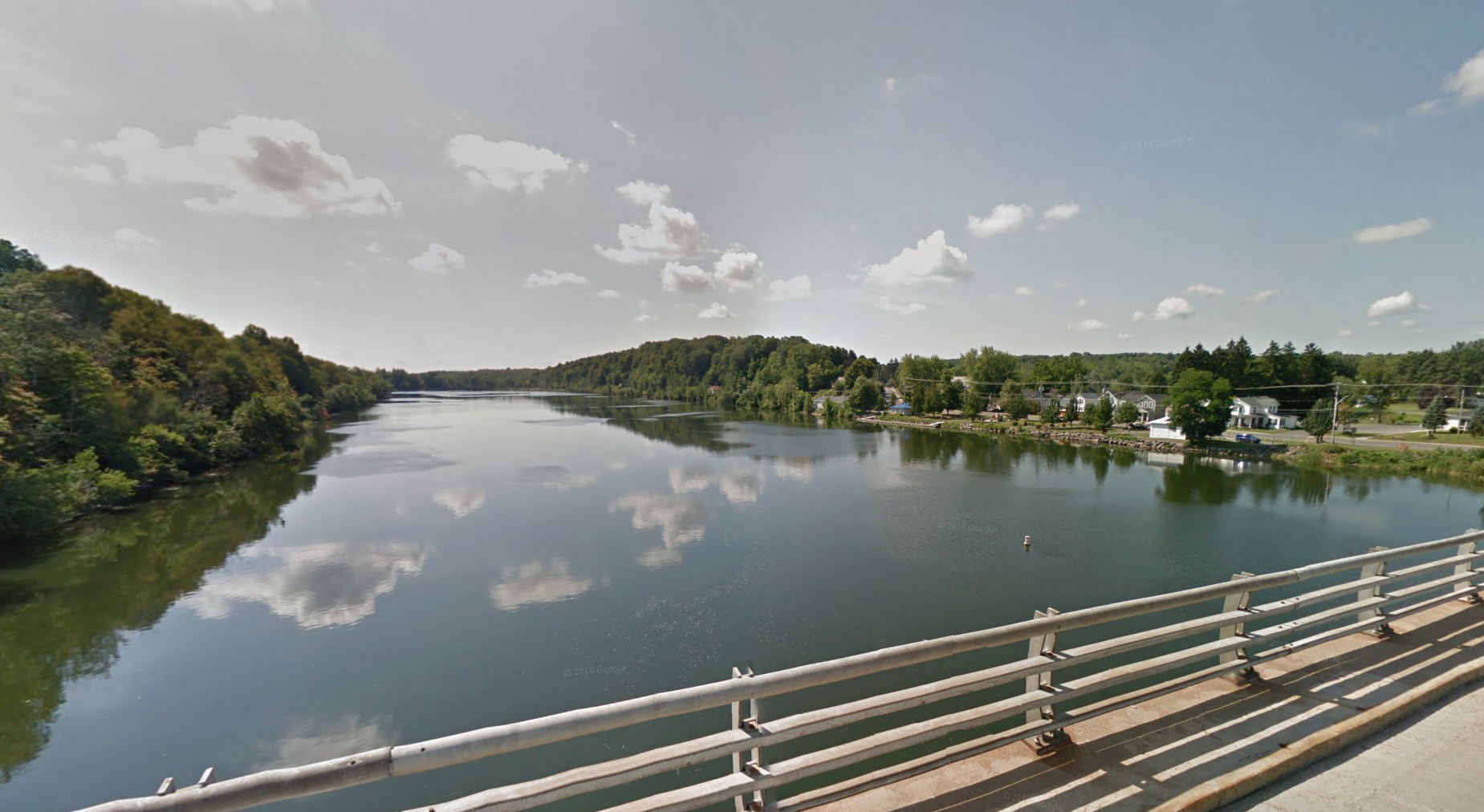
Champlain also mentions passing 5 rapids and smaller lakes along the way. The matches the pre-Trent canal rapids at Bobcaygeon, Buckhorn, Peterborough, and the many other falls and rapids they would have encountered along the Otanabee and Trent rivers.

Otanabee River Champlain and his Huron warriors travelled along.

Otanabee River Champlain and his Huron warriors travelled along. (Google Maps)

Champlain mentions how beautiful the river area is and that it seemed eerily abandoned of people. It is noteworthy to mention that some think Champlain is speaking of Prince Edward County at this point, but the journal and mapping do not make this possible.

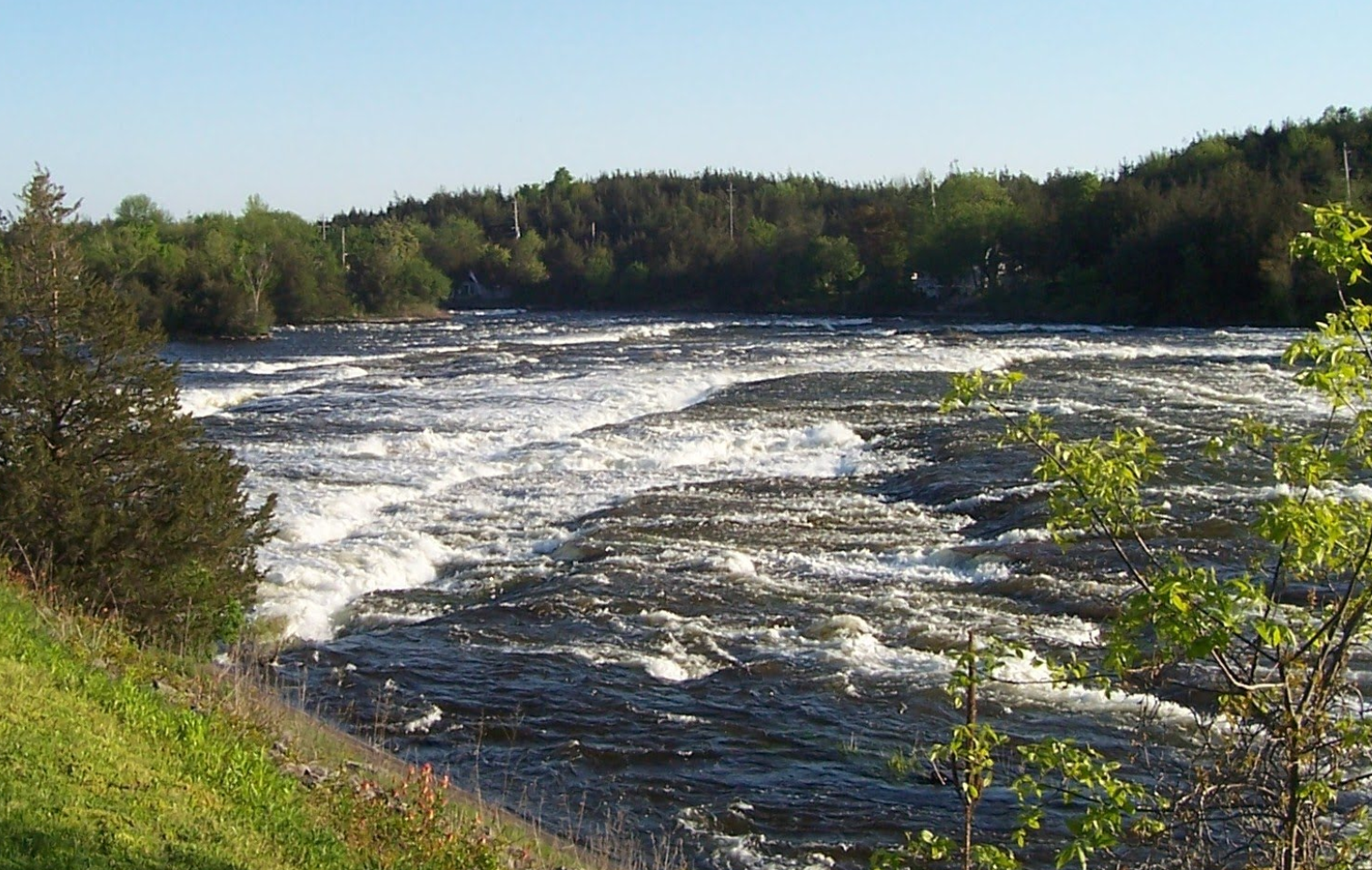
Some of the rapids Champlain mentions in his journal on the Trent River.

Some of the rapids Champlain mentions in his journal on the Trent River.

CHAMPLAIN’S WEAPON

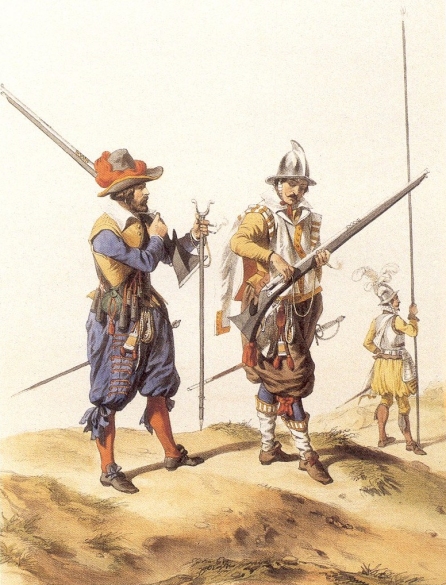
Along the Otanabee and Trent, Champlain watches his native companions hunt with spears and one of them is injured when one of Champlain’s men tries to also hunt with their own weapon, an “arquebus” which is a type of matchlock musket used by Champlain and his French companions. A heavy weapon between 30 and 50 inches in length, Champlain’s arquebus fired 1 ounce lead balls through a straight barrel, capable of felling large game and men. This was Champlain’s weapon of choice on his adventure 400 years ago.

Champlain used an "arquebus" similar to this as his weapon of choice on the adventure.

Champlain used an “arquebus” similar to this as his weapon of choice on the adventure.

matchlock7

After Champlain and team empty into Lake Ontario (what Champlain calls Entouhonorons) at Trenton, they entered what is now the Bay Of Quinte and Prince Edward County. Passing along through the Bay Of Quinte past Deseronto, Picton and finally into the main body of Lake Ontario near Adolphustown, Champlain and company head east along the northern shore.

This is where Champlain would have exited from the river into "lake of the Entouhonorons" or as we now call it, Lake Ontario.

This is where Champlain would have exited from the river into “Lake of the Entouhonorons”, or as we now call it, Trenton on Lake Ontario.(GoogleMaps)

They would have passed Bath, Millhaven, Amherstview and Kingston. It is here that I firmly believe that scholars and the history books are incorrect in their assumption that Champlain cut down into the lake on the eastern end of Prince Edward County towards the Main Duck islands.

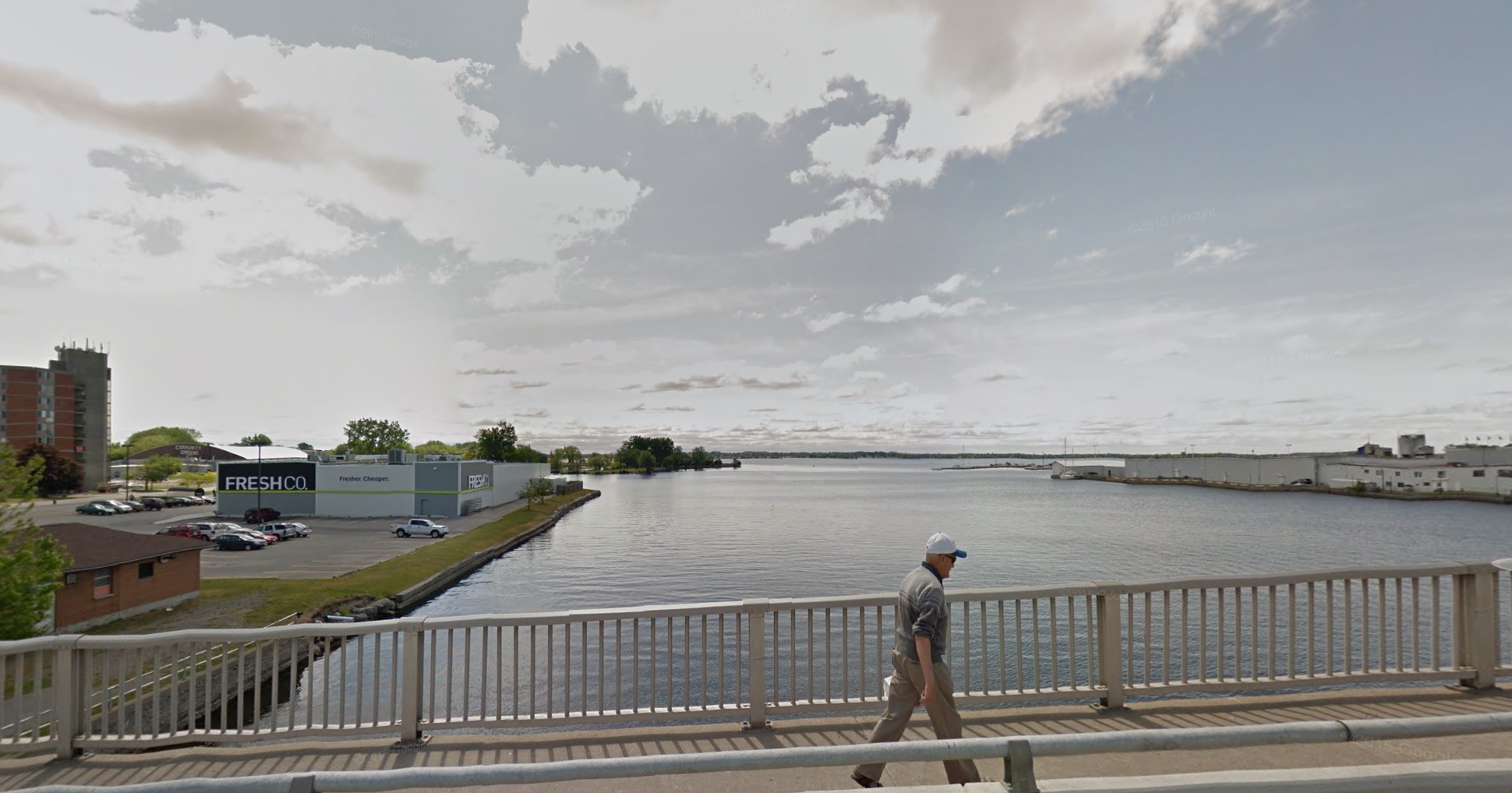
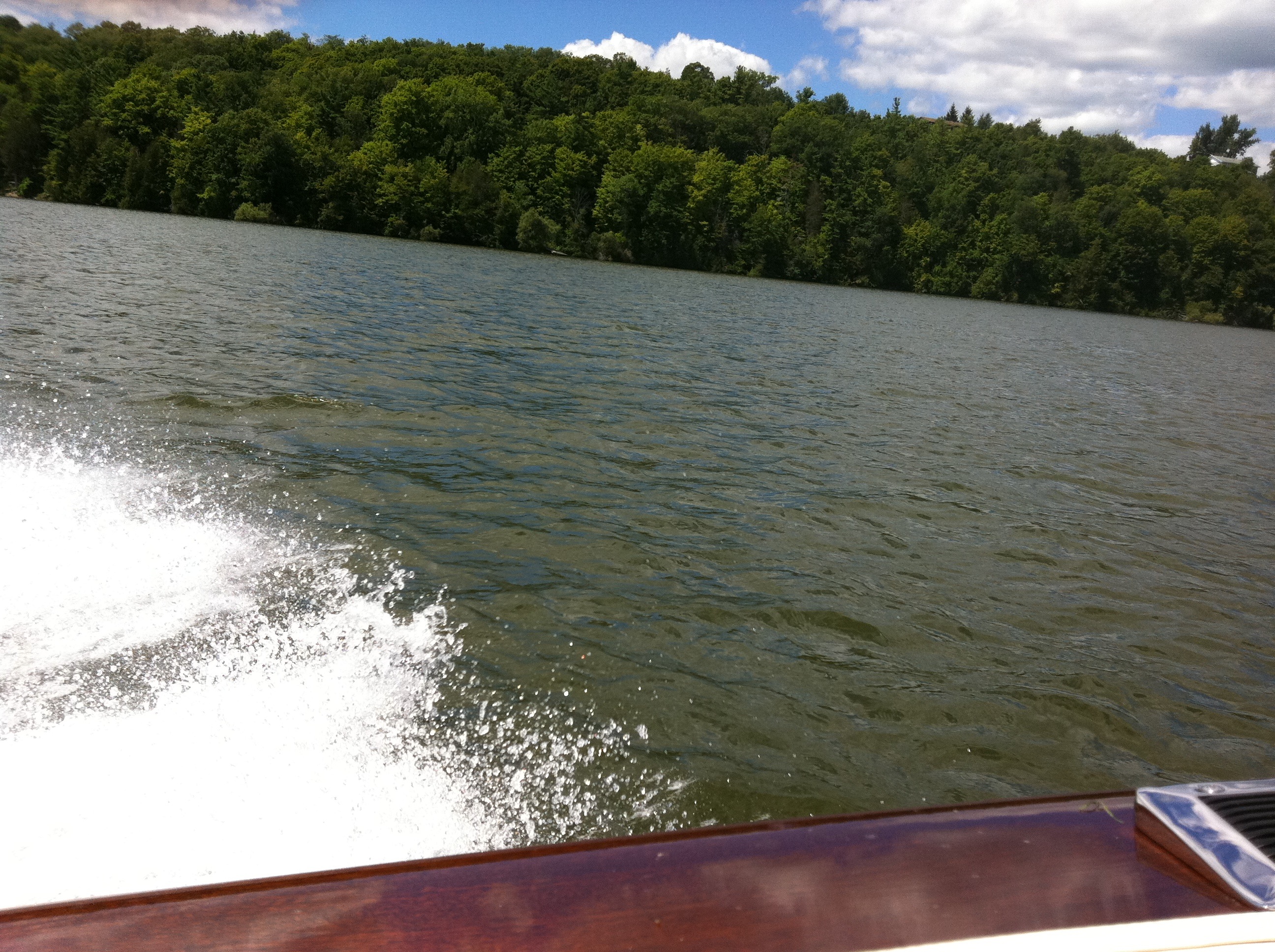
Cruising along the Bay of Quinte in the same waters Champlain traversed 400 years ago.

Cruising along the Bay of Quinte in the same waters Champlain traversed 400 years ago.

routemarked

The route I believe Champlain took on his 1615 journey.

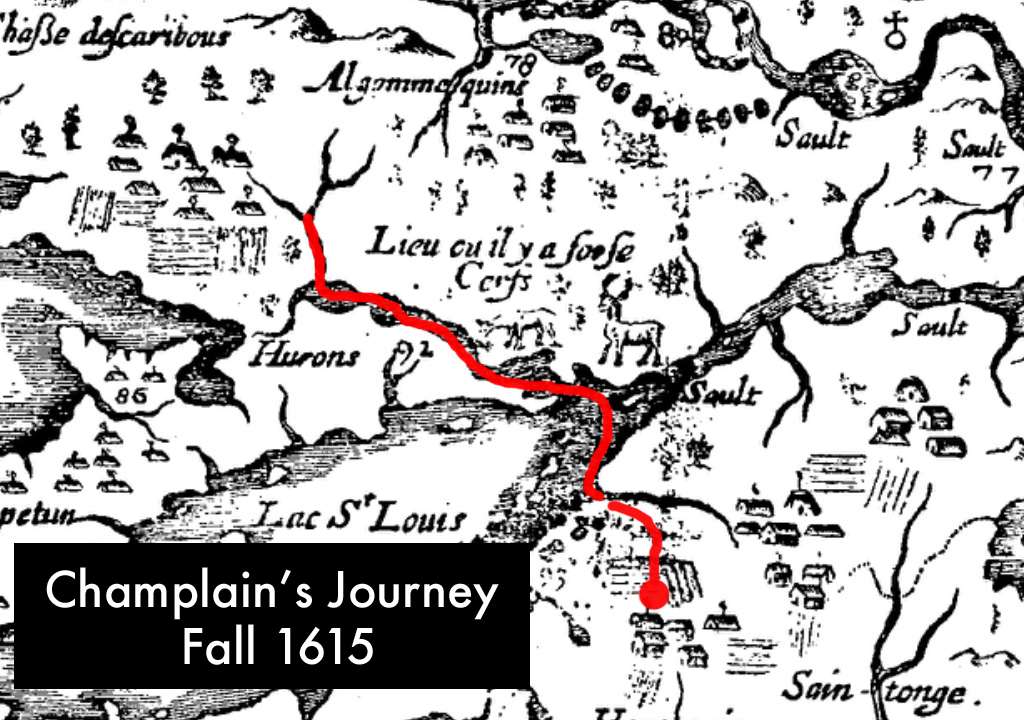
Champlain's actual map he drew of the land he explored drawn in 1632. I marked his route that he took in red.

Champlain’s actual map he drew of the land he explored drawn in 1632. I marked his route in red.


Another map of Champlain's with his route marked in red.

Another map of Champlain’s with his route marked in red.

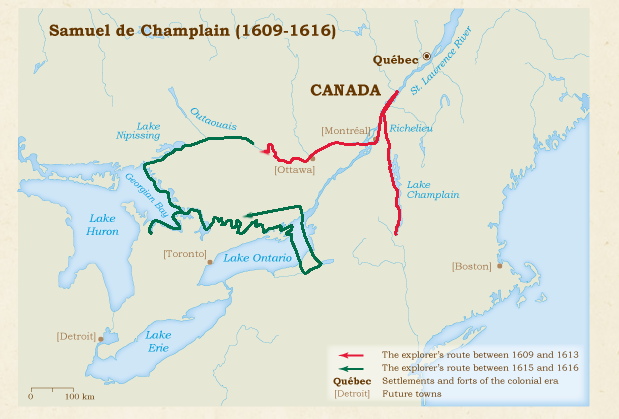
The accepted route Champlain supposedly took but I think is incorrect.

The accepted route Champlain supposedly took but I think it is incorrect.

Champlain mentions in the journal:

“we went across at the eastern end, which is the entrance to the great River St. Lawrence at latitude 43 degrees where there are some beautiful and very large islands in this passage” 

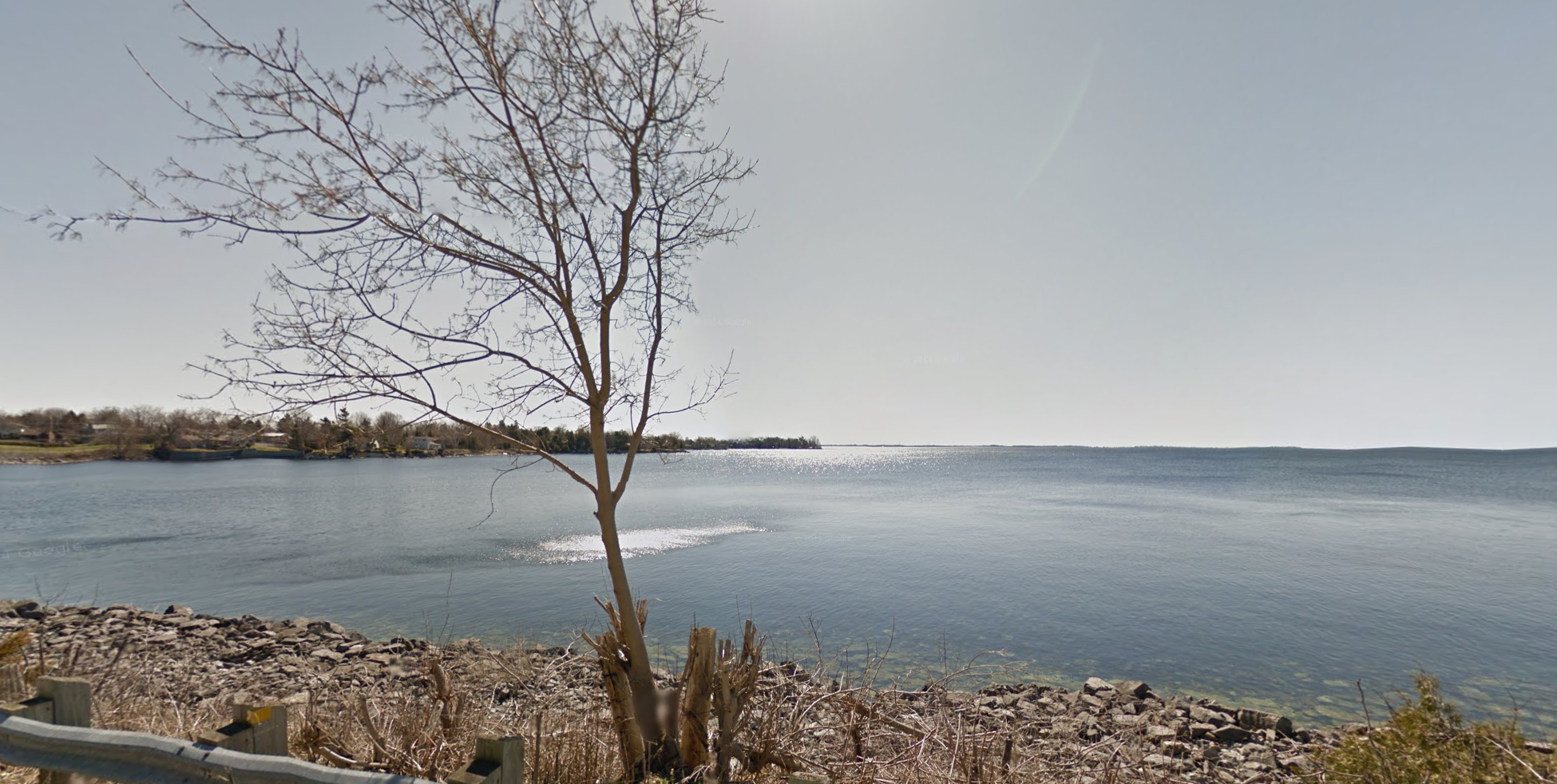
This description tells me Champlain travelled along the northern shore of Lake Ontrio to Kingston, where the St. Lawrence begins as he mentions. It is here that there are also the “VERY beautiful and LARGE ISLANDS” he mentions would have been Amherst Island, Wolfe Island, Grenadier ISland and Galoo Island. Having sailed these exact waters, I know that this would make the most logical location to traverse Lake Ontario as it is more sheltered than the open lake of the accepted Main Duck Island route.

The gap where I think Champlain went through to go across Lake Ontario.

The gap where I think Champlain went through to go across Lake Ontario.

The "large beautiful islands" Champlain makes note of oin his journal as he crossed the eastern end of the lake were lost likely Wolfe Islands, Galoo and Stony Islands to name a few.

The “large beautiful islands” Champlain makes note of in his journal as he crossed the eastern end of the lake were lost likely Wolfe Islands, Galoo and Stony Islands to name a few.

Champlain’s native companions would have known this and also being in river canoes, have most likely traversed at the far eastern end of the lake around the shelter of the islands he mentions instead of going across the open waters of the lake with its treacherous autumn winds. Also, the latitude of 43 degrees he mentions puts Champlain in the Wolfe Island/Grenadier/Galoo Island area.

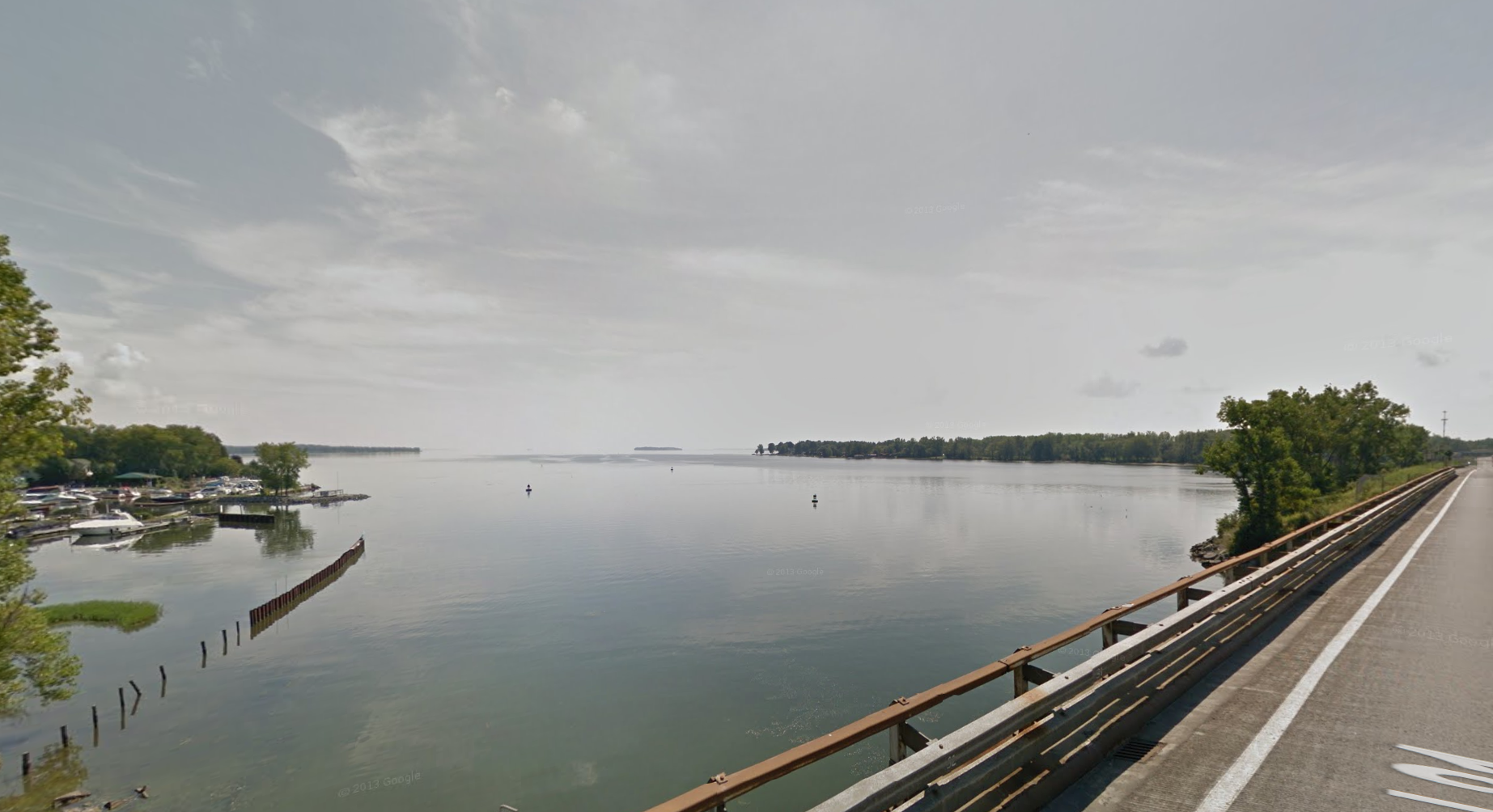
Using that area as his crossing point, the journal then mentions he traversed across “about 14 leagues to get to the other side of the lake in a southerly direction” . The distance of 14 leagues x 3.5km gives us a distance of about 50km they travelled across the lake. It is here, in late September 1615 that Champlain hit the shores of present New York state. The following journal details and description allow us to now pinpoint where this was, which I believe to be El Dorado Beach, NY.

landing beach

Where Champlain likely landed in New York state in late September 1615.

ENTERING NEW YORK STATE

Champlain explains that once they reached the shore of the enemy and hid their canoes in the woods,

“we went about 4 leagues by land along a sandy beach , where I observed a very agreeable and beautiful country crossed by several little brooks and two small rivers which empty into this lake; and a great many lands and meadows..”

Champlain’s description and clues reveal:

  • a sandy beach
  • several little brooks
  • two small rivers

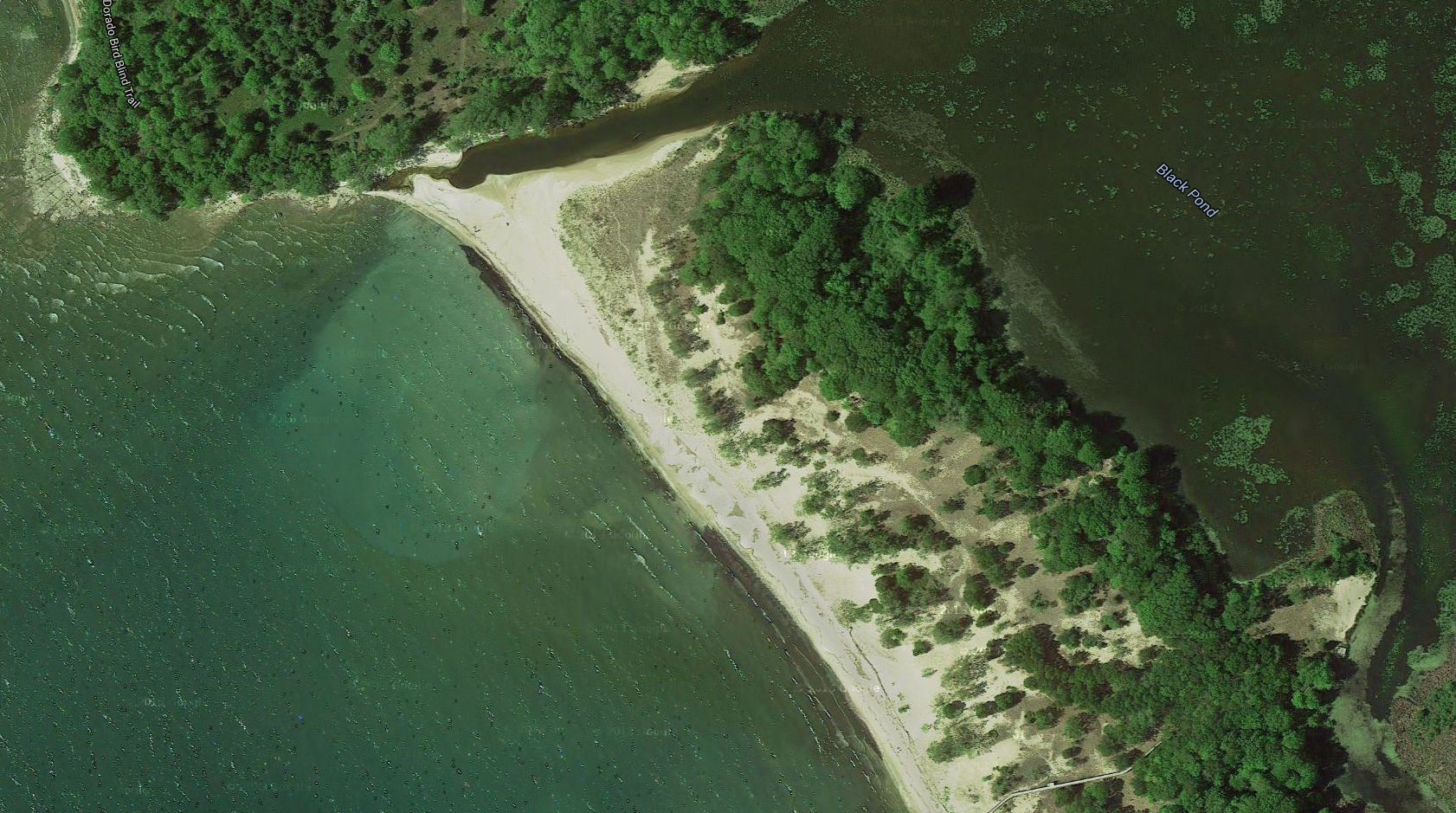
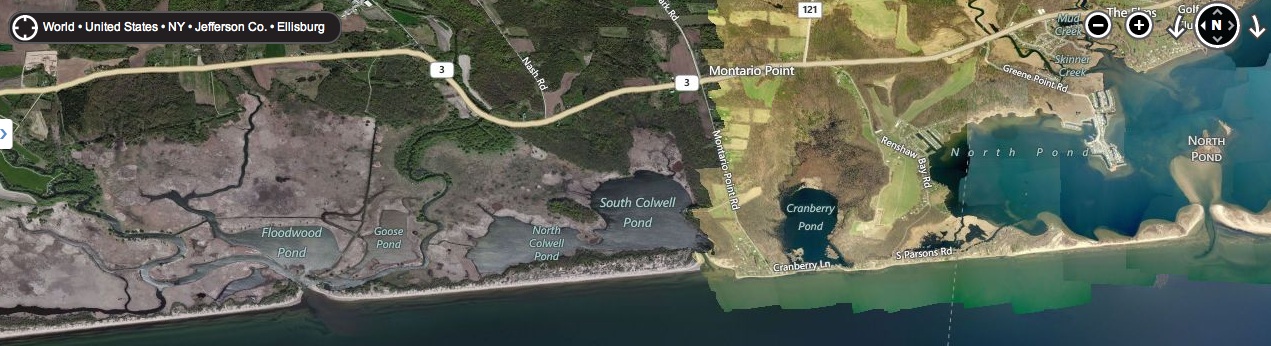
These clues all point to Champlain landing at what is now EL DORADO BEACH Preserve, just southwest of what is now Henderson, NY. NOT Hernderson Harbour as others believe. I think El Dorado Beach is where Champlain and his warriors first landed because it is a beach area that stretches south for exactly 14km that he mentions walking along (4 leagues x 3.5km=14km).

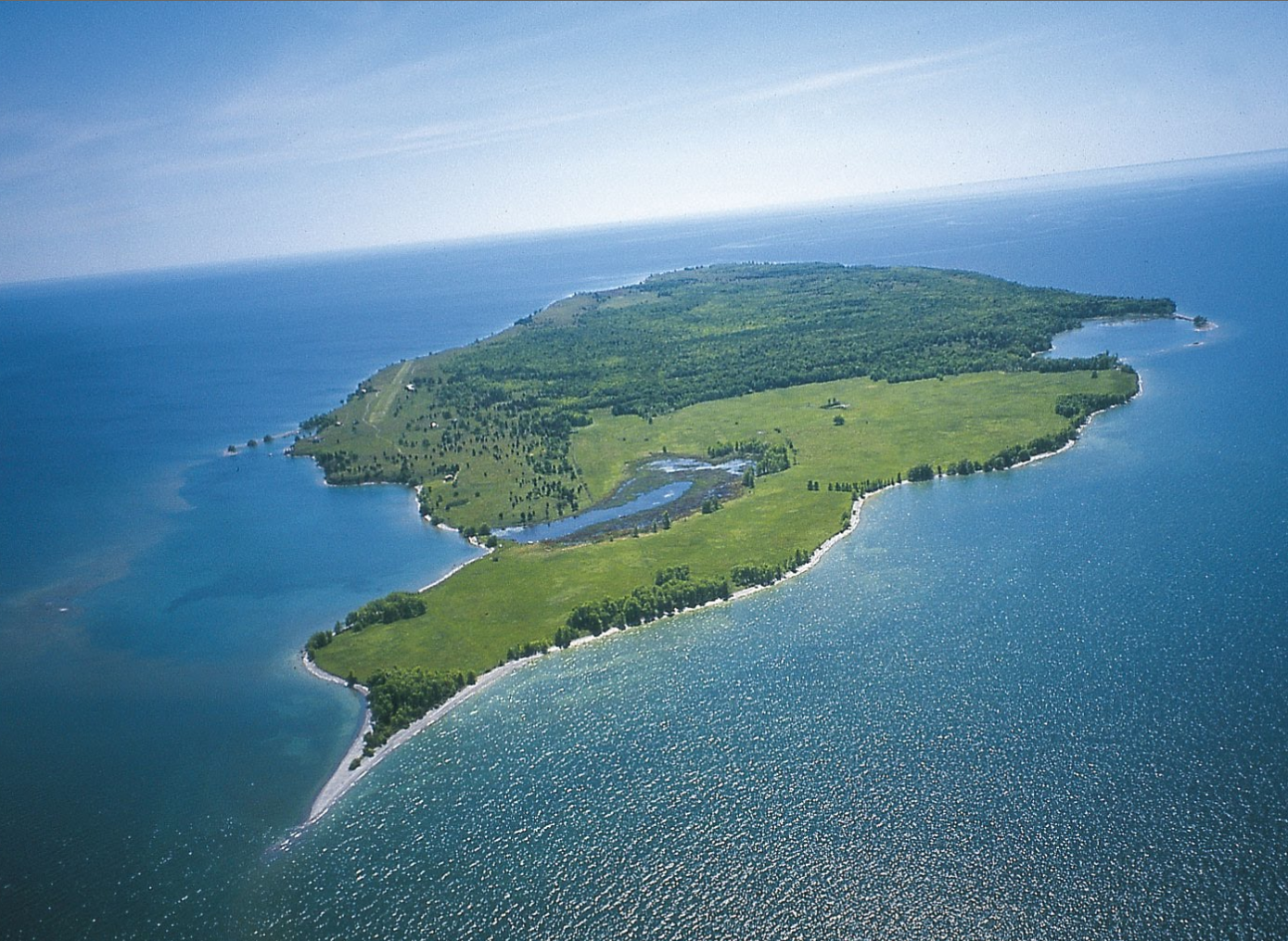
Aerial view of Champlain's landing point.

Aerial view of Champlain’s landing point.

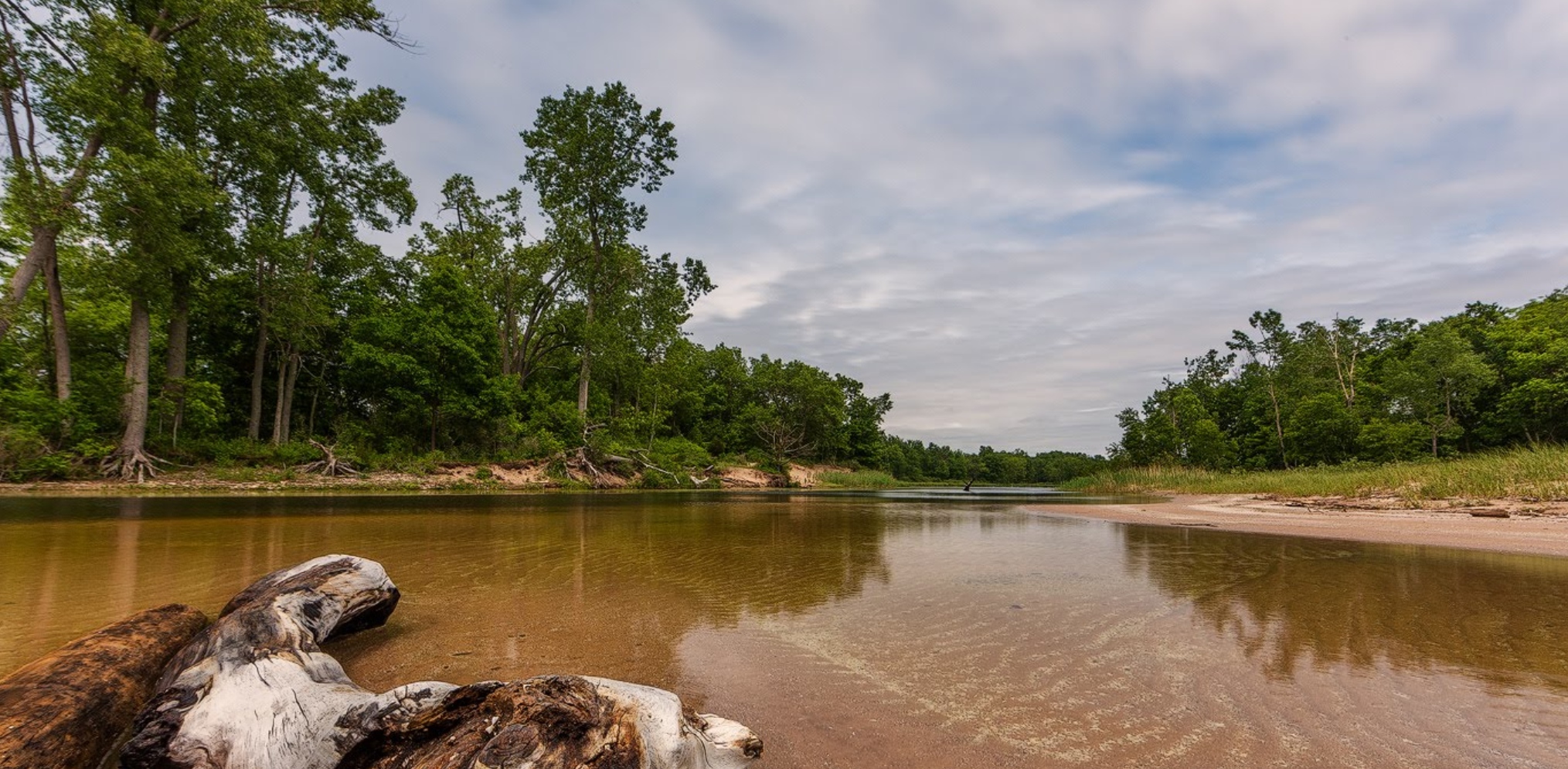
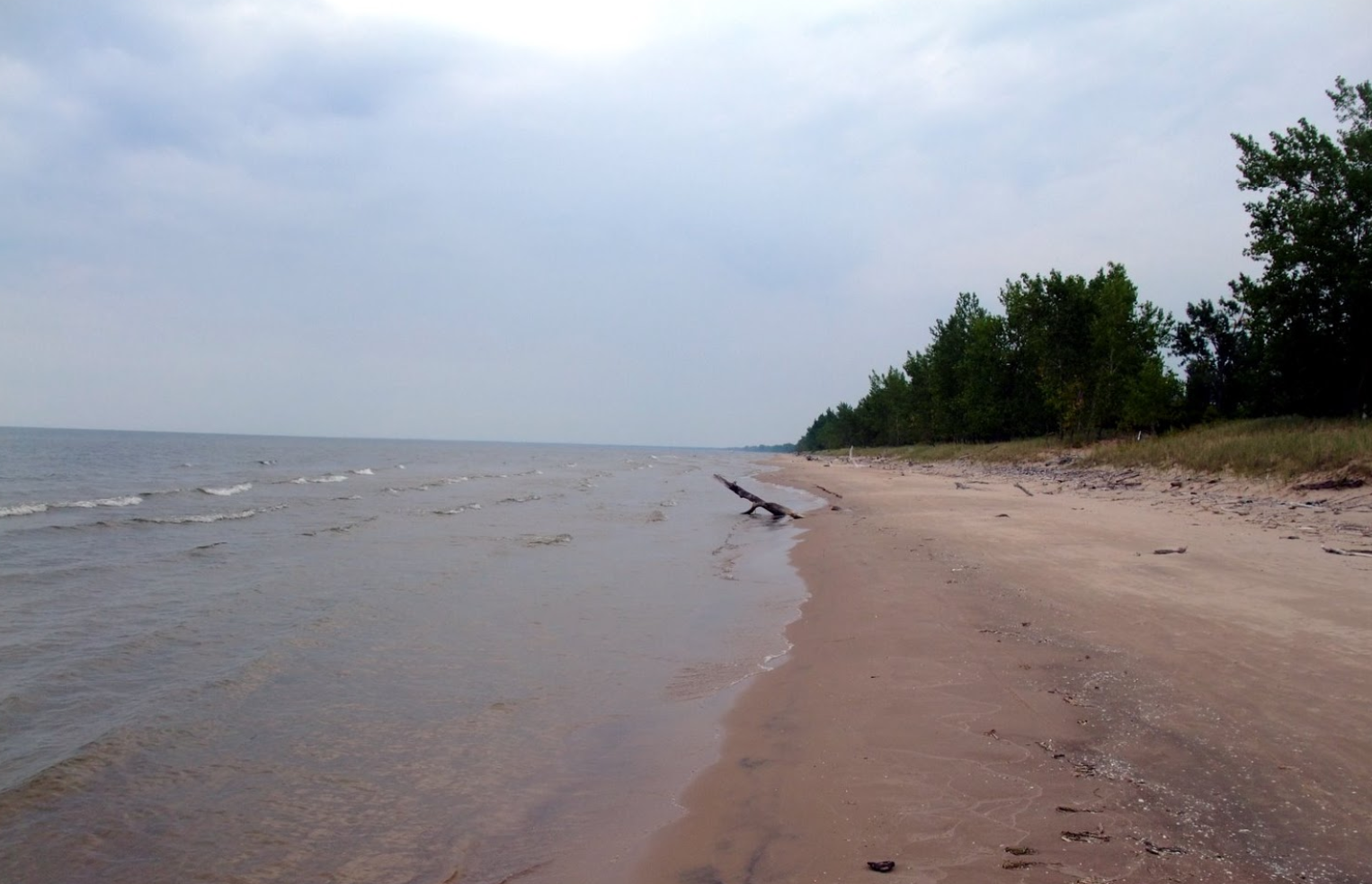
The beach Champlain walked along with his invading war party.

The beach Champlain walked along with his invading war party.

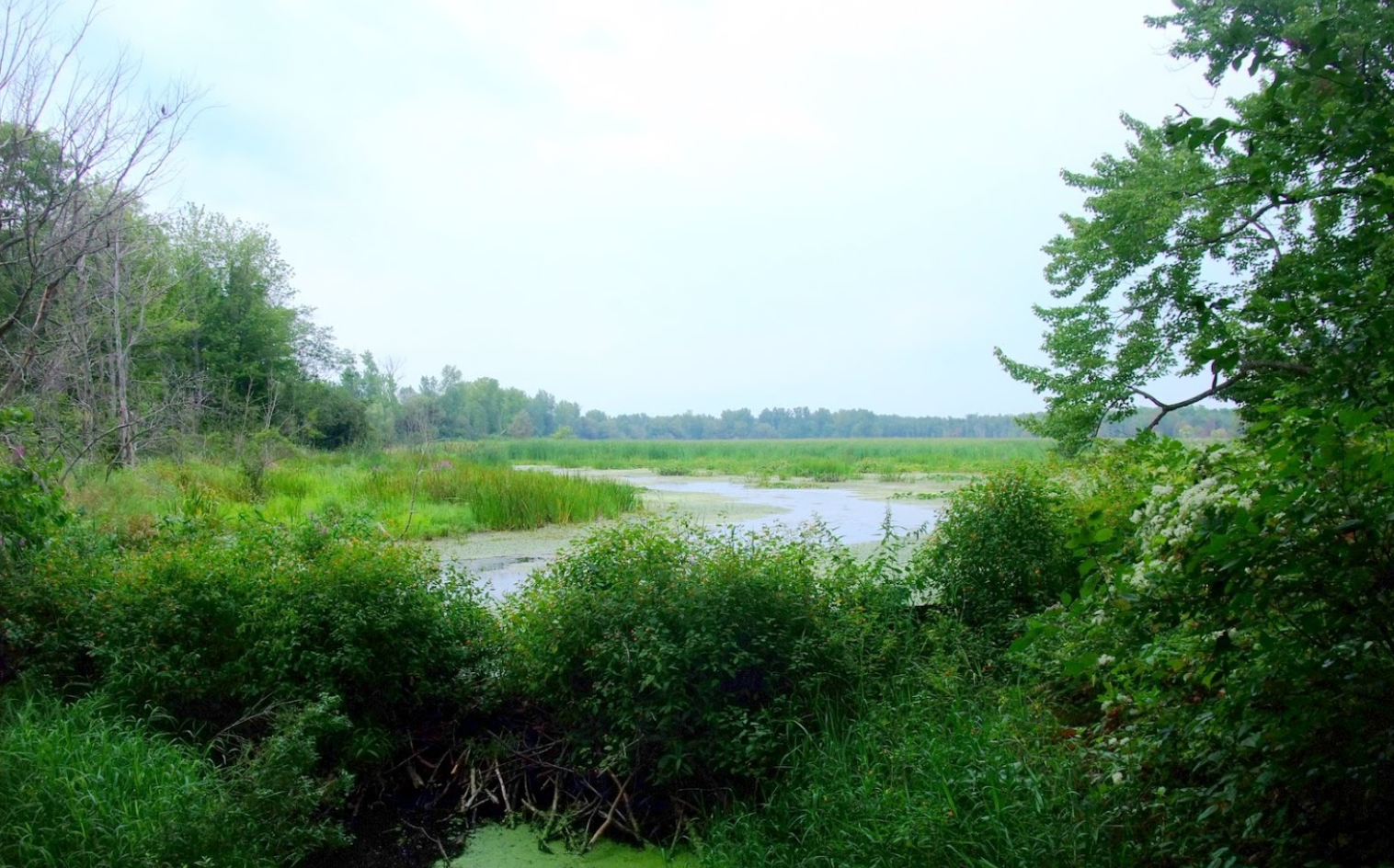
The two small rivers he mentions would be Sandy Creek and the Salmon River. The “several little brooks” would be the various creeks that dissipate in from the beach. Next Champlain mentions in his journal “a great many ponds and meadows where there were an unlimited amount of game”.

The marshes Champlain mentions with lots of game.

The marshes Champlain mentions with lots of game.

These ponds would likely be the Lakeview Pond, North Sandy Pond and many other ponds that lie behind the beach, now called Southwick Beach in New York state that he walked south along around Oct.1 1615. I am not sure if there has ever been a proper archeological investigation into this 14km stretch of beach area where Champlain landed and traversed, but I’m sure a number of artefacts lie buried in the sand from this 400 year old expedition, waiting to be discovered.


Beach Champlain walked along.

Beach Champlain walked along.

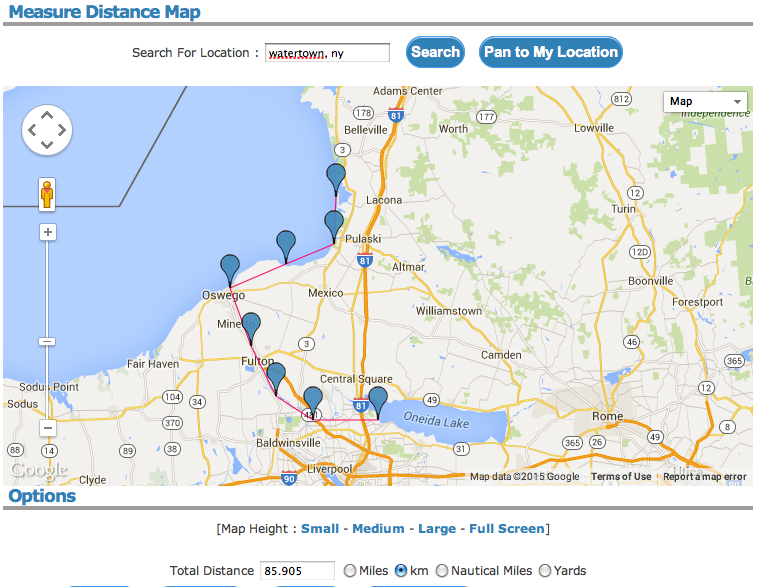
It is from this beach in NY state that Champlain continued down into Upper New York state for four days on foot through Oswego and Onondaga Counties to the Oneida River.

After walking along the coast of Lake Ontario, Champlain enters the Oswego River and follows its shores inland.

After walking along the coast of Lake Ontario, Champlain enters the Oswego River and follows its shores inland. (Google Maps)


Champlain followed the river inland to Lake Oneida that he mentions in his journal.

Champlain followed the river inland to Lake Oneida that he mentions in his journal. (Google Maps)

The inland journey Champlain would have taken.

The inland journey Champlain would have taken.

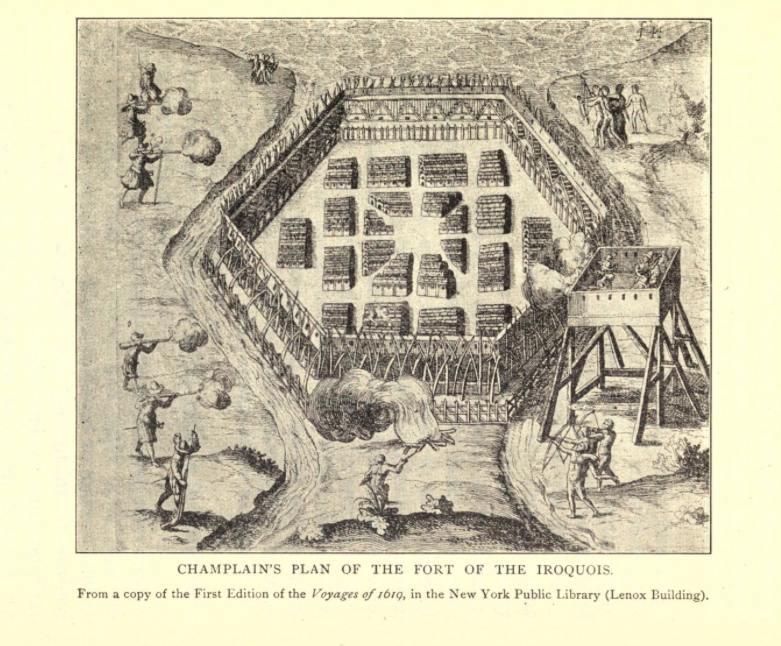
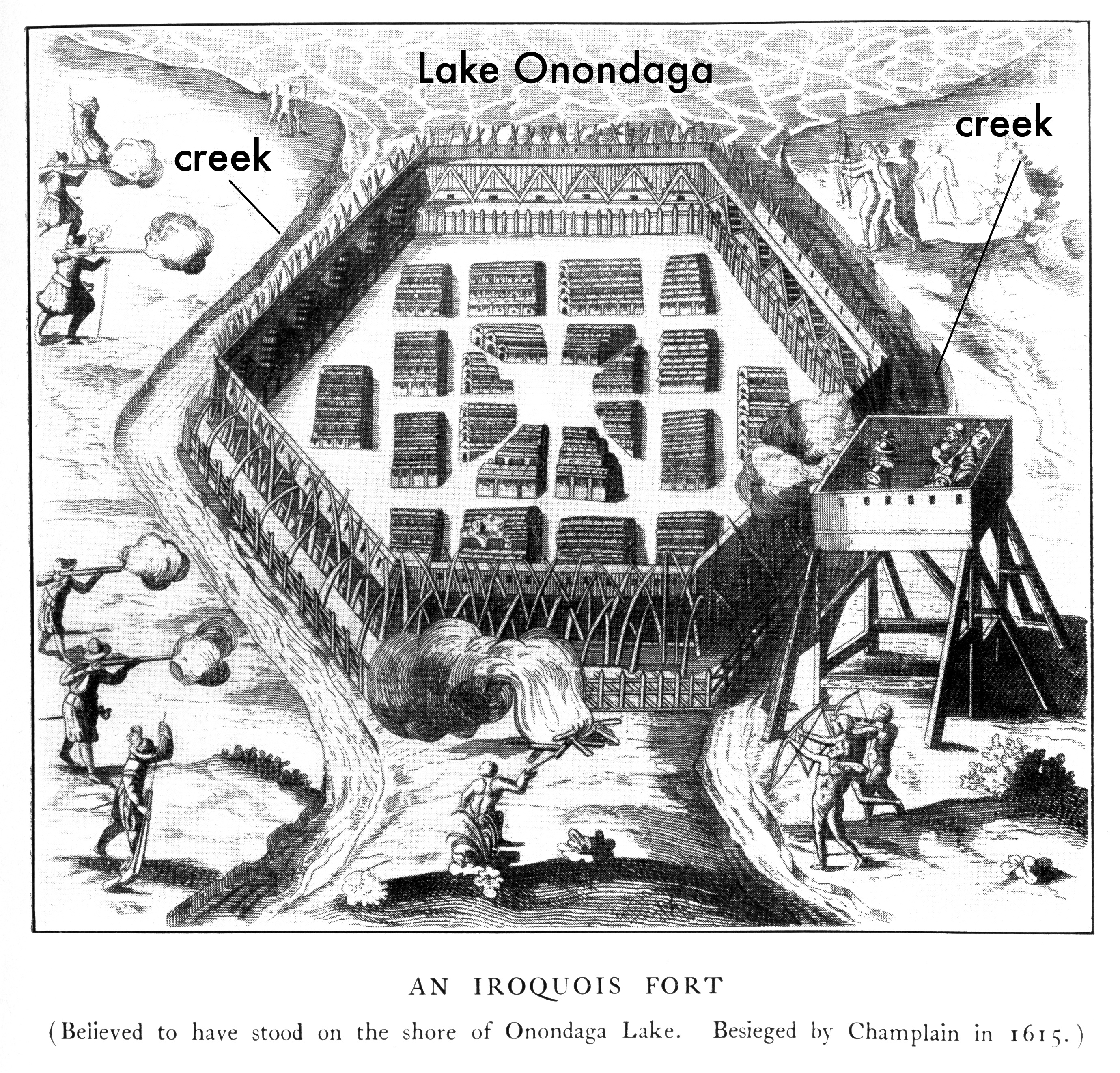
On October 9 Champlain encountered enemy Iroqouis while on scouting mission that they took prisoner. On October 10 1615, Champlain and his band of native warriors reached their destination: the immense palisaded fortress of the Iroquois.

Champlain's own sketch of the Iroquois fortress he attacked on Oct.10 1615. Note the two rivers either side.

Champlain’s own sketch of the Iroquois fortress he attacked on Oct.10 1615. Note the two rivers either side and Lake Onondaga at top.

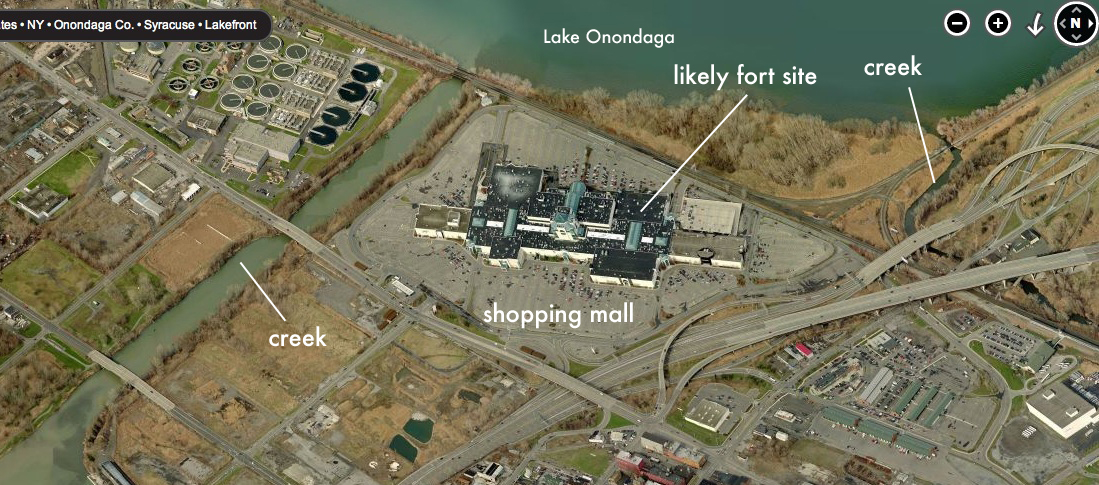
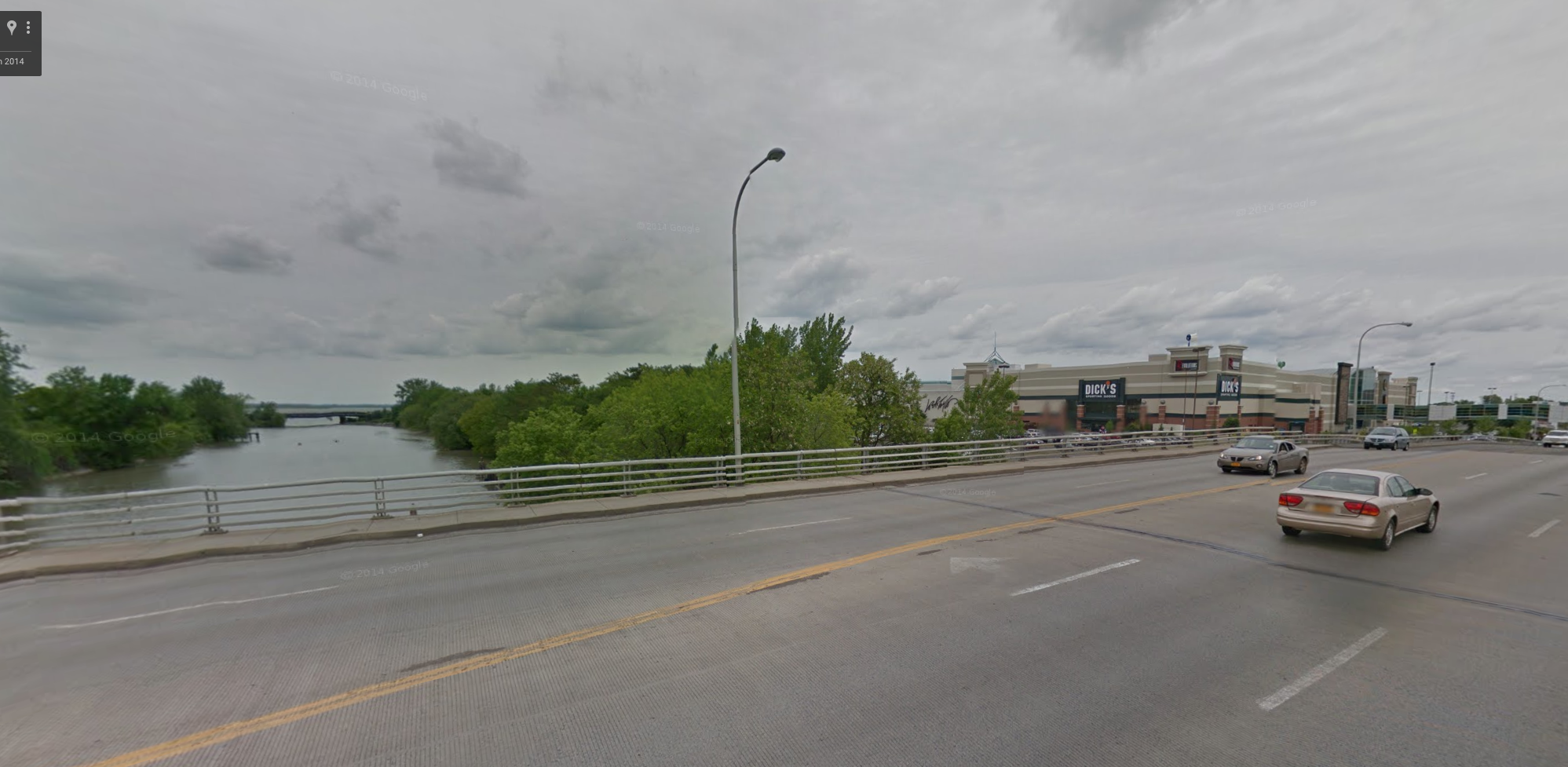
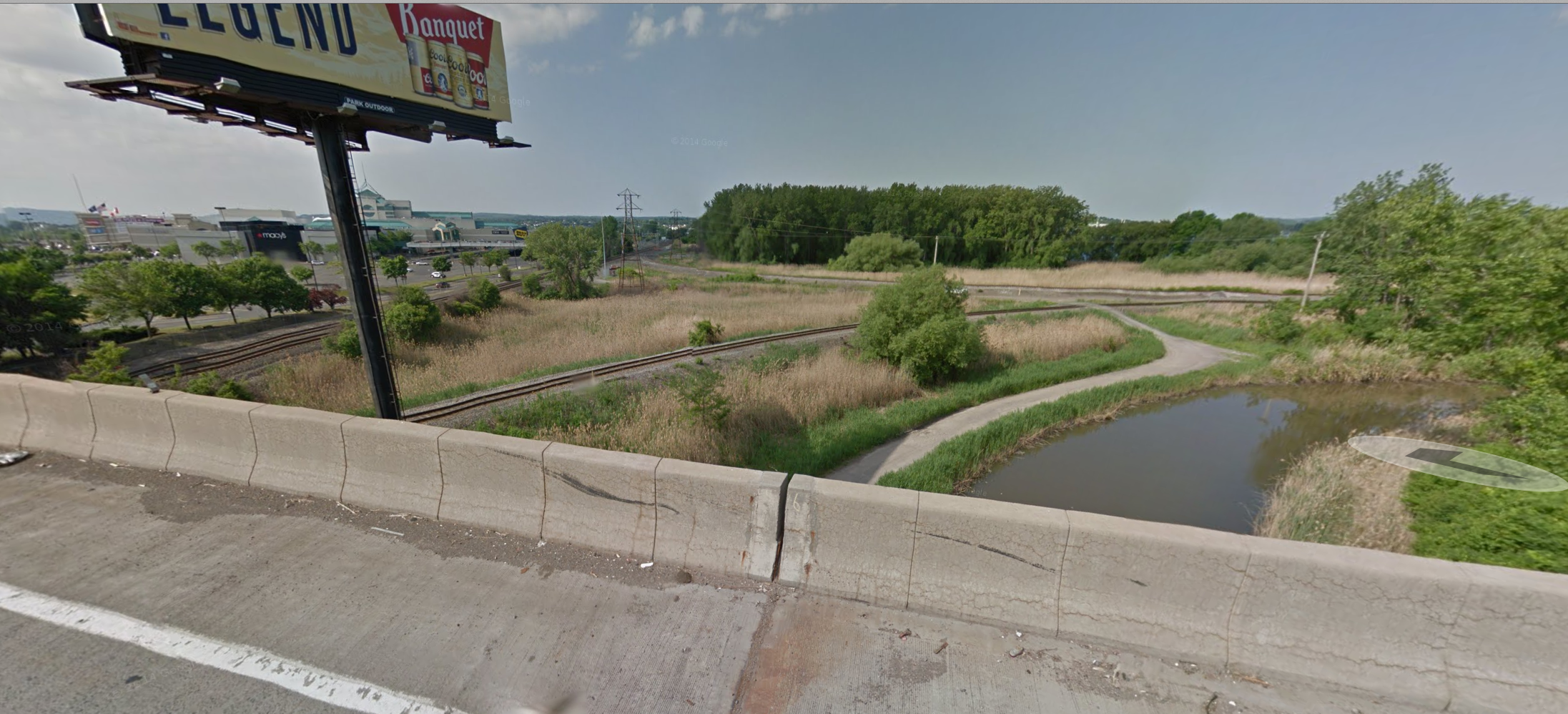
This was an Iroquois stronghold whose exact location has been the subject of much controversy due to Champlain’s scant details on getting there. Other than simply saying it was located “between two streams” there are few details that help locate where this fort would have been. In his 2009 book “Champlain’s Dream” author David Fischer speculates historians have been incorrect in their assumption the Iroquois fortress was in Fenner, NY within Madison County. Fischer postulates that the fort was probably in between two streams at the south end of Lake Onandaga in Syracuse NY where the present day Carousel Shopping Mall resides.

Where the fortress was it is now a shopping mall. Note two rivers either side.

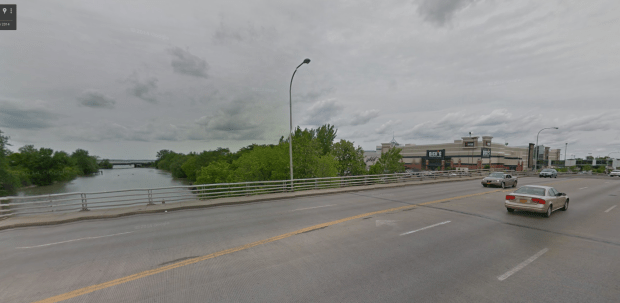
Where the fortress was it is now a shopping mall. Note two rivers either side.


iroquoisfortress

Streetview of where the fort likely stood. Now a Syracuse shopping mall.

Streetview of where the fort likely stood. Now a Syracuse shopping mall.

Other side showing the other river that surrounded it.

Other side showing the other river that surrounded it.

On October 10 Champlain began his assault of the enemy fortress, firing his arquebus at the enemy who retreated in shock of having never seen or heard such a weapon. An ensuing battle brought causalities and injuries to Champlain’s native companions who soon retreated in the woods surrounding the fort. The Iroquois fort was a hexagonal shaped wooden fortress made with high walls of sharpened log palisades. Champlain gave orders to burn the walls down and build a series of devices to penetrate the walled fort. Counting on being joined by 500 hundred other warriors from the north, Champlain set to work on a full on offensive attack of the Iroquois fort with disastrous results. The accompanying warriors did not take any orders from Champlain who was trying to rally his troops into some kind of sensible attack formation. Champlain recounts how the native warriors ran around in disarray without a proper plan of attack which frustrated him greatly, but Champlain “excused” them for their behaviour.

The complete route I believe Champlain took in 1615.

The complete route I believe Champlain took in 1615.

With his troops in disarray and two native chiefs injured in the failed attack, Champlain retreated to his own hastily made wooden fort with having sustained two enemy arrows lodged into his leg. The arrows had pierced his knee and leg which required attention and caused the explorer great pain. Camping out in their fort and enduring a number of further skirmishes until October 16th, Champlain joined his companions on a full scale retreat. With the enemy following Champlain’s team for about a couple of kilometres before retiring back to their fortress, on October 18th Champlain reached the beach of Lake Ontario from where they originally landed. Fighting snow, hail and cold winds, Champlain found their concealed canoes still near the beach and loaded up for a return across Lake Ontario to Kingston. Champlain pleaded to be returned to his settlement. Constructing a camp on the beach area near Henderson, NY, the team packed up on October 28th and as Champlain recounts:

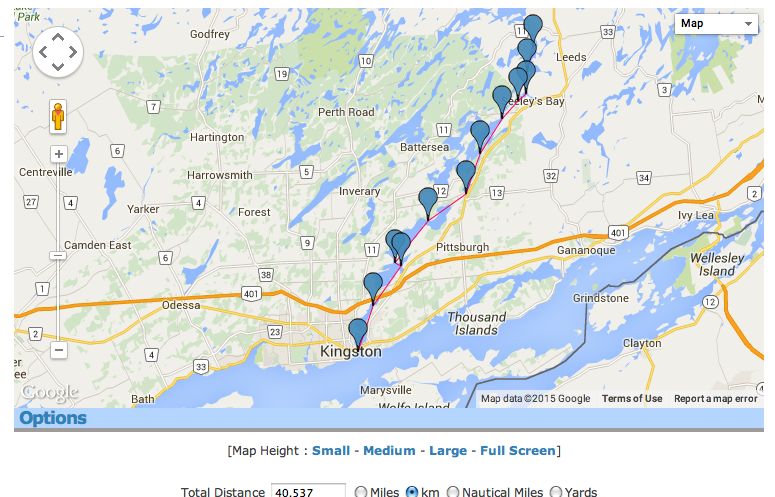
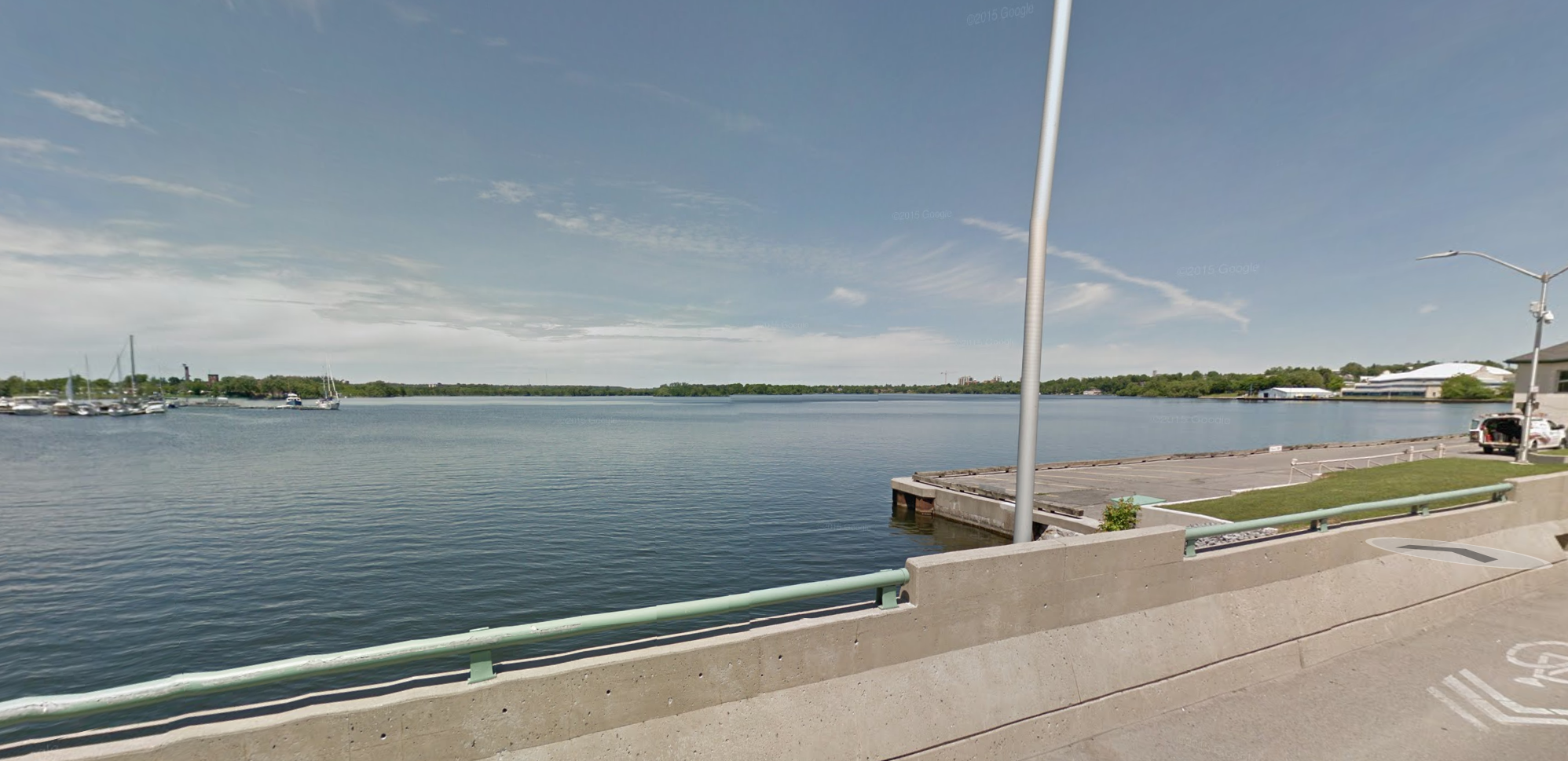
“after crossing from the island, the end of the lake, we entered a river some 12 leagues in length”. This I believe to be Cataraqui River, now part of the Rideau canal system.

Cataraqui River Champlain I think ventured up on his return journey.

Cataraqui River Champlain I think ventured up on his return journey.

This entry most likely refers to crossing “from the island” which would be Wolfe Island, over to Kingston, On and into the Cataraqui River. When we apply Champlain’s “12 leagues in length” it calculates to be 42km up the Cataraqui River, placing Champlain up near Seeley’s Bay, ON. and Whitefish Lake. Another possibility that works is that they took Millhaven Creek across from Amherst Island and up the 42km distance to Sydenham Lake. However, I strongly believe it was the former route mentioned since I have travelled down both, and Millhaven Creek is more of a trickle of a stream that would make canoe travel near impossible. This leaves the Cataraqui River as the most likely option and matches the “marshy” description in his journal.

View of the entrance to the Catarqui River from Lake Ontario.

View of the entrance to the Catarqui River from Lake Ontario.

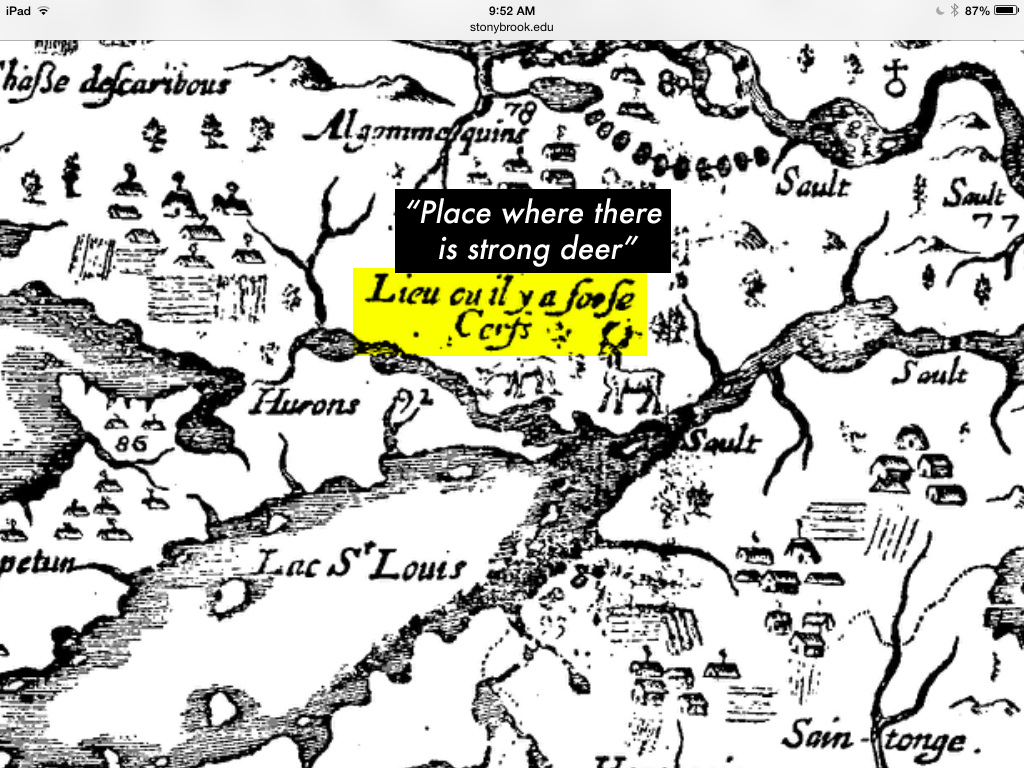
Champlain’s group built two or three log cabins most likely on the shores of Whitefish Lake, where a great deer hunt was established using native hunting methods of building traps and deer capture enclosures. This “great deer hunt area” is marked on a map made by Champlain in 1632 that is marked “Lieu Ou il y a Forte Cerfs” which when translated means “place where there is strong deer”. Having grown up in this area I can attest to the fact that even to this day there is a an abundance of deer in the surrounding woods.

Champlain's map mentions the site of a great deer hunt he participated in. This matches to the area north of Kingston.

Champlain’s map mentions the site of a great deer hunt he participated in. This matches to the area north of Kingston.

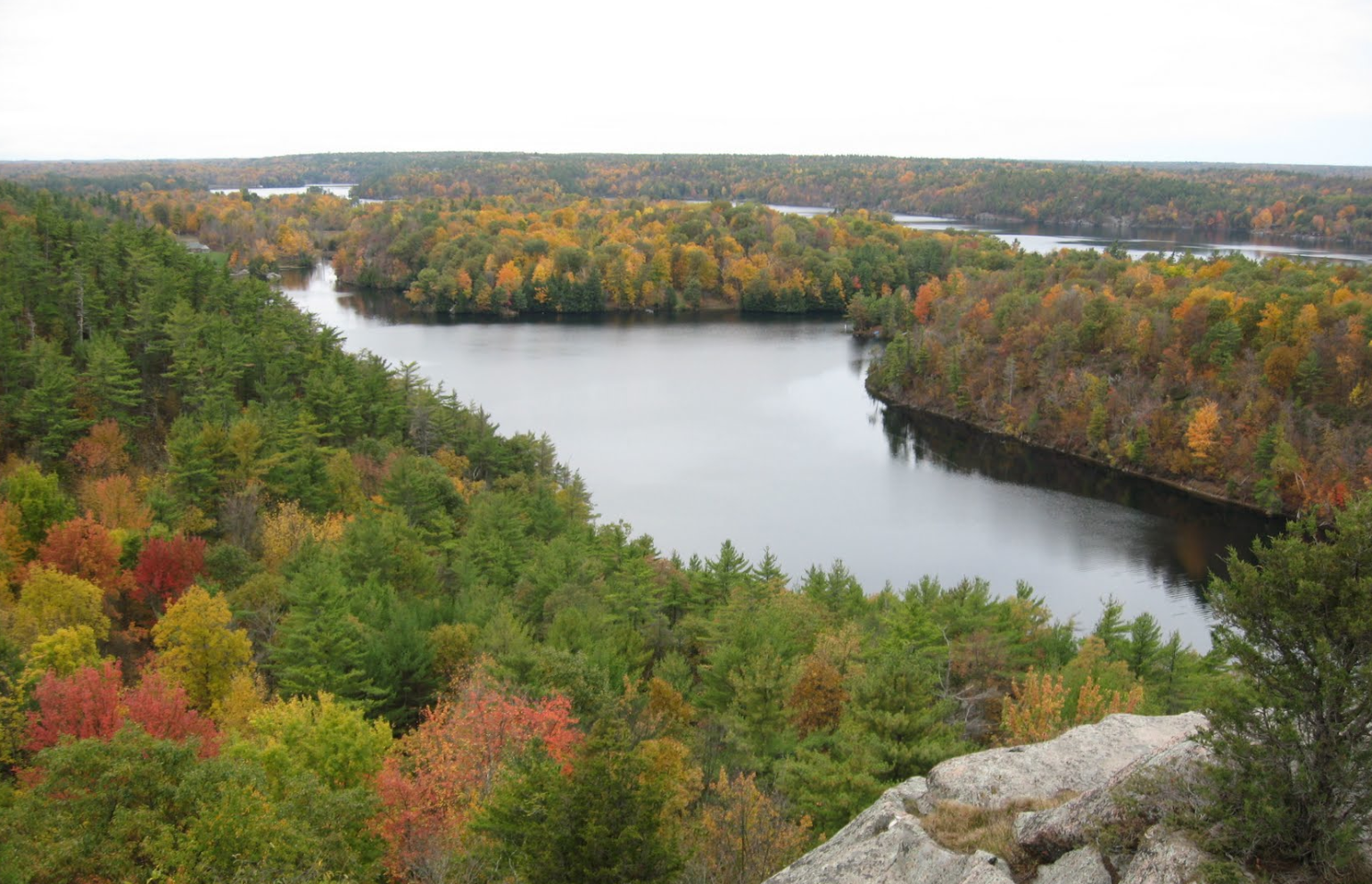
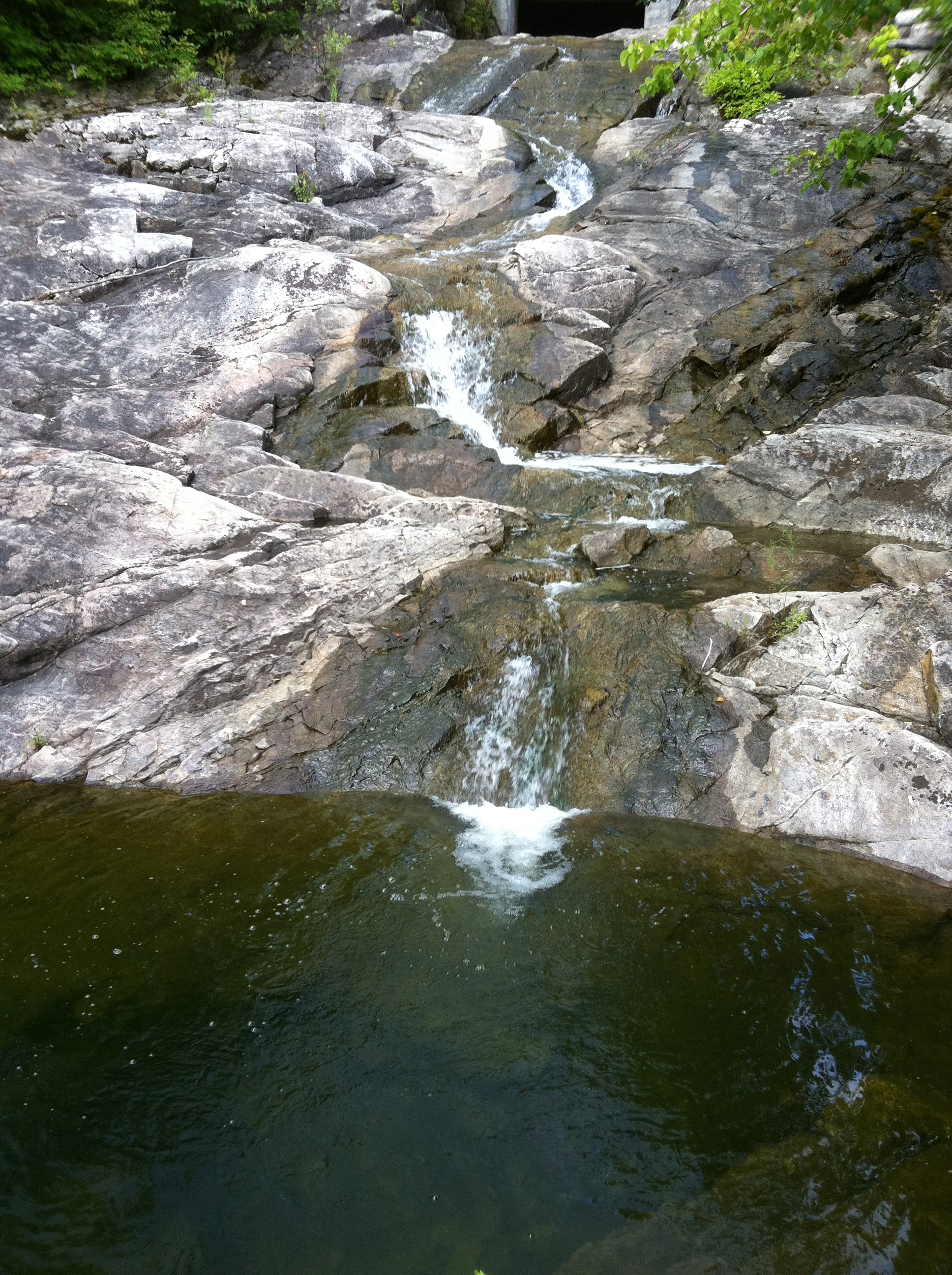
Champlain at this point on his adventure gets lost in the woods of which he transcribes into his journal in detail. Having wandered off trying to capture an unusual bird he had spotted, Champlain was separated from his native companions and was lost in the woods North of Kingston for days. Spending the first night at the foot of a massive tree, Champlain trudged on and came to a pond where he killed some birds of which he ate to survive. In what he describes as being about 5-6 days lost and wandering the woods north of Kingston, probably in the vicinity of Jones Falls where he came across a stream that he followed to a small lake about 4km in length which could very well have been on Whitefish Lake before the building of Rideau Canal in 1830 had flooded the land. Champlain mentions hearing a great waterfall and being surrounded by mountains, of which were probably Jones Falls and the mighty and nearby Rock Dunder mountain area respectively. There are no large mountains per say anywhere west of the Frontenac Axis geographical formation of which his terrain descriptions match.

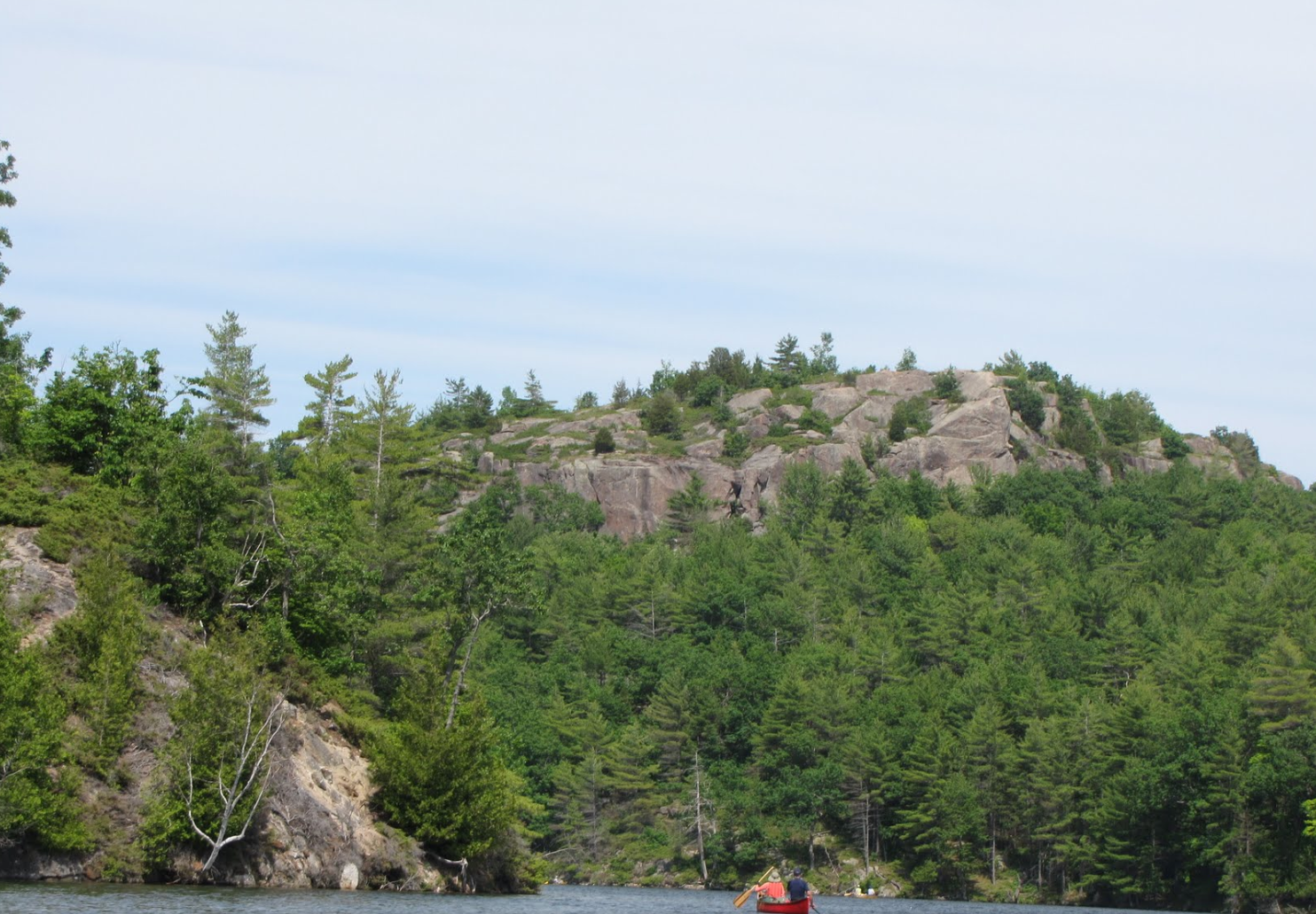
Whitefish lake as viewed from a mountain Champlain mentions in his journal.

Whitefish lake as viewed from a mountain Champlain possibly mentions in his journal, Rock Dunder.

Chmaplain mentions the sound of a waterfall in his journal, which was likely the sound of the mighty Jones Falls before it was dammed up for the Rideau canal.

Champlain mentions the sound of a waterfall in his journal, which was likely the sound of the mighty Jones Falls before it was dammed up for the Rideau canal.

Following the river Champlain was finally re-united with his worried native companions who told Champlain that if had not returned, they would never again meet with the French in fear that they would think they had killed Champlain. It is something to contemplate that history could have been much different if Champlain remained lost in the woods and perished north of Kingston.

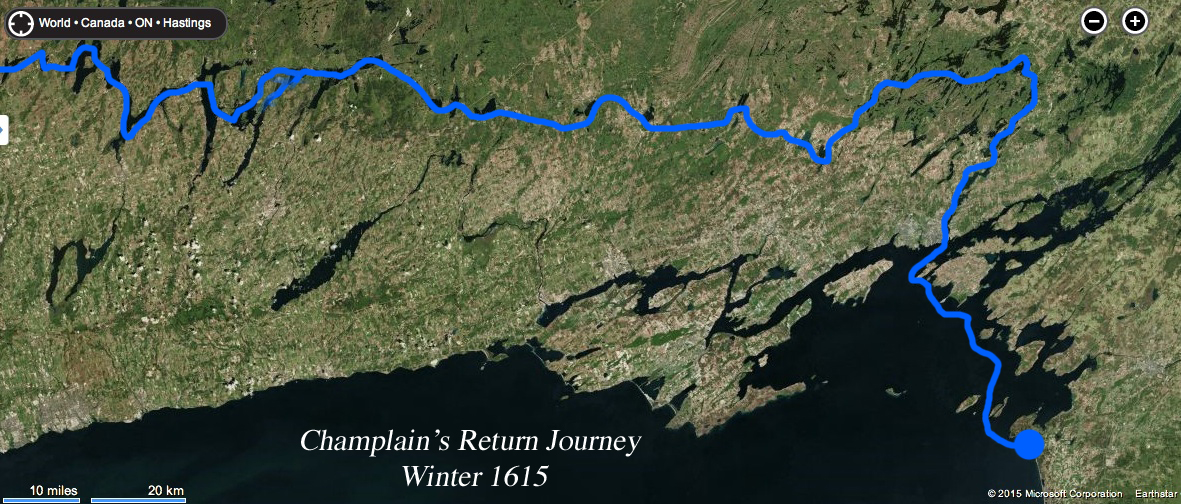
The return journey Champlain took in the late fall early winter of 1615.

The possible return journey Champlain took in the late fall early winter of 1615.

rock dunder2

A mountain Champlain mentions, could be Rock Dunder near Morton, ON, the highest point in Eastern Ontario.

From here, after spending about a month in the area north of Kingston, Champlain departed on December 4th and headed north west across frozen ponds and rivers, most likely traversing the areas of Tweed, Madoc, and the Kawarthas to arrive at their originating native village on December 20th. It is here where Champlain’s adventure concludes and spends the winter among the natives before returning to Quebec and later France.

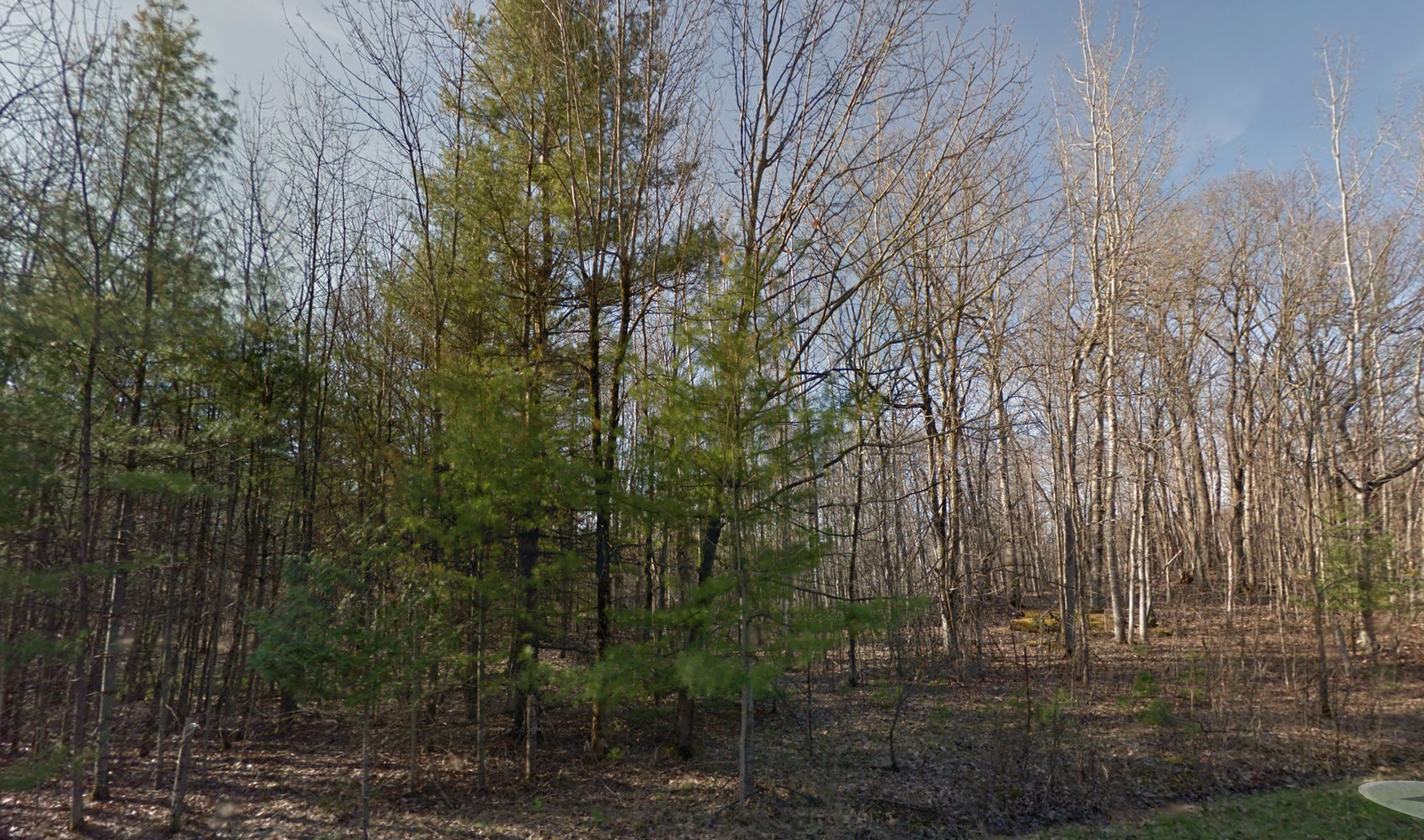
Wooded area north of Kingston Champlain traversed in the winter of 1615 on his return to Huronia

Wooded area north of Kingston Champlain traversed in the winter of 1615 on his return to Huronia

CONCLUSION

Using Champlain’s journal and its descriptive details of landmarks and terrain, along with his units of league measurement we can put together a fairly accurate recreation of his journey four centuries ago. Of course it has a margin of error and speculation, but as previously mentioned, I have traveled these exact same areas and found many elements to match his journal descriptions.  With this year marking the 400th anniversary of this epic journey it might be worth considering archeological teams from both Canada and the United States search the areas of this route for possible remnants of Champlain’s epic adventure 400 years ago into what was then, the unknown.
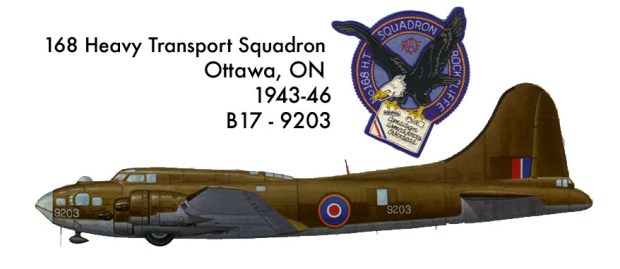


MYSTERY OF THE STONE CAIRN

A mysterious stone structure stumbled upon in the woods high atop a geological formation.
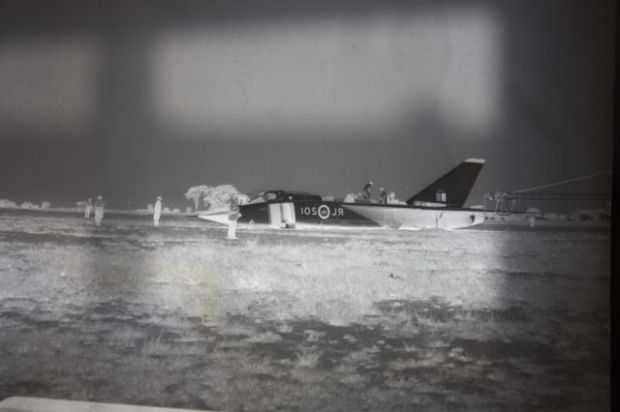
A mysterious stone structure stumbled upon in the woods high atop a geological formation.
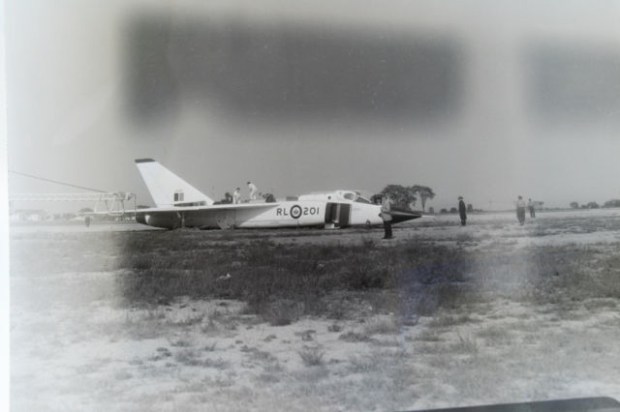
During a recent camping trip along the Rideau Waterway I went for a brief hike into the woods near our campsite at Davis Locks and stumbled upon an interesting geological formation. This extensive outcropping of unusual rocks on Lake Opinicon had me take a closer look which led me to a rugged cliff like area. A collection of strewn stones and odd formations were visible that looked curiously man made. Of course wanting to investigate further, I climbed these rocks for about 20 minutes to the summit where tucked beneath a stand of trees I came across an unusual stone cairn. It’s purpose unknown, the structure was compiled of rocks piled into a rectangular formation with purposely placed stone steps leading into it. The stones of the structure were placed atop an existing boulder protruding from the ground, as well as a split rock also situated in the ground. It looked like a kid’s fort built on the top of a cliff. Yet it seems like a lot of effort the kids went to  in building the structure, but perhaps kids years ago were more resourceful than kids today. I inspected the structure for other details that may reveal its purpose, but still the answer was not clear. I photographed it and proceeded to descend the cliff back to camp. Eventually I wanted to ask others what they thought it was to see if we could solve the MYSTERY OF THE STONE CAIRN.
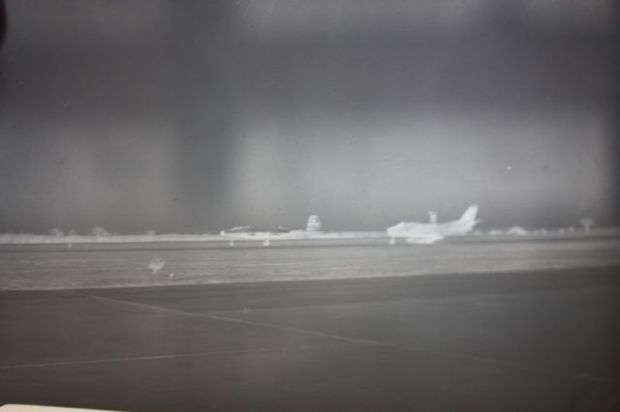
Situated on the top of the cliff, the structure looks like it has been undisturbed for years.

Situated on the top of the cliff, the structure looks like it has been undisturbed for years.

Returning to Ottawa I emailed some photos of the mystery structure to experts in the field of archaeology to see if they could give their opinion as to what it was. A response soon came back that it was some sort of old mining operation structure, a flagpole base or a lime kiln. I personally don’t think it could be a mining operation since I have come across these before and there is no indication the area had any active mining. With the canal lock in close proximity a flag pole base could be an option, but the size of the structure measured about 8 feet by 6 feet and about 4 feet tall, which makes it seem like an unusual candidate for a flag pole base. A kiln is a possibility, but it seemed so crudely put together that it seems unlikely it would be used for heating/kiln purposes.

Stones had been placed in an obvious

Stones had been placed in an obvious “staircase” formation that leads into the cairn.

Purposely placed cut stones that form stairs into the stone structure.

Purposely placed cut stones that form stairs into the stone structure.

Doing my own research into what it could be, a looked into the previous history of the land where it rests. Research shows the parcel of land was first owned in 1797 by a Loyalist by the name of Walter Davis from Connecticut , of which the lock is named after. A former member of the American Rangers, Davis moved to South Crosby Township where he set up new life for himself as a Loyalist, building a home and mill on the site of rapids that once connected Lake Opinicon to Indian Lake. This would later be taken over by Col.John By during the construction of the canal system in 1826 when the locks were constructed and the rapids diverted and channelled elsewhere.

The structure measures about 6 by 8 feet and is about 4 feet tall. The interior is filled with unknown material.

The structure measures about 6 by 8 feet and is about 4 feet tall. The interior is filled with unknown material.

Did Davis build a stone lookout atop the cliff overlooking his property? The structure is situated on the highest point of land that overlooks both lakes and commands an impressive view where you would be able to see anyone approaching for miles. As a former American Ranger, perhaps Davis knew to take the strategic high ground to build a mini stone fort lookout. However, why was this not destroyed in the almost 200 years it could have been sitting there by the various other people that came into the area?

A map from 1880 shows the area and a

A map from 1880 shows the area and a “Store Ho.” is marked in the vicinity. Is this the storehouse made of stones?

I contacted another source who may have answers, a historian who specializes in the history of the Rideau canal. Upon receiving the photos of the structure he was also mystified as to its purpose and given the GPS coordinates, went to investigate for himself and inspect it for clues that may reveal its purpose. Upon closer inspection he concluded it is just a “children’s fort” and which could date it to almost any period (1800s or even early 20th century).

Rocks are piled neatly on top of existing ground boulders.

Rocks are piled neatly on top of existing ground boulders.

This conclusion is in part because he could not can’t see any other purpose for it. He quotes from his investigation it is “Sloppily built (so not an official structure) and uses local field stones. The few squared stones actually appear natural or minimally worked (I can’t see any obvious tool marks) and they clearly form steps into the structure.” However, he still thinks it is open to other theories and says his analysis is “just a guess on my part, I’m not an expert, so still open for interpretation. However I don’t see it as anything Walter Davis Jr. would have done, there’s no reason for it.”
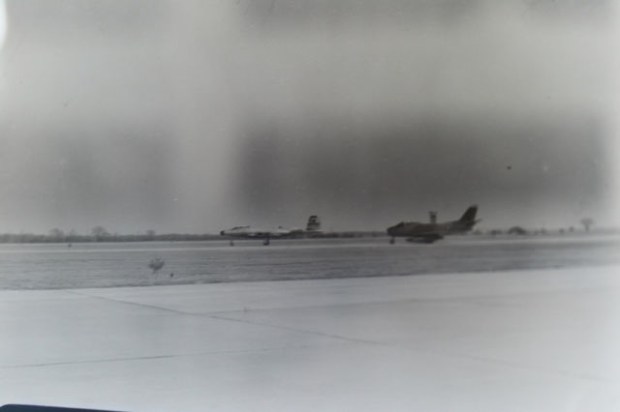
Tucked out of sight the structure is on the highest point in the area.

Tucked out of sight the structure is on the highest point in the area.

Looking further into the land owner Walter Davis who is from Connecticut, I attempted to see if there was a connection to the state he came from. Perhaps there was a typical North Eastern United States stone building technique that was common to that area Davis brought with him to Canada. A quick Google search revealed that Connecticut, New Hampshire and Vermont all have an incredibly high number of these mystery stone cairns as well. Is there a connection to some kind of Eastern US farming practice? Maybe they used these stone cairns to burn brush or store garbage.

A similar stone structure in Connecticut.

A similar stone structure in Connecticut. (photo: StoneStructures.org)

Another theory put forward by a historian is that these mystery stone cairns are based on aboriginal spiritual practices built by the indigenous people of the area. “Stone Structures of the NorthEastern United States” is a website dedicated to the study of these mystery stone structures found in the woods and forest regions of the NorthEastern United States. They refer to these structures as a “cairns” which are “an intentionally constructed pile of stones. It is built one stone at a time. Cairns have been used by humans in the northeastern United States as far back in time as 5,000 years ago and continue to be used today. Cairns were built by both Native American Indians and white settlers. They were used by the Native Americans for ceremonial purposes and by white settlers for utilitarian purposes.”

Another North Eastern United States Stone Cairn structure.

Another North Eastern United States Stone Cairn structure that is similar. (photo:StoneSturctures.org)

Comparisons of the Opinicon stone structure and the ones presented at Stone Structures.org are almost identical. They give an example of a cairn that uses a “base stone” the same as the Opinicon cairn. The base stone cairn is built upon an above ground boulder, below ground boulder with exposed top, above ground bedrock called an outcrop, or surface level exposed bedrock. Base stone ranges from ground level up to three to four feet high.” The use of a split stone in the base, also like the Opinicon Cairn “exhibits a total split or crack in the base stone. Split stone cairn sites are said to be a spirit portal to the Underworld, utilized by Native Peoples during a “Spirit Quest”. In his book “Vision Quest” author Steven Foster recounts how the piling of stones to form a structure is an ancient practice of “communication” between the living and the dead, where you would enter the structure and connect with loved ones passed and the spirits of nature. Foster says they are usually constructed at a “beautiful. prominent place, where it could be found easily.”
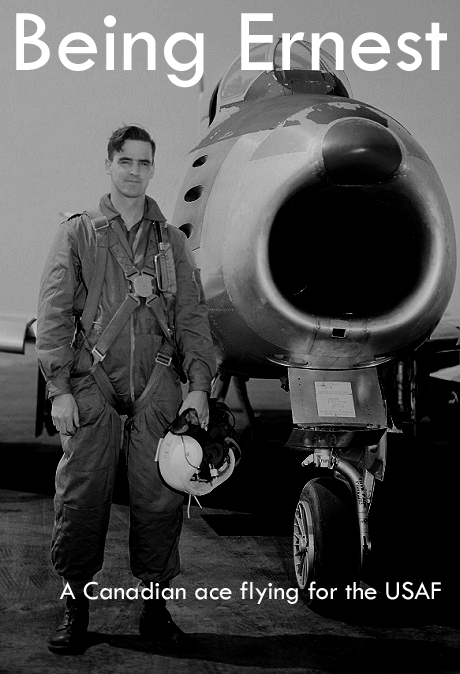
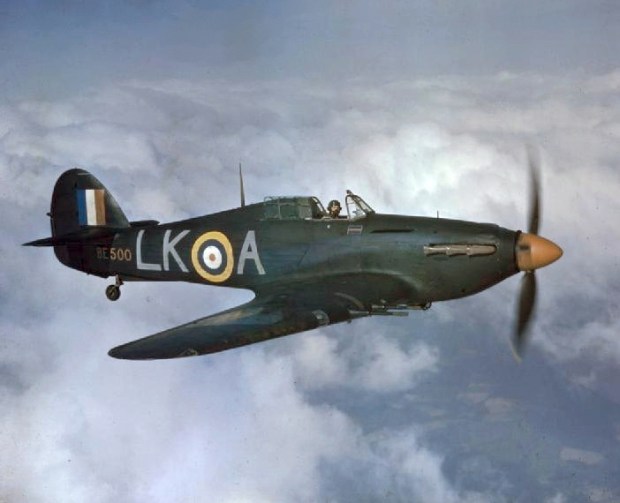
An unsolved stone mystery lies quietly beneath the trees of Lake Opinicon.

An unsolved stone mystery lies quietly beneath the trees of Lake Opinicon.

So, there you have it. A mysterious stone structure sitting in the woods south of Ottawa overlooking Lake Opinicon. To conclude, here is what was said it could be:

-a flag pole base

-a lime kiln

-a mining structure

-a kids fort

-an aboriginal spirit cairn

My thoughts lean towards it being some kind of lookout post our Loyalist friend Davis built when he arrived from Connecticut to the area in 1799. Yet the location is most serene, surrounded by rocks of unusual shapes and geological compounds. Situated high above two gorgeous lakes at rapids that once connected the two in a tranquil forest also lends itself to the plausible theory it was an ancient spiritual structure that has remained as such to this day.

If anyone else has other ideas or theories, please pass them on and perhaps we may eventually solve the MYSTERY OF THE STONE CAIRN.

UPDATE!

Since this post was published it was brought to my attention that the stone structure is actually a British Ordinance watchtower post from the 1800s. If this is the correct answer, then the structure I think should be studied in further detail and an archaeological analysis and/or preservation of the site should be undertaken to preserve this unique piece of early Rideau Canal history. The answer submitted is copied and pasted below:

“If you were camped at Davis and went up the trail to the high ground on the opposite side from the lock office there was a British ordinance watch tower that looked off across to Opinicon lake and this is what remains of the base .Cliffe Pennock the turn of the19 century Opinicon barber/photographer took different shots of the lake from this vantage point and they ended up with other Post card publishers of the day like Valentines of Montreal.”

SOURCES

http://www.uelac.org/Loyalist-Info/detail.php?letter=d&line=60

https://books.google.ca/books?id=_DuPuV5hzyEC&pg=PA47&lpg=PA47&dq=stone+cairn+spirit+quest&source=bl&ots=h8J25Abs8M&sig=dEvBBj3JDKRlemqURao6ochrREw&hl=en&sa=X&redir_esc=y#v=onepage&q=stone%20cairn%20spirit%20quest&f=false

http://www.nativestones.com/cairns.htm

http://digital.library.mcgill.ca/countyatlas/searchmapframes.php

http://www.stonestructures.org

The Mystery Of The Sparks Street Smile

At 93 Sparks St. in Ottawa 11 scowling heads adorn a historic building. However, one of the heads is oddly smiling.

At 93 Sparks St. in Ottawa 11 scowling heads adorn a historic building. However, one of the heads is oddly smiling.

Once a bustling avenue of shops, restaurants, hotels and theatres, Sparks Street today is a mere shadow of its former self, a once glorious past swallowed by the Federal Government and the National Capital Commission who expropriated most of the buildings on the downtown Ottawa street. With a good portion of its past life-force depleted, a stroll down Sparks Street can still provide an interesting look back at some of Ottawa’s finest preserved architecture. A look upwards on a walk down this historic street reveals fascinating details that may be overlooked when walking with eyes straight ahead at street level. One such architectural detail up above provides a curious mystery and may reveal Ottawa’s own version of the DaVinci Code.

Dubbed "Canada's Four Corners Building", the structure has been covered with scaffolding for years.

Dubbed “Canada’s Four Corners Building”, the structure has been covered with scaffolding for years.

Located at 93 Sparks Street, at the corner of Metcalfe, there is a building dubbed “Canada’s Four Corners”. For as long as I can remember, this building has been the home to the longest operating souvenir shop in Ottawa, its impressive architecture filled with various pieces of Canadiana being offered to the throngs of tourists that pass it each day on their way to Parliament Hill. Also for as long as I can remember, the old building has been unfortunately encased in what seems to be a perpetual scaffolding facade that hides its ground level grandeur. Above the scaffolding there are details of sculpted heads that adorn the keystones of each second level window. These scowling bearded faces all look identical, except for one…one head is mysteriously smiling. Different than the others, this smiling face for some reason is the only head that is not scowling. Why is it smiling? To solve this mystery of expression, let’s go back and check out the history of this old building….

The only one of the eleven carved heads on the building that has a grin.

The only one of the eleven carved heads on the building that has a grin.

HISTORY

Built in 1870 by John Kelly, the structure was designed by Ottawa architect King Arnoldi, who also designed many churches and other notable buildings throughout the Ottawa Valley. Built as a rental property, it was first called “The Montreal Telegraph Building”, whose first tenant was the Merchant Bank Of Canada, a very influential bank that was part of the financial empire of prominent Montreal entrepreneur, Sir Hugh Allan.  Sir Hugh Allan was the richest man in Canada when he died in 1882, and a study of this man may reveal clues as to why there are bearded sculpted heads on his building.

Sir Hugh Allan. Shipping magnate and the richest man in Canada.

Sir Hugh Allan. Shipping magnate and the richest man in Canada.

All ten of the eleven keystone heads are similar in appearance.

All ten of the eleven keystone heads are similar in appearance.

Hugh Allan was a Scotsman who made his vast fortune as a shipping magnate, owning the largest privately owned shipping empire in the world. Based in Montreal, Allan’s riches grew after he became the director of the Bank Of Montreal while still in his thirties. Allan formed the Merchant Bank of Canada in 1864 and because of his association with the bank he garnered further wealth in his other profitable ventures. Allan invested in communications technology, manufacturing, and mining. In 1852, he became president of the Montreal Telegraph Company, and rented out the new Sparks Street building to his own bank, the Merchant Bank of Canada that operated in the building until 1954 when it was sold to the Canadian National Railway.

Sir Hugh Allan's castle mansion on Mount Royal filled with mythological symbols. He named "Ravenscrag" after his favourite childhood castle ruins in Scotland.

Sir Hugh Allan’s castle mansion on Mount Royal filled with mythological symbols. He named “Ravenscrag” after his favourite childhood castle ruins in Scotland.

Allan was somewhat of an illustrious fellow infatuated with the realm of fantasy and mythology. As a child, Allan was obsessed with a medieval castle ruin in Scotland near Ayrshire, a castle called “Ravenscraig”, a place where he would spend countless hours exploring. After become extremely wealthy in Canada, Allan bought property in Montreal on Mount Royal to build his own castle, a mansion he dubbed oddly enough “Ravenscrag”. This imposing 72 room property was decorated with figures inspired by Allan’s interest in mythology, including hand-painted frescos and murals illustrated with mythological scenes. His favourite room at Ravenscrag, the library, was dominated by a wall-to-wall mahogany bookcase decorated with carved panels depicting sea monsters and mermaids. Above the main entrance to Ravenscrag, a sculpted crest with Allan’s motto “SPERO” greets those that enter, which in Latin means “I hope”.

Allan's motto and crest above the main entrance to Ravenscrag.

Allan’s motto and crest above the main entrance to Ravenscrag.

One can speculate that Allan had a hand in the design of the Ottawa Sparks street building in collaboration with King Arnoldi. Arnoldi’s experience with medieval church design combined with Allan’s fascination with mythology may be the reason the building is adorned with 11 sculpted heads. But who are these heads representing and why is only one smiling?

The heads are the keystones in each of the arched windows of the building. Ten of them are of a scowling bearded man that look remarkably similar to Sir Hugh Allan himself. Perhaps Allan wanted to ensconce his likeness into his building like the Greek gods he was fascinated with in ancient temples of past. Yet one of these carved heads has a completely different expression. The smiling head is perhaps a clue Allan left for us to figure out, an unsolved mystery that was part of a bigger puzzle Allan arranged with Arnoldi.
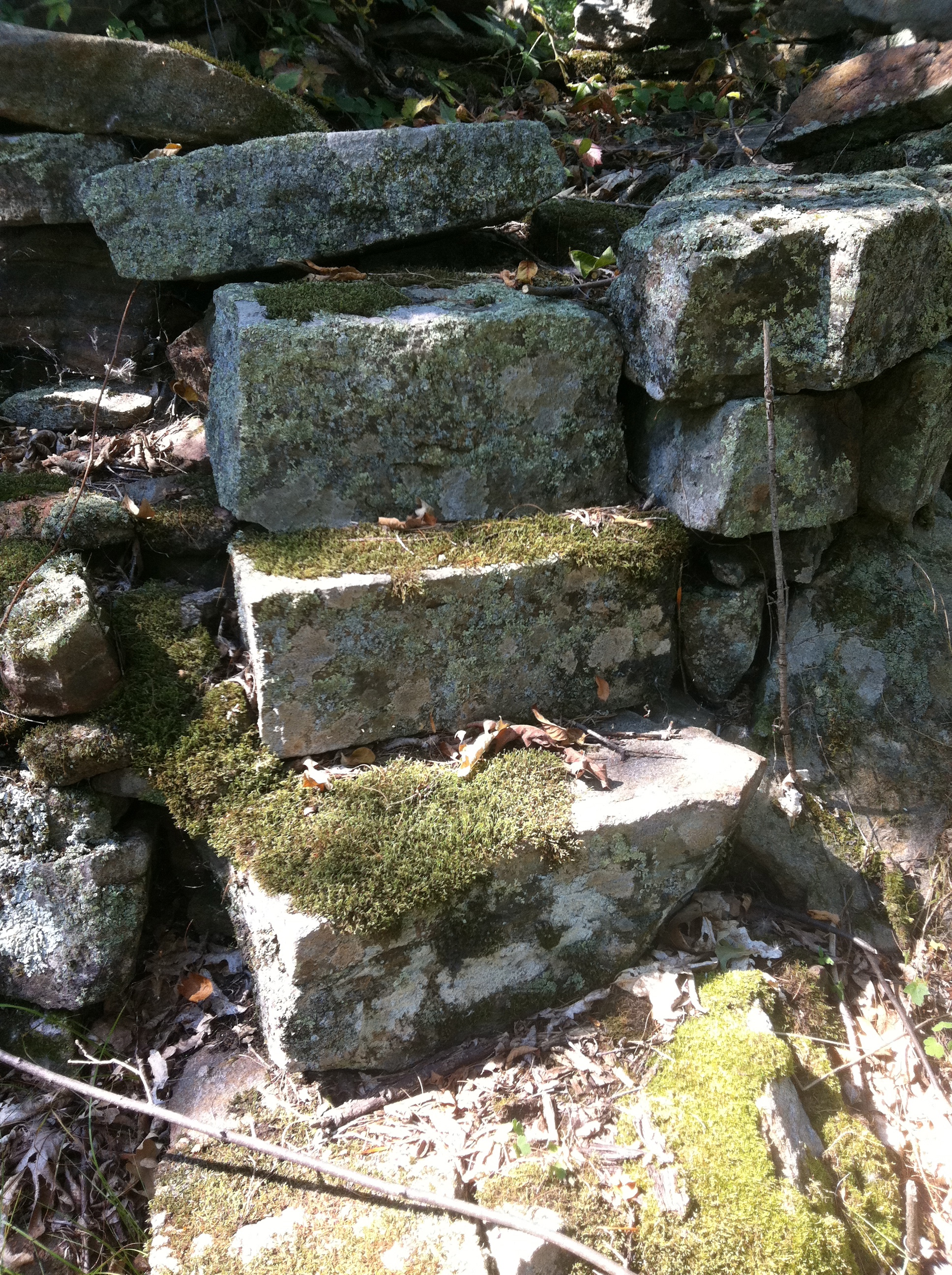
IMG_4414

Are the carved heads a representation of Allan himself? (below)

1f970bca-4af1-4da3-8036-391c2cda0ff7

A look back at Allan’s life history reveals he had 11 children. There are 11 carved heads. One of his children, Arthur Allan, was the last child to be born in 1871, in the exact same year the building was being built. Arthur later died in a fire. Is the smiling head a representation of Allan’s last born child, a symbol of hope for his empircal dynasty like his motto ‘Spero” implied? Also in the year 1871,  Allan was created a Knight Commander of the Order of St Michael and St George by Queen Victoria for his services in connection with the development of ocean steam navigation in Canada. Perhaps his knighthood in the same year the building was constructed could be a clue to the grinning carved head.
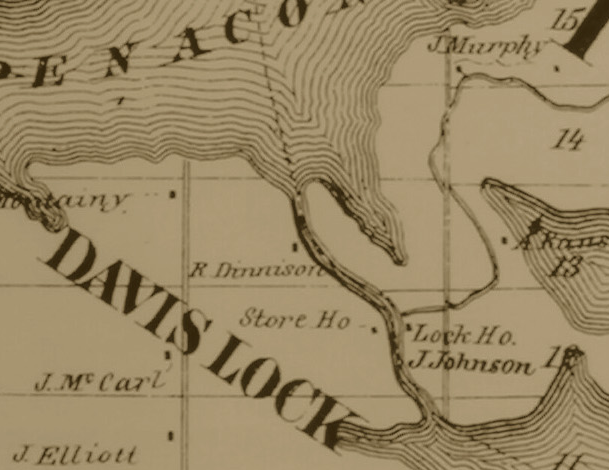
Allan died in 1882 and took with him the secret of the smile. Wanting to solve this Ottawa DaVinci Code,  I asked staff who currently work in the building if they knew why one of the heads is smiling but they hadn’t even noticed the anomaly. The architect of the building, King Arnoldi died in 1904, so we may never know what the two men were up to when they designed these heads. Until someone else comes forward with an answer to this mystery, the carved face on Allan’s grand building will continue to smile down on the Sparks Street souls that unknowingly pass below.


SOURCES

http://dictionaryofarchitectsincanada.org/node/1267

http://historicplaces.ca/en/rep-reg/place-lieu.aspx?id=4640

Click to access 1985-021(e)canada’sfourcornersbuilding.pdf

http://en.wikipedia.org/wiki/Hugh_Allan

http://en.wikipedia.org/wiki/Ravenscrag,_Montreal