Year: 2015

HISTORIC FRANKTOWN “CASTLE” CHURCH UP FOR SALE

The castle-like church in Franktown, ON is up for sale. (Photo: Wikipedia)

The castle-like church in Franktown, ON is up for sale. (Photo: Wikipedia)

For as long as I’ve been driving back and forth to Ottawa along Highway 15 the familiar sight of a stone spire in Franktown, Ontario has signalled my journey to the Nation’s Capital was almost at an end. The landmark stone spire and conical tin roof that looks like it was grafted on to the side of the building from the Disneyland castle has always meant I had about 35 minutes left of driving before I arrived home. As a kid in the back seat of my parents car, I’d always eagerly look out for the “castle” in Franktown….and now, the century old building designed by a notable Ottawa architect is up for sale.

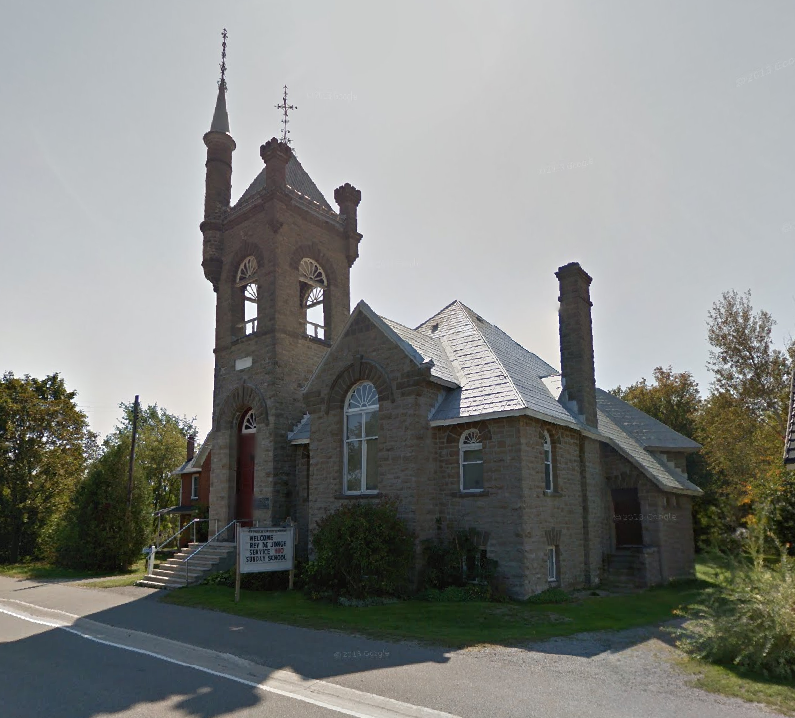
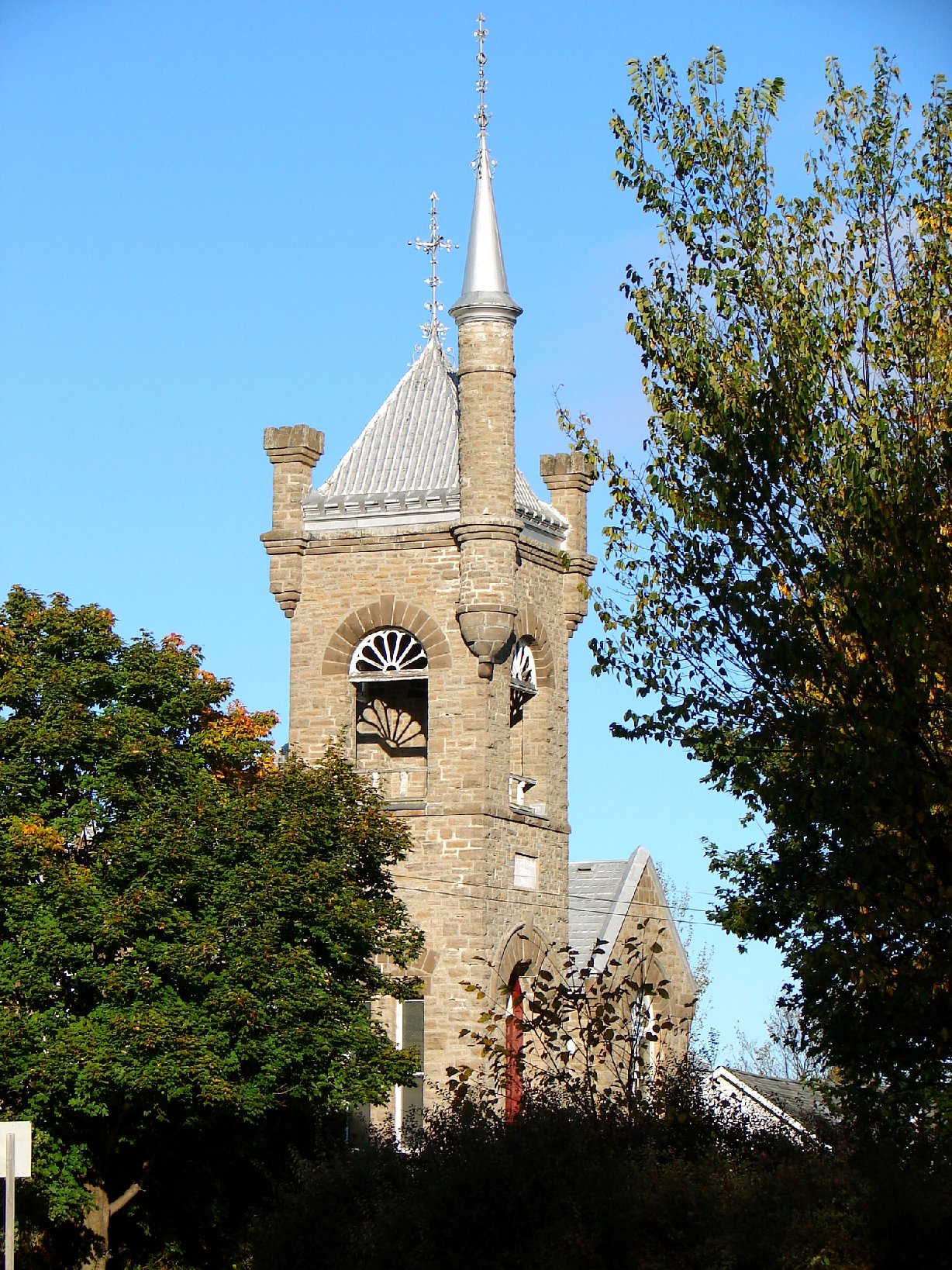
St. Paul's church, built in 1901-02, sits prominently along Highway 15 in Franktown, On

St. Paul’s church, built in 1901-02, sits prominently along Highway 15 in Franktown, On. (photo: Google Streetview)

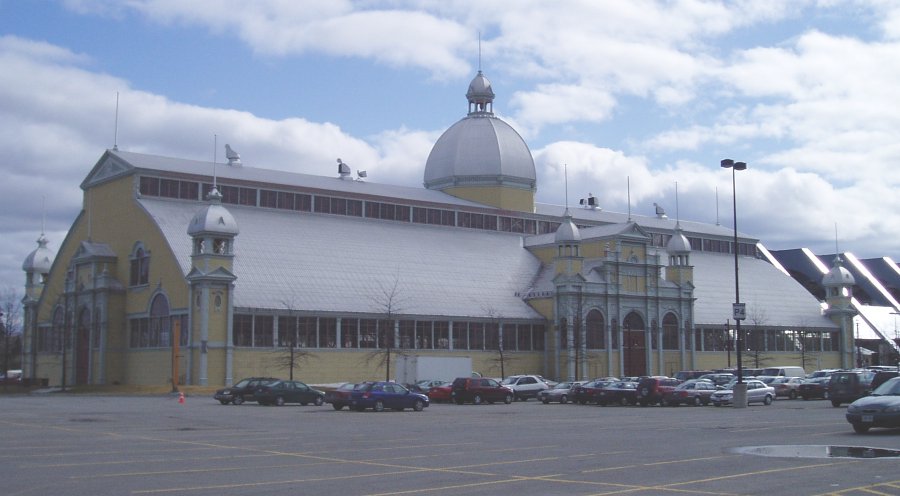
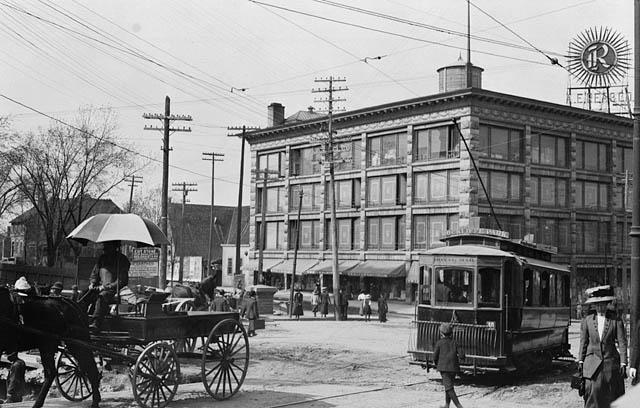
The Franktown Castle is actually St. Paul’s church, built in 1901, opened in 1903 and was designed by none other than the famous Ottawa architect Moses Chamberlain Edey . Edey also designed the Aberdeen Pavilion at Lansdowne Park, a National Historic Site and the infamous downtown Daly Building, which was Ottawa’s first department store. The construction firm who built it was ‘James Wilson’ of Perth, ON for a cost of $6100.

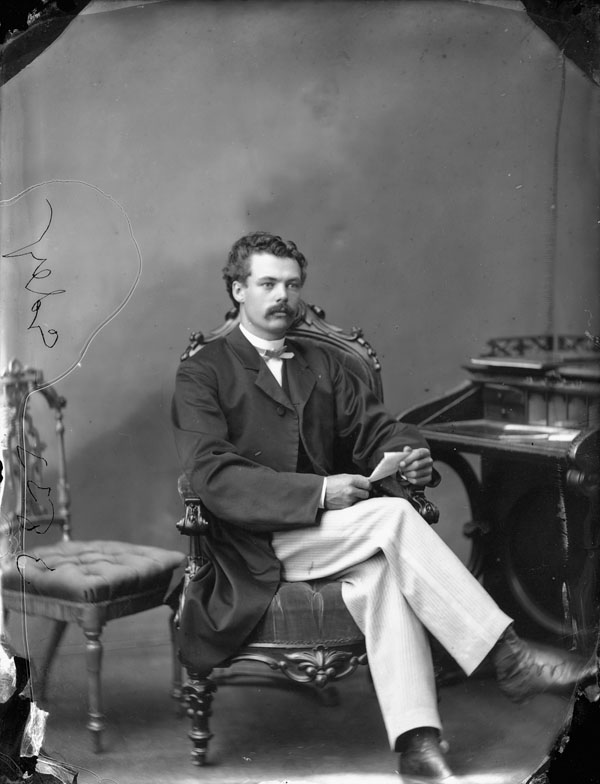
The Franktown church's architect, Moses Chamberlain Edey, who also designed the Aberdeen Pavilion and Daly Building in Ottawa.

The Franktown church’s architect, Moses Chamberlain Edey, who also designed the Aberdeen Pavilion and Daly Building in Ottawa. (photo:Wikipedia)

The church stone came from the J. McEwen Quarry, in Beckwith Township and was blasted out with dynamite and drawn in the raw state by the men of the congregation using horses and wagons or sleighs. The stone was dressed on site with all the materials, sand and stone, donated to the Church.

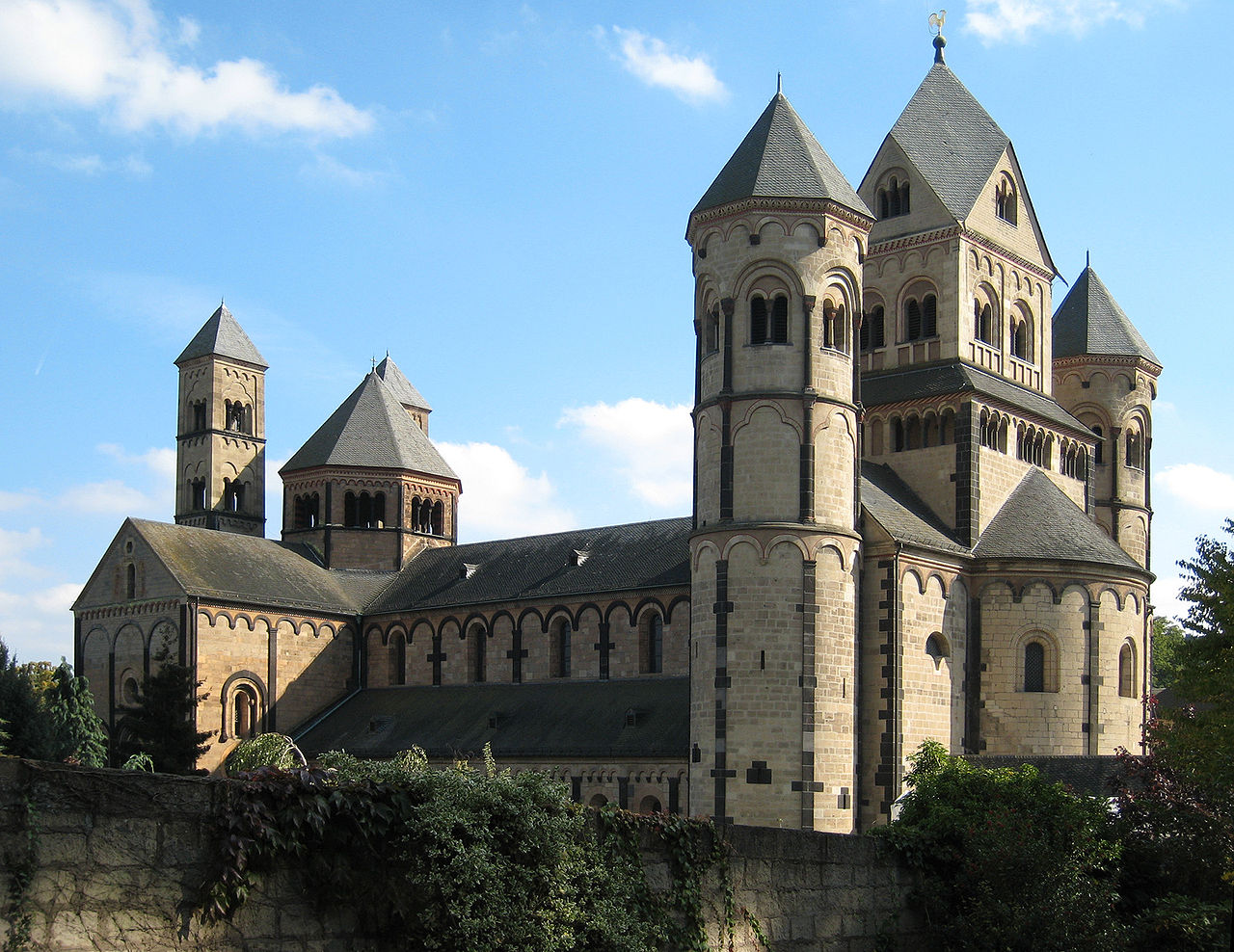
Built in a Romanesque architectural style of medieval Europe which is characterized by semi-circular arches, towers and spires, the revival of the Romanesque style was carried through Edey’s church design for Franktown. The Romanesque Revival style was widely used for churches, and St. Paul’s is no exception with its Norman castle like corbelled corner turrets and spire, complete with a conical peak.

The Romanesque style featured on the church by the architect Edey  featured turrets and arches, like medieval European castles.

The Romanesque style featured on the church by the architect Edey featured turrets and arches, like medieval European castles. (photo: Wikipedia)

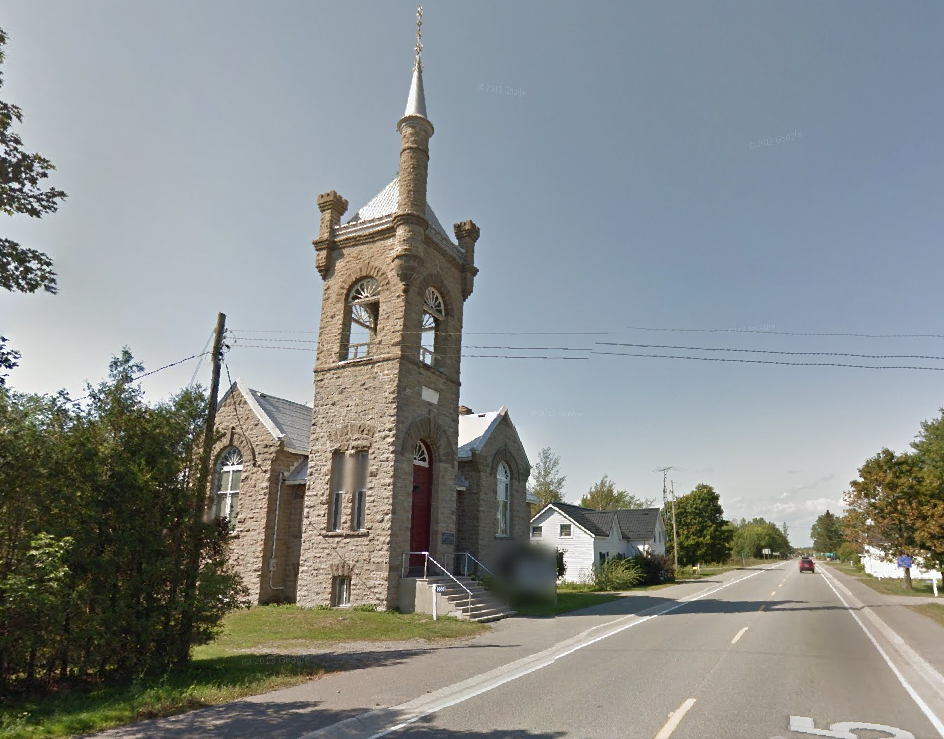
A view of St. Paul's Church, which is a grand landmark in Franktown. Its distinctive turrets and spire can be seen for miles. (photo: Google Streetview)

A view of of the Romanesque St. Paul’s Church, which is a grand landmark in Franktown. Its distinctive turrets and spire can be seen for miles. (photo: Google Streetview)

Edey Romanesque style contrasts his other work in Ottawa, which was the Aberdeen Pavillion at Lawnsdowne Park, and the Daly Building which was built in the “Chicago” style, both designs that came after his work designing the church in Franktown.

The Aberdeen Pavilion, also designed by Edey. (photo: Wikipedia)

The Aberdeen Pavilion, also designed by Edey. (photo: Wikipedia)

The Daly Building, Ottawa's first department store, was also designed by Edey in the "Chicago" style of architecture. (photo: Wikipedia)

The Daly Building, Ottawa’s first department store,  designed by Edey in the “Chicago” style of architecture. (photo: Wikipedia)

After more than a century in operation, the church congregation decided to sell the historic building in September 2014, and it it is now listed with Re/Max Realty and offered at a reduced price of $199,000. The listing can be seen here.

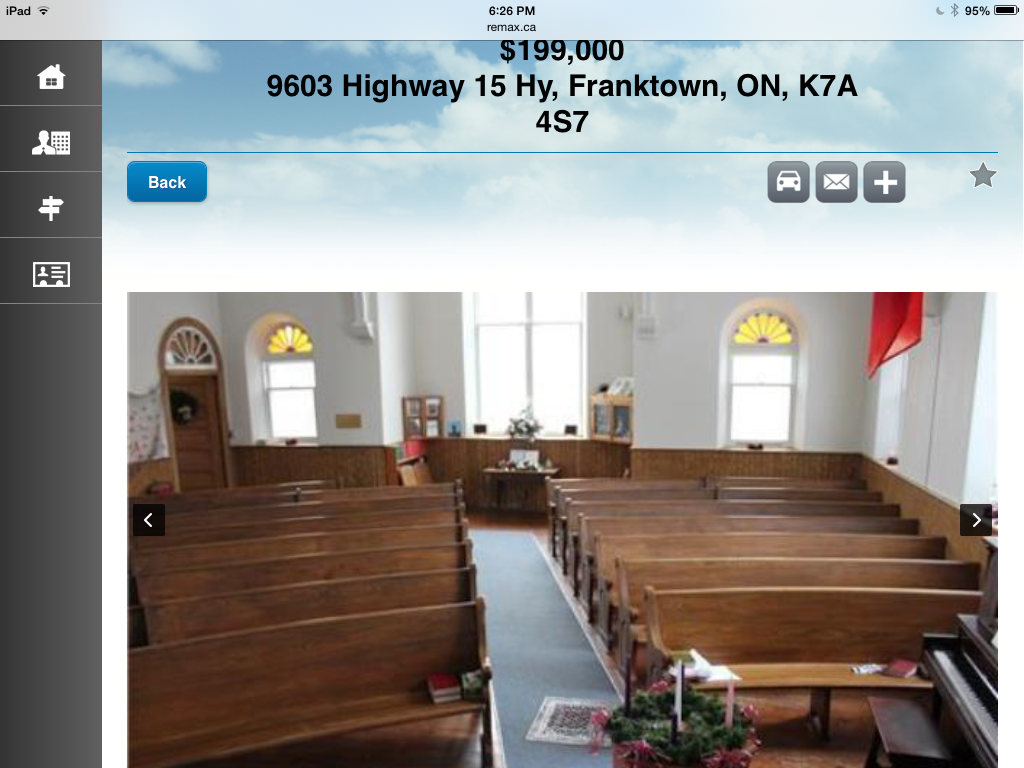
The structure is zoned institutional, which means if you want to purchase it and convert it into your own personal castle, you would have to apply for rezoning it as residential. The church space features a large open main floor and in the church basement there is a full kitchen so you could host your very own church bake sales.

A photo from the Re/Max realty site that is selling the church. A full church basement kitchen is perfect for bake sales.

A photo from the Re/Max realty site that is selling the church. A full church basement kitchen is perfect for bake sales.

The church has been up for sale for a few months and has been reduced in price by $50,000 from its original listing. The property is a historic landmark in Franktown, and could very well become you own personal century old “castle”. I wonder what permits would be necessary to build a moat and drawbridge…


SOURCES:

http://www.insideottawavalley.com/news-story/5325010-st-paul-s-united-church-in-franktown-up-for-sale/

http://en.wikipedia.org/wiki/Moses_Chamberlain_Edey

http://www.twp.beckwith.on.ca/historicalmap/popup.aro?id=CH7

http://en.wikipedia.org/wiki/Romanesque_Revival_architecture

Google Maps Streetview

The Lost Rocket

titlecard

The Story of Canada’s Lost Nazi Rocket

(from material originally published in my column for The Ottawa Citizen November 7 2014, which can be viewed HERE.)

Canada’s lost V2 rocket story begins during the closing months of WW2 when a Canadian Army captain began to collect captured and abandoned German equipment to send back to Canada for analysis and museum display. The Captain in charge of this 1st Canadian Army Museum Collection Team was none other than famous Canadian author Farley Mowat.
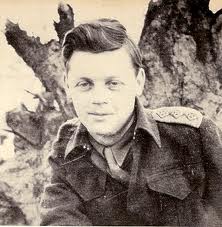
Captain Farley Mowat during WW2.

Captain Farley Mowat during WW2.

Farley Mowat in his book “My Father’s Son” outlines how Captain Mowat quickly assembled an impressive collection of German, tanks, vehicles and assorted equipment that can be seen today at the Canadian War in Ottawa.

One such piece of captured German technology that was collected by Captain Mowat was an advanced 12 ton liquid fueled rocket, the V2, or (“Vengeance Weapon 2”), technical name Aggregat-4 (A4). It was the world’s first long-range ballistic missile, and the precursor to all modern rockets, including those used by the US and the Soviet space programs.
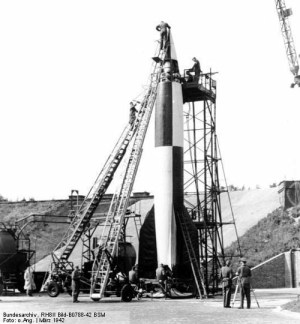
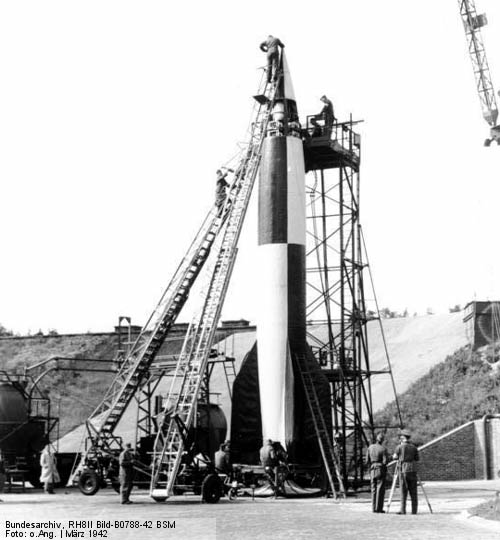
A German V-2 being tested at Werner Von Braun's advanced rocket test facility at Peenemunde in Germany.

A German V-2 being tested at Werner Von Braun’s advanced rocket test facility at Peenemunde in Germany.

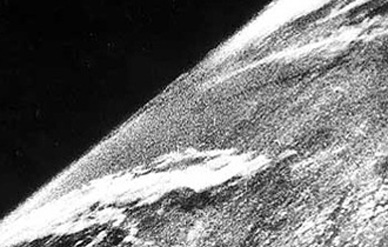
6,000 of these advanced rockets were built by German forces with half being fired onto Allied targets during the latter part of World War 2. Designed by Wernher von Braun, who was later an integral part of the American NASA rocket program and the NASA moon missions, this 50 foot  tall rocket was the most advanced weapon of its day that paved the way for rocket and space exploration after the war. The very first photo from space was taken from a captured V2 rocket in 1946 launched by US scientists.

At the end of the war, a race began between the United States and the USSR to retrieve as many V-2 rockets and their support staff as possible. Three hundred rail-car loads of V-2s and parts were captured and shipped to the United States and 126 of the principal designers, including Wernher von Braun and Walter Dornberger, were in American hands. Von Braun, his brother Magnus, and seven others decided to surrender to the United States military to ensure they were not captured by the advancing Soviets or shot dead by the Nazis to prevent their capture.

The very first image of space was taken from a captured V-2 rocket in 1946.

The very first image taken from space was from a captured V-2 rocket in 1946.

BRINGING THE ROCKET TO CANADA

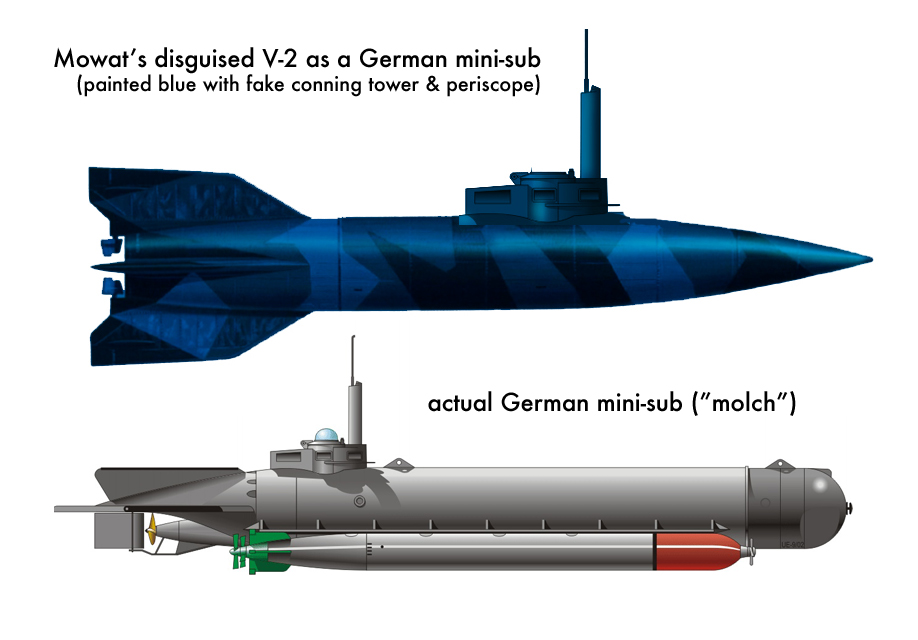
Due to the advanced technology of the V2 and its desirability by US, Russian and British research scientists, Captain Mowat was forbidden to take his captured V2 rocket back to Canada. This did not stop the determined Mowat who knew this was a valuable prize for Canada, and took the necessary action to get the rocket back to Canada. With British guards protecting the rocket which was now on a train, Mowat and his team apparently got the guards drunk, then loaded the rocket off the side of the train and onto a trailer. They then transported the rocket to Holland to a waiting Canadian cargo ship bound for Montreal. With Americans that would surely confiscate the rocket, Captain Farley and his team disguised it as a German submarine, painting the rocket blue and adding a fake periscope.

Mowat disguised the captured V-2 as a German mini-sub to smuggle it past American guards to get it back to Canada.

Mowat disguised the captured V-2 as a German mini-sub in order to smuggle it past American guards to get it back to Canada.

It was loaded without incident aboard the Canadian cargo ship and safely made it’s way back to Canada where it was unloaded in Montreal, dismantled, studied and blueprinted at the Canadian Armament Research & Development Establishment (CARDE) in Valcartier, Quebec.

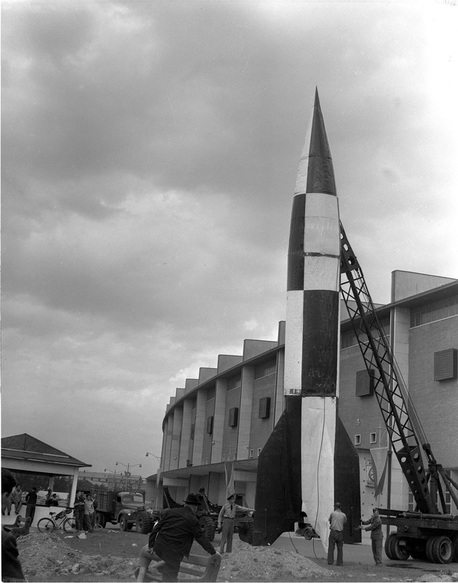
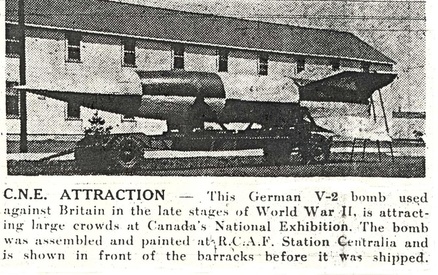
After being scrutinized by CARDE, the Department of Defence loaned the captured V2 to the CNE in Toronto to display at the 1950 CNE. Re-painted in its German test pattern paint scheme at CFB Centralia, it was transported to Toronto where the CNE placed it upright on display for the many visitors see at the 1950 CNE. After that, the history of Canada’s V2 rocket falls into relative obscurity.

photo4

The captured V-2 rocket as seen on display at the 1950 CNE in Toronto.

photo5

Department of Defence crew preparing to display the V-2 rocket at the 1950 CNE in Toronto.
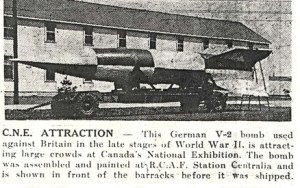
photo3

A newspaper clipping showing the V-2 after being studied by CARDE between 1945-50 and re-painted to be shipped to Toronto for display at the 1950 CNE.
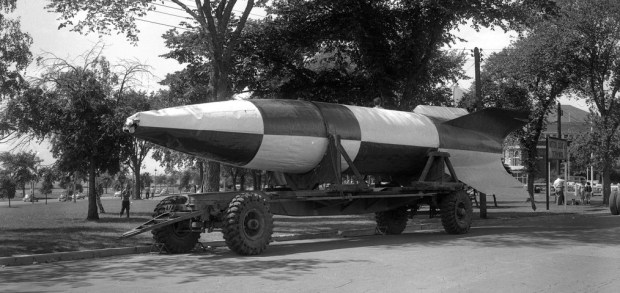
photo6

With its nose cone damaged (from a truck backing into the hitch it seems) the V-2 after its display at the CNE. Where it went after the CNE remains a mystery.

WHERE DID IT GO?

A retired Air Canada pilot, David Savage, who lived in Picton, Ontario during the 1960s may be able to provide some possible clues as to the final resting place of the lost V2 rocket. Picton, a small town in Prince Edward County, three hours from Ottawa, once had a massive airport full of hangers, buildings, barracks and other assorted military establishments from its WW2 role of training RCAF pilots and crew. In the 1960s, the base was still operating, but was then used for storing surplus aircraft and artillery training. Surplus P-51 Mustangs, B-25 Mitchell bombers and other assorted aircraft were stowed away to be sold off for scrap or to private collectors. In his recent book “Camp Picton”, local author Ian Robertson mentions the V2 rocket in great detail. I contacted Mr. Robertson who graciously offered his time to tell me about the V-2 that apparently ended up in Picton, Ontario in 1961.

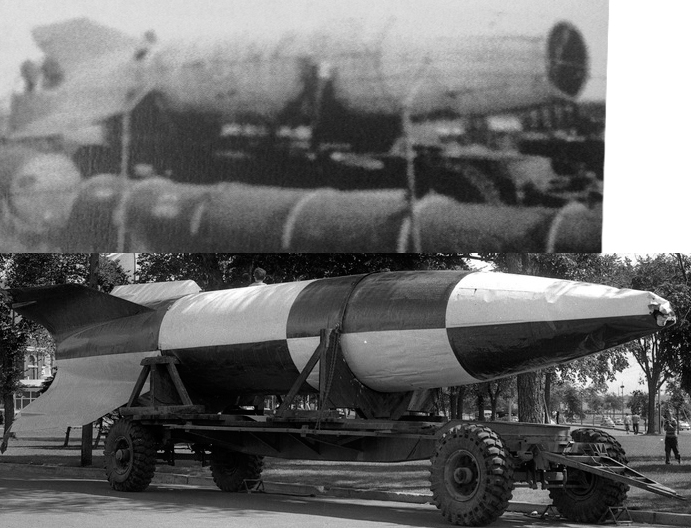
A photo that appears in Robertson’s book taken by Mr. Savage as a teenager in 1961 clearly shows what appears to be the lost V2 rocket sitting on its side, apparently on the same trailer used to transport it around at the CNE, weathered and missing its crumpled nose cone. The unmistakable shape and size is clearly that of a V2 rocket. It seems logical that it was brought to the Picton airbase for storage with all the other unwanted old DND equipment. Savage left Picton in 1962, never knowing what happened to the V2 he captured on film. The base closed in 1969, and the the whereabouts of the V2 closed with it. No further information about what happened to the stored rocket can be found.
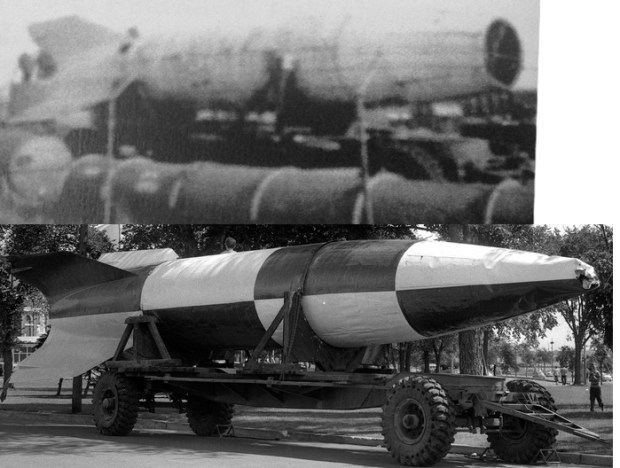
Comparing the 1961 photo taken by Savage in Picton with the 1950 CNE photo of the V-2 rocket. A match.

Comparing the 1961 photo taken by Savage in Picton with the 1950 CNE photo of the V-2 rocket. (top photo courtesy of Ian Robertson from his book “Camp Picton”)

Comparing the 1961 Picton photo with the 1950 CNE photo provides a definite match, even when the two photos are superimposed on top of one another. An exact match.
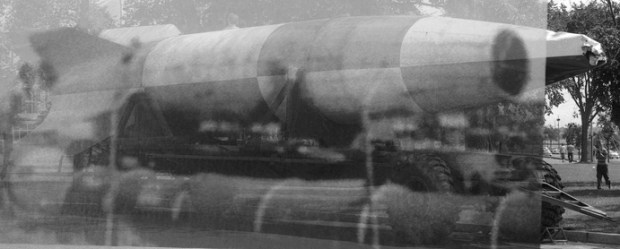
Super-imposing the 1961 photo by Savage over the 1950 CNE photo of the V-2 provides an exact match.

Super-imposing the 1961 photo by Savage over the 1950 CNE photo of the V-2 provides an exact match.

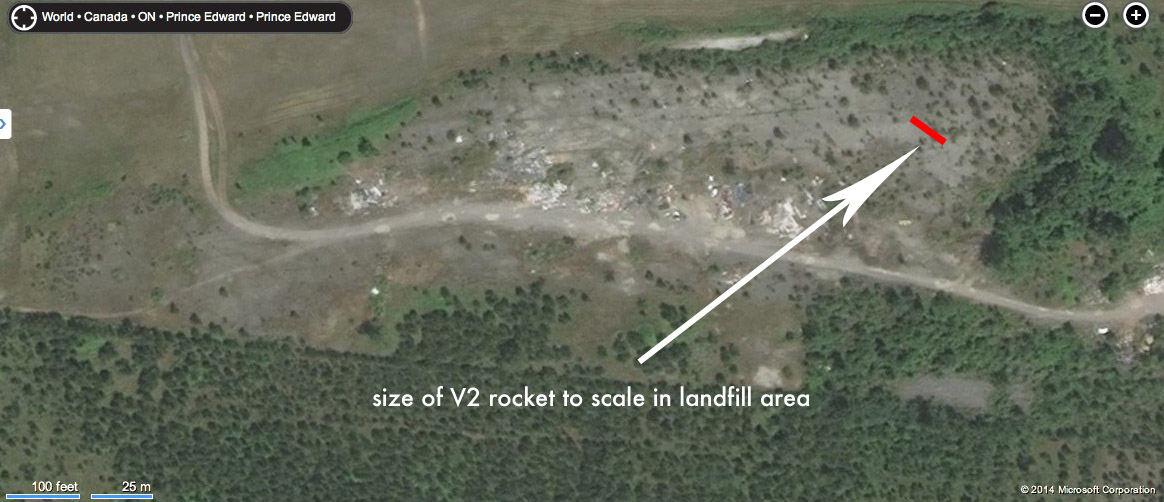
Locals in Picton who also grew up during the 1960s recall the V2 and other unwanted old equipment being bulldozed into the base landfill site. If this is the case, a very significant piece of world history lies under the surface in Prince Edward County waiting to be discovered, preserved and exhibited in a Canadian museum along with the fascinating story of how it got there. Having grown up in the area myself, and flying out of this airport many times with my dad who kept his plane here, I can attest to the fact there are many wartime artifacts strewn around the area.

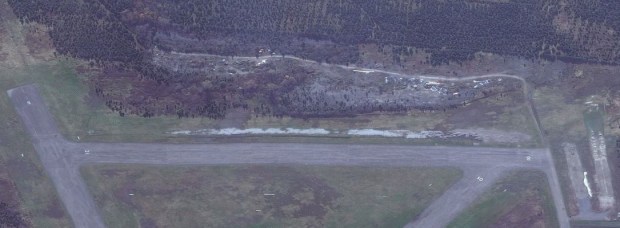
Aerial view of Camp Picton as it looks today, and the last possible resting place of the V2 rocket.

Aerial view of Camp Picton as it looks today, and the last possible resting place of the V2 rocket.

The airport landfill site lies south of the current runway. Loch-Sloy currently owns the airport property.
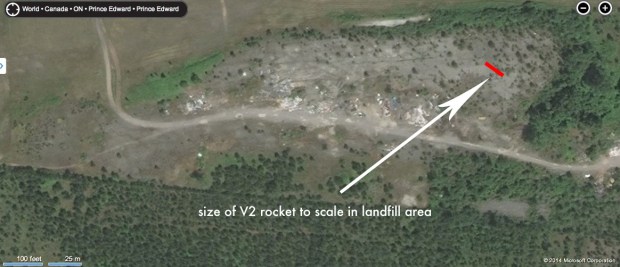
dump3

The landfill area at Camp Picton as it looks today. The lost V-2 rocket could very well lie below its surface.

The landfill area at Camp Picton as it looks today. The lost V-2 rocket could very well lie below its surface.

The airport property, including the landfill area, is currently owned by Loch-Sloy Holdings Ltd. who have reported that the landfill area is a “contaminated” zone and further investigation or digging would be hindered by this designation. Does Canada’s lost V2 rocket sit buried underneath a layer of dirt in Picton? With only 20 remaining in the entire world out of the original 6,000 made, it would certainly be a worthwhile endeavour to excavate the area and find out once and for all if indeed our captured German WW2 rocket truly remains lost.

Sources

“Camp Picton: Wartime to Peacetime” by Ian S. Robertson 2013

Google Maps

Bing Maps

http://canadianaerospace.weebly.com/canadas-lost-v-2.html

Wikipedia
Ottawa’s Bunny Club

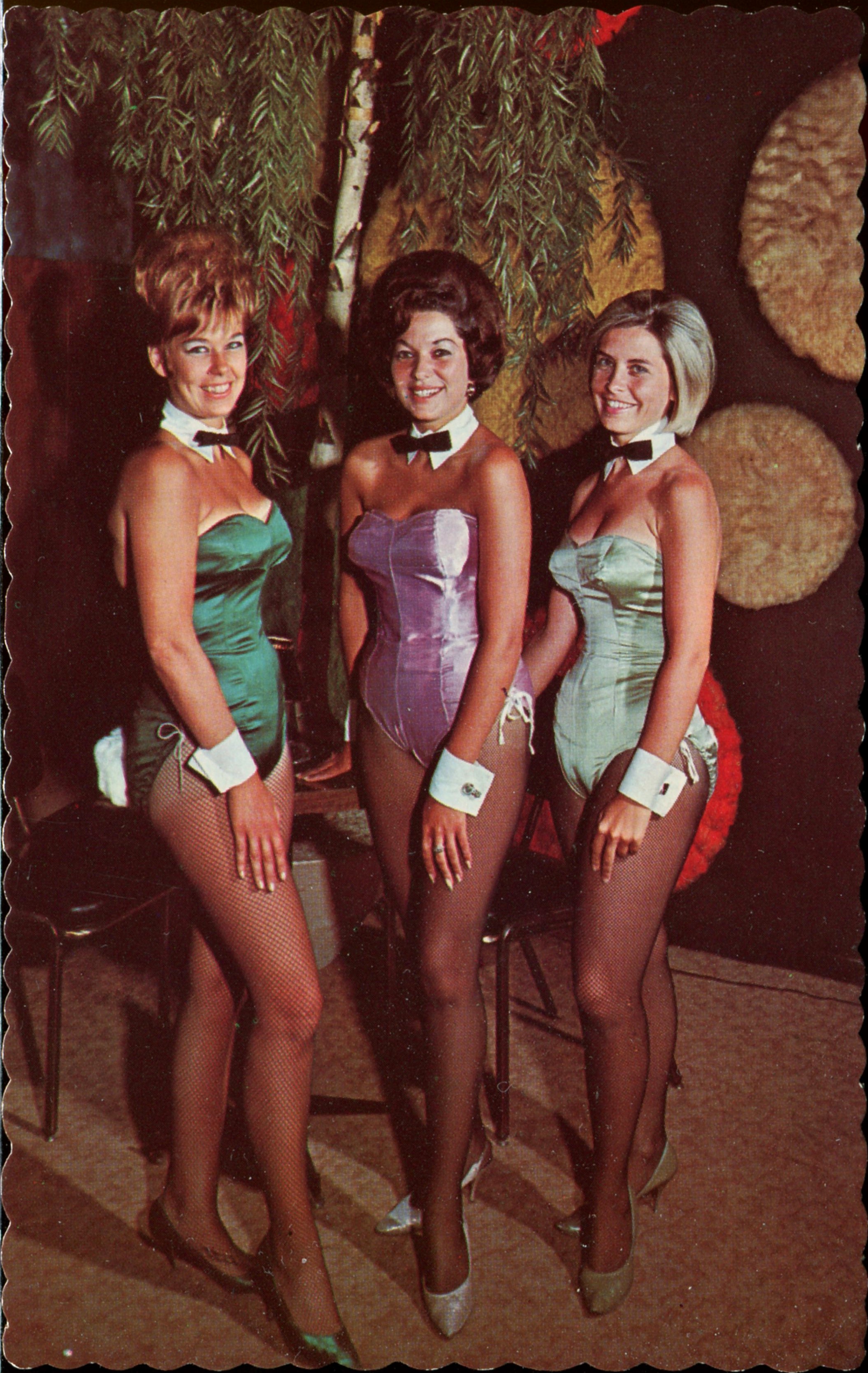
A 1968 postcard shows Ottawa's "bunnies" as they appeared at The Riverside Hotel in Vanier.

A 1968 postcard shows Ottawa’s “bunnies” as they appeared at The Riverside Hotel in Vanier.

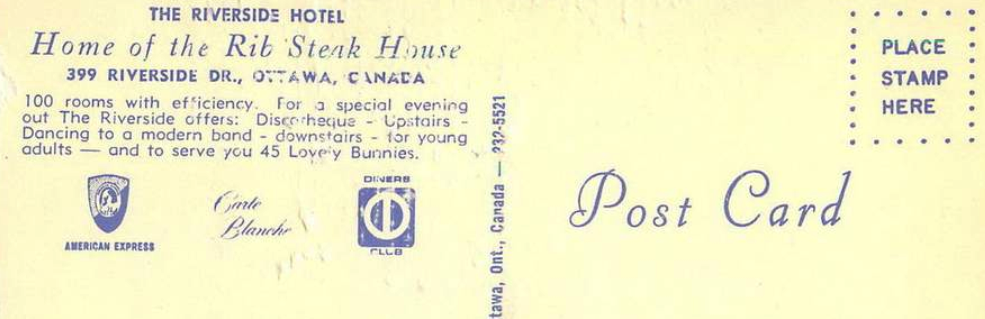
The back of the postcard gives an indication of what the Riverside Hotel offered its guests.

The back of the postcard gives an indication of what the Riverside Hotel offered its guests.

During the late 1950’s and 1960’s the “Playboy” phenomenon was sweeping the nation as Hugh Hefner’s magazine Playboy took society by storm and created a new sexual revolution. The magazine’s trademark “Playboy Bunnies” graced the pages of the gentleman’s magazine, and soon Playboy clubs were opening across North America, staffed by waitresses dressed up as the “bunnies” as portrayed in Hefner’s publication.

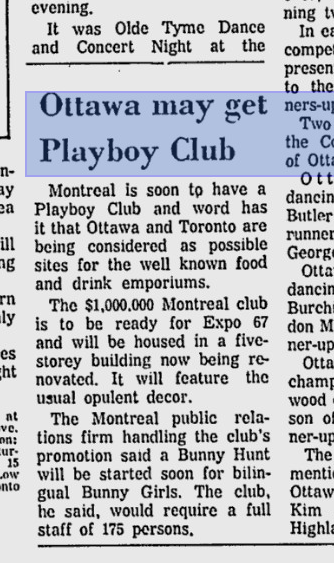
Ottawa was slated to get its own "Playboy Club" as shown in this 1967 Ottawa Citizen article. It never happened.

Ottawa was slated to get its own “Playboy Club” as shown in this 1967 Ottawa Citizen article. It never happened.

With the first Playboy Club opening in 1960, Canada only saw one Playboy Club open on its soil, and that was in Montreal which opened in 1967 for Expo67. Rumours in newspapers hinted Ottawa might also get its own Playboy Club, but this was never realized so Ottawa created it’s own version of “bunnies”…at a place called The Rib.

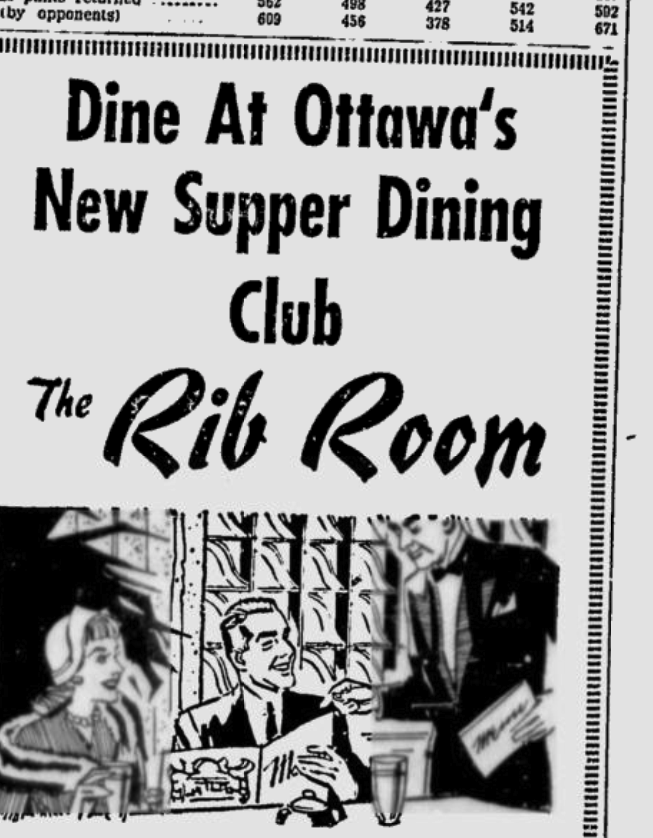
A 1962 Ottawa Citizen ad illustrates the tantalizing appeal of The Rib.

A 1962 Ottawa Citizen ad illustrates the tantalizing appeal of The Rib.

Located within the Riverside Hotel on what is now River Road N. in Vanier, the listed address in the 1960s was 399 Riverside Drive. The hotel boasted a “Businessman’s Buffet” at the restaurant called “The Rib” and it was also reported to be Ottawa’s very first and “best” steakhouse.

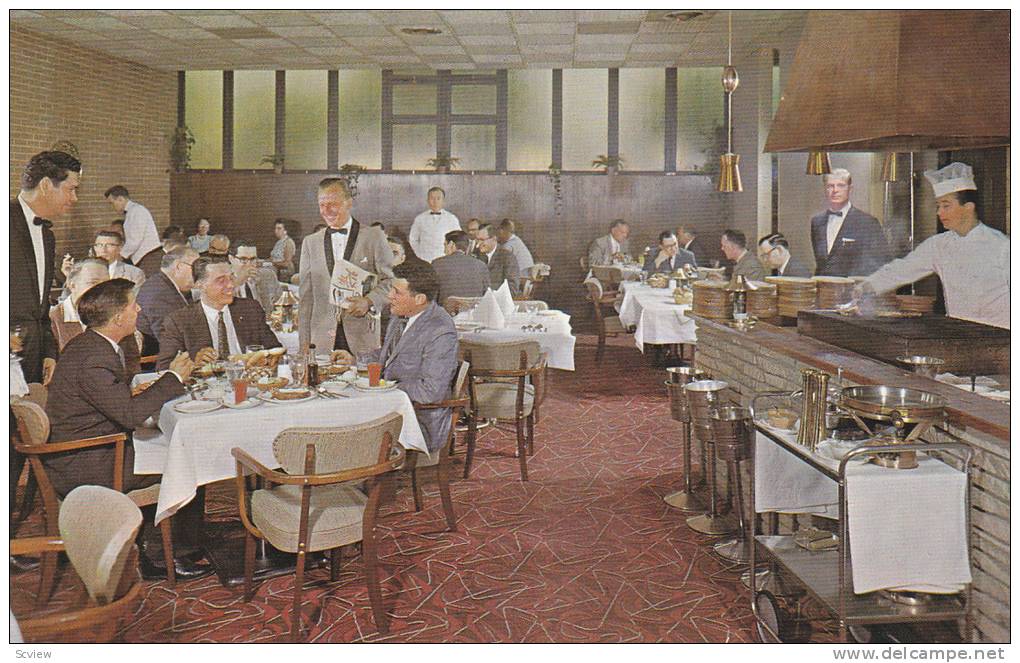
A vintage postcard of The Rib at The Riverside Hotel. Note the  "gentlemen" conducting important business meetings over cocktails and steak.

A vintage postcard of The Rib at The Riverside Hotel. Note the “gentlemen” conducting important business meetings over cocktails and steak.

Postcards and newspaper ads touted The Rib as the place to eat and be entertained, served cocktails and steaks by “45 lovely bunnies” similar to the Playboy Club in Montreal.  A discotheque and live music venue also graced the Riverside Hotel and was a popular attraction for those wishing to have, er… business “meetings”.

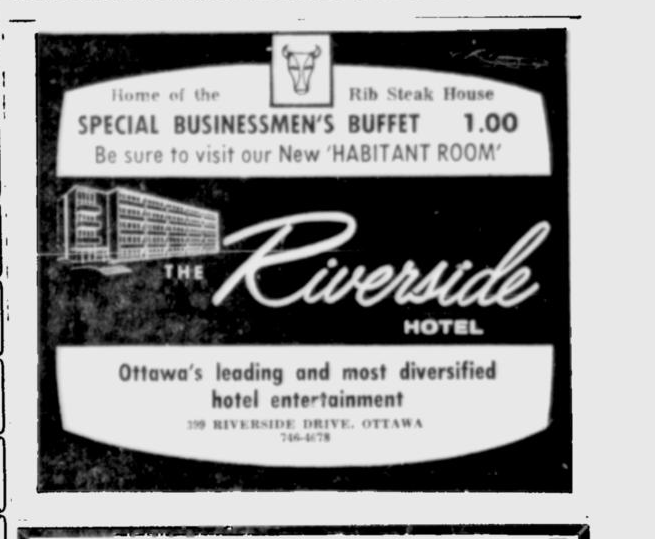
Another 1960s Ottawa Citizen ad for the Riverside Hotel.

Another 1960s Ottawa Citizen ad for the Riverside Hotel and their Businessmen’s Buffet and entertainment options.

Straight out of the Mad Men era and what looks like a set piece from the show, The Rib’s atmosphere was that of gentleman’s entertainment and a source for the associated business trip expense account receipt. A special “Businessman’s Lunch Buffet” was offered at The Rib and it continued operation until the hotel closed. The bunnies left the building and it was subsequently demolished in 2006 to make way for the EdgeWood Care Centre.

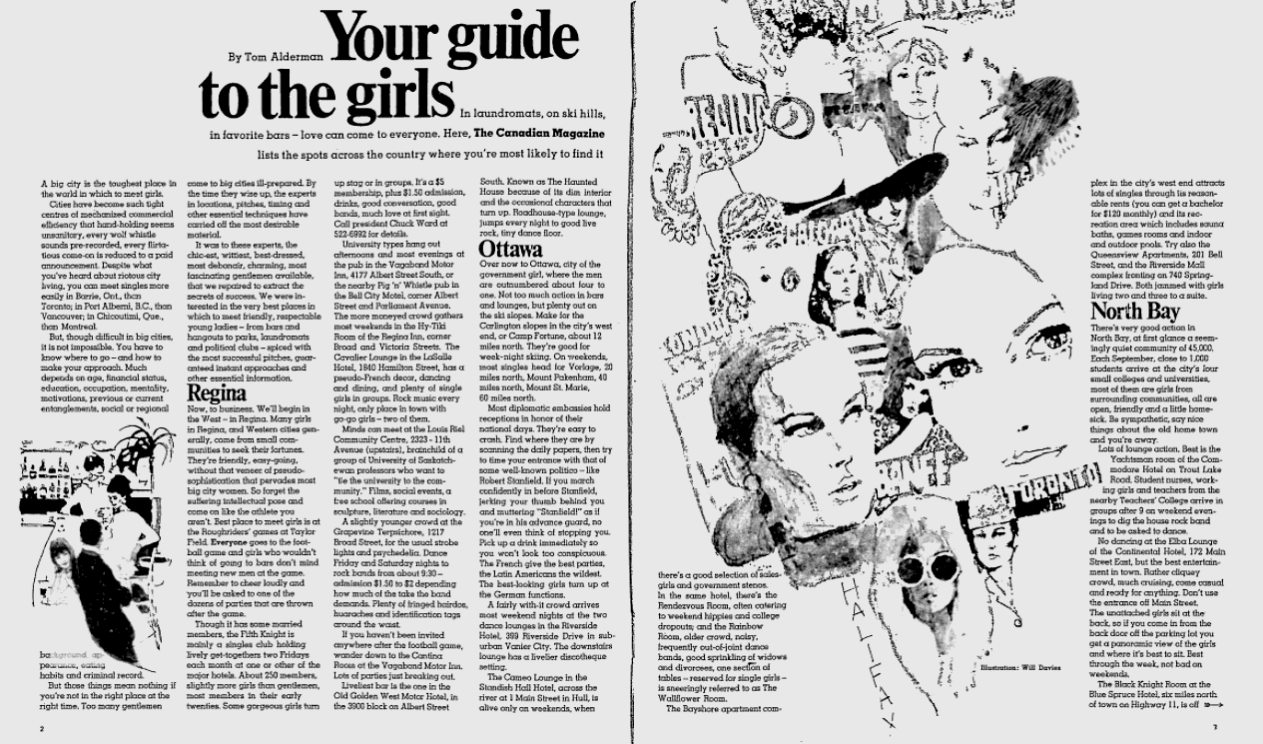
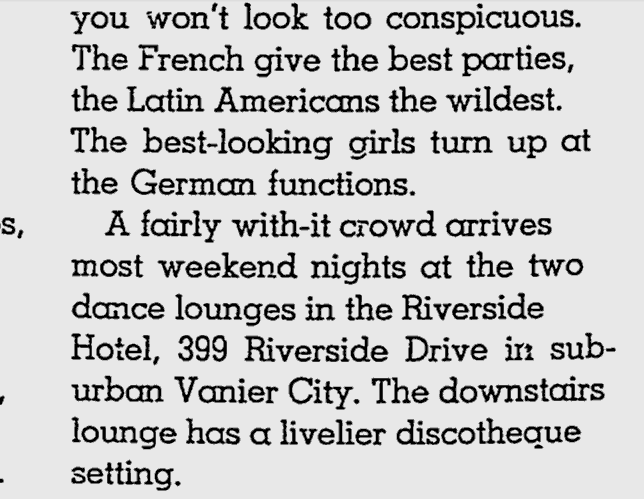
A 1969 Montreal Gazette article explains how The Riverside Hotel was the place to meet girls in its "Guide To The Girls".

A 1969 Montreal Gazette article explains how The Riverside Hotel was the place to meet girls in its “Guide To The Girls”.

Description of how The Riverside Hotel was a happening spot to meet the ladies.

Description of how The Riverside Hotel was a happening spot to meet the ladies.

The Riverside Hotel was a relic of different era and of a different mindset when it came to entertainment, all of which disappeared when it was removed from the Ottawa landscape.

A 1965 aerial image of The Riverside Hotel. (geoOttawa image)

A 1965 aerial image of The Riverside Hotel. (geoOttawa image)

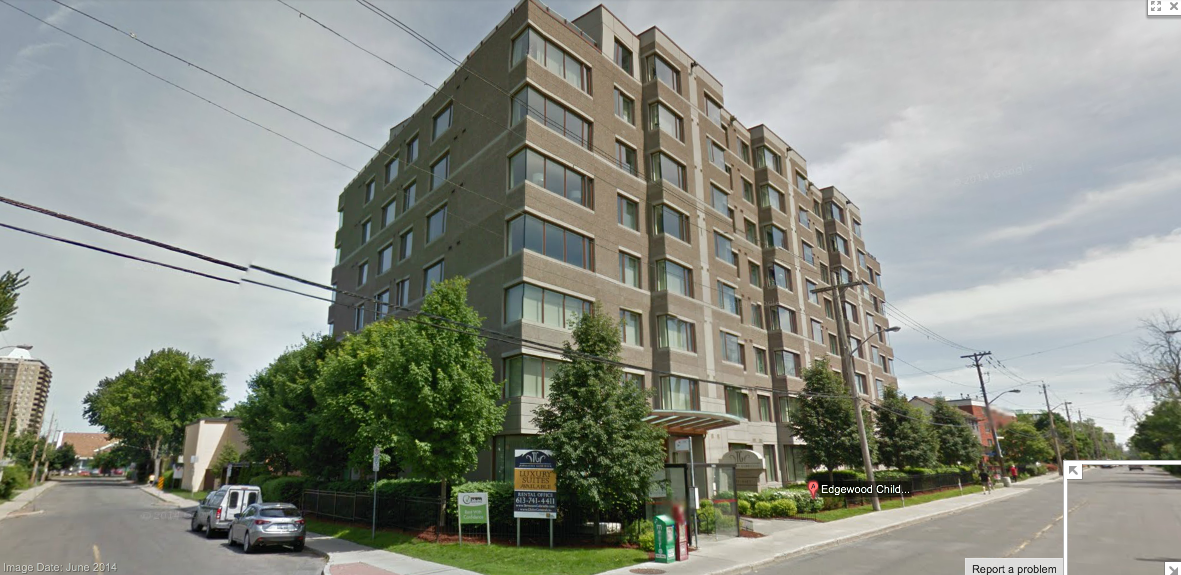
The hotel and its outdated image were demolished in 2006 to make room for the Edgewood Care Centre.

The hotel and its outdated image were demolished in 2006 to make room for the Edgewood Care Centre.

The site of the former Riverside Hotel as it looks today. (Google streetview)

The site of the former Riverside Hotel as it looks today. (Google streetview)

THE OTTAWA X-FILES: STRANGE EVENTS IN THE NATION’s CAPITAL

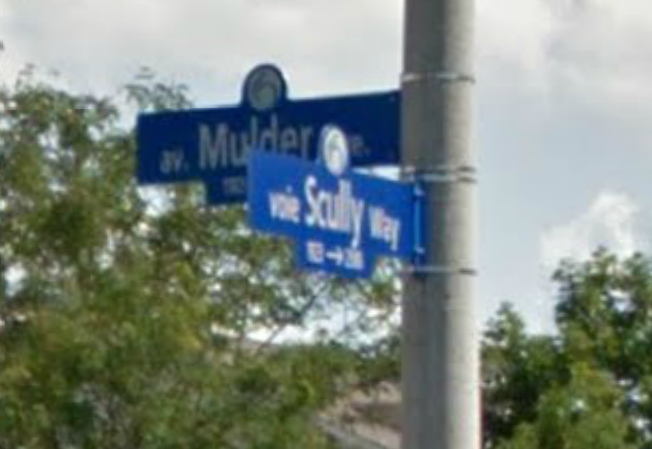
Street signs at an intersection in east Ottawa..Orleans. (photo Google Streetview)

Street signs at an intersection in east Ottawa..Orleans. (photo Google Streetview)

At an intersection in suburban east Ottawa, Scully and Mulder, the paranormal investigative duo from the hit sci-fi TV series “The X-files” have their names emblazoned on City Of Ottawa street signs. According to a 2008 Ottawa Citizen article the names ‘Scully Way’ and ‘Mulder Road’ were given to these two intersecting streets by Claridge Homes which developed the neighbourhood in 2001, a time when the hit FOX show was at peak popularity. Paul Rothwell the former planner with Claridge Homes said that the old City of Cumberland provided a list of street names not yet taken, one of them being “Scully”. Rothwell reflected in the Citizen article that “At the time, I guess, the TV show X-Files was a big hit and I said, OK, well, there was a name that had been approved, and “Mulder” was the obvious choice for a street to go with it.”

A fun suburban tribute to television’s fictional special agents makes for an interesting landmark, but what’s even more fascinating is that Ottawa has its own real “X-File” incidents, events that stretch beyond that street corner and into the realm of the unexplained. Here are some of my favourites:

JAM BAND

suburbia

In November of 2005 the City of Ottawa experienced an event where hundreds of residents were affected by a mysterious signal that jammed automatic garage door openers across the city. The phenomenon jammed automatic garage doors within a 25 mile radius, including embassy gates and residential garage doors between Aylmer and Casselman. Almost all automatic garage door openers operate with a remote that uses a radio signal on the 390 MHZ band, but on that day were rendered inoperable. Further investigation shows that the 390MHZ signal is also employed by Land Mobile Radio Systems used by the United States government, and a December 2005 US Government Accountability Office report coincidentally states:

“To address homeland defense needs and comply with government direction that agencies use the electromagnetic spectrum more efficiently, the Department of Defense (DOD) is deploying new Land Mobile Radios to military installations across the country. The new Land Mobile Radios operate in the same frequency range–380 Megahertz (MHz) to 399.9 MHz—as many unlicensed low-powered garage door openers.”

This seems to easily explain the phenomena in Ottawa but both the Canadian military and the US Embassy categorically denied any involvement using this new technology of radio signal jamming. It seems the mystery signal that affected Ottawa garage doors for 10 days defied all explanation until it suddenly vanished as quickly as it appeared. Industry Canada inspectors arrived in Ottawa to study the signal jamming but as they began to investigate the problem it disappeared and all systems returned to normal. No organization has claimed responsibility and it continues to defy alternative explanation.

UNDERWATER UFO

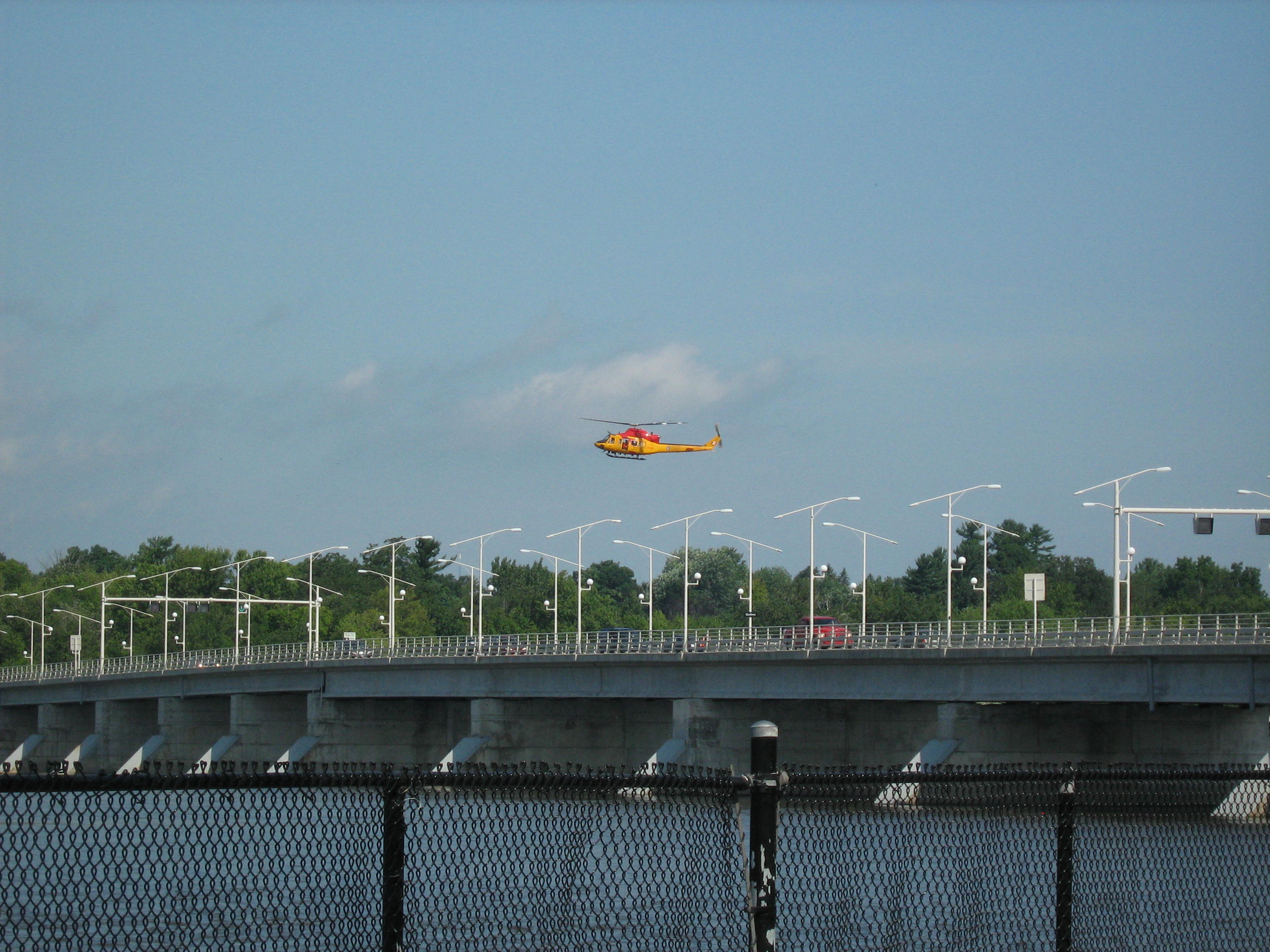
In 2009 an extensive search operation involving military and police equipment scoured the Ottawa River for what was reported to be a crashed UFO. (this photo I snapped is from that search near the Champlain Bridge)

In 2009 an extensive search operation involving military and police equipment scoured the Ottawa River for what was reported to be a crashed UFO. (this photo I snapped is from that search near the Champlain Bridge)

I recall in July of 2009 a number of military helicopters were circling near the Ottawa River at the Champlain Bridge and in typical Spielbergian fashion, I grabbed my bike and hastily pedaled my way down to the river to see what all the commotion was about. Search and rescue helicopters and military vehicles as well as city police equipment had gathered around the river in what looked like a complex recovery operation. Further investigation revealed that the previous night people in Ottawa and in Gatineau reported they saw an object streak across the night sky and crash into the Ottawa River with a “thunderous boom.” The object reportedly had lights on it and appeared to change course several times before it hit the water.

Multiple witnesses called authorities which prompted police, firefighters, paramedics and a helicopter from CFB Trenton to scour the waters for a downed aircraft. Using sonar and underwater cameras the investigation continued into the next day when an object was discovered about 30ft below the surface. An Ottawa Sun article stated that local police constable Alain Boucher said something was down there. “The size and the shape doesn’t lead us to believe it’s any piece of an airplane or fuselage or anything like that. It could be a rock, it could be a bunch of logs stuck together, it’s hard to say.”

Soon police remarked that due to a strong current in the river and because no aircraft were reported missing, there was no debris or oil slick the search was to be terminated. No known further investigation into what happened in the river that July night has been reported and the incident remains a mystery.

BARRHAVEN BEAST

The legend of the cupacabra states the beast preys viciously on livestock.

The legend of the chupacabra states the beast preys viciously on livestock.

Earlier this year a “mystery creature” viciously attacked a horse in Ottawa near Barrhaven within the NCC Greenbelt. Officials only described the animal as “wildlife incident” and closed off trails in the area to lay traps in an effort to capture whatever attacked the horse. The owner of the horse and neighbours told media that it was “no coyote” and the ottawa sun reported that Dr. Brent Patterson, “a wildlife expert with the Ontario Ministry of Natural Resources and the Environmental and Life Sciences professor at Trent University, also studied the photos of the horse’s wounds and ruled out coyotes, bobcats or cougars as the culprits.”

So what attacked the horse with such severity? A nearby farmer reported a cougar was spotted in his barn, but that animal had been ruled out as the attacker. The traps never caught anything and the area was soon re-opened. Speculation ranged from a bear, rabid dog, a fisher and even the legendary “chupacabra”, an odd beast rumoured to inhabit parts of the Americas. The name comes from the animal’s reported habit of attacking and drinking the blood of livestock. Described as a heavy creature, the size of a small bear with a row of spines reaching from the neck to the base of the tail. Eyewitness sightings have been been reported as far north as Maine but most experts say they are simply coyotes infected with a parasite whose symptoms would explain most of the features of the chupacabra. The attack and the perplexing case of the Barrhaven Beast remains unsolved.

WORLD’S FIRST UFO RESEARCH FACILITY 

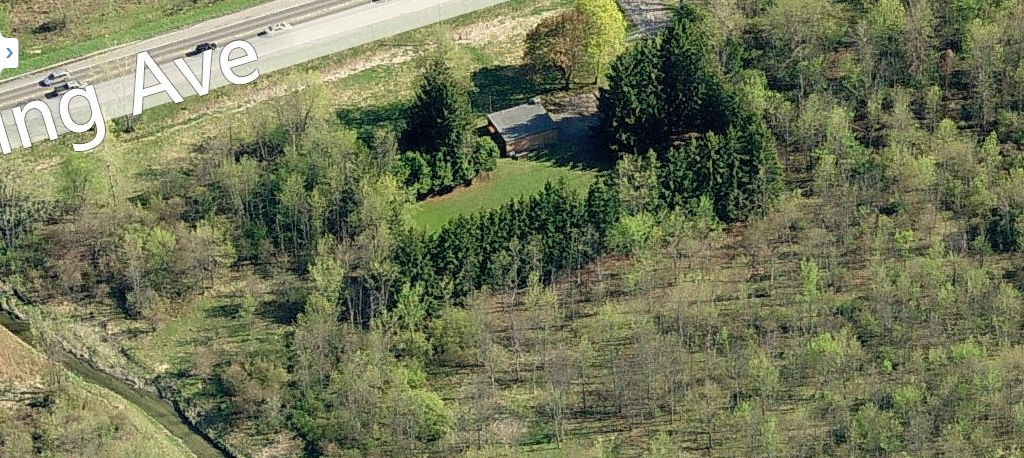
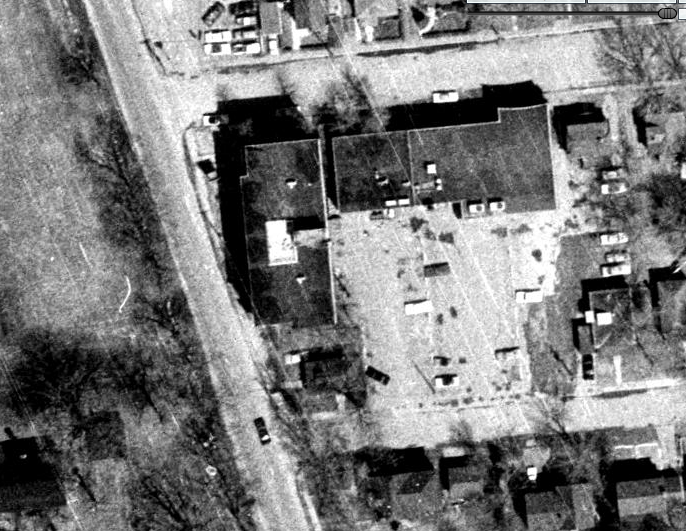
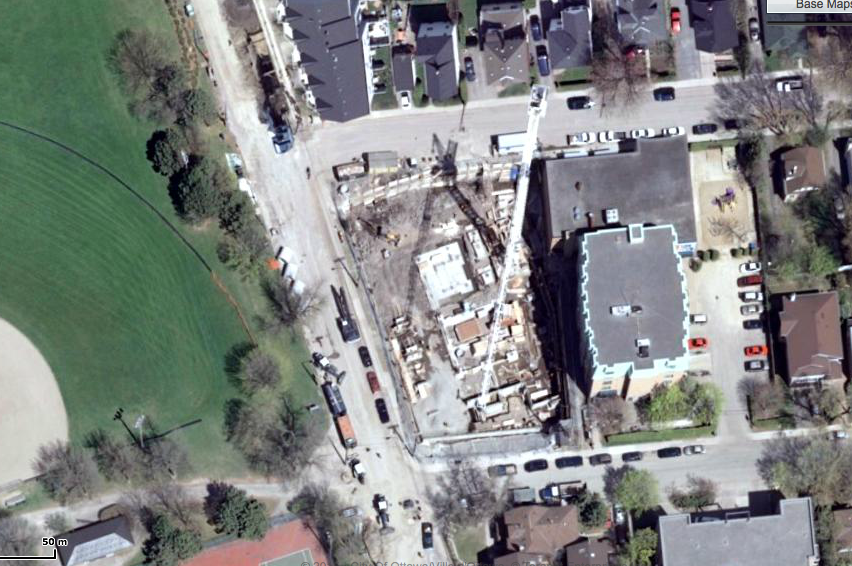
"Building 67", the world's first UFO research facility off Carling Ave. near Shirley's Bay. Demolished 2011. (photo Bing Maps)

“Building 67”, the world’s first UFO research facility off Carling Ave. near Shirley’s Bay. Demolished 2011. (photo Bing Maps)

During the 1950s reports of Unidentified Flying Objects grew each day with both the general public and government agencies from around the world quickly reacting. Canada was not without its own concerns over these new “alien spacecraft” roaming the skies, and set up a special investigation unit in Ottawa under the name “PROJECT MAGNET”. An UNIDENTIFIED FLYING OBJECT (UFO) study program was established by the CANADIAN DEPARTMENT OF TRANSPORT (DOT) on December 2, 1950, under the direction of Wilbert B. Smith, senior radio engineer for the DOT’s Broadcast and Measurements Section. Smith, the Defence Research Board and the National Research Council (NRC) were trying to determine that if UFOs did really exist, they might hold the key to a new source of power using the Earth’s magnetic filed as a source of propulsion for their vehicles. The top secret project in Ottawa also worked with their American counterparts in the CIA to determine if this new UFO “power source” could be studied and harnessed.

Smith’s geo-magnetic studies grew, and in 1952 the investigation was moved to Shirley’s Bay, a government facility on the Ottawa River approximately 15km west of Ottawa. UFO detection equipment was installed and by the end of October of 1952 the installation was complete. It became the world’s first UFO research facility. The 12 foot by 12 foot building housed instruments such as a gamma-ray counter, a magnetometer, a radio receiver (to detect the presence of radio noise) and a recording gravimeter within a 50 mile radius from the station.

Smith and his UFO research team at Shirley’s Bay conducted a number of experiments trying to attract UFOs to the area using their newly installed equipment. After months of potential UFO activity being recorded in the area, the facility soon had their most unusual occurrence.

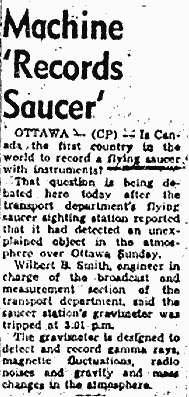
At 3:01pm on August 8, 1954 the instrumentation at the Shirley’s Bay installation registered an unusual disturbance. In Smith’s words “the gravimeter went wild”, as a much greater deflection was registered than could be explained by conventional interference such as a passing aircraft. Smith and his colleagues rushed outside their research building at Shirley’s Bay to view the craft that was creating such a enormous reading on their equipment. Once outside the building they were disappointed to find a heavily overcast sky with limited visibility. Whatever kind of craft that was up there was well hidden under the cover of clouds. The only evidence the researchers had of this large UFO was the deflection registered on the chart recorder paper.

Local newspaper article relating the 1954 UFO event at the Ottawa facility.

Local newspaper article relating the 1954 UFO event at the Ottawa facility.

Two days later Smith and the Shirley’s Bay research facility were abruptly shut down upon orders from the Department Of Transport. Many speculate the findings and strange occurrence at Shirley’s Bay prompted the project to go “underground”, with all findings entering the “TOP SECRET” status of operation elsewhere. Smith was allowed to remain if he chose to, but all government funding to conduct his UFO research was halted. Without government subsidies. Smith continued his research, funded by “other sources”. Smith carried on working at Shirley’s Bay, developing what he claimed was a breakthrough anti-gravity device. In a 1959 presentation Smith stated “ We have conducted experiments that show that it is possible to create artificial gravity (not Centrifugal force) and to alter the gravitational field of the Earth. This we have done. It is Fact. The next step is to learn the rules and do the engineering necessary to convert the principle into workable hardware.”

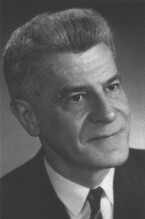
Smith, who headed the UFo research lab was stricken with cancer and died before he could complete his studies.

Wilbert Smith, who headed the Ottawa UFO research lab was stricken with cancer and died before he could complete his studies.

As Smith was about to finish work on this anti-gravity device he was stricken with cancer and died at the age of 52 on December 27 1962. The research facility at Shirley’s Bay was closed. The Project Magnet building he worked in existed until 2011 at the Shirley’s Bay Department of National Defence complex now known as “Defence Research and Development Canada” off Carling Avenue. It was simply marked as Building 67 but has since been demolished.

CONCLUSION

Odd events occur in many communities, usually later explained through logical explanation; a mysterious light becomes a plane, a loud sound turns out to be an icequake and so on. Yet there are some events that defy explanation, and Ottawa is no exception to being host to some of these interesting “X-files”. Perhaps it is because our city is the Nation’s Capital and the frequency of these unexplained events lends itself to being a perplexing anomaly. Or maybe the truth is here.

SOURCES

http://www.canada.com/story.html?id=228dd1fc-156f-4e0b-b31f-0c219d402615#__federated=1

http://www.cbc.ca/news/canada/ottawa/mysterious-signals-jamming-garage-door-openers-1.532740

http://www.cbc.ca/news/canada/ottawa/garage-doors-work-after-mystery-signal-vanishes-1.549198

http://www.wellandtribune.ca/2009/07/28/did-ufo-crash-into-ottawa-river

http://ottawacitizen.com/news/local-news/mystery-wildlife-attacks-horse-in-greenbelt-ncc-says

Beacon Hill Named After Lost Lighthouse

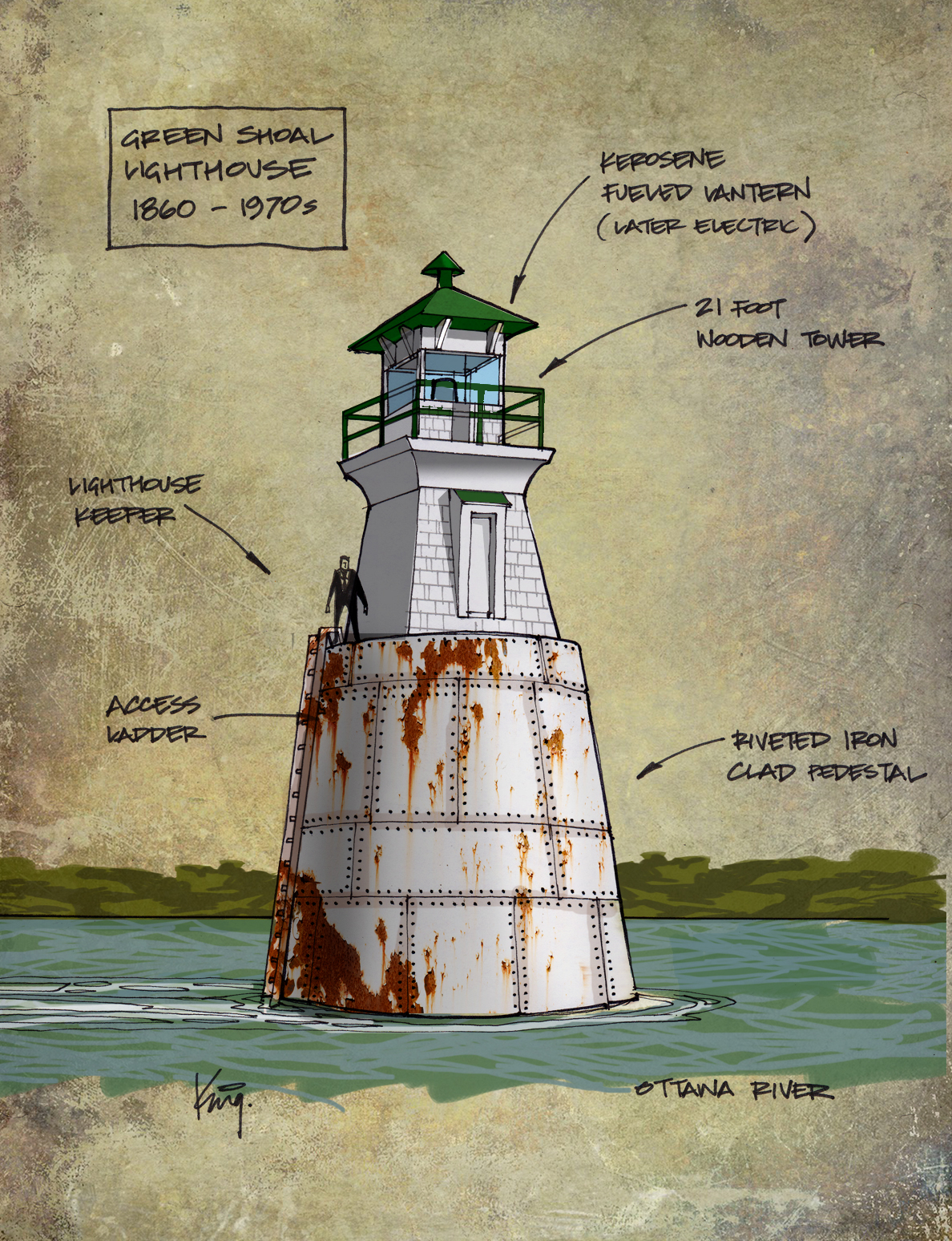
A concept sketch of how the lighthouse in the Ottawa River may have looked based on a photo taken by Lou Bouchard circa 1960s.

A concept sketch of how the lighthouse in the Ottawa River may have looked based on a photo taken by Lou Bouchard and aerial images from the 1960s.

The east-Ottawa community of Beacon Hill has a history of celebrity upbringing since the early 1970s when the suburban neighbourhood was originally developed. Tom Cruise, then known as Thomas Mapother, lived in Beacon Hill in the early 1970s along with another Hollywood Tom, the home-grown comedian Tom Green. Bryan Adams and former Saturday Night Live cast member and Weekend Update anchor Norm MacDonald also spent their youth in this east end suburb located a few kilometers downstream from the Nation’s Capital.

Having attracted a number of celebrities, the area also has a history of keeping people away from its shores with the construction of a warning beacon, the very beacon that gave the community its name.

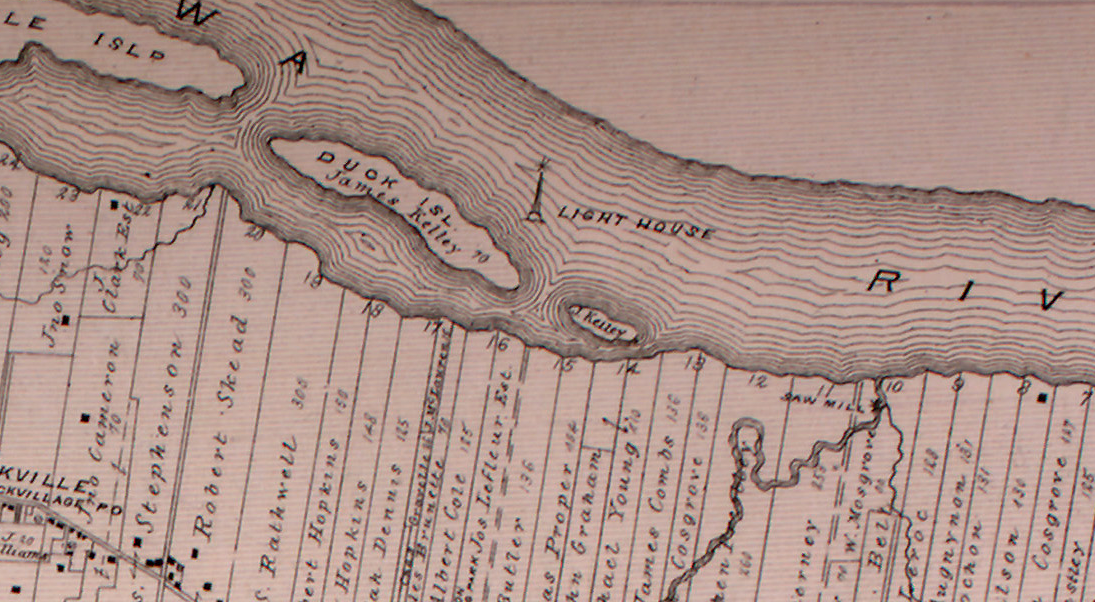
This old 1880 map clearly shows a lighthouse in between the Duck Islands on the Ottawa River.

This old 1880 map clearly shows a lighthouse in between the Duck Islands on the Ottawa River. (Gloucester Township Map 1880)

A few hundred metres north of the shore near Beacon Hill lie the remains of one of the Ottawa River’s lost lighthouses. Constructed in 1860 between the gaps of the the Ducks Islands near the provincial border, the lighthouse structure was built as a navigational aid to warn sailors of the dangerous reef of rocks known as “Green Shoal”. Navigating ships on the Ottawa River was a relatively new adventure in the mid-19th century, but with the construction of the Rideau Canal in 1832 and the Carillon Canal in 1833, the Ottawa River became a busy shipping and tourist route between Ottawa, Lake Ontario and Montreal before the advent of area rail travel. The waterway was busy with steamships plying the waves between cities, but a number of shoals and islands created hazards for the vessels and required the need for warning lights to mark their location. The government at the time gave the order for the construction of approximately 30 lighthouses on the Ottawa River to assist in the safe passage of growing river traffic. Pre-Confederation Canadian lighthouses were usually built of stone or brick, but with the need to build so many new structures in time, the newly formed Department of Marine and Fisheries required cheaper and faster lighthouse construction techniques.

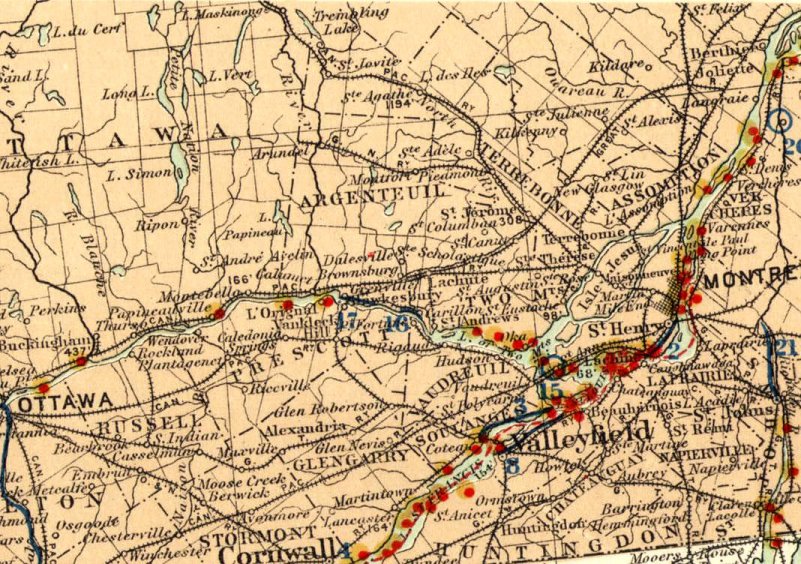
A 1904 map shows lighthouses in red, a number of which were on the Ottawa River.

A 1904 map shows lighthouses in red, a number of which were on the Ottawa River. The Beacon Hill lighthouse, on Green Shoal, is the furthest red dot on the left. (bytown.net -Department of the Interior, Atlas of Canada 1904)

Built as four sided tapering wooden clapboard towers, these structures had the advantage of being cheap to build, and in some cases could be relocated if the site needed attention. The water hazard known as Green Shoal would seen see the construction of such a beacon structure in 1860 on a conical pedestal sheathed in iron boiler plates, riveted together like some kind of Jules Verne rocket to withstand the strong river current and sheets of crushing ice carried downstream. Atop this iron clad pedestal was placed a 4 sided white wooden pyramidal tower 21 feet in height. Using a standard design used for many of the Ottawa River lighthouses, the structure housed a fixed light that was initially fueled by Kerosene, a fuel invented by the Canadian geologist Abraham Gesner in 1846. The Green Shoal light was visible to passing ships from a distance of nine miles and eventually was rebuilt in 1900 when it was most likely converted to using an electric lamp.

In 1862 the Sessional Papers of the Province of Canada reveal a house was requested to be built for the keeper of the lighthouse, yet its location or fate is unknown. In 1891 the lighthouse keeper by the name of A. Laberge earned an annual salary of $250 for his duties maintaining the light at Green Shoal.

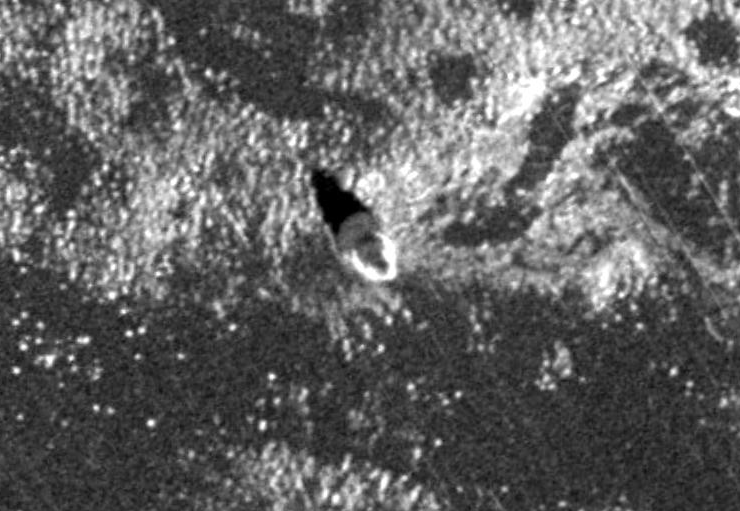
A 1965 aerial image shows that the beacon was still in place on its pedestal on the Ottawa River.

A close-up of a 1965 aerial image shows that the beacon was still in place on its pedestal on the Ottawa River. (geoOttawa)

The beacon remained in operation for more than a hundred years, being dismantled and replaced by an automated light marker sometime in the 1970s. It was at this time that a new suburb was being developed nearby, and from atop the hill on what is now Naskapi Drive, the neighbourhood got its name from the old beacon that was visible on the river below.

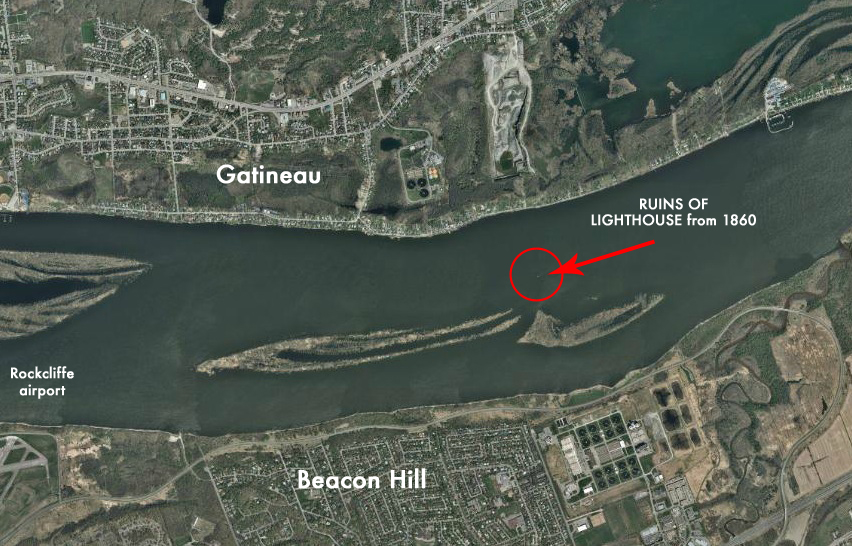
The location of the ruins of the lost lighthouse that gave Beacon Hill its name.

The location of the ruins of the lost lighthouse that gave Beacon Hill its name. (Google Maps)

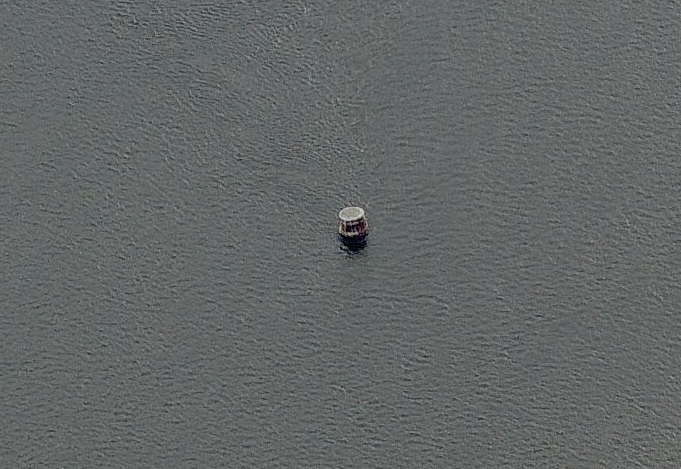
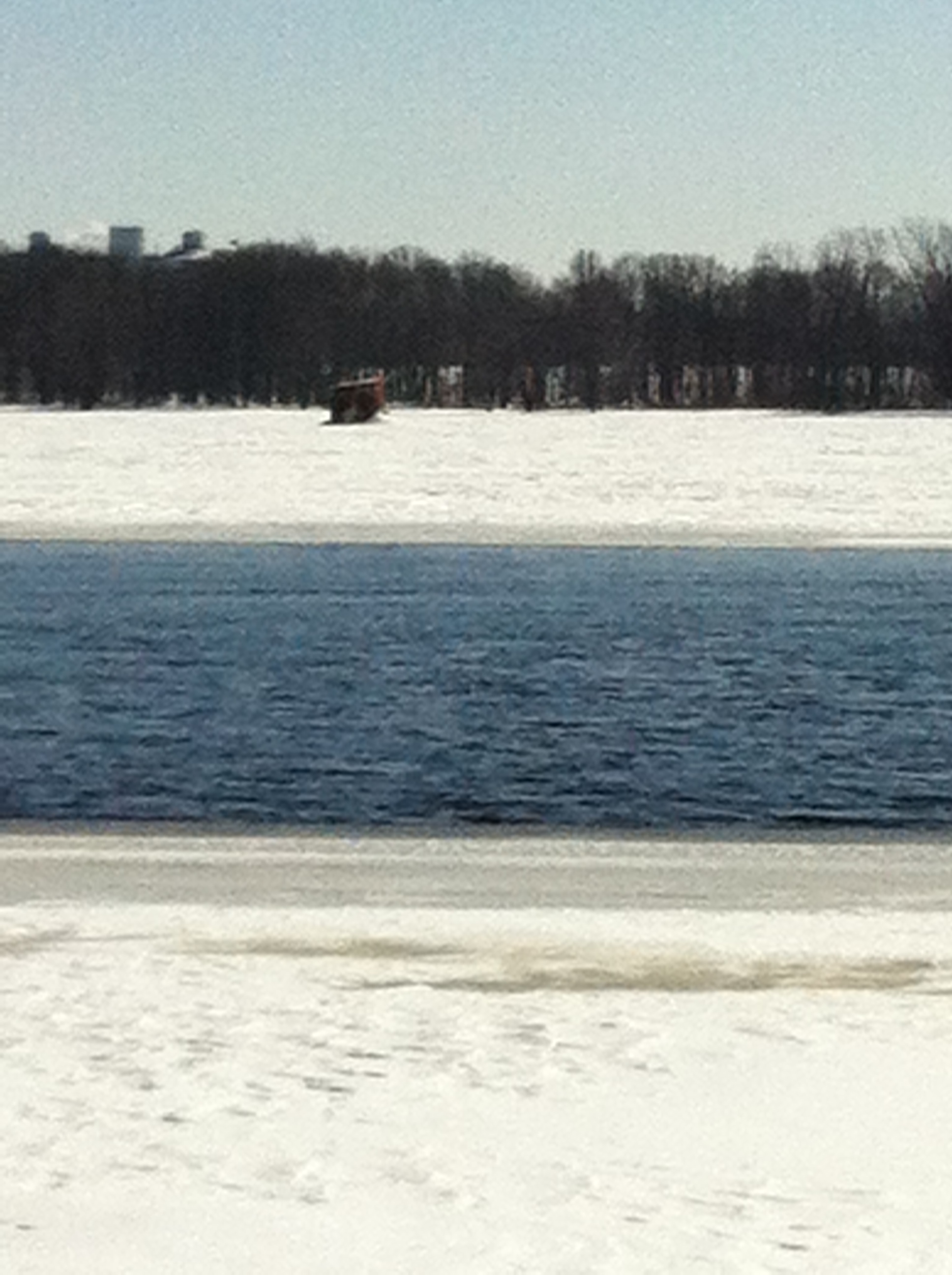
Today Beacon Hill residents and those on the Quebec side of the river can catch a glimpse of the iron-clad lighthouse ruins sitting in the Ottawa River. Bashed by years of crushing river ice, the rusty remnants now list to one side, a forgotten sentinel literally frozen in time during the winter months.

All that remains of the lighthouse are the iron-clad rusty remnants of the beacon's pedestal.

All that remains of the lighthouse are the iron-clad rusty remnants of the beacon’s pedestal. (Bing Maps)

The beacon ruins, literally frozen in time, encased in ice on the Ottawa River. The neighbourhood of Beacon Hill, which got its name from this very lighthouse,  is in the background.

The rusting beacon ruins, literally frozen in time, encased in ice on the Ottawa River. The neighbourhood of Beacon Hill, which got its name from this very lighthouse, is in the background.


Beacon Hill, a neighbourhood that could also be called “Celebrity Hill”, continues to carry the name of the structure that once warned sailors to keep away. What’s left of this namesake slowly slips under the waves from where it emerged.

SOURCES

http://en.wikipedia.org/wiki/Beacon_Hill,_Ottawa

http://en.wikipedia.org/wiki/Tom_Cruise

http://www.bytown.net/lighthouses.htm

Lighthouse Digest Magazine Database http://www.lighthousedigest.com/Digest/database/uniquelighthouse.cfm?value=2998BING MAPS

1891 Sessional Papers Canadian Parliament -Report Of Dominion Fisheries Canada

1862 Sessional Papers Of The Province Of Canada

GOOGLE MAPS

HIDDEN FORTRESS: 17th CENTURY FORT ON THE OTTAWA RIVER

A 17th century stone fortress ruin lies in someone's backyard on the banks of the Ottawa River 90minutes east of Ottawa.

A 17th century stone fortress ruin lies in someone’s backyard on the banks of the Ottawa River 90minutes east of Ottawa. (photo: Google Maps)

fortsenneville

When you think of a stone castle fort with gun ports and swiveling cannon bastions, images of European castle fortresses probably come to mind. A stone fortification that repels invaders with projections for pouring hot liquids and/or rocks down on attackers seems in place within medieval Europe, but yet this castle fortress lies not there, but on the Ottawa River. Hidden amidst trees in someone’s backyard, there lies the ruins of a 17th century stone fortress.

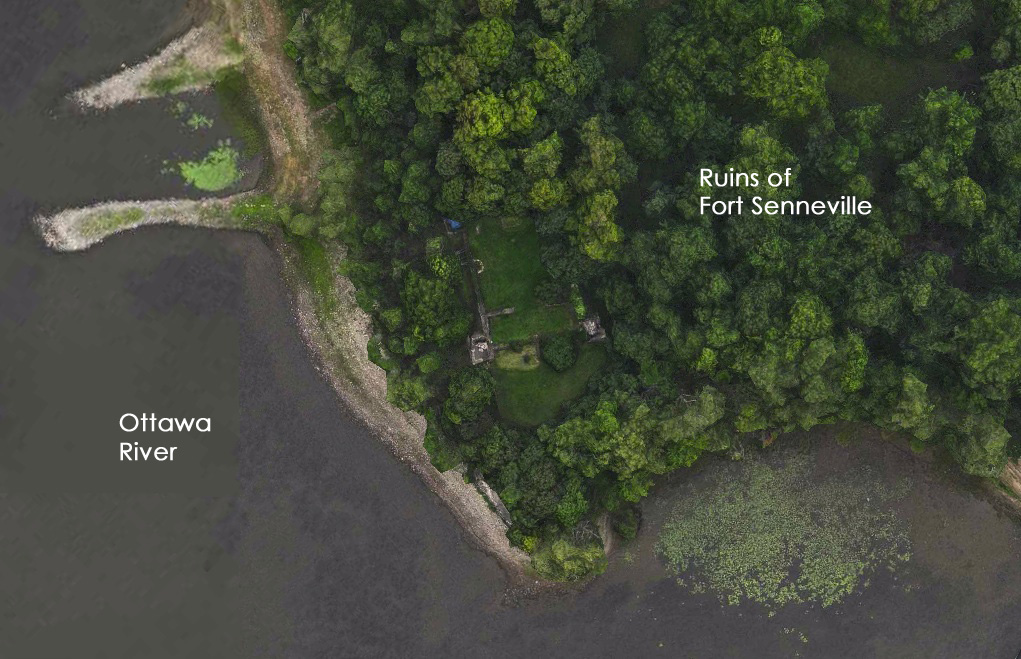
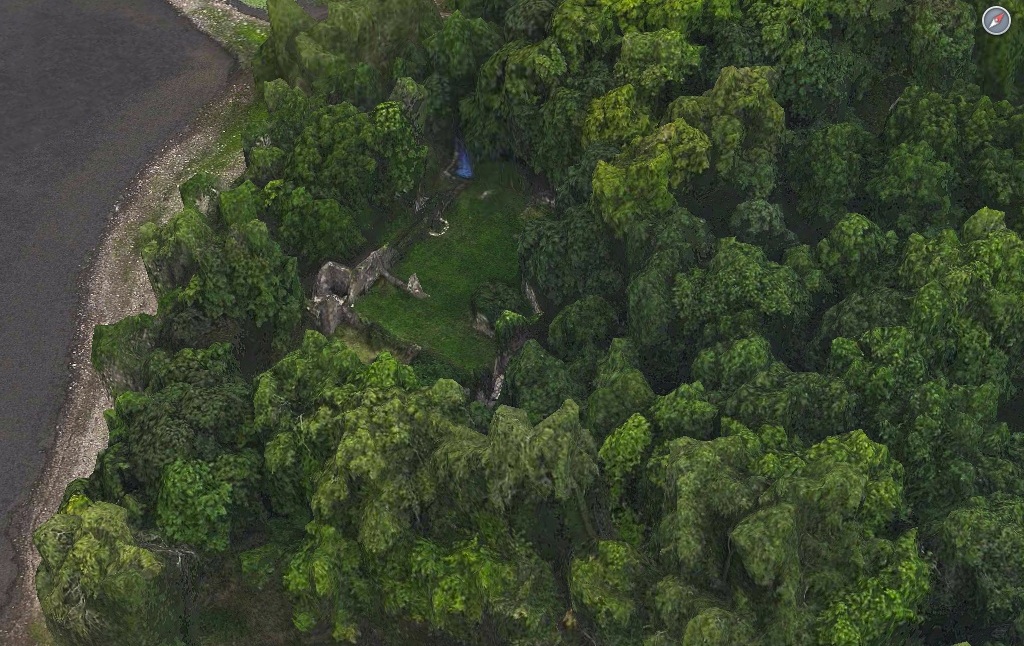
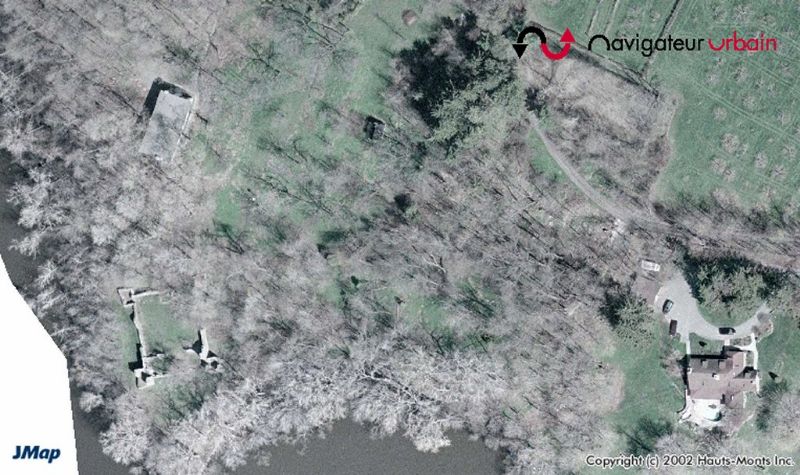
Aerial image of what remains of Fort Senneville built in 1692. (photo: Google Maps)

Aerial image of what remains of Fort Senneville built in 1692. (photo: Google Maps)

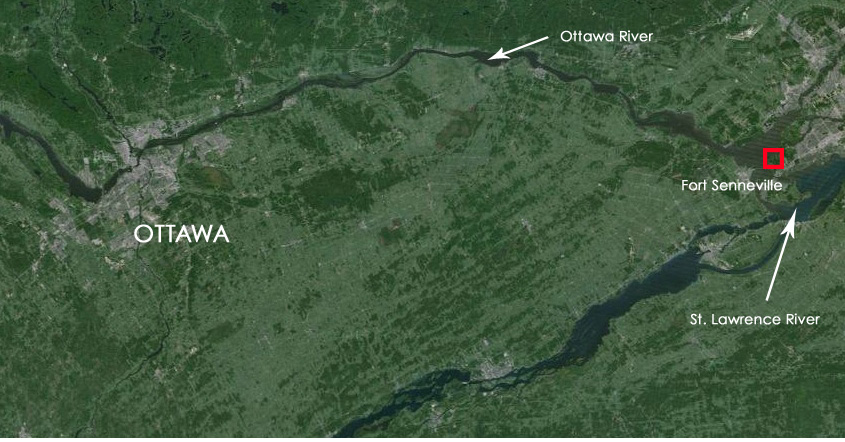
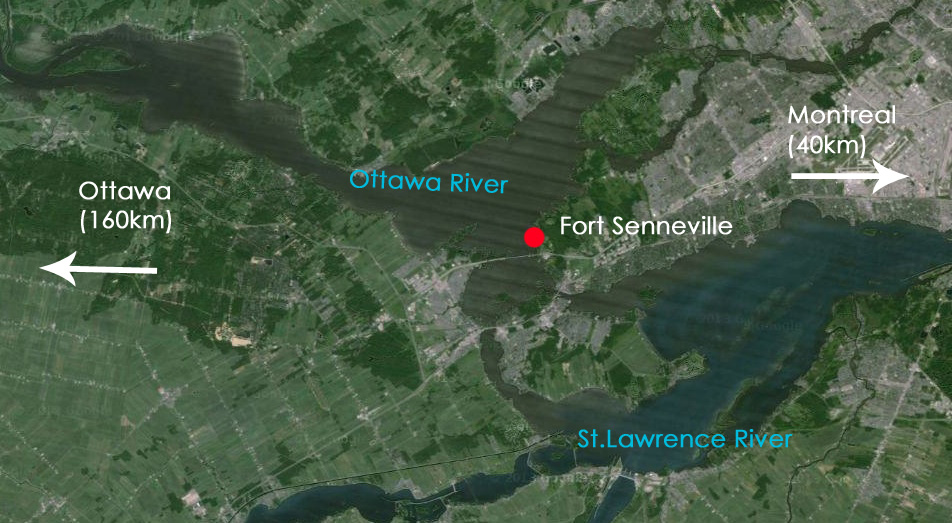
Approximately 160km east of Ottawa hidden from view on the banks of the Ottawa River sit the remains of Fort Senneville, a 17th century stone castle-fort built to protect French settlers. The fortress ruins sit in the backyard of a residence on Senneville Road, designated a National Historic Site, but out of view from the general public. The fort can however be seen with the use of aerial images such as Google Maps and Bing Maps where we can further study this fascinating piece of history under the trees.

Location of the fort in relation to Ottawa.

Location of the fort in relation to Ottawa.

Closer aerial view showing the location of the fort.

Closer aerial view showing the location of the fort.

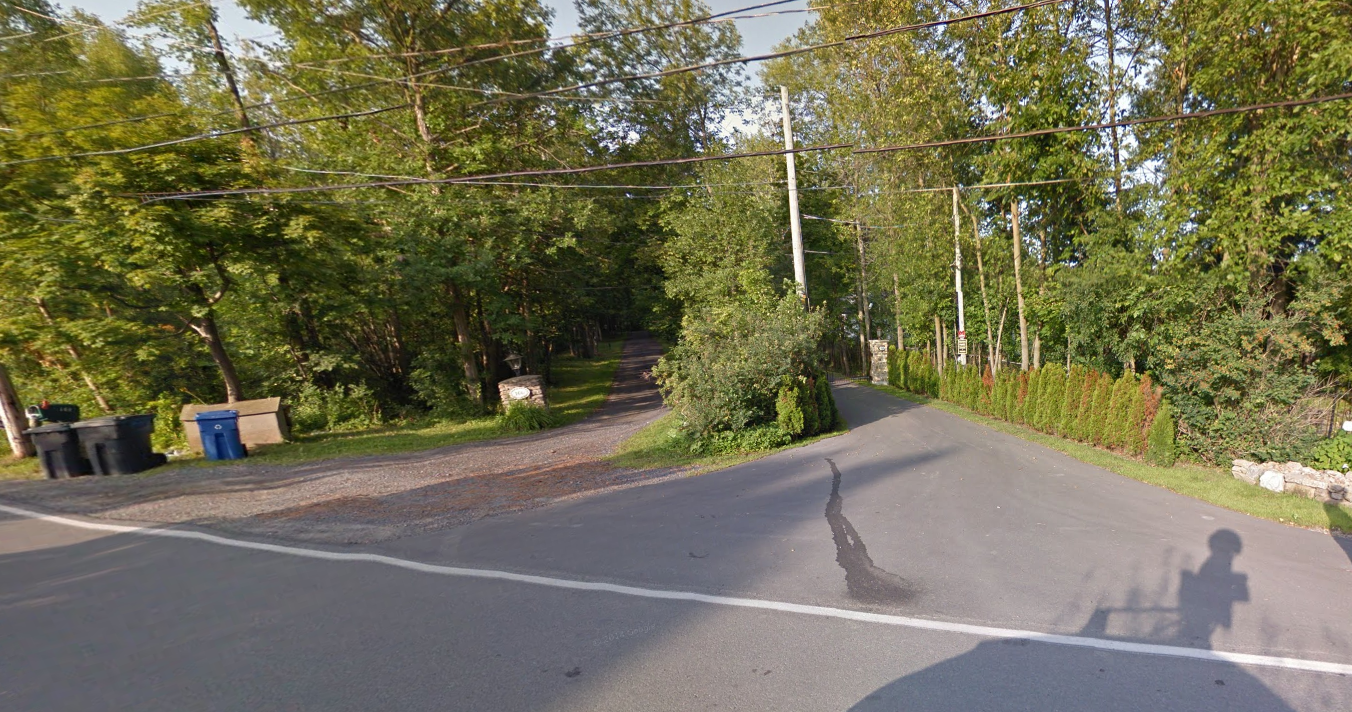
Google streetview showing the entrance to the private residence where the fortress sits in their backyard.

Google streetview showing the entrance to the private residence where the fortress sits in their backyard.

The fort is the westernmost stone fortification built by the French on the Ottawa River when they constructed a protective string of 30 outlying forts to repel the Iroquois threat to the expansion of French settlements. Originally the fort was constructed of wood in 1671 and was attacked by the Iroquois in 1687, a year after a fortified stone mill was built on the site that also served as a watchtower overlooking the Ottawa River. The initial attack was repulsed, but the Iroquois returned in greater force in 1691 when they successfully attacked and burned the wooden fort to the ground.

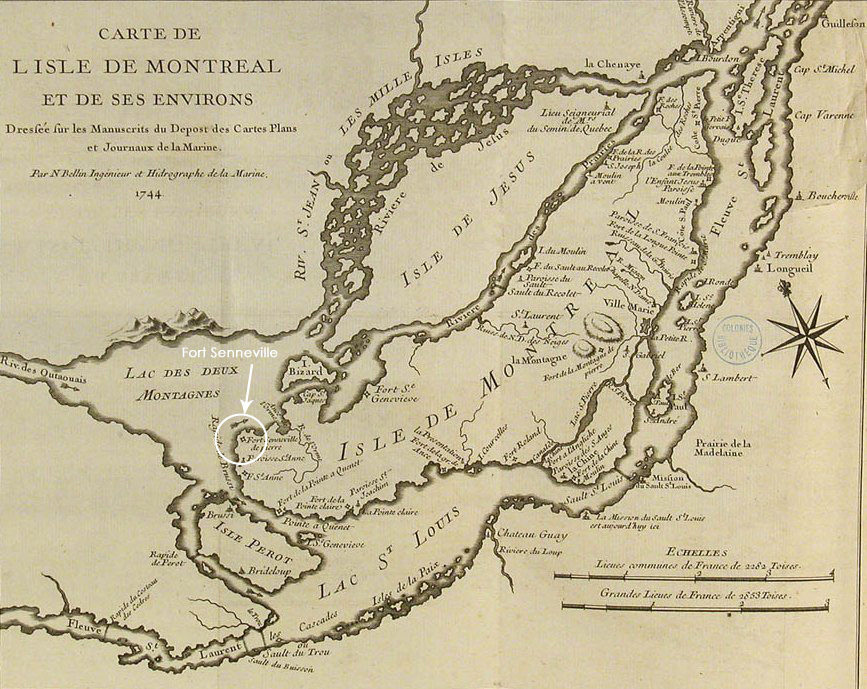
A map from 1744 showing the location of Fort Senneville.

A map from 1744 showing the location of Fort Senneville.

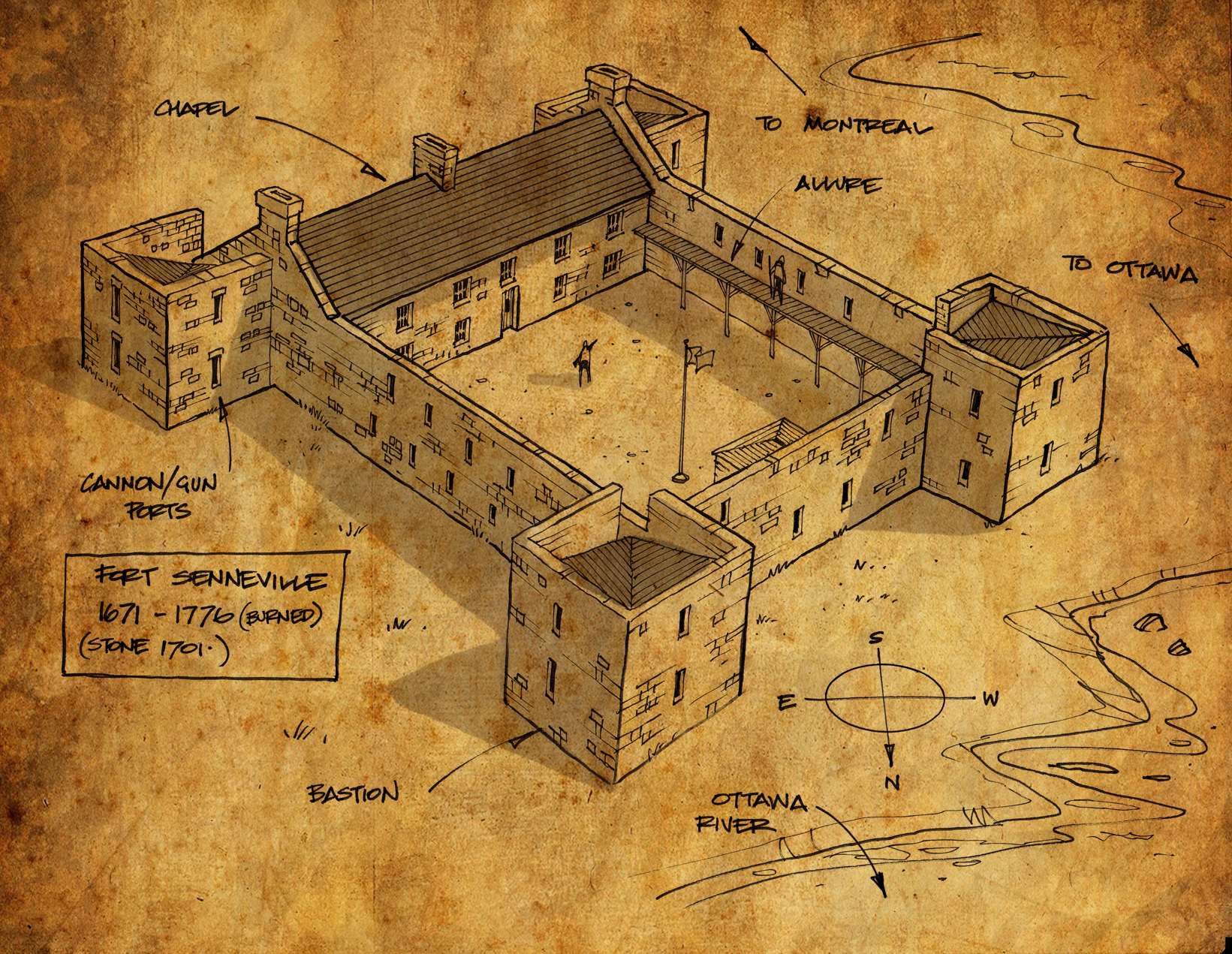
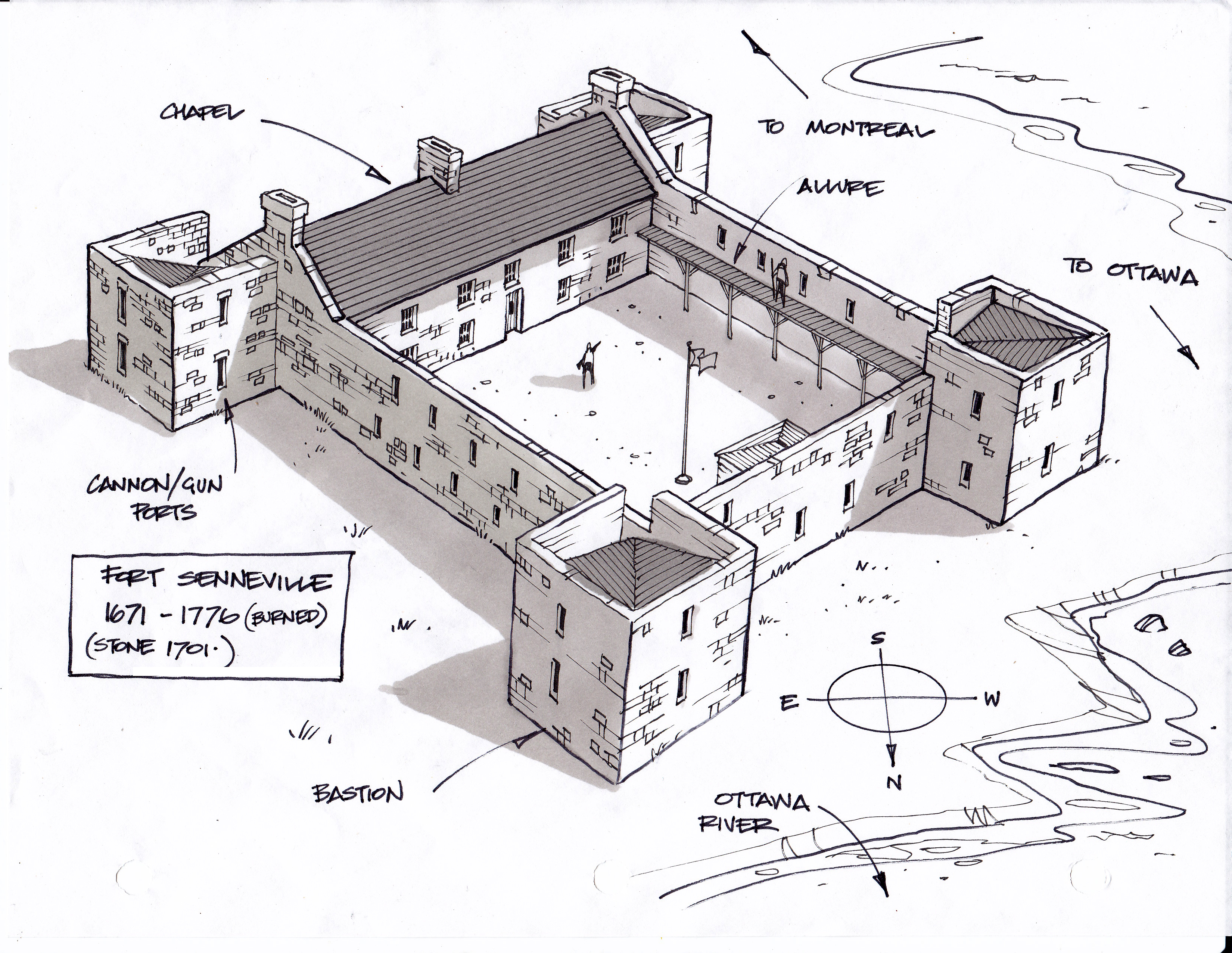
Governor-General Frontenac then ordered the construction of a stronger, more substantial fort, and in 1692 Fort Senneville was constructed using thick stone walls and corner tower bastions, cannon ports, musket ports, and extensive swivel wall guns. Fort Senneville on the Ottawa River was the “most substantial castle-like fort” near Montreal.

My conceptual sketch of how Fort Senneville may have looked in the 1700's

My conceptual sketch of how Fort Senneville may have looked in the 1700’s

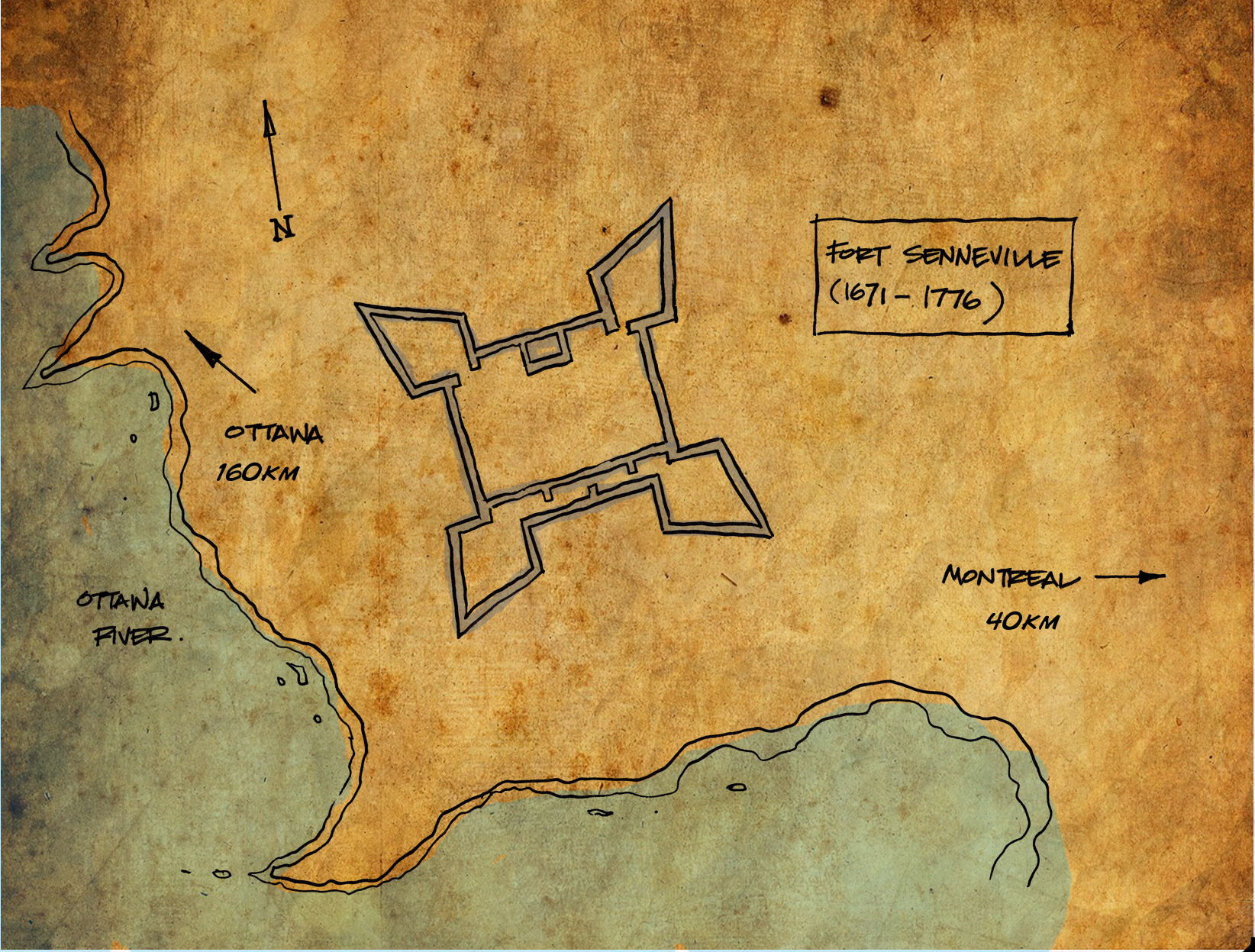
Top view sketch of the fort footprint near the Ottawa River.

Top view sketch of the fort footprint near the Ottawa River.

This new fortress was never attacked again. It remained a stronghold on the easternmost end of the Ottawa River near where it meets the St. Lawrence River, a strategic location for shipping and fur trading operations.

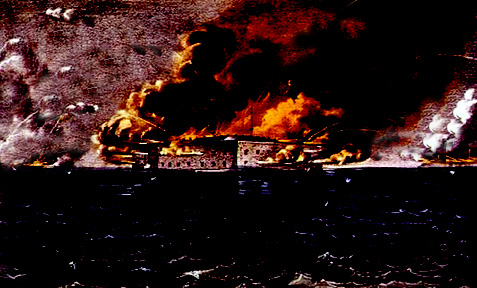
This imposing castle-like French fortress was ceded to the British in 1763 after the fall of New France and it remained an unused outpost. However, in 1776 during the American Revolutionary War, the fort was doomed.

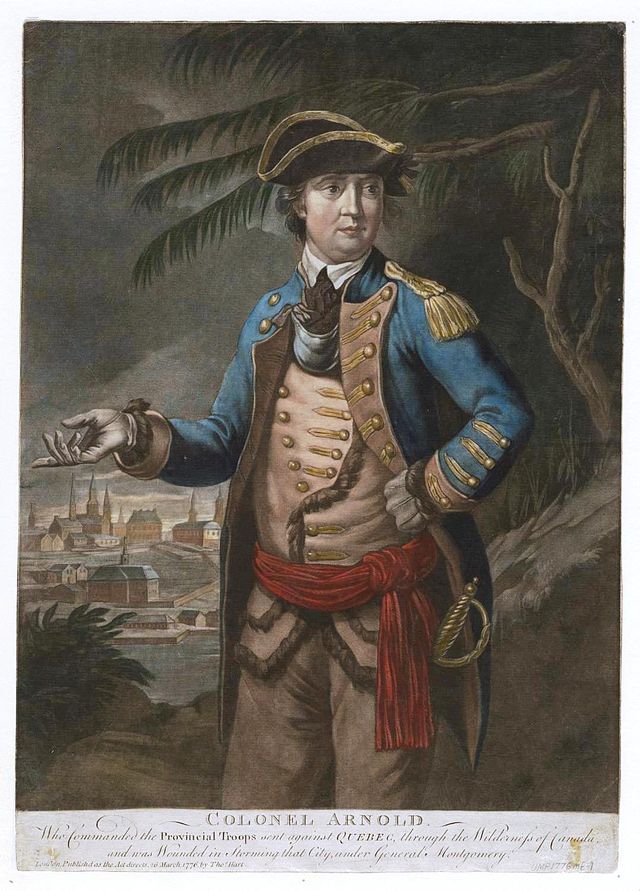
Benedict Arnold, who destroyed the fort in 1776.

Benedict Arnold, who destroyed the fort in 1776.

Benedict Arnold leading his Continental Army troops in military maneuvers during the Battle Of The Cedars took over the fort and burned it to the ground as they retreated back to the United States. Arnold successfully destroyed the fort before he switched sides and joined the British around 1780.

Benedict Arnold took over then later burned the fort as he retreated to the USA during the American Revolutionary War in 1776.

Benedict Arnold took over, then later burned the fort as he retreated to the USA during the American Revolutionary War in 1776.

The ruined Fort Senneville was purchased in 1865 as a summer residence by the former prime minister of Canada and mayor of Montreal, John Abbott. The property then changed hands again in 1898 to Edward Clouston, the General Manager of the Bank Of Montreal.

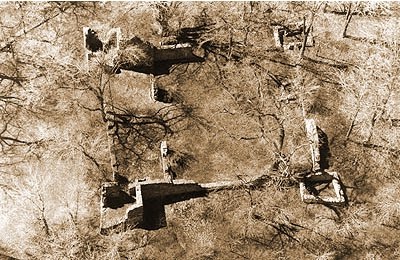
A photograph of the fort exposing the ruins when the foliage has cleared during the autumn season.

A photograph of the fort exposing the ruins when the foliage has cleared during the autumn season.

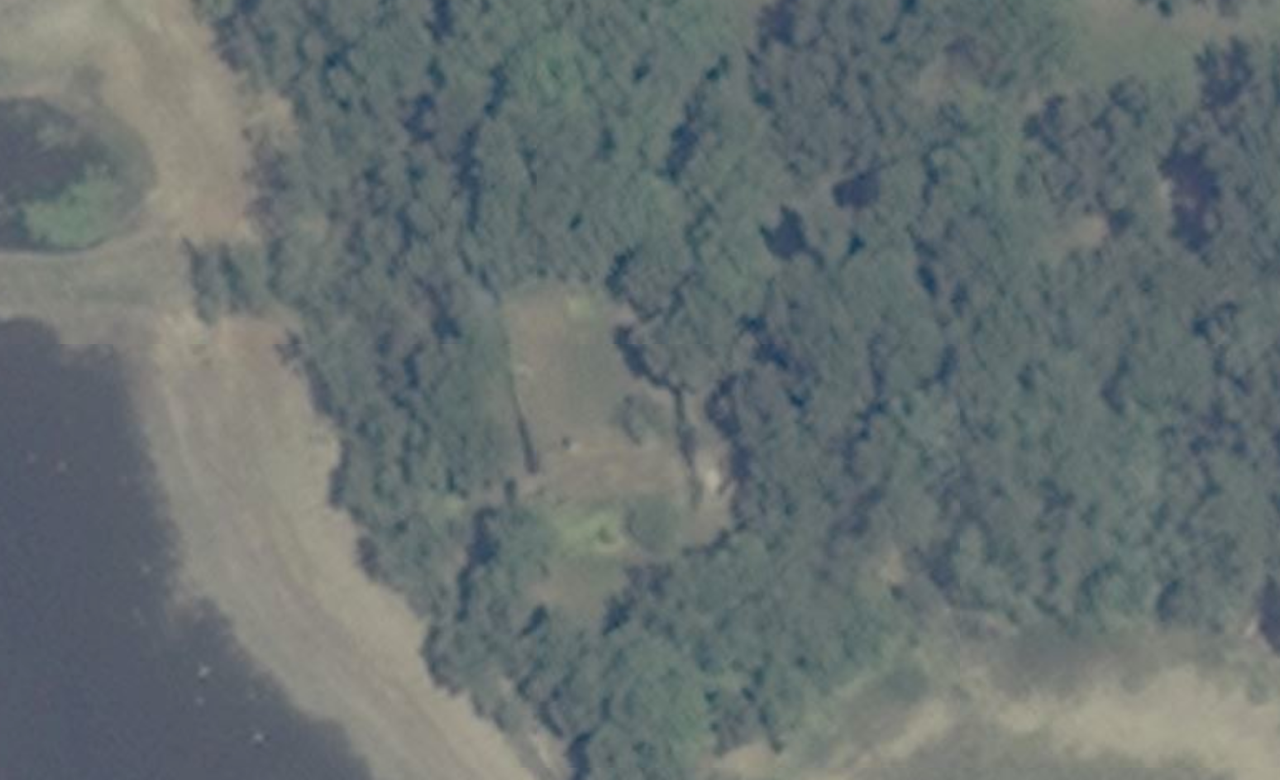
A Google Map image showing what remains of the 17th century fortress.

A Google Map image showing what remains of the 17th century fortress.

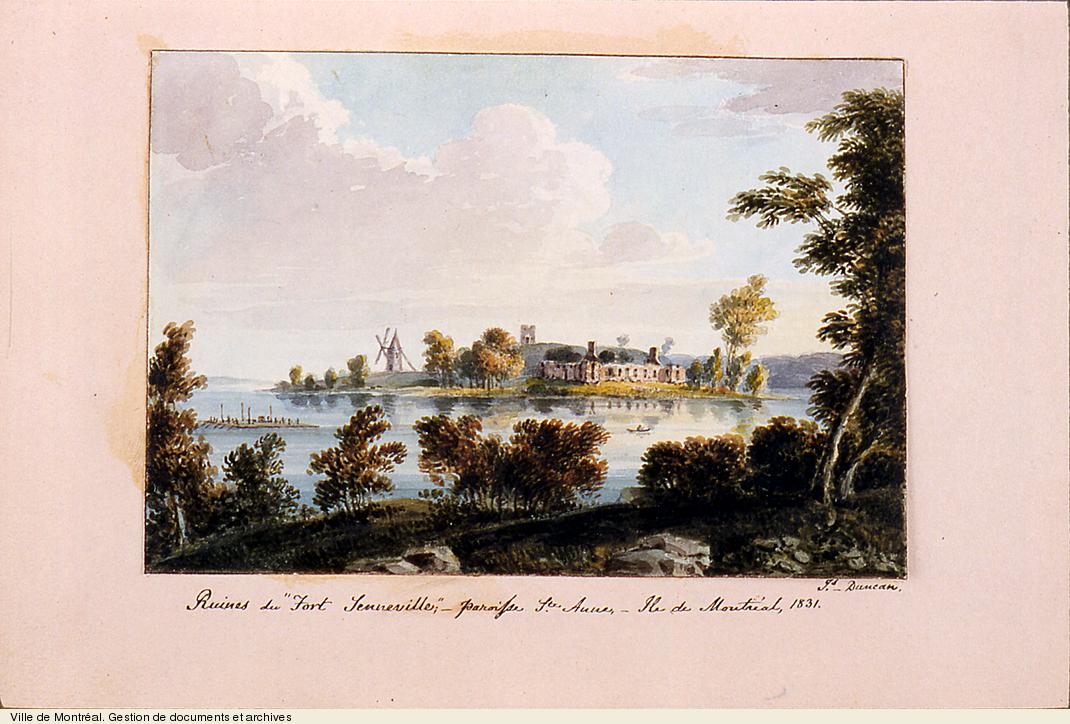
BM99-0127

Artwork from 1831 showing the ruins of the fort, which look to be in good condition at the time.


Since then the property has been privately owned and the hidden stone fortress remains cloaked under trees on the shores of the Ottawa River. It was designated in 2003 by Quebec for historical significance by classifying it as a “site historique” . Archaeological research and repairs funded by the Ministry of Culture and Communications has helped preserve what remains, and in 2009 it became a National Historic Site.

91983

This aerial image shows the modern residences nearby with the fort in their backyard.

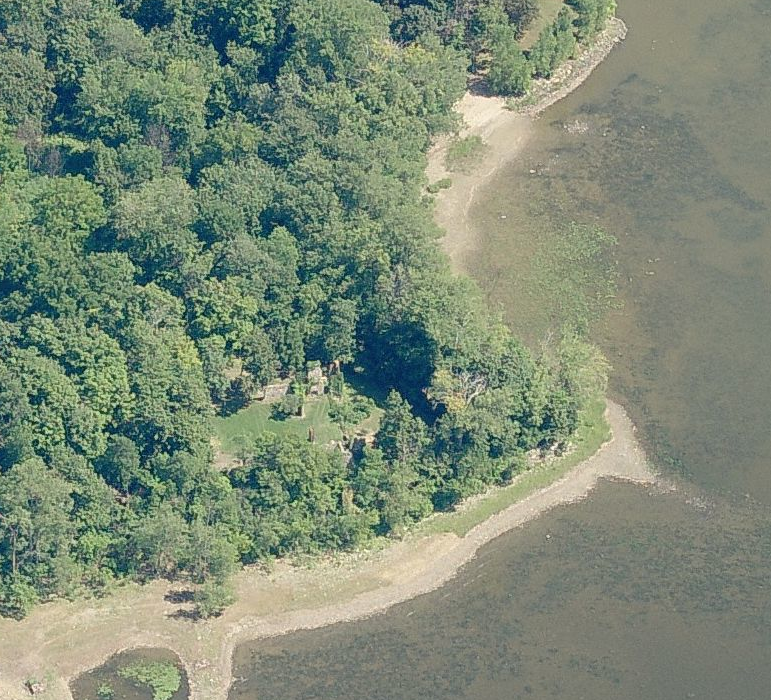
Bing Map image showing the ruins of the fort near the Ottawa River.

Bing Map image showing the ruins of the fort near the Ottawa River.


The ruins of the fort continue to be under private ownership and public access is not allowed. It is interesting to think that what remains of the largest stone castle-like fortress on the Ottawa River from the 17th century remains hidden in someone’s backyard, out of sight for those of us that aren’t invited to their backyard barbecue.

ATLAS SHRUGGED: Ottawa’s Landmark Rocket To Be Cut Up


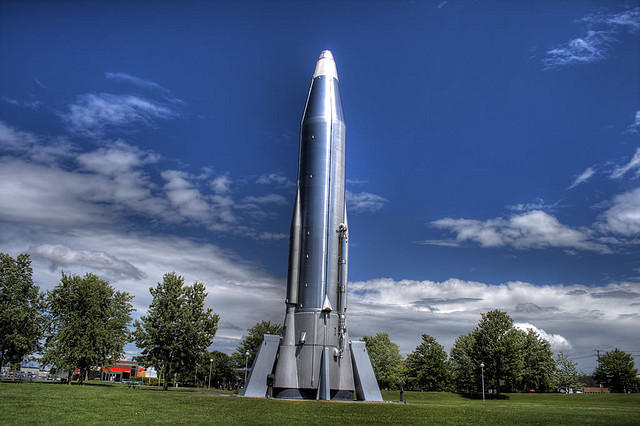
PHOTO : Intiaz Rahim

PHOTO : Intiaz Rahim

The Museum Of Science and Technology recently announced that their iconic rocket displayed on the grounds of the museum is slated to be destroyed after more than forty years. The museum stated “For safety reasons related to their deterioration, the Atlas rocket and the oil pumpjack that have for many years graced the lawns of Technology Park in front of the Canada Science and Technology Museum (CSTM) will be removed.” according to a recent article in the Ottawa Citizen. (read complete article here)

The museum has already been forced to close due to air quality concerns, so this recent announcement comes as a second blow for the cash-strapped facility that houses some of this country’s most historic artifacts. The rocket is on loan from the USAF who says they don’t want it back, but rather ask it be “cut down into tiny pieces so that no one could possibly figure out how to reassemble them.”

The destruction of our beloved and popular landmark will occur over the course of the next few weeks, but before that happens, let’s take a closer look at our famous rocket before it is sadly gone forever.

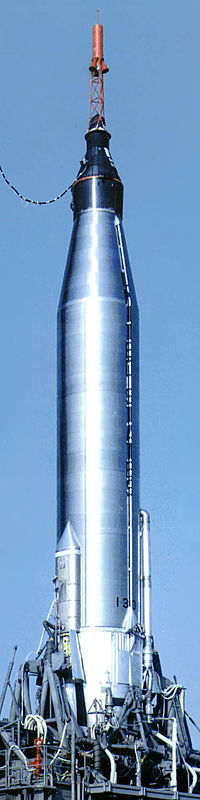
Our rocket is an Atlas 5A (Serial #56-6742) and it is the only surviving Atlas in the original A-series configuration. The first Atlas flown was the Atlas A in 1957–1958. Our rocket was built in 1956 used as a test and research article, later displayed  throughout the 1960s at the former location of the Air Force Museum, at Wright-Patterson AFB, Ohio.

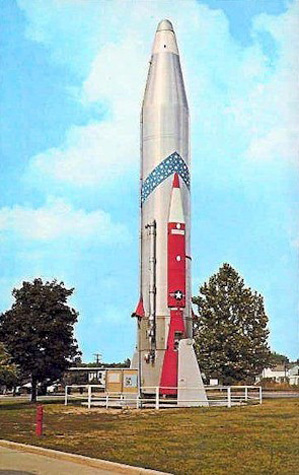
Our Rocket as it appeared on display in the United States before arriving in Ottawa.

Our Rocket as it appeared on display in the United States before arriving in Ottawa.

The Atlas-class rocket was used to put Lt. Col. John Glenn in space becoming the first American to orbit the Earth in 1962 and was also the first intercontinental ballistic missile. (ICBM) . Nuclear ICBM launch silos were built across the US during the cold war to facilitate nuclear armed Atlas rockets. The Atlas was retired from service in 1965.

An Atlas rocket with the Mercury capsule attached circa 1963.

An Atlas rocket with the Mercury capsule attached circa 1963.

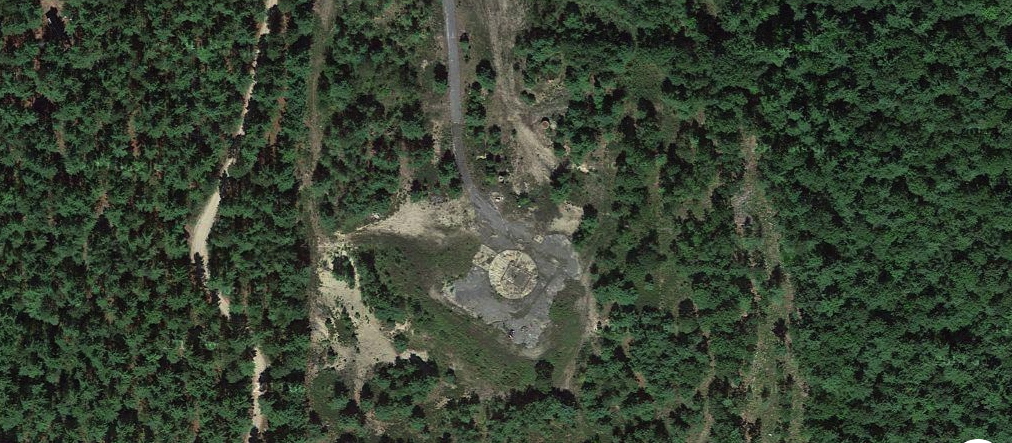
One such missile silo exists just south east of Ottawa in Upper New York state, Here is a Google pic of the abandoned Atlas ICBM silo located just a two hour drive from Ottawa.

IMG_4045The rocket was loaned to the museum in Ottawa by the USAF in 1973 when it was installed on the front lawn of the museum..

After more than forty years outside  in the harsh elements, the rocket has now deteriorated to the point, that according to the article it “has not been air tight for many years, and a compressor coupled to a generator (has) been required to maintain its internal pressure to prevent it from collapsing upon itself,”

Pressure in the tanks provides the structural rigidity and an Atlas rocket would collapse under its own weight if not kept pressurized with 5 psi of nitrogen in the tank even when not fuelled. The compound WD-40 was invented in 1953 by Dr. Norm Larsen, founder of the Rocket Chemical Company and first used by Convair to protect the outer skin of the rocket, more importantly, the paper-thin balloon tanks of the Atlas missile from rust and corrosion. These stainless steel fuel tanks were so thin that, when empty, they had to be kept inflated with the nitrogen gas to prevent their collapse.

The museum sates that “As its deterioration advances and becomes more severe, practical solutions to maintain the required internal pressure to prevent it from crumpling and potentially injuring visitors to Technology Park are running out.”

A sad end to a rocket that launched the imaginations of thousands of kids over the last four decades. You’d think we’d be able to find an alternative way save this valuable piece of world history. Does anyone have the Smithsonian’s number?

UPDATE FEBRUARY 22 2015

After recently contacting the Smithsonian Air and Space Museum about the doomed rocket, they put me in touch with Discovery Park Museum in Tennessee. There is a slim chance the rocket may have a new home and avoid being cut up.

FULL update in the Ottawa Citizen here:

SOURCES

Ottawa Citizen, February 10 2015 http://ottawacitizen.com/news/local-news/science-and-tech-museum-will-lose-rocket-pumpjack

Wikipedia http://en.wikipedia.org/wiki/SM-65_Atlas
http://www.atlasmissilesilo.com/556thSMS_Site11.htm

Google Maps


THE IRON GIANT: Smiths Falls 100 year old bascule bridge

WATCH THE AMAZING DRONE FILM FOOTAGE OF THE IRON GIANT by Dan Brennan of B4CK40

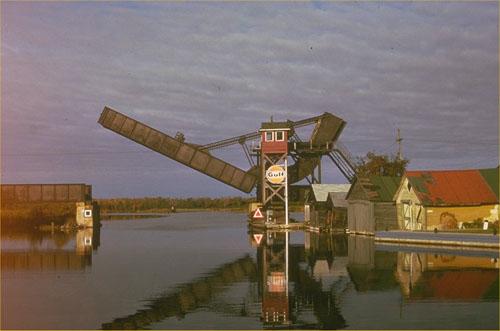
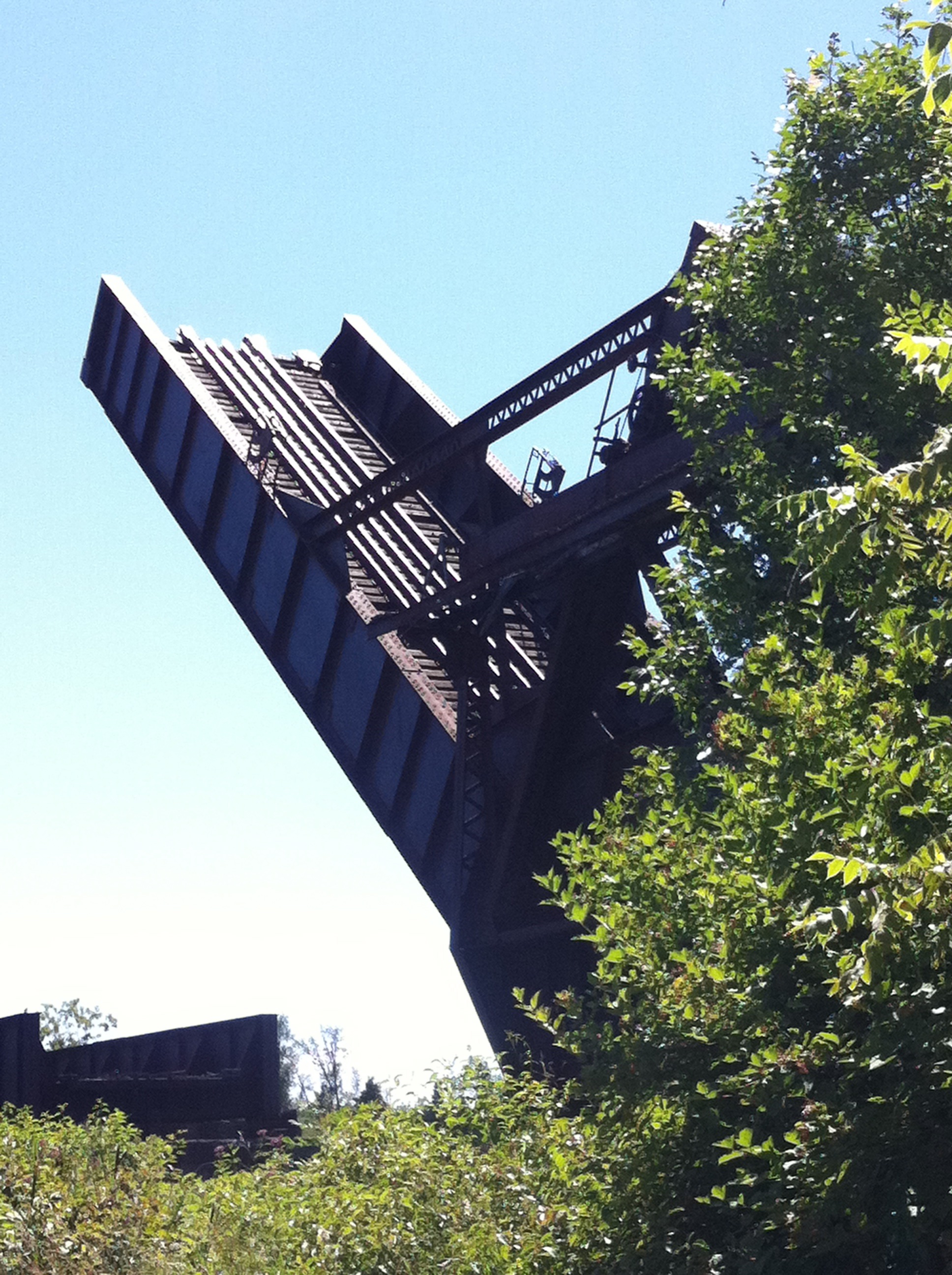
A Smiths Falls landmark for over a hundred years, the giant iron bridge on the outskirts of town that once spanned across the Rideau Canal sits like a massive sentinel, forever poised at a 45 degree angle.  Built by the Canadian Northern Railway over the course of the year 1912-13, the bridge was part of the Toronto to Ottawa connection of the CNR. Designed in Chicago and built by the Dominion Bridge Company, this massive iron bridge showcased a new style of bridge engineering fairly new to North America called the bascule bridge.

The bridge as it looked in 1988. (photo Parks Canada)

The bridge as it looked in 1988. (photo Parks Canada)

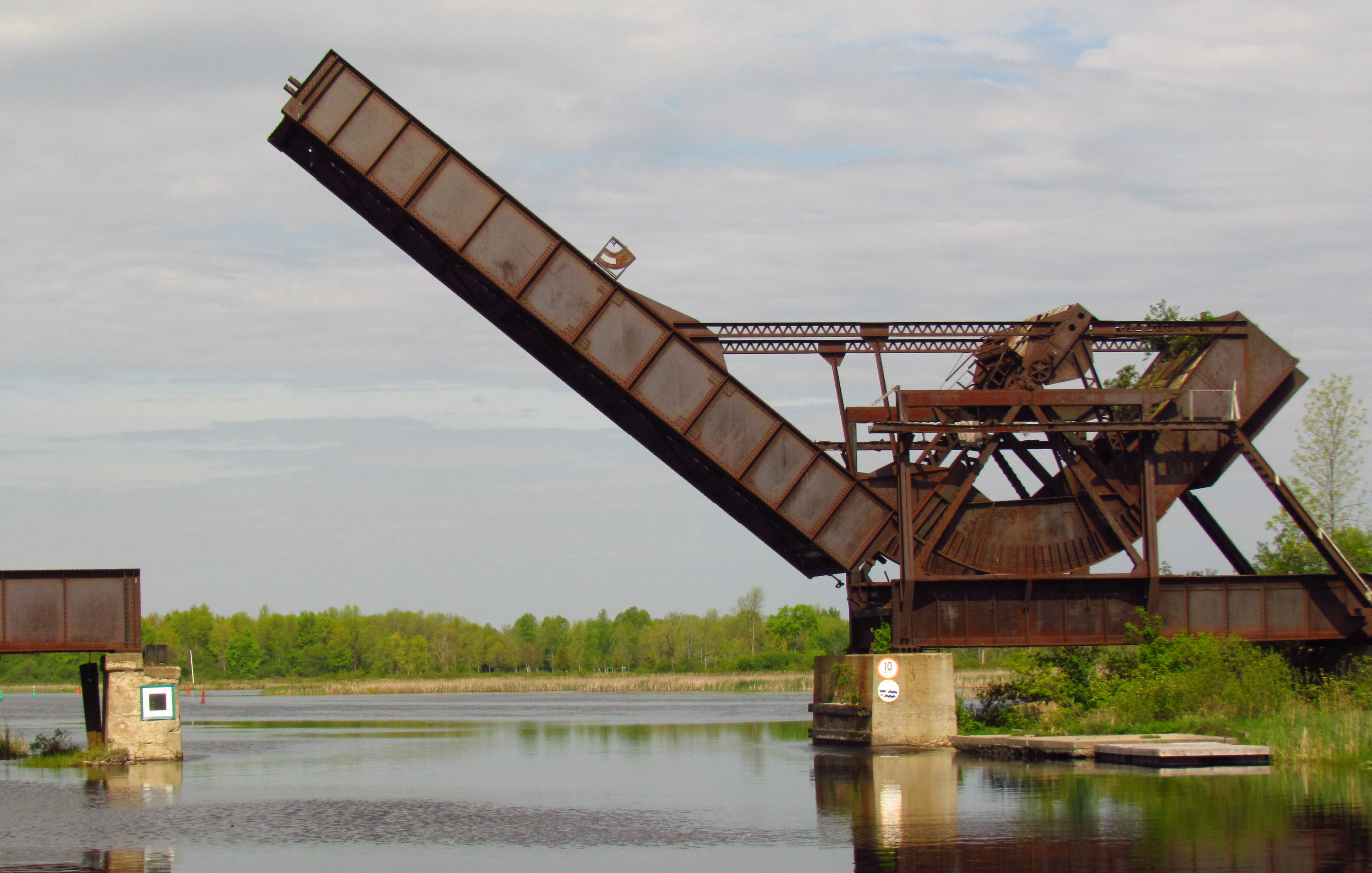
Called the Schrezer Rolling Lift Bascule bridge, after the Chicago company who designed it, these bridges were designed for areas where a high rail bridge or swing bridge could not be implemented. “Bascule” is French for “see-saw”, the principle used in its design and operation. Using a massive concrete counterweight perfectly balanced, the bridge lifted up with relative ease by either manual or electric operation. The bridge first began operating by manual fashion, but in 1914 a DC electric motor was installed to raise the bridge, but in 1915, the town of Smiths Falls switched to AC electric current, making the bridge motor useless. It went back to being manually operated until 1978. The CNR line later closed, and the bridge was put in a permanent “up position” which is how it remains to this day.

The bridge in its fixed upright state. (photo Wikipedia)

The bridge in its fixed upright state. (photo Wikipedia)


The Iron Giant in Smiths Falls.

The Iron Giant in Smiths Falls.

The bridge is the oldest surviving structure of its type in Canada and is in the care of the City Of Smiths Falls who claimed ownership of the bridge in the mid-1980s. It can easily be visited by foot and every year hundreds of boats pass beneath its  ironwork as they travel under this looming iron giant on the Rideau Canal system. It was designated a National Historic Site in 1983.

SOURCES

Parks Canada http://www.pc.gc.ca/APPS/CP-NR/release_e.asp?bgid=559&andor1=bg

Canada’s Historic Places http://www.historicplaces.ca/en/rep-reg/place-lieu.aspx?id=7867


Sleeping Prince: A look at re-using the Prince Of Wales Bridge

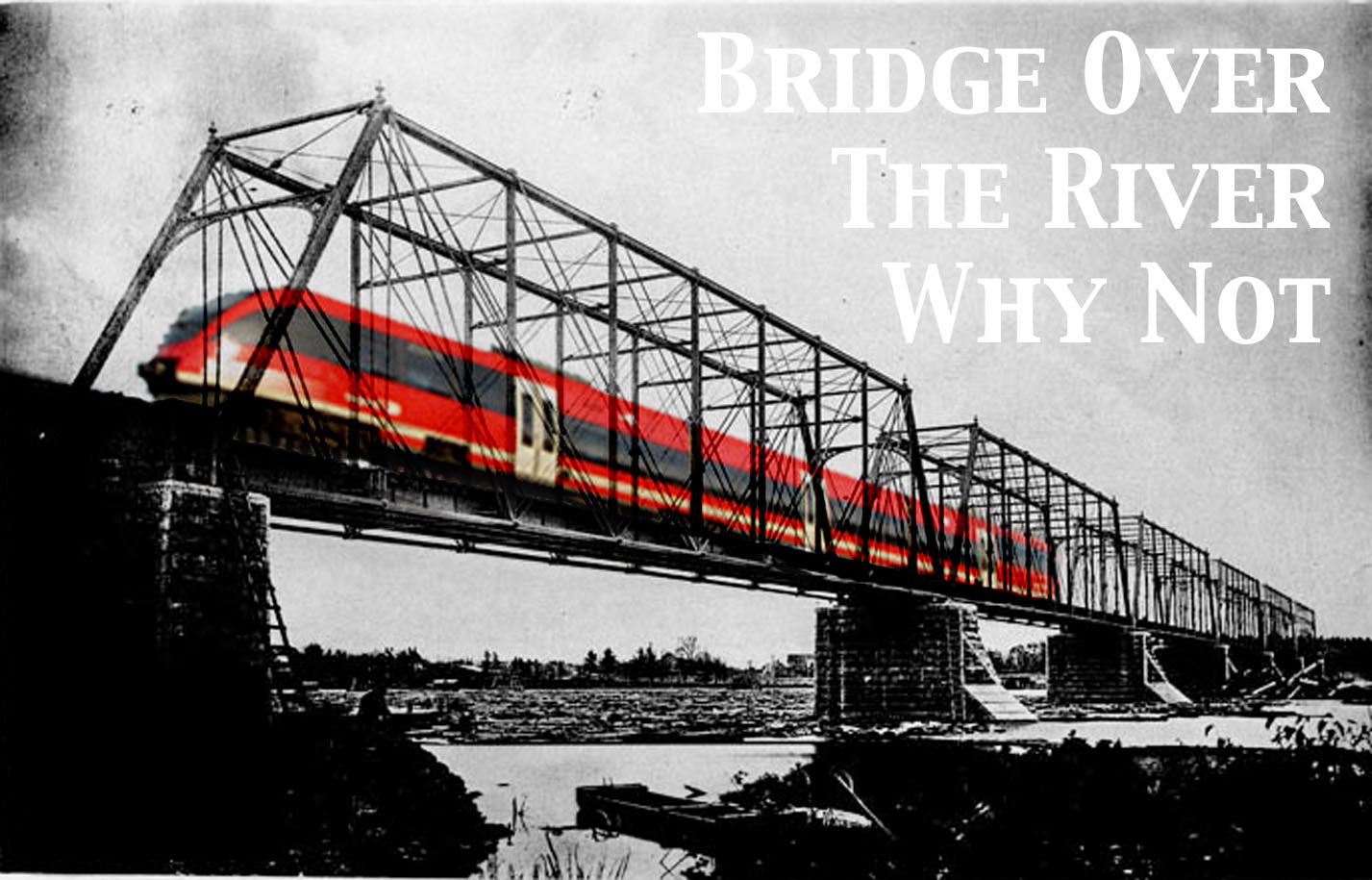
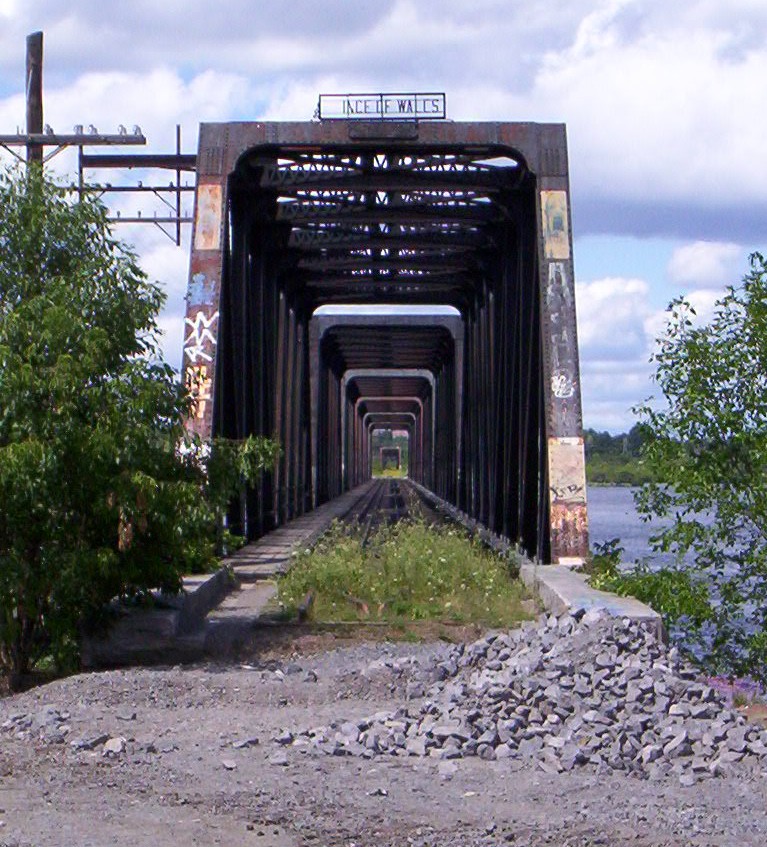
Concept of the O-train crossing the Ottawa River on the dormant Prince Of Wales bridge.

Concept of the O-train crossing the Ottawa River on the dormant Prince Of Wales bridge.

The oldest railway bridge in Ottawa is being considered for a pedestrian/bike path. Finally something is being done to make use of our Prince Of Wales bridge, an Ottawa River landmark built in 1880 that was abandoned in 2001. Since then it has simply been a magnet for daredevils and graffiti. Yet, this solid link to Gatineau could also be re-purposed for something more, making it a vital connection to help alleviate the growing commuter traffic that continues to clog area bridges carrying hundreds of cars at Island Park Drive, Chaudiere, Alexandra Bridge and the Macdonald-Cartier Bridge. A simple gap of a few hundred metres, bureaucracy and money stands between continuing the O-train across the bridge to the Gatineau side using the old existing rail beds and bridge, a purpose for which the Prince Of Wales Bridge was designed for.

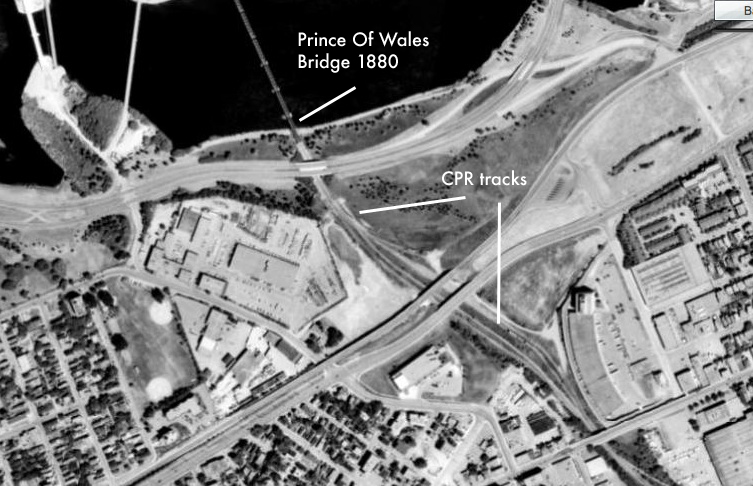
1965 aerial image showing the original Canadian Pacific rail line that crossed the Ottawa River on the bridge.

1965 aerial image showing the original Canadian Pacific rail line that crossed the Ottawa River on the bridge. -geoOttawa

It was built in 1880 by the Phoenix Bridge Company for the Québec, Montréal, Ottawa and Occidental Railway to cross the Ottawa River near the busy industrial area of Lebreton Flats and Chaudiere Falls. A few years later the bridge and line was purchased by Canadian Pacific Railway who later modified the bridge in 1926 when they replaced the iron work with heavier iron trusses that could carry heavier rail loads between the two sides. The PoW bridge continued to carry rail traffic until 2001 when the last train chugged across.

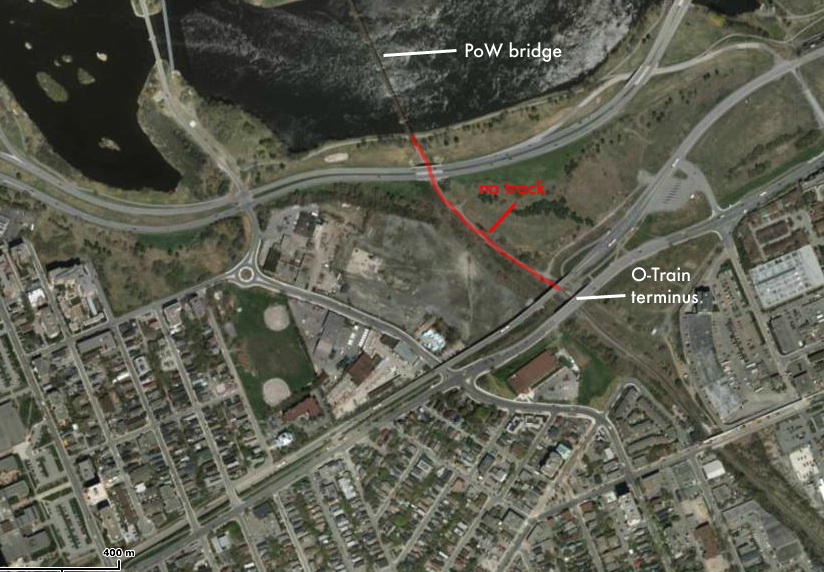
The bridge was soon purchased for its scrap value by the City Of Ottawa, but the purchase included the approach land on BOTH sides of the river, which means the City Of Ottawa owns property on the Gatineau/Quebec side. Curiously, the intact tracks that would have led from the newly operating O-train line were disconnected and removed crossing the NCC property during their Lebreton Flats re-vitalization project in 2005.

The Prince Of Wales bridge could utilize the old connection with the existing O-train and continue across the river to Gatineau.

The Prince Of Wales bridge could utilize the old connection (removed in 2005) with the existing O-train and continue across the river to Gatineau. -geoOttawa

It seems like an odd and unnecessary action to literally derail future extension of the O-train over to Gatineau using the PoW bridge, that with some forward thinking upgrades, could certainly ease commuter traffic if properly implemented.

In addition to extending the O-train, of which the original rail beds still exist, future modifications could also see the addition of a pedestrian/cycling path built on the side, much like the one on the Alexandra Bridge further down river.

Currently abandoned, the old bridge could be re-purposed as a cycling/pedestrian river crossing and possibly an O-train extension. -photo Wikipedia public domain
Currently abandoned, the old bridge could be re-purposed as a cycling/pedestrian river crossing and possibly an O-train extension. -photo Wikipedia public domain
With these modifications to a solid, timeless bridge already in place we could certainly help decrease growing commuter traffic building up on our bridges while increasing healthy alternatives to crossing the river with a safe cycling and pedestrian crossing, which is lacking on other bridges.
As I’m sure there are many bureaucratic roadblocks and prohibitive costs involved on both sides of the river that I don’t know about, and there are engineering details that could simply make this a dream, maybe with enough public support for such a vision it could become reality. With the City Of Ottawa owning both the bridge AND the land it connects to on both sides of the river, one has to wonder how the NCC and the City of Gatineau would adversely influence a vision that can, and will help all those involved.


From information at:

http://en.wikipedia.org/wiki/Prince_of_Wales_Bridge

http://www.railways.incanada.net

GeoOttawa


THE BEACHCOMBER ROOM: Finding Ottawa’s original 1960’s Tiki Bar

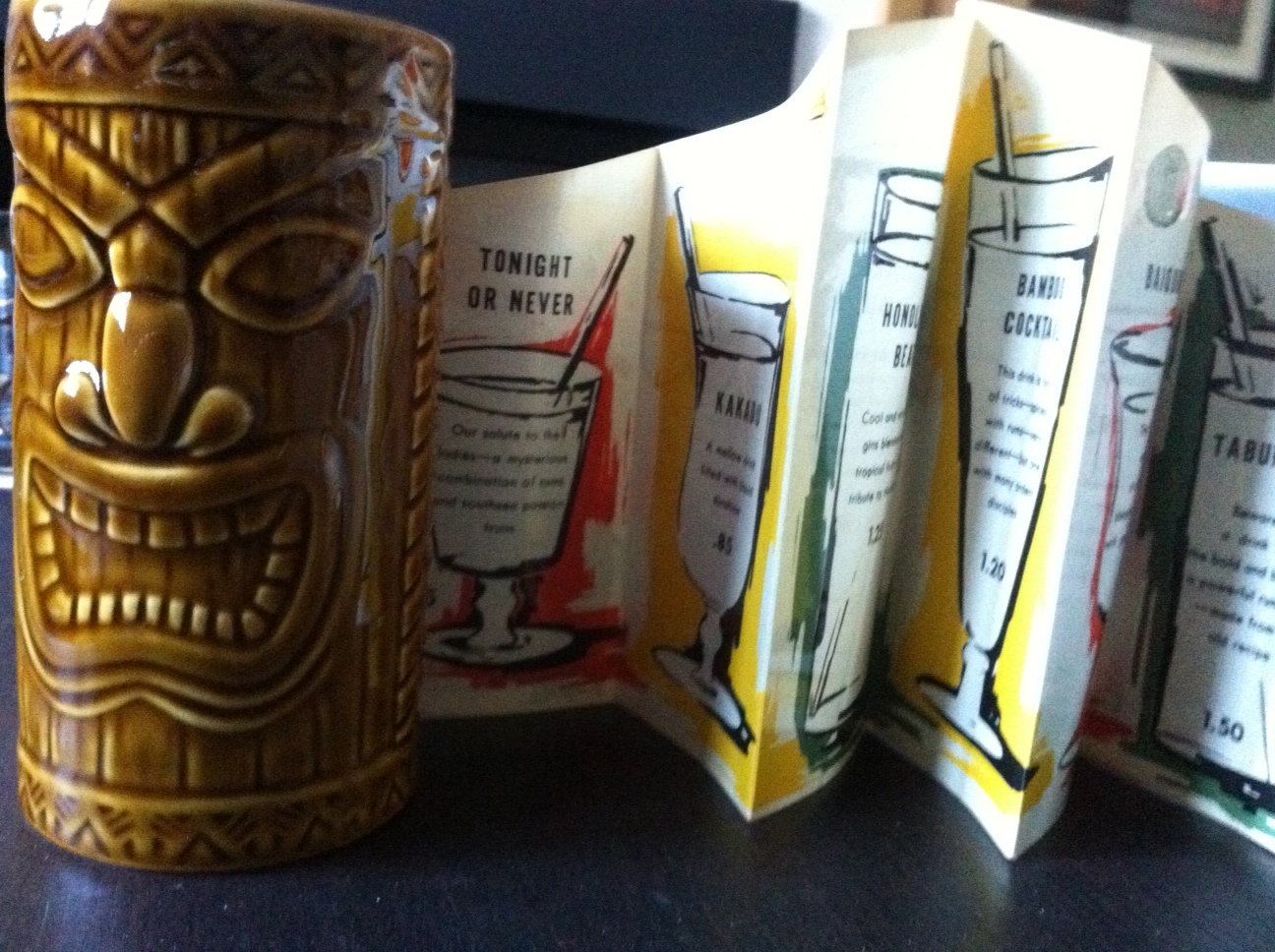
photo

A tiki-mug and an original Ottawa Tiki-bar menu.


Every city has its favourite night clubs, most of them enjoying the spotlight for a few years before something trendier comes along. Every decade has its hot spots, and in the 1960s, one of the hottest, or should I say coolest night clubs was Ottawa’s “Beachcomber Room”. Located in the Talisman Motor Inn on Carling Avenue, the Beachcomber Room boasted the latest in Tiki culture and entertainment through the vision of  Talisman designer William Teron.

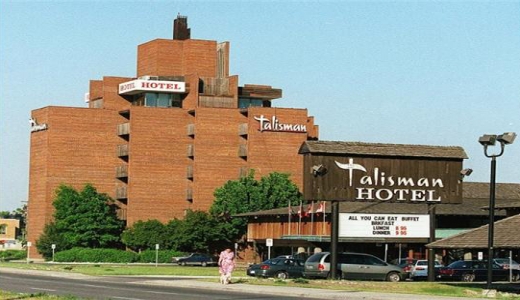
Original 1960s postcard of the Talisman Motor Inn that contained the Beachcomber Room

Original 1960s postcard of the Talisman Motor Inn that contained the Beachcomber Room

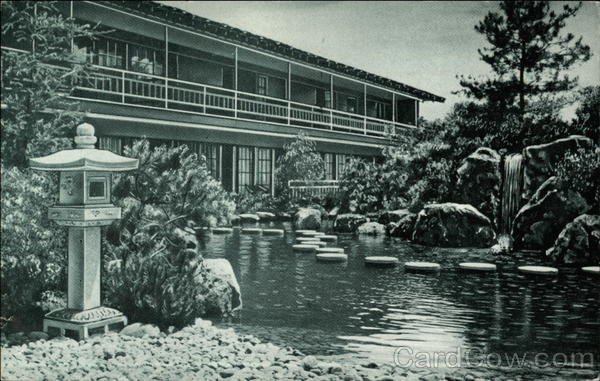
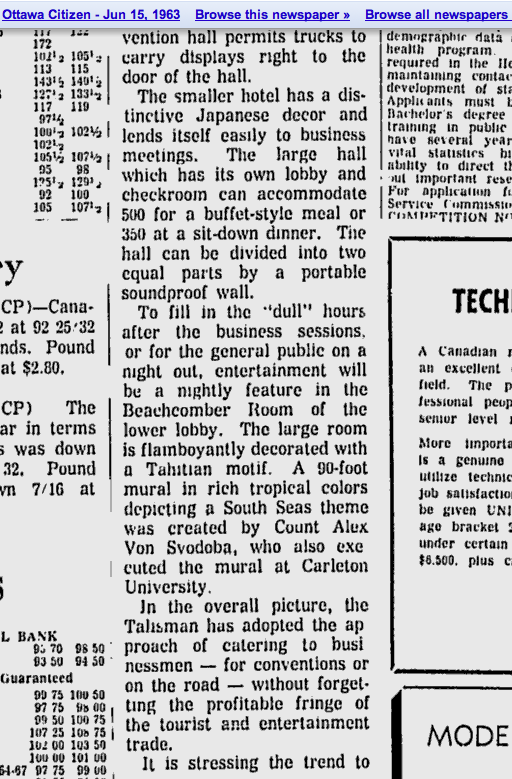
Built in 1963 as Ottawa’s premier business convention centre and hotel, Teron designed the Talisman with a South Pacific theme, including a very faithful replica of a tranquil Japanese garden at the center of the motel. The Beachcomber Room was “flamboyantly decorated in a Tahitian motif” and also featured a 90-foot mural painted by Count Alex Van Svodoba, who also completed a mural at Carleton University.

The Talisman Motor Inn as it appeared in 1989. All original signs have since been removed.

The Talisman Motor Inn as it appeared in 1989. All original signs have since been removed.


The Polynesian theme of the Beachcomber Room was in tune with the popularity of the Tiki culture during the mid-century era, which was based primarily on “Don the Beachcomber’s” in Hollywood, California. Credited as being the first tiki restaurant that all others copied, its founder, Donn Beach, was the first to mix flavored syrups and fresh fruit juices with rum. The trend became the hot ticket for Hollywood stars and elite, making the Tiki-theme a nationwide phenomenon.  Ottawa was no exception, with The Tabu opening in the old Beacon Arms Hotel (now the Capital Hotel & Suites) in the early sixties and The Beachcomber Room opening soon afterwards in 1963, taking its name directly from the original Hollywood establishment.

A newspaper ad from the Ottawa Citizen describing the Beachcomber Room with its GO-Go Girls and

A newspaper ad from a late 1960s Ottawa Citizen describing the Beachcomber Room with its GO-Go Girls to make “you surge with emotion”

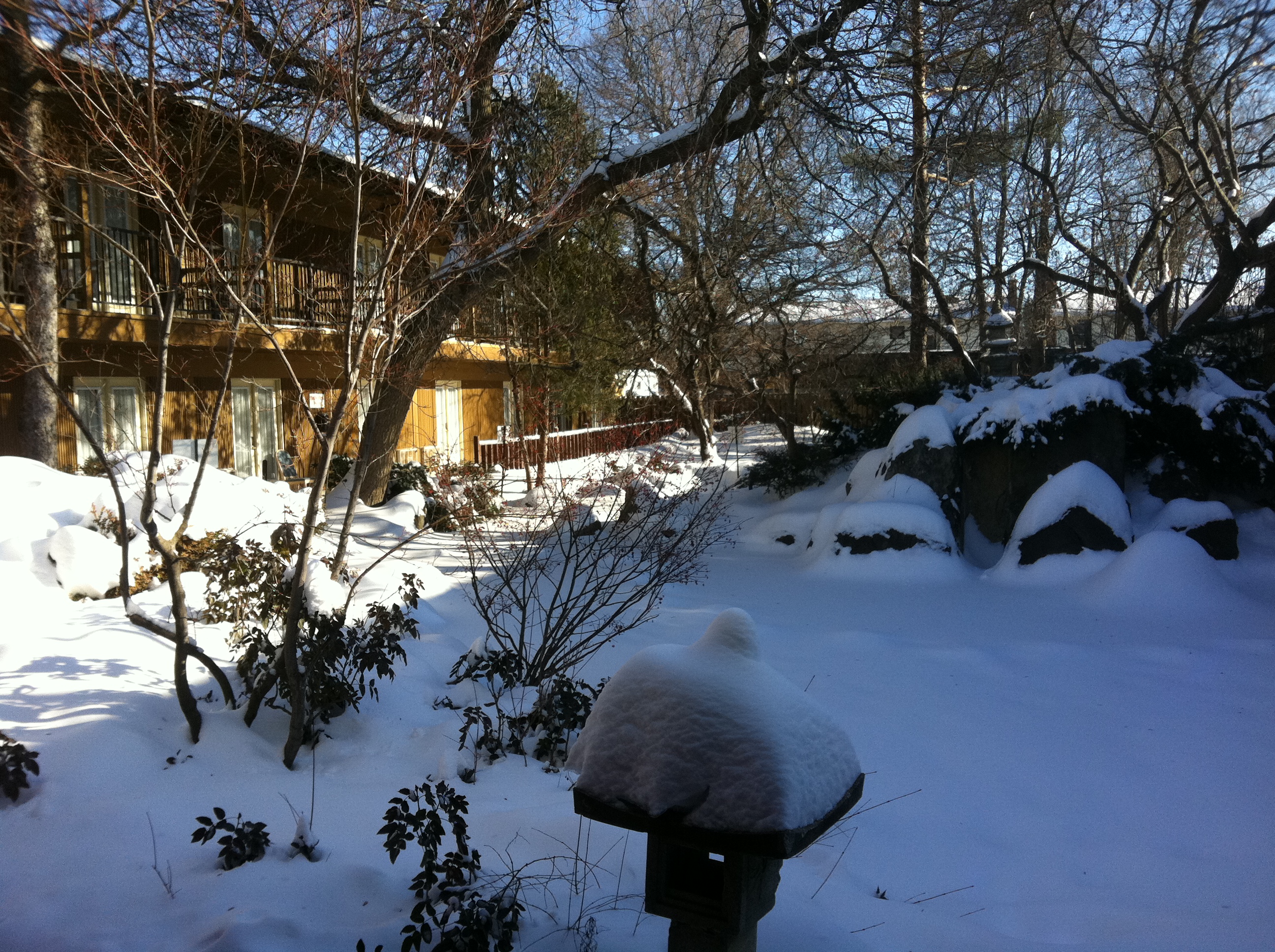
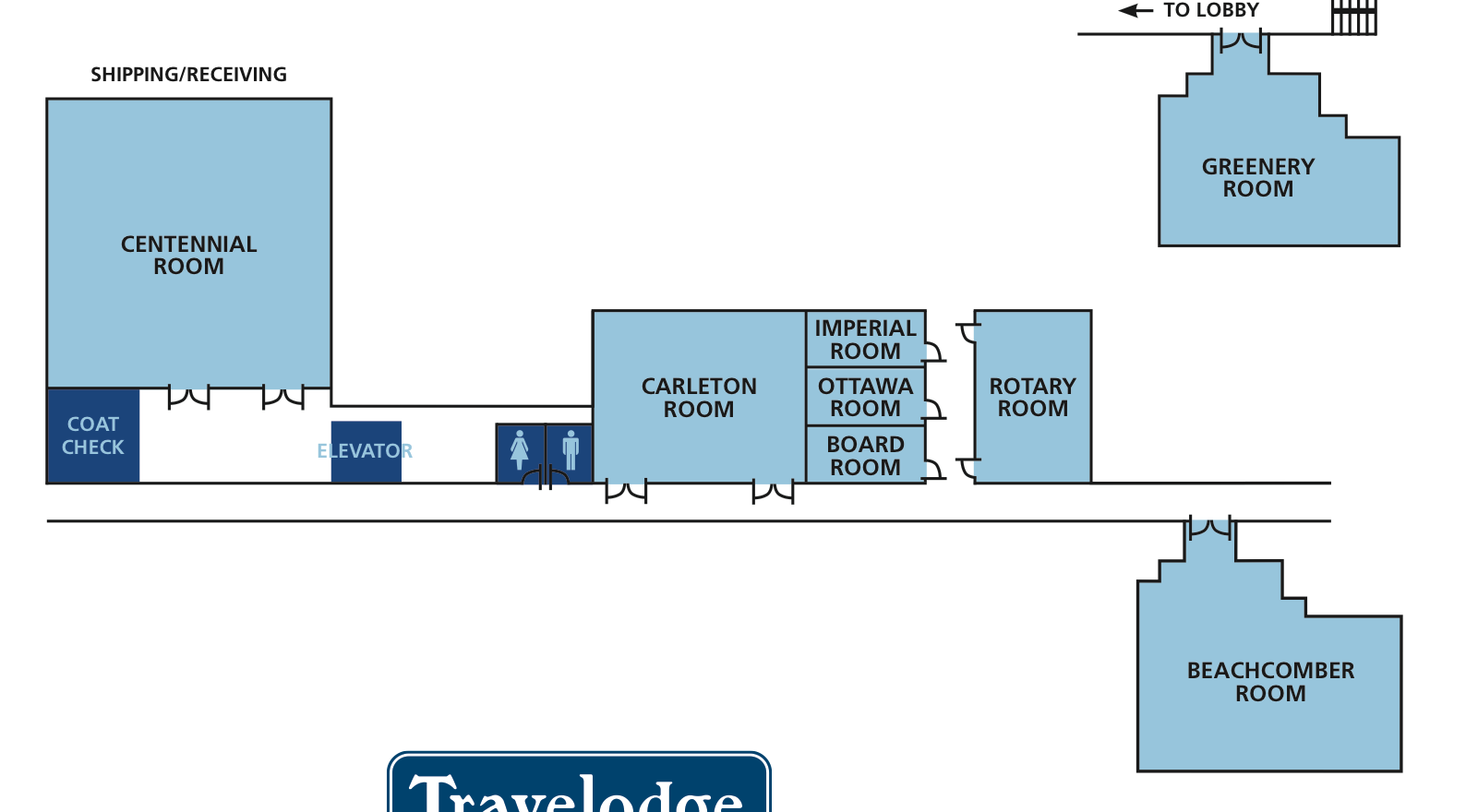
Enjoying almost three decades of popularity as Ottawa’s hottest drinking and entertainment establishment, the Beachcomber Room was THE place to dance, listen to live music and enjoy the quintessential Tiki Mai Tai cocktail. However, as with most bars, its popularity wained and the Talisman name was dropped when it became a Travelodge and it was extensively renovated with a Kids Water Park and its unique Polynesian theme was lost.  Remnants of the Japanese gardens are still visible today, as are some architectural details from its illustrious past. But where was the Beachcomber Room? What is left of it? Lets comb the beach…

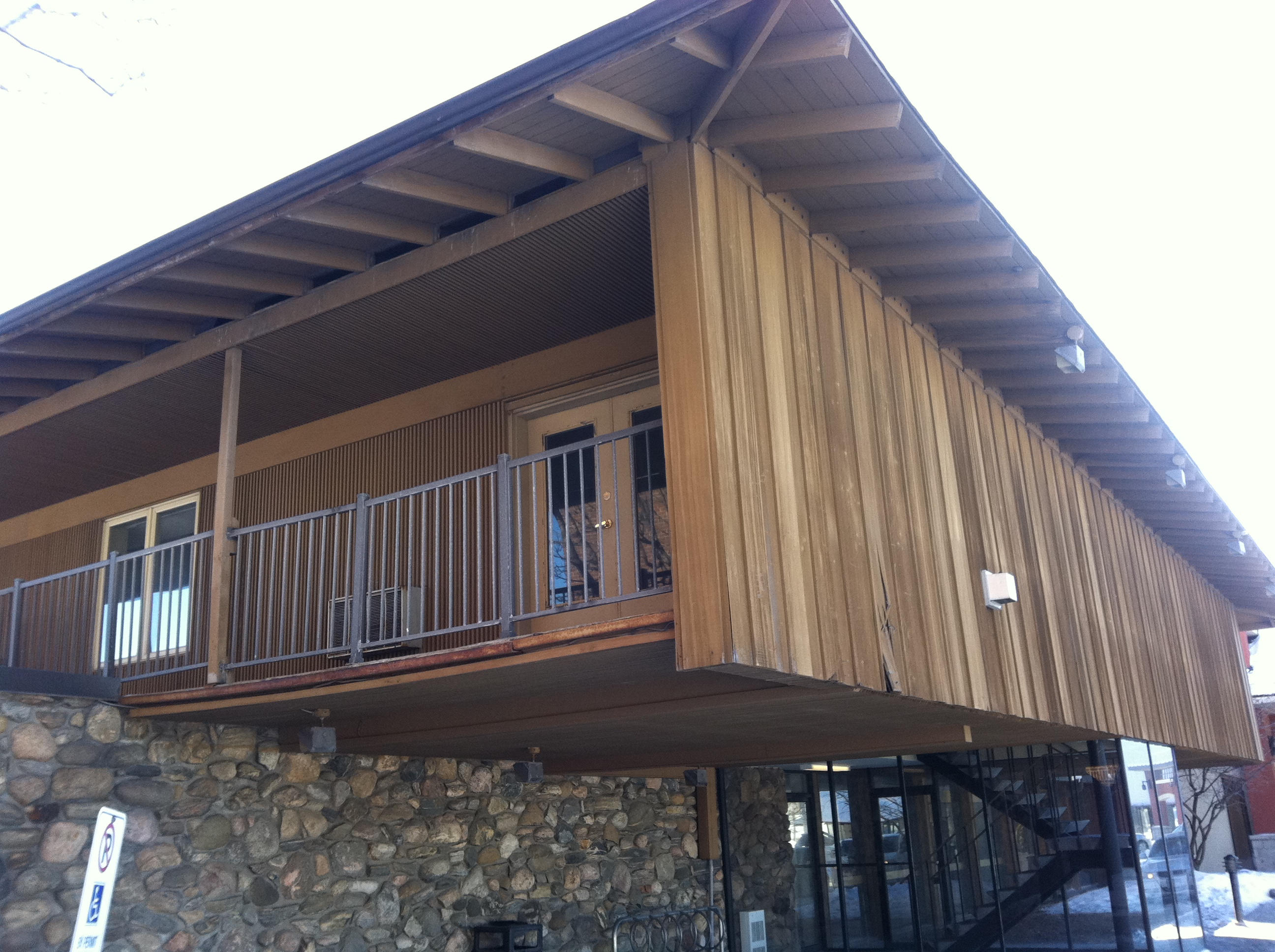
Approaching the old Talisman, its unique 1960s architectural style by Bill Teron is still evident.

Approaching the old Talisman, its unique 1960s architectural style by Bill Teron is still evident.

Original postcard of the Talisman central Japanese Garden...

Original postcard of the Talisman central Japanese Garden…

...and that same view as it looks today.

…and that same view as it looks today.

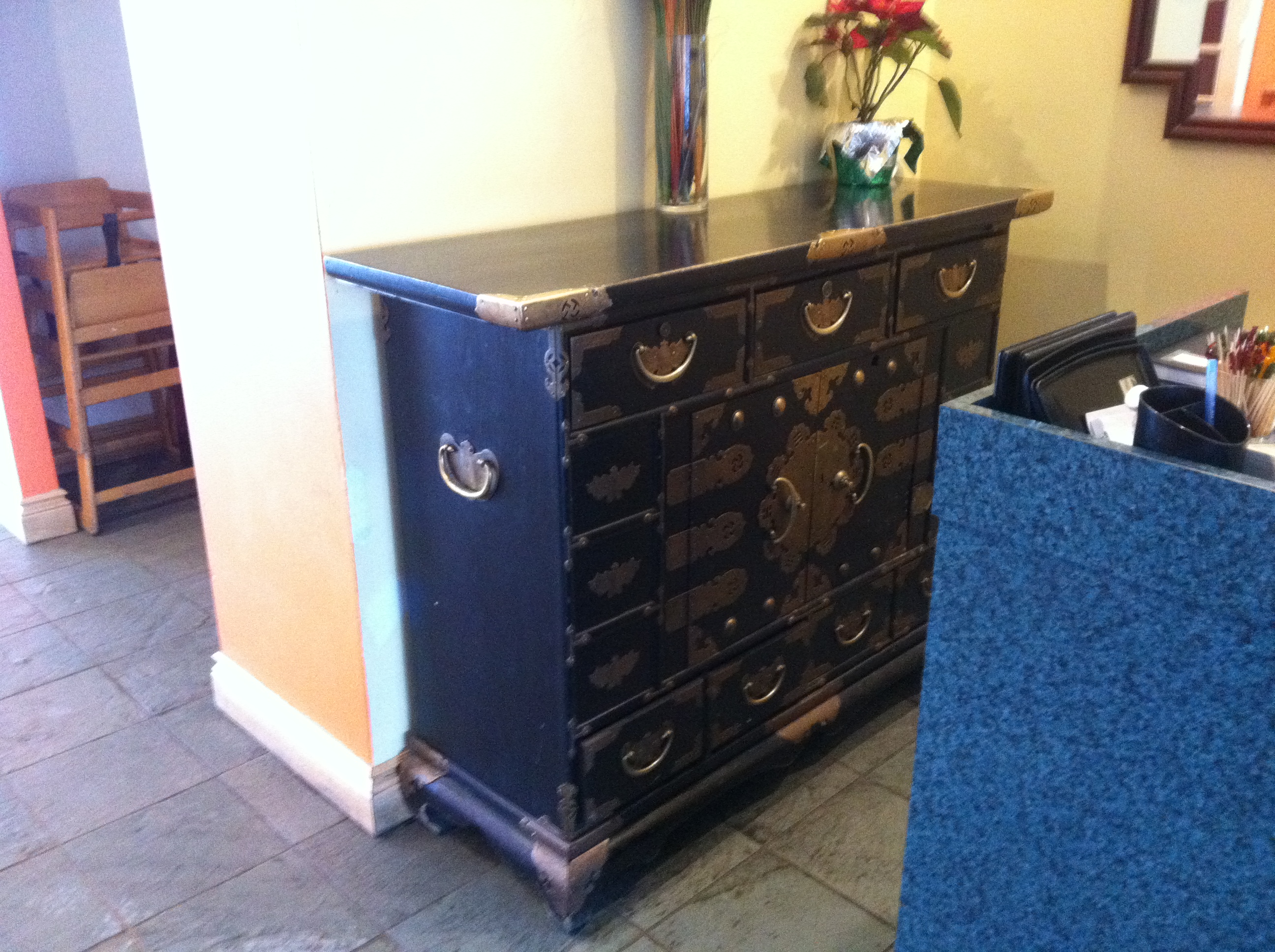
Some left over relics from the old South Pacific themed Talisman can be spotted around the present day hotel, like this Japanese hutch.

Some left over relics from the old South Pacific themed Talisman can be spotted around the present day hotel, like this Japanese hutch.

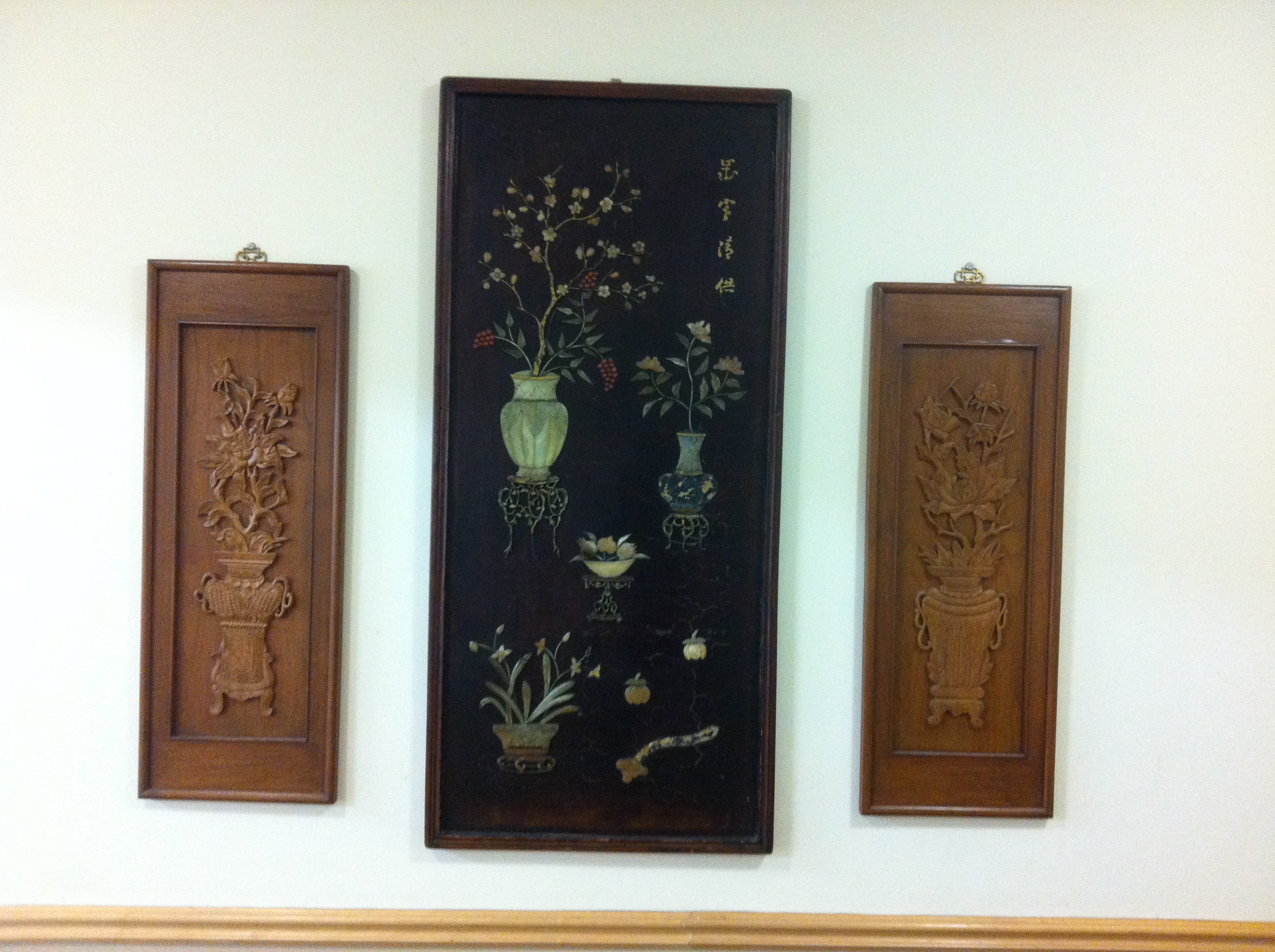
More relics of the Talisman's glorious Polynesian past...some wall hangings on a wall hidden by an emergency exit.

More relics of the Talisman’s glorious Polynesian past…some Asian style wall hangings on a wall hidden away by an emergency exit.

A 1963 newspaper article describes the Beachcomber Room as being "downstairs"

A 1963 newspaper article describes the Beachcomber Room as being in a “lower lobby” – Ottawa Citizen

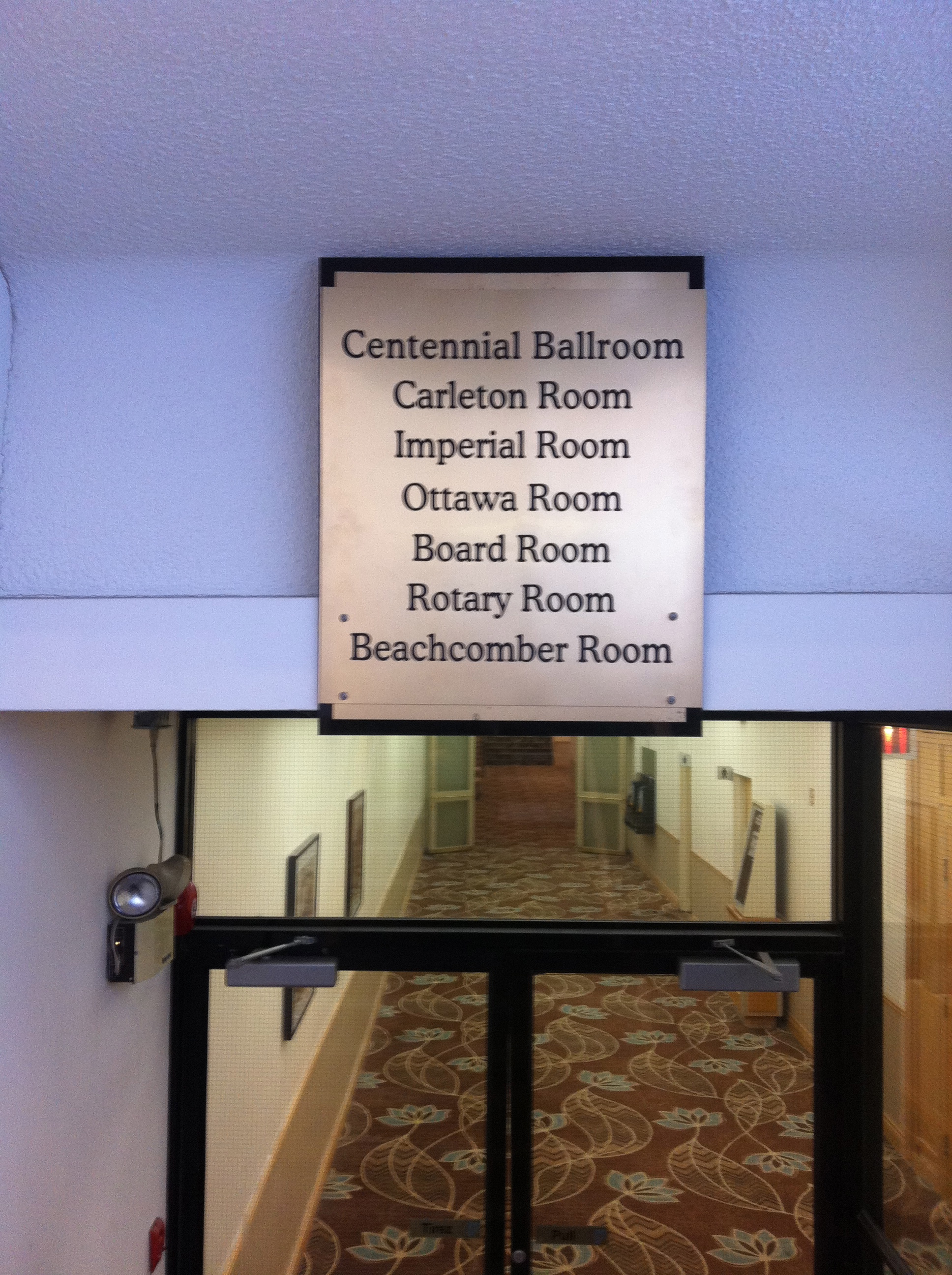
A clue...marked on an old sign in the stairway is "BEACHCOMBER ROOM"

A clue…marked on an old sign in the stairway is “BEACHCOMBER ROOM”

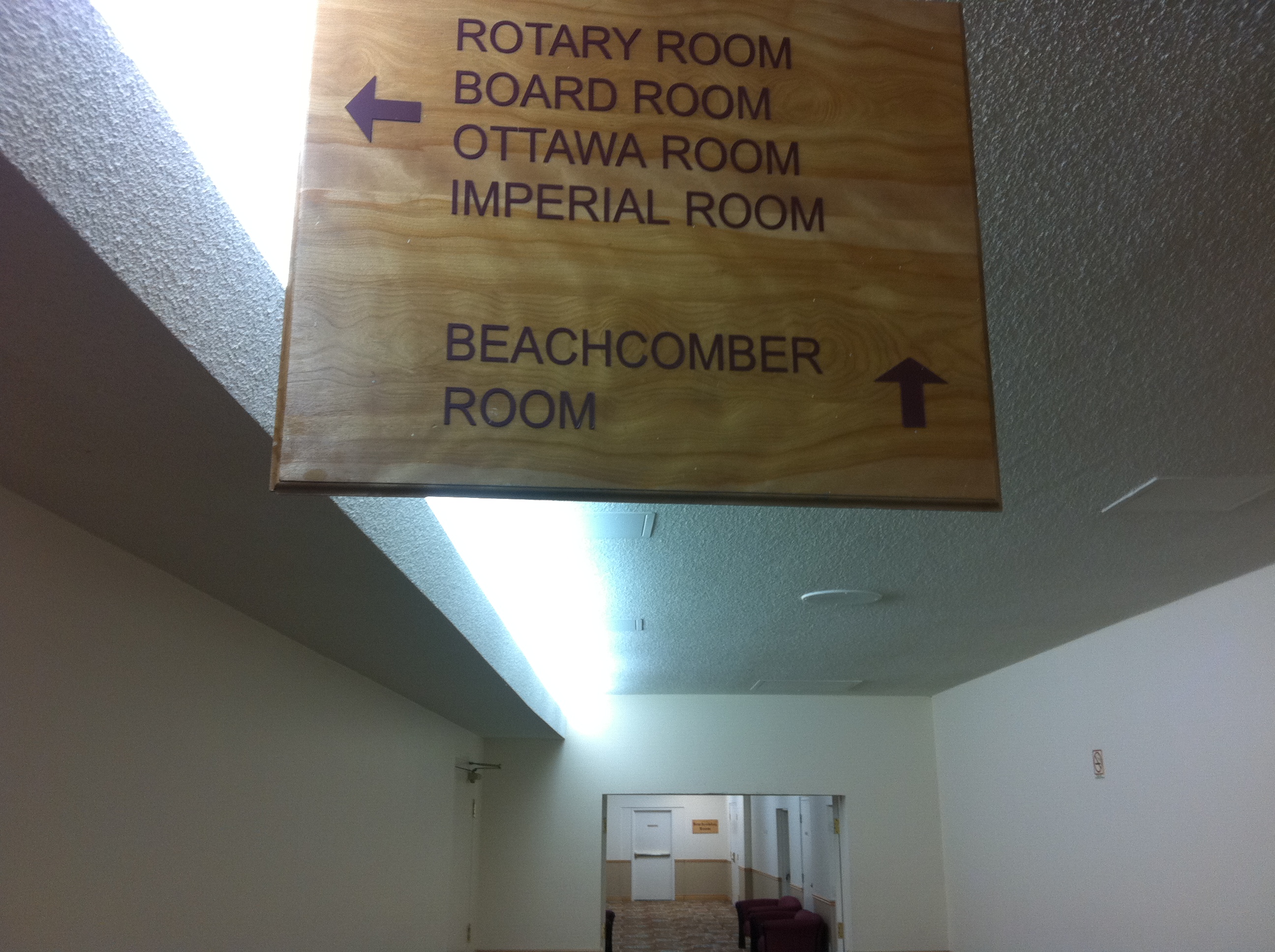
Another sign clue is leading us downstairs in the direction of the Beachcomber Room.

Another sign clue is leading us downstairs in the direction of the Beachcomber Room.

...and there it is. I have no idea what lies behind those doors and if the original 1963 Polynesian themed mural by Count Alex Von Svodoba is still in there.

…and there it is. I have no idea what lies behind those doors and if the original 1963 Polynesian themed mural by Count Alex Von Svodoba is still in there.

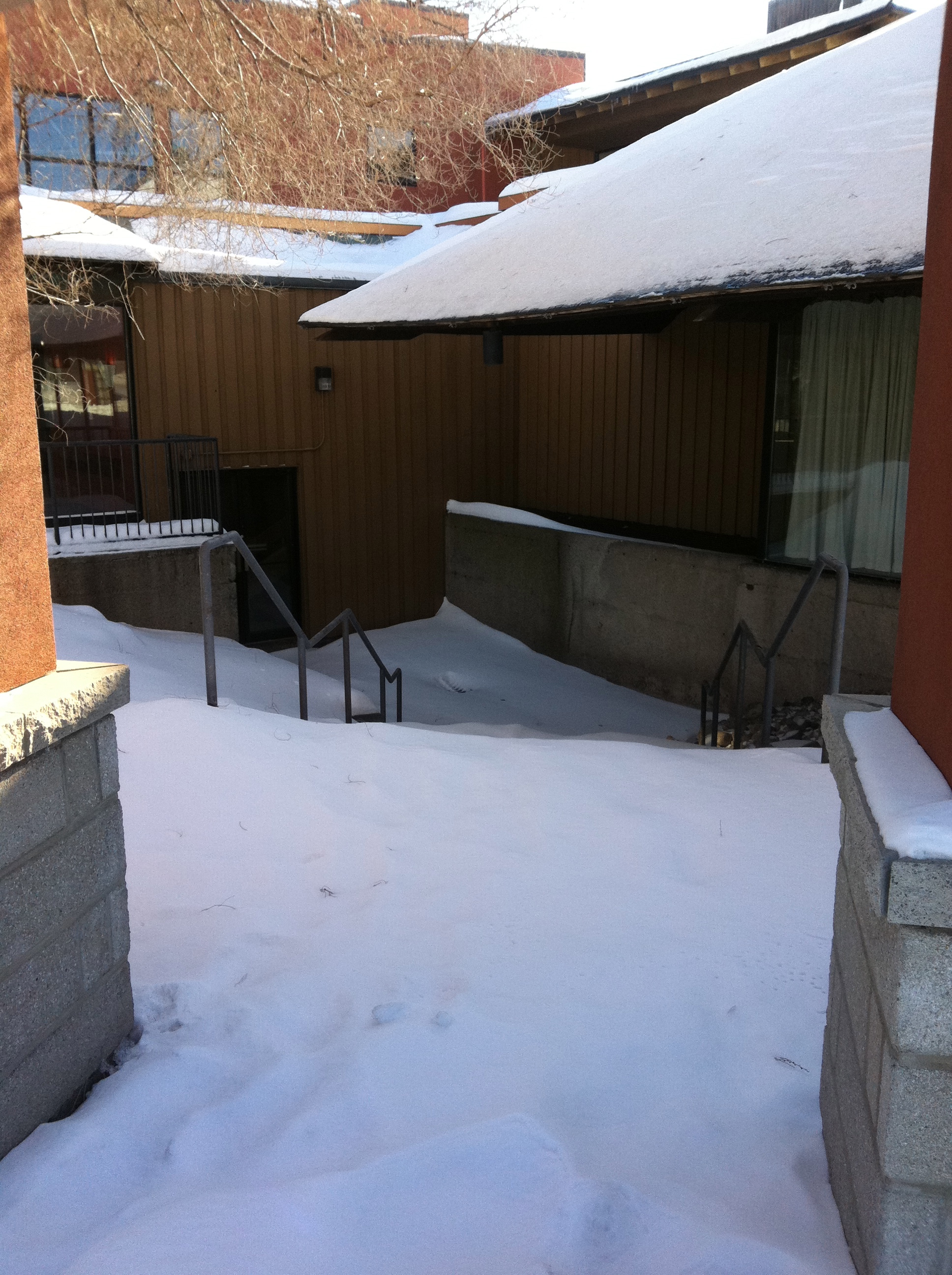
These abandonedf stairs would have lead you down to Ottawa's hottest nightclub, the long lost original tiki-bar known as...THE BEACHCOMBER ROOM.

These abandoned snow-covered stairs lead down to what was once Ottawa’s hottest nightclub, the long lost original tiki-bar known as…THE BEACHCOMBER ROOM.

The current hotel website says you can rent out the 5600 square foot "Beachcomber Room"....Tiki-party anyone?

The current hotel website says you can rent out the legendary “Beachcomber Room”….Tiki-party anyone?