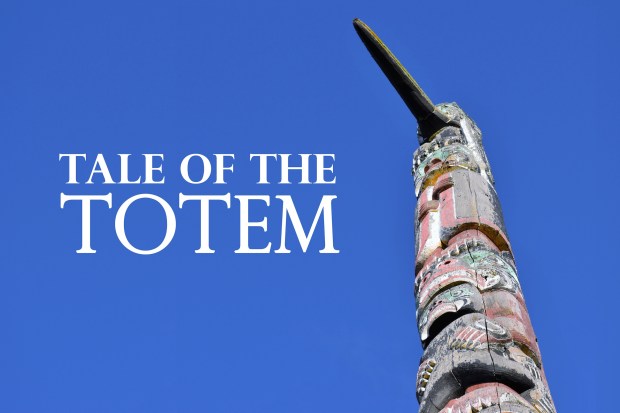
On Baseline Road beside the Walmart Super Centre, there is a fading old totem pole, towering 60 feet over the bustling city traffic, sitting grandly in front of the Scouts Canada National Headquarters. Having passed by this sentinel many times, I often imagine it one day toppling over Baseline Road, its top bird beak skewering a car below it like a shish kabob. Aside from that, I also think of what the story is behind this amazing totem pole, a somewhat forgotten and fading old soul beside the Walmart…who carved it and why is it there?….
This is the Tale of the Totem.
Photography by @oldmanloudwife
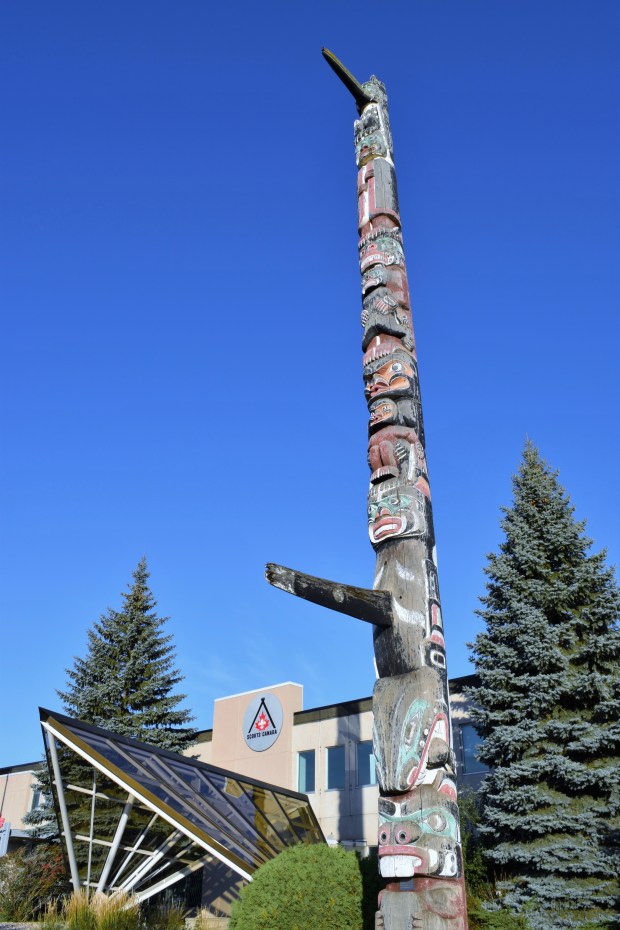
Carved in 1960 by Chief Mungo Martin, Ottawa’s towering totem has weathered almost 60 years at its post on Baseline Road. (Photo by @oldmanloudwife)
Carved in 1960 by Chief Mungo Martin, of the Kwakiutl Tribe and his grandson Henry Hunt, Ottawa’s totem pole has been weathering away at its post for almost 60 years. Most of the carving was done in Victoria, B.C. where Chief Martin was a prominent figure in Northwest Coast style of aboriginal art, specifically that of the Kwakwaka’wakw eople who live in the area of British Columbia and Vancouver Island. The pole was gifted to Ottawa from the British Columbia Scouts, and cost approximately $8,000 in 1960 to carve and paint from a BC cedar tree.
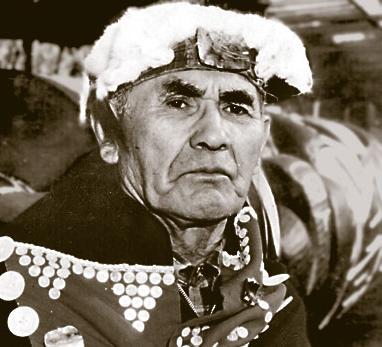
Chief Mungo Martin (Photo Wikipedia)
The towering totem consists of 6 main figures; a Raven, a Man, a Grizzly Bear, a Cannibal Woman, a Killer Whale, and a Beaver. These were all clan crests of the tribes that Chief Martin was closely related, and hence forth placed on the Ottawa totem.
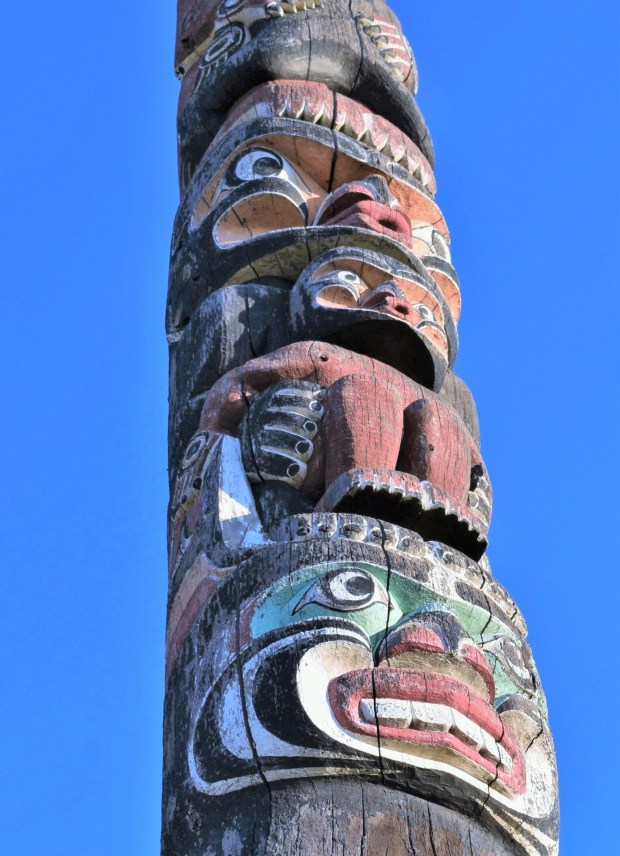
The raven on the top represents “Gwawina” a raven that came to the earth and transformed into a man, which is the the second figure. The grizzly is the bear Kyelem, that also transformed into a man, and the woman is Tsonoqua the Cannibal Woman.
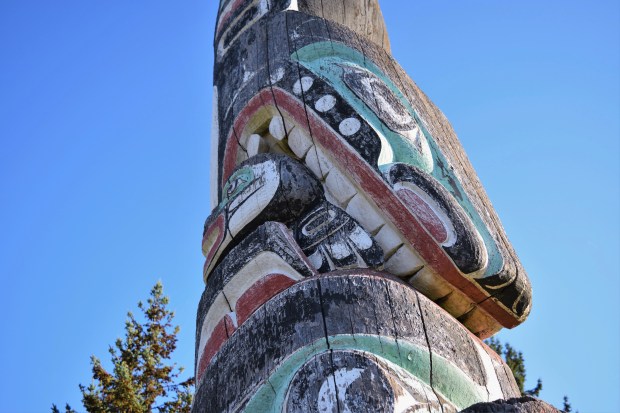
The Killer Whale is Makinukw, a supernatural whale. The Beaver on the bottom is Tsawa, who gave birth to a half beaver, half human son.
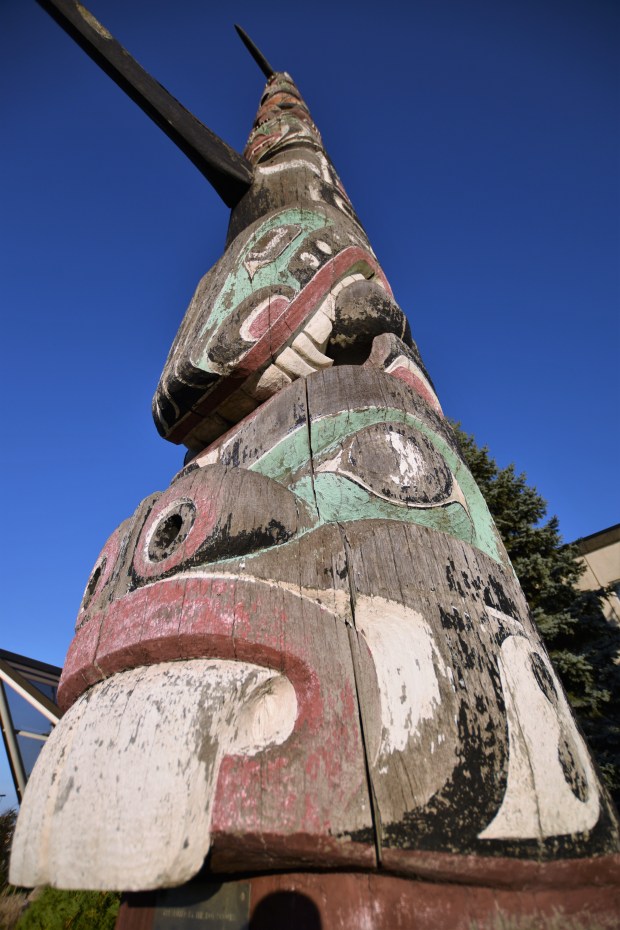
When it was completed in British Columbia, the totem was transported on rail two cars to Ottawa where it was hoisted in 1961 in front of the Scouts Canada building. The totem’s base is ten feet long and was anchored in over 75 tons of concrete at the base.
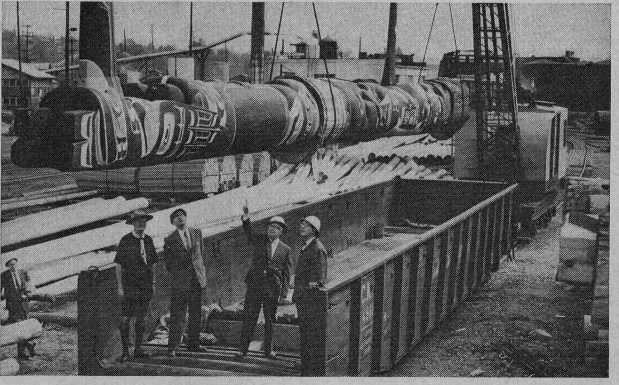
The totem pole is loaded onto a train car bound for Ottawa. (courtesy of D. Stremes from Canadian National Railways employee magazine
“Keeping Track” from July-August 1960)
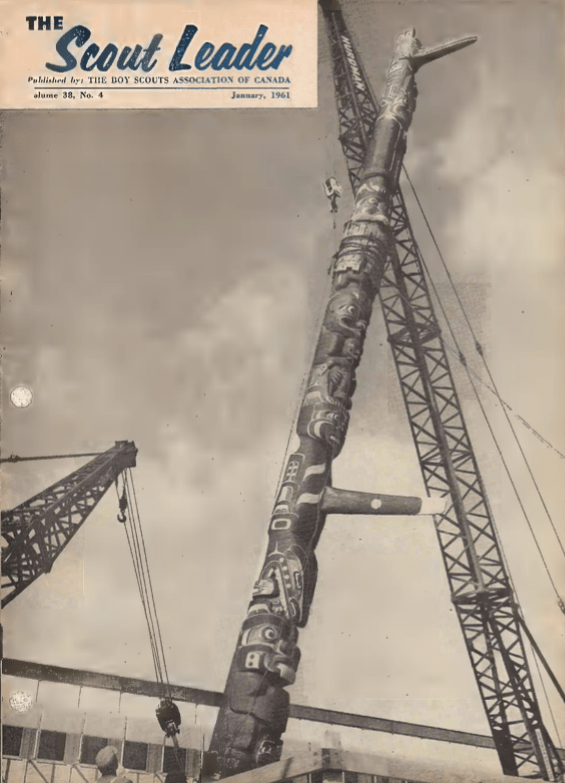
The totem being hoisted into position on Baseline Road in 1961. (Scout Leader Magazine)
It would only be a year after Chief Mungo Martin’s totem was erected in Ottawa that he would pass away in 1962, leaving behind his legacy through various totem poles across North America, and one totem pole in Windsor Great Park in the United Kingdom. That Totem Pole was a gift from the people of Canada to Her Majesty The Queen in June, 1958.
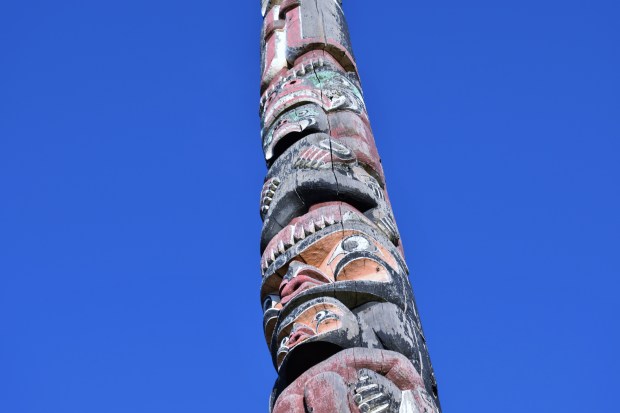
Ottawa’s great totem remains on Baseline Road, its once vibrant colours fading with each passing year. It has endured the harsh winds and weather of Ottawa winters for 56 years and has welcomed many a Scout into the National Headquarters in that time.
The next time you pass by the great totem of Baseline Road, you might want to wave to the great spirit who lies within its weathered wood.
Andrew King, September, 2016
With special thanks to @oldmanloudwife for the photos used with permission.
SOURCES
https://en.wikipedia.org/wiki/Mungo_Martin
The Scout Leader, Vol.XXXVIII Number 4, January 1961
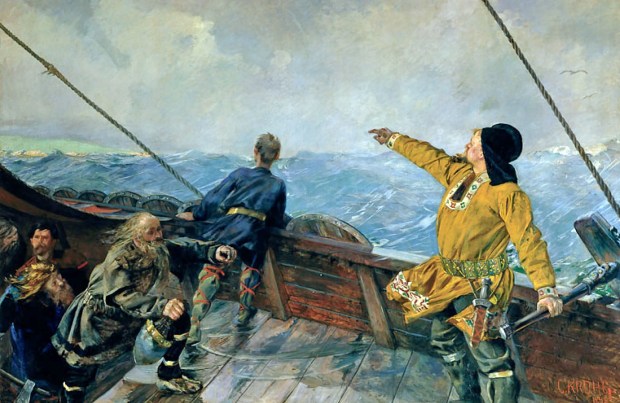 On November 5 1970 Led Zeppelin released the “Immigrant Song” on Atlantic Records, written during Led Zeppelin’s tour of Iceland, Bath and Germany in the summer of 1970.
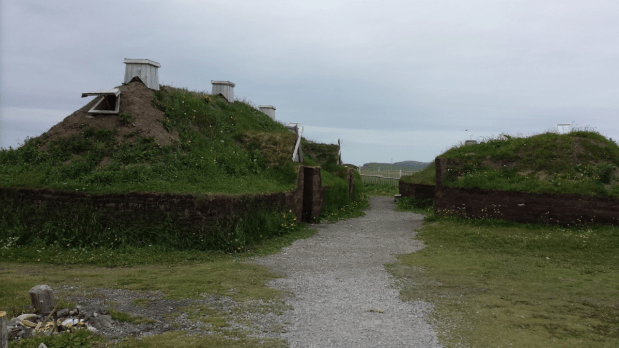
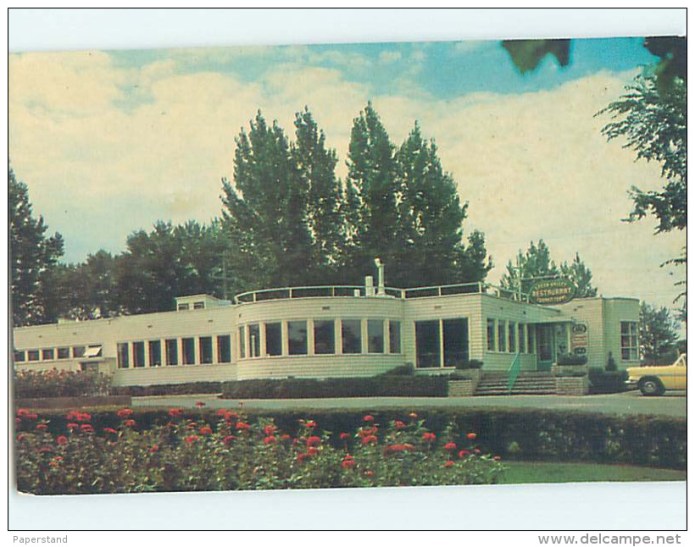
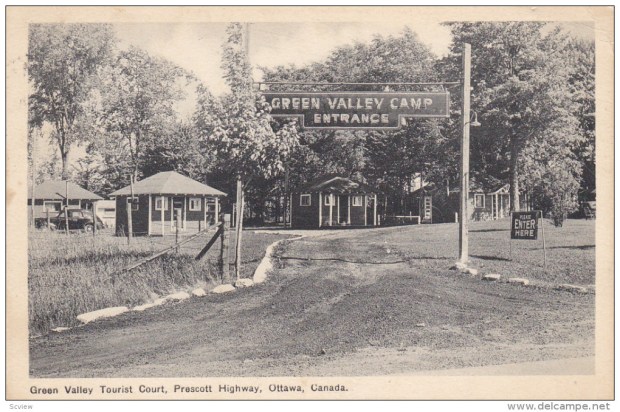
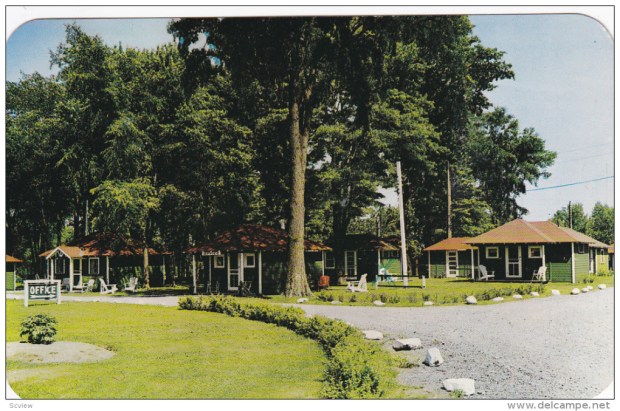
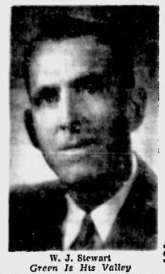 In 1933 Waldorf Stewart moved to a remote wooded property on the old Prescott Highway near Ottawa where he built a play cabin for his daughter near his new home. The rustic cabin was soon visited by uninvited guests who were tourists passing by thinking it was a Motor Court cabin rental, a type of accommodation that was springing up all over North America as more and more tourists traveled by car. Stewart realized an opportunity when he saw one, and built a few more cabins and opened the Green Valley Tourist Court with cabins to rent for tired travellers on their way into the Nation’s Capital.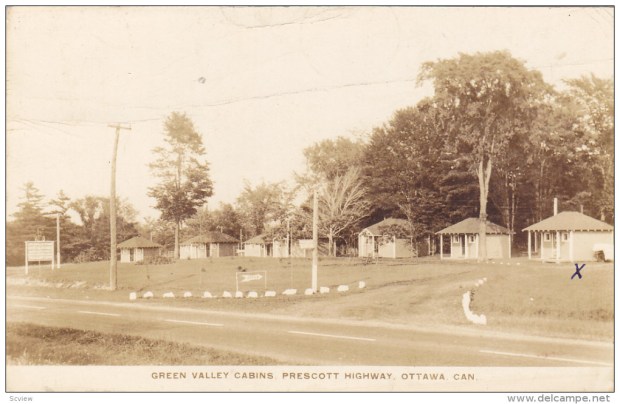
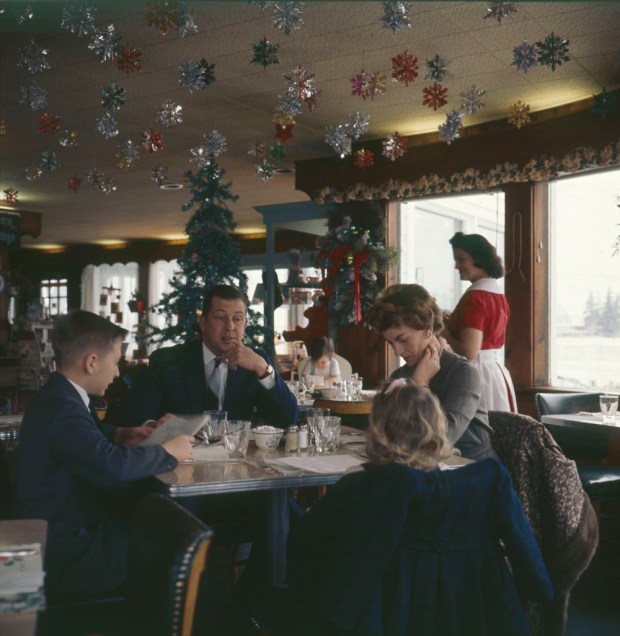
 The restaurant was expanded three times and included a gift shop called the ‘Then and Now Shop’ where visitors could purchase toys, souvenirs and curious gadgets. Kids especially enjoyed the “Mickey Mouse” sundaes that the restaurant served to its younger diners which was a cartoon dessert; a scoop of ice cream with wafer ears and pistachio eyes. Many Ottawa residents will remember going there with grandparents or on special occasions, as it was a treat to be treated to the Green Valley Restaurant back in the day.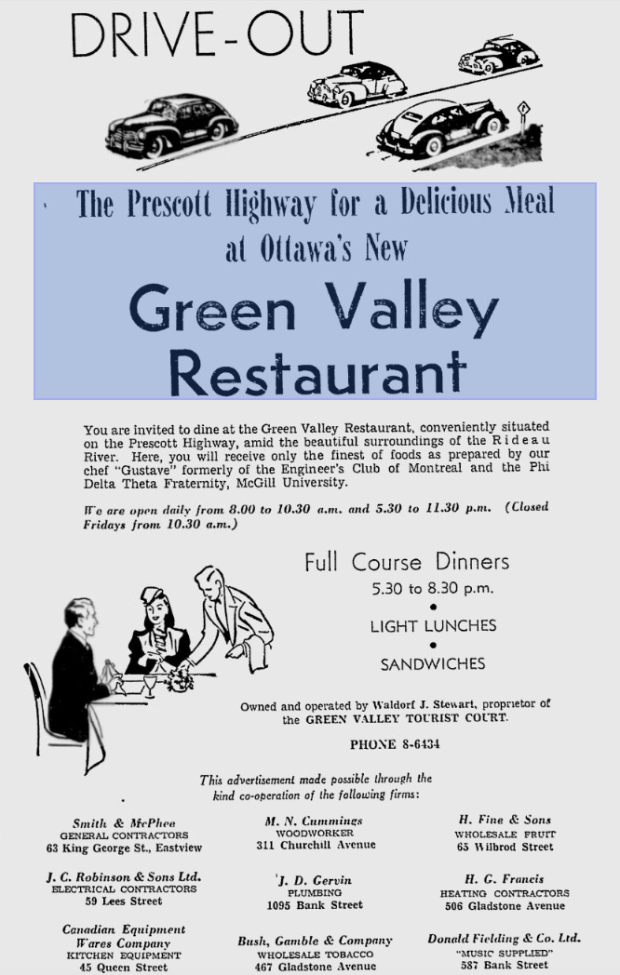
 I remember when I received my first paycheque from my first full time job and I wanted to treat myself to a nice dinner. So I picked the place I saw when I first drove into Ottawa a few years earlier, the Green Valley. It was 1995 and I remember the place looked like it was trapped in 1955, with a musty smell reminiscent of an old landmark dame that now sat tired, empty and staffed by elderly servers who had probably worked there when it first opened and still wore their original uniforms. The furniture was worn, the food was bland, and the place had a very “The Shining” feel to it. Nevertheless you could sense it was once “THE” place to eat in Ottawa, but with the Lone Star opening up down the road, and other restaurants emerging, the Green Valley was left behind, its grandeur tarnished by the hands of time.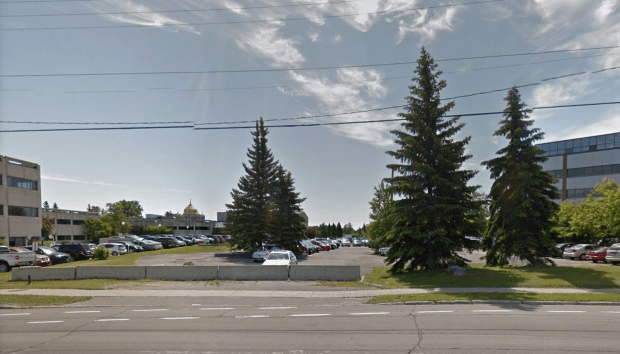
 OTTAWA REWIND