Year: 2014

Canada’s first “Air Force One”: Prime Minister Mackenzie King’s Silver Saloon

The "Silver Saloon" ...Canada's first "Air Force One" that flew Prime Minister Mackenzie King out of Ottawa around the world between 1945-48.

The “Silver Saloon” …Canada’s first “Air Force One” that flew Prime Minister Mackenzie King out of Ottawa and around the world between 1945-48. (At Rockcliffe airport)

During World War Two, Ottawa was home to 168 Squadron based in Rockcliffe, a special air transport group that was responsible for carrying mail back and forth between the troops serving overseas and home. This squadron of aircraft included converted B17 Flying Fortress bombers and later, B24 Liberators. (more info on these planes can be found at an earlier post here)

On June 30, 1944, the Rockcliffe aerodrome received a special aircraft delivered from the United States Air Force with serial number 44-10583. Built at the Consolidated Convair B24 factory in Fort Worth, Texas, this plane was immediately given a special designation: to become Prime Minister Mackenzie King’s personal transport aircraft.

The B24 was quickly modified for the special purpose of transporting the Prime Minister of that time and other dignitaries around the world. Modifications to this WW2 bomber included fitting it with a comfortable VIP interior that accommodated 10 passengers and a special office for the PM and his secretary. Windows were installed along the each side of the fuselage as well as an extra side door. A galley kitchen and washroom were also installed in the Prime Minister’s new aircraft. A special highly polished aluminum exterior finish and lightning bolt paint scheme was given to the PM’s new plane and by August 30, his Silver Saloon was ready for service.

Prime Minister Mackenzie King's newly modified B24 plane sporting a new interior Prime Minister's office, kitchen, washroom, new windows and a new paint scheme. 1945

Prime Minister Mackenzie King’s newly modified B24 plane with a new interior Prime Minister’s office, kitchen, washroom, new windows and a new paint scheme. 1945

Mackenzie King's plane sported a newly designed roundel that was to become the future symbol of the RCAF. The RCAF used this roundel on all their aircraft from 1946-48.

Mackenzie King’s plane sported a newly designed roundel that was to become the future symbol of the RCAF. The RCAF used this roundel on all their aircraft from 1946-48.

One of the first plane’s to sport a newly designed roundel on the fuselage (which later became the official RCAF symbol) B24-574 was ready to transport the Prime Minister of Canada and his staff anywhere around the world. This new “Royal Canadian Air Force One” soon prepared to take Prime Minister Mackenzie King on a very special journey to San Francisco. In June of 1945 the Prime Minister and his staff flew from Ottawa to San Francisco to help organize the newly formed United Nations. Representatives from 50 countries met at the United Nations Conference on International Organization to draw up the United Nations Charter. The Charter was signed on the 26th of June 1945 by representatives of the 50 countries, including Canada’s Prime Minster Mackenzie King who arrived at the signing in his new Silver Saloon.
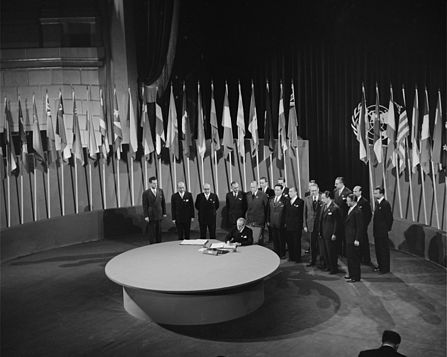
Representatives from around the world gathered in San Francisco in 1945 to form the United Nations. PM Mackenzie King flew there in his new plane to sign the charter.

Representatives from around the world gathered in San Francisco in 1945 to form the United Nations. PM Mackenzie King flew there in his new plane to sign the charter.

RCAF-574 later carried the Governor General The Earl of Athlone and his family in March 1946, and then The Viscount Alexander of Tunis to Winnipeg in September 1946.

In 1947 it carried General H. D. G. Crerar on tour of the far east, flying across the Pacific to Hawaii, Johnston Island, Kwajalein, Tokyo, and Nanking. The Prime Minister continued to use the plane as his VIP transport, but when Mackenzie King retired in 1948, his plane was flown from its home in Ottawa to CFB Trenton where it was put into storage.

After only four years of service flying Canada's Prime Minister and other dignitaries around the world, the Silver Saloon was put into surplus storage in Trenton, On. 1948

After only four years of service flying Canada’s Prime Minister and other dignitaries around the world, the Silver Saloon was put into surplus storage in Trenton, On. 1948

Unused, and sitting in a Trenton hanger, the plane was sold as surplus to Chile in 1951. In Chile it was given a new paint scheme and operated under the Chilean designation “CC-CAN” with the “Air Chile” that operated there.
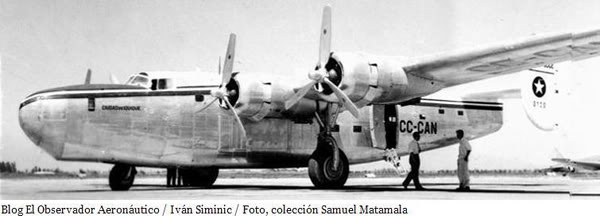
Purchased by the Chilean airline "Air Chile" in 1951, the Silver Saloon was put into airline service after being in storage at Trenton for 3 years.

Purchased by the Chilean airline “Air Chile” in 1951, the Silver Saloon was put into airline service after being in storage at Trenton for 3 years. (note new paint scheme)

Flying across Chilean skies for the better part of four years, the former PM’s plane was soon to make it’s last flight.
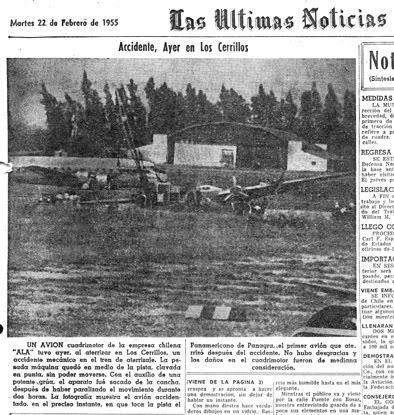
Local paper in Santiago, Chile reporting the crash of the former Canadian Prime Minister's plane after a landing gear malfunction.

A local paper in Santiago, Chile reporting the crash of the former Canadian Prime Minister’s plane in 1955 after a landing gear malfunction.

Landing at an airport in Santiago, Chile on February 21, 1955 the plane suffered a landing gear malfunction that resulted in it running off the runway. Local newspapers reported the crash of the former Canadian PM’s plane, and salvage crews were brought in to assess and possibly repair the damaged aircraft. Sadly, the plane was deemed beyond economical repair, and was dragged off to sit idle in storage.
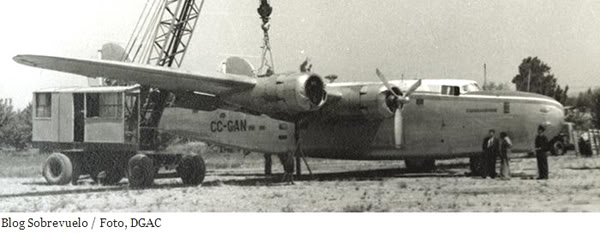
Repair crews assess the damage to the former Pm's plane, but it was deemed to expensive to repair and was dragged away to sit idle for 4 years before being chopped up for scrap metal in 1959.

Chilean repair crews assess the damage to the former PM’s plane after the crash, but it was deemed to expensive to repair and dragged away to sit idle for 4 years before being chopped up for scrap metal in 1959.

Four years later the plane met its final fate when it was chopped up for scrap metal in 1959. Mackenzie King’s Silver Saloon was no more, and Canada’s first “Air Force One” disappeared into history.

Sources:

http://ww2talk.com/forums/topic/44844-the-canadian-pms-transport/

http://www.goodall.com.au/warbirds-directory-v6/consolidated.pdf

http://ivansiminic.blogspot.ca/2006/09/b-24-liberator-en-chile_24.html
German U-boat Near Kingston, Ontario?

photo2

German U-boat In St. Lawrence River? Solving the mystery of the Wahl Anchor

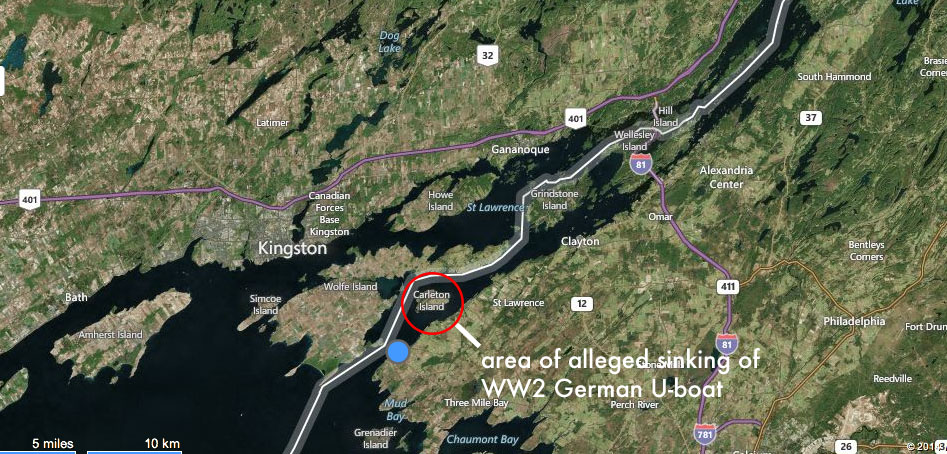
A Clayton, NY marina owner Wilbert Wahl says in 1942 at age 10 he watched American fighter aircraft sink a German U-boat in the St.Lawrence near Wolfe Island, just off Cape Vincent, about 20 km across from Kingston, On. During the 1960’s an area scuba diver in the area, Skip Couch, was told the story of this sunken U-boat and investigated the area.

Marina owner Wahl claims a German U-boat was sunk in 1942 off Cape Vincent, NY near Carleton Island.

Marina owner Wahl claims a German U-boat was sunk in 1942 off Cape Vincent, NY near Carleton Island.

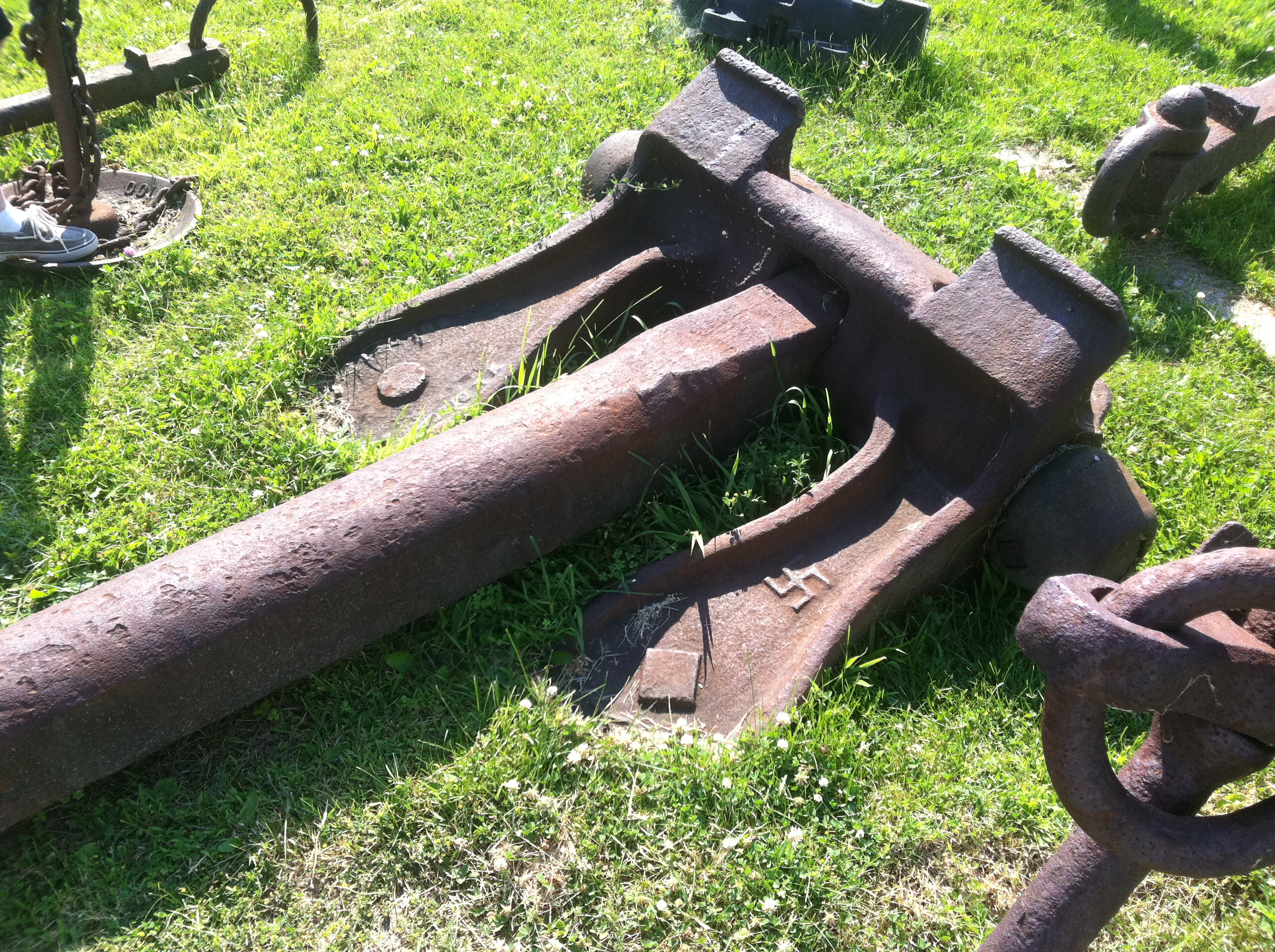
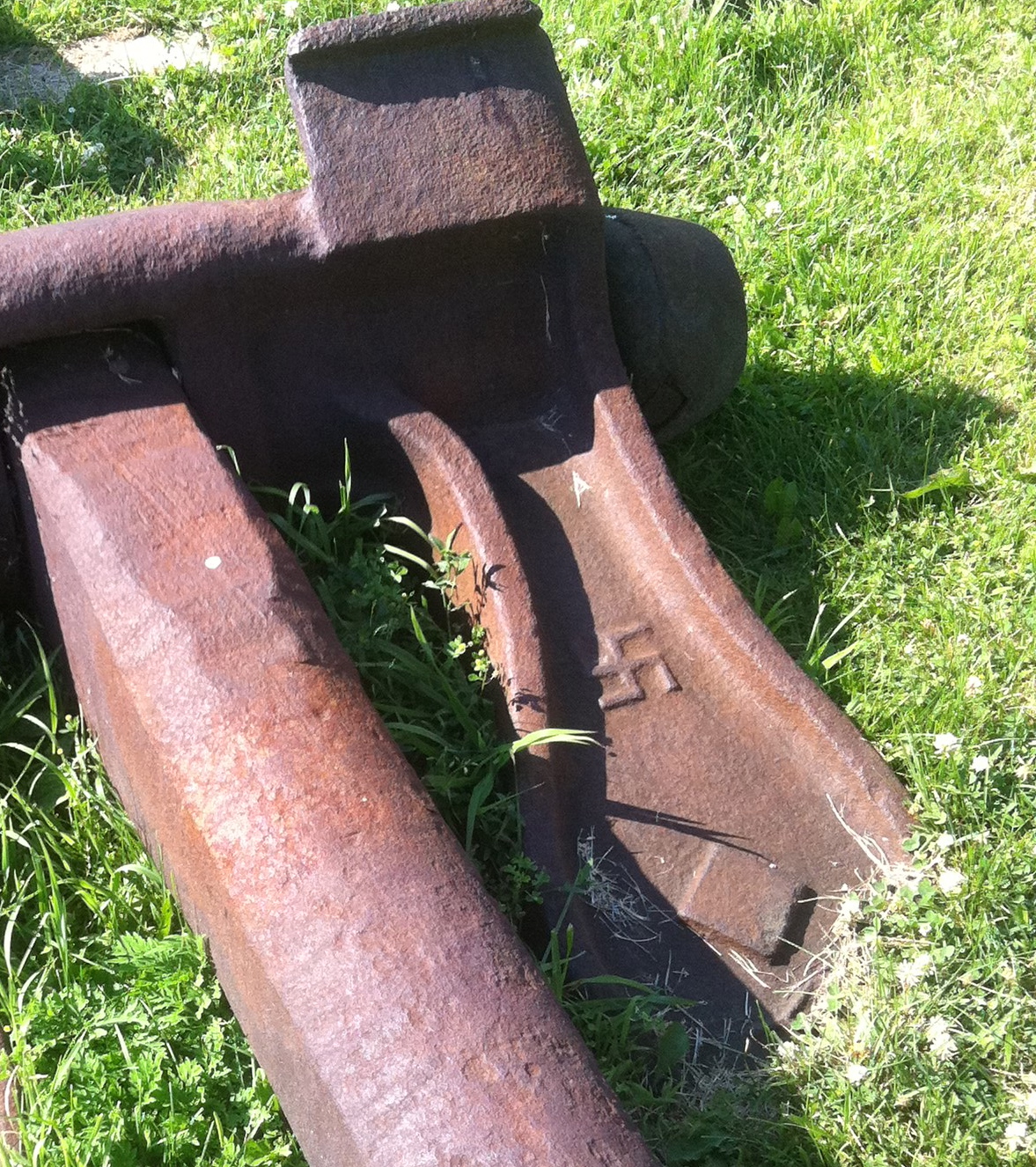
Diving off Carleton Island near Cape Vincent, Couch retrieved an anchor, which is now on display at Wahl’s marina in Clayton, NY. This anchor has a very unusual and mysterious swastika marking on the fluke of the anchor, very similar to the swastika used by the Nazis during World War 2.

Wahl's recovered anchor he believes came from the submerged U-boat.

Wahl’s recovered anchor he believes came from the submerged U-boat.

Close up of Wahl's anchor clearly shows a swastika marking on it.

Close up of Wahl’s anchor clearly shows a swastika marking on it.

Did a German U-boat make its way down the St. Lawrence River to Wolfe Island before being sunk and now lies at the bottom of the river? With U-boats regularly patrolling the St. Lawrence River during WW2, they were spotted as far down as Quebec City, but none further than that…unless one made it it further south somehow.

Let’s investigate…

During the late 1800’s a British foundry, Byers, in Sunderland, England, made anchors. Turns out they had a very unusual corporate logo…

anchorswastj

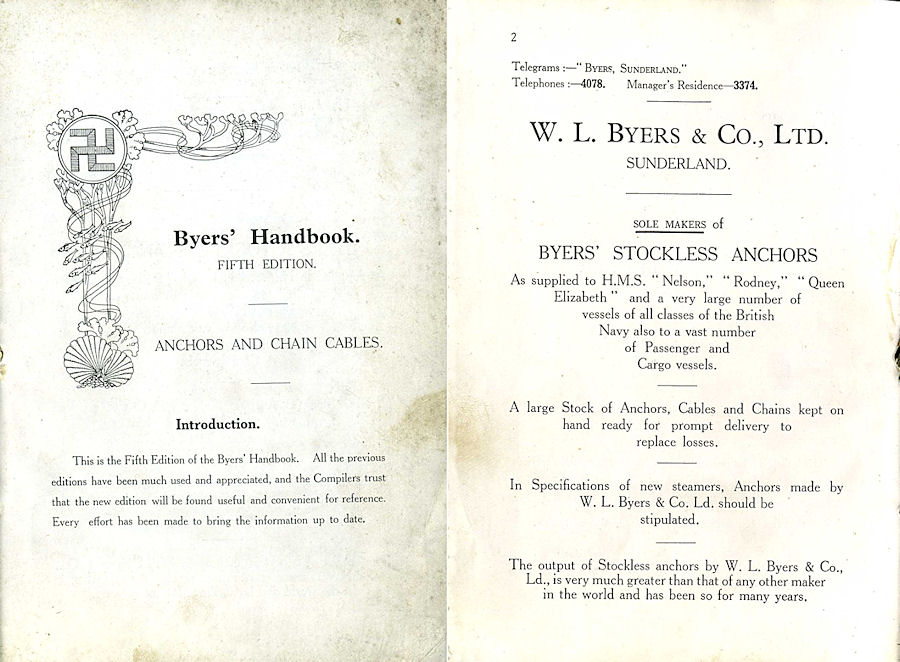
W.L. Byers, the owner, was fascinated by the ancient discoveries in Troy, which included pottery found with the ancient swastika symbol on them…Byers made that his company symbol, and it was put on all the anchors his company produced from the late 1800’s until the 1920’s. Here is his anchor catalogue from the early 1900’s:

Byers Anchor Catalogue from the early 1900's with their logo clearly shown.

Byers Anchor Catalogue from the early 1900’s with their logo clearly shown.

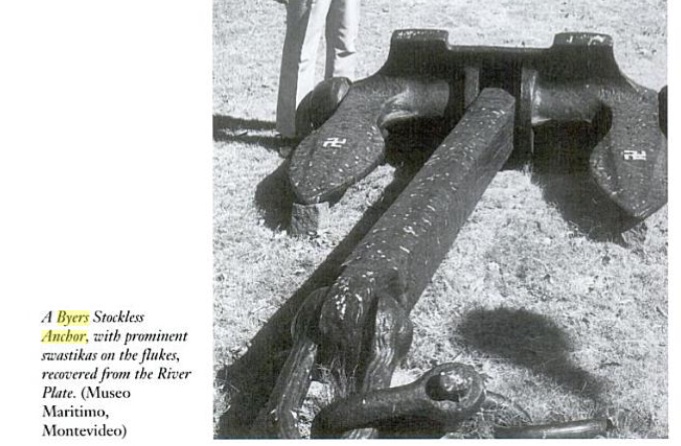
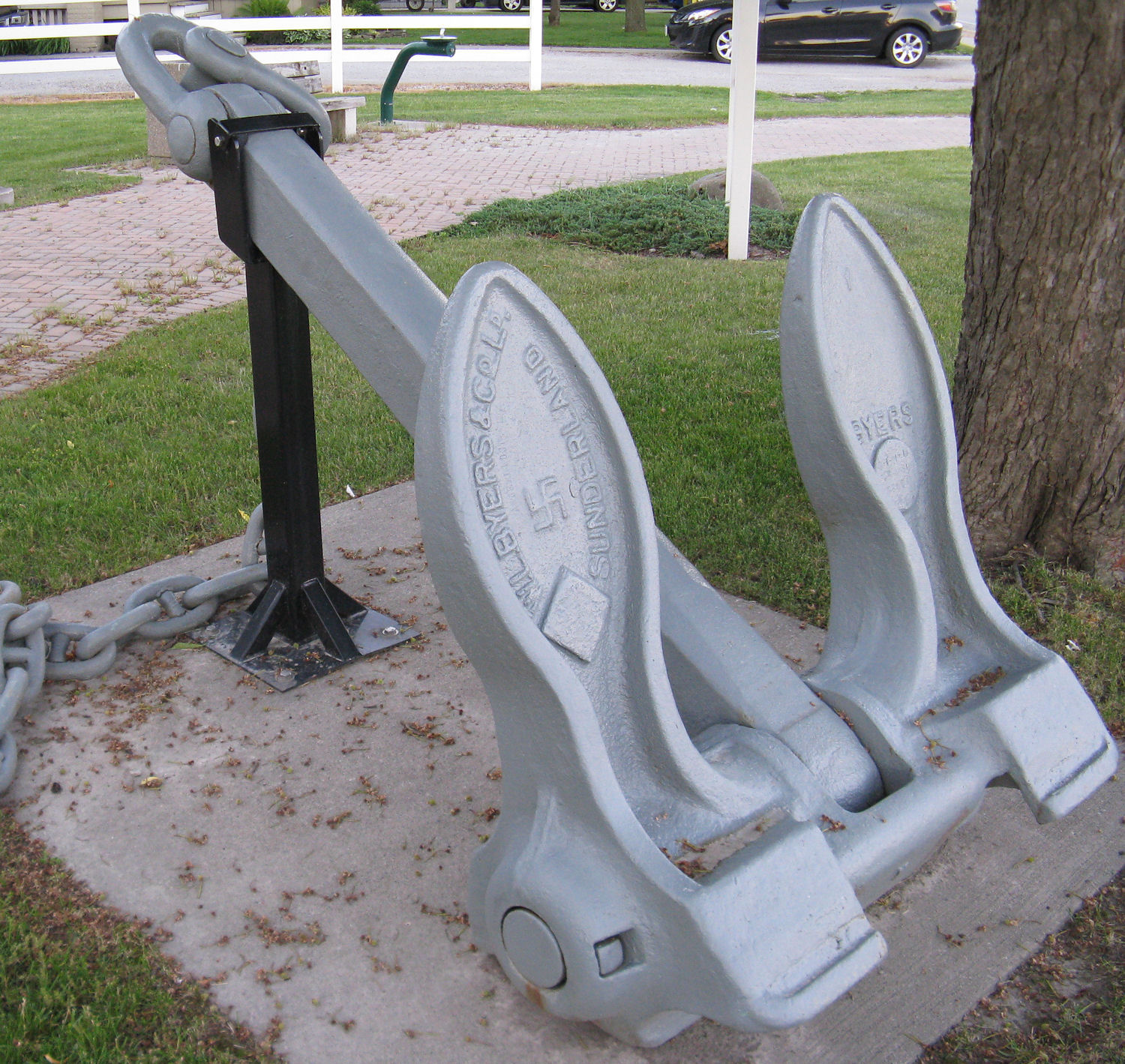
Byers anchors from Sunderland used the swastika symbol on their anchors until the German Nazi Party made it their symbol in the 1920’s…and here is a Byers anchor clearly showing the Byers swastika marking:

Byers anchor very similar to the Wahl anchor in Clayton, Ny. Note similar swastika marking.

Byers anchor very similar to the Wahl anchor in Clayton, Ny. Note similar swastika marking.

…which is an almost identical looking anchor to what Wahl’s recovered “U-boat” Wolfe Island anchor.

Mystery solved…the Wahl Anchor is most likely an anchor recovered from an early 1900’s shipwreck that used a Byers forged anchor that sunk off Cape Vincent, later found by Skip Couch in the 1960’s.

So it looks like the U-boat story is merely an urban legend, although it does make for a good story around the campfire….

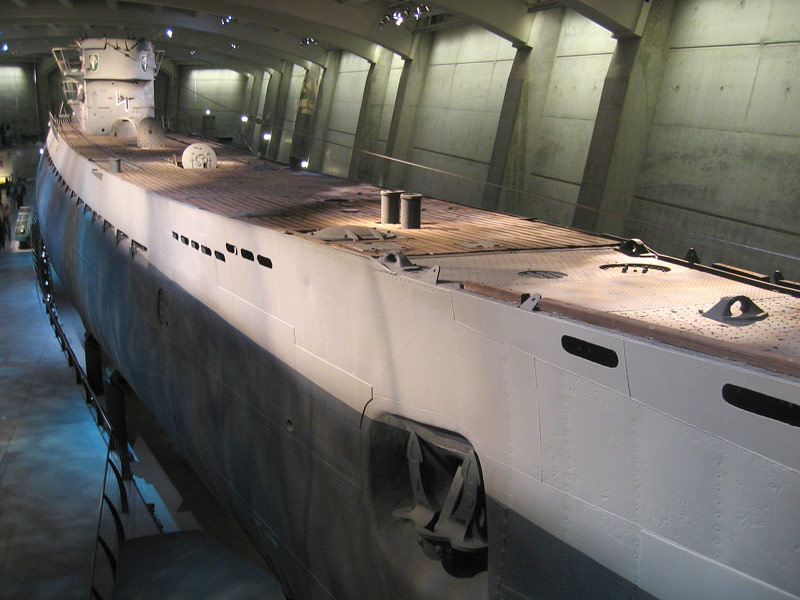
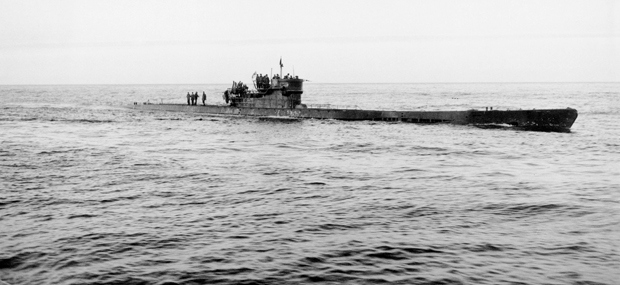
HOWEVER, it looks like a German U-boat actually did go down the St. Lawrence River past Kingston AFTER the war…Captured by the US during the war, German U-boat U-505 was towed down the St. Lawrence past Kingston, thru the Great Lakes to a museum in Chicago in 1954.

Captured German U-boat U-505 that was towed down the St. Lawrence River and through the Great Lakes in 1954 to Chicago.

Captured German U-boat U-505 that was towed down the St. Lawrence River and through the Great Lakes in 1954 to Chicago.

U-505 still resides in The Chicago Museum of Science and Industry where it is currently on display.


Photos/Info Sources

Google Maps

Wikipedia : U-505

http://schnorkel.blogspot.ca/2007/06/sunken-german-sub-in-st-lawrence-river.html

http://www.searlecanada.org/sunderland/sunderland212.html

Anchors: An Illustrated History By Betty Nelson Curryer  http://books.google.ca/books?id=MigKLVemmvEC&pg=PA124&lpg=PA124&dq=byers+anchors+swastika&source=bl&ots=-RwlJrPQkf&sig=N2Py_S0Xzsqol1emznjlq8uP48w&hl=en&sa=X&ei=b4HMUtH9F9OxsASCqYDQDg&ved=0CDEQ6AEwAQ#v=onepage&q=byers%20anchors%20swastika&f=false

Arnprior Komet Trail

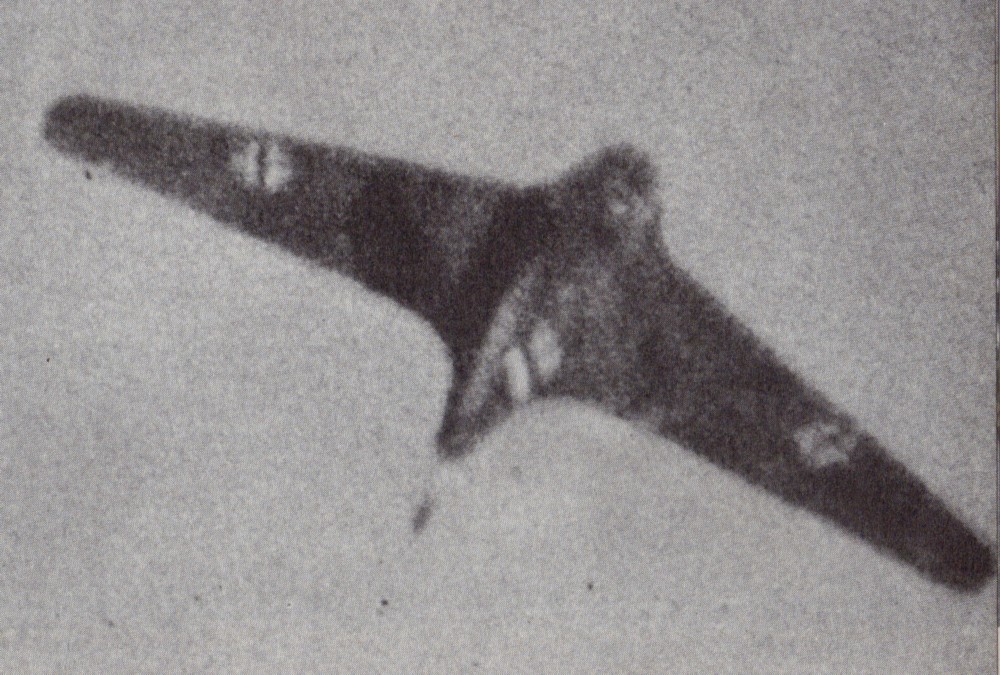
In flight footage of a ME163 Komet

In flight WW2 gun camera photo of a ME163 Komet

During the last days of World War II, the German Luftwaffe was getting desperate in designing new aircraft that would stop the increasingly effective Allied air attacks. The Luftwaffe believed developing advanced new technologies in aviation would help them win the war. One of their more radical last ditch effort designs was the Messerschmitt Me163 Komet. Designed by Alexander Lippisch, this strange interceptor was a rocket-powered fighter aircraft. Being the only rocket-powered fighter aircraft ever to have been operational, the design was revolutionary, and the Me 163 was capable of performance unrivaled at the time. Using a two part highly flammable liquid rocket fuel as propellant, the Komet reached speeds of almost 1000km/h and was armed with two 30mm cannons to bring down attacking Allied aircraft. The Komet proved too little, too late and the war soon ended with 300 Komets being produced. Most were captured by Allied forces and due to the advanced technology of the design, were sent back to North America for further testing, studying and analysis.

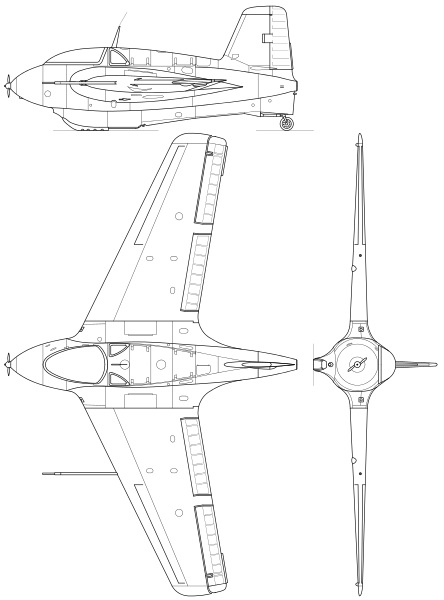
Schematic drawing of the Me163 Komet

Schematic drawing of the Me163 Komet

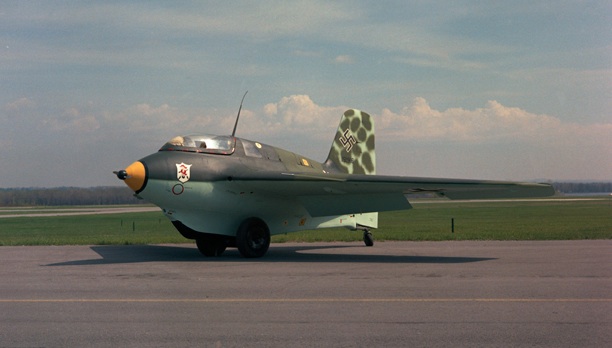
Three of these advanced rocket planes made their way back to Canada after the war, and through various sources, it looks to me that one ended up 30 minutes away from Ottawa in Arnprior, On…its final fate unknown. Of the three captured Komets in Canada, one (serial 191659) is currently on display at the National Aviation Museum here in Ottawa.

The Komet currently on display at the Canadian Aviation and Space Museum

The Komet currently on display at the Canadian Aviation and Space Museum. Serial #191659

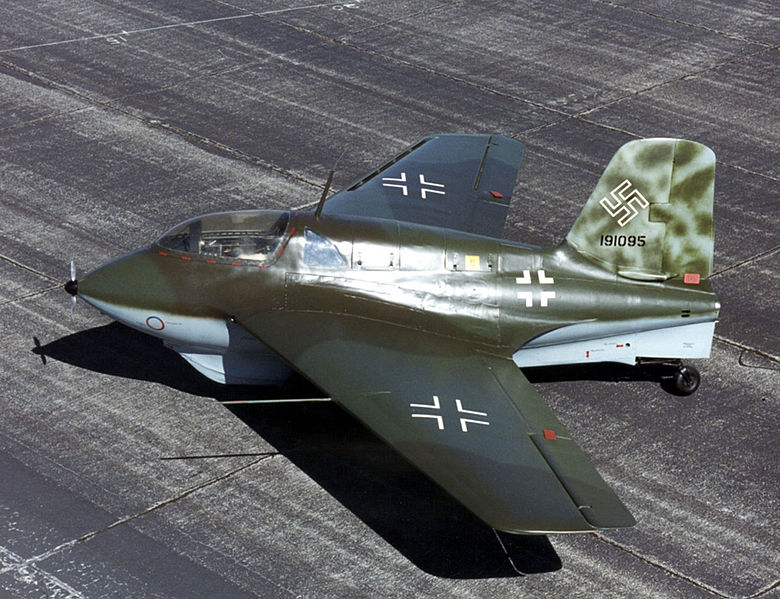
A second one, serial #191095 was as a gate guardian at RCAF Station St Jean, Québec, until taken over by the Canadian War Museum where it was restored and later given as a gift to the USAF Museum in Dayton, Ohio where it resides today.

the second captured Canadian Komet now at the National USAF Museum in Dayton, Ohio.

The second captured Canadian Komet now at the National USAF Museum in Dayton, Ohio. Serial#191095

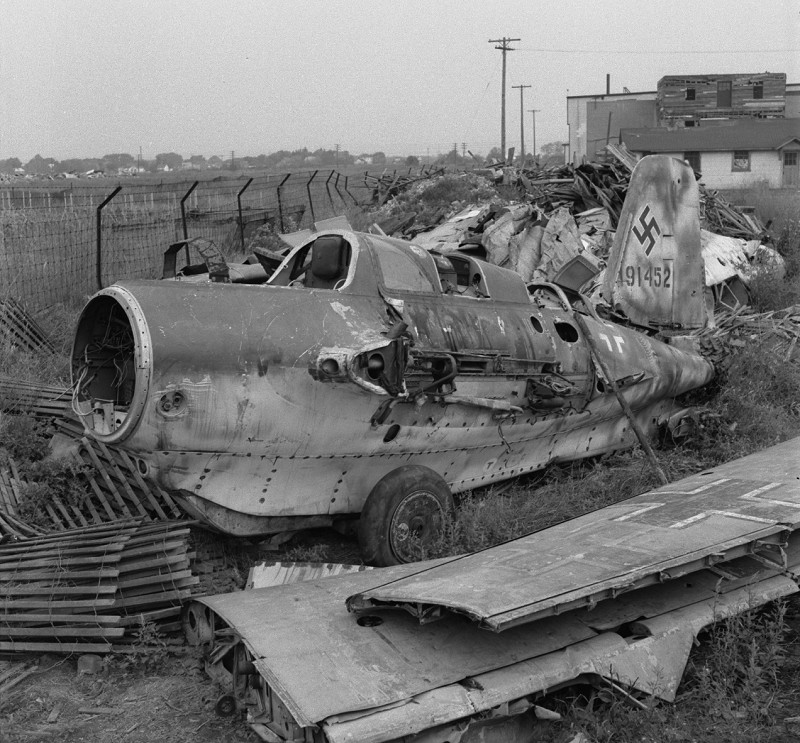
The third captured Komet, serial #191452 apparently ended up in Arnprior. After the war, it was brought over from Germany where it was put on a boat bound for Montreal. From there it somehow ended up at RCAF Station Arnprior where it was tossed in a pile of old aircraft stored there. Here is a photo of it from 1957 as it appeared in the Arnprior scrap heap:

The third Komet, sitting in a scrap pile in Arnprior, ...fate unknown.

The third Komet, sitting in a scrap pile in Arnprior…fate unknown. Serial#191452

In 1946 the Arnprior airport became the National Research Council (NRC) Flight Research station. The Komet was most likely brought here for study and research by the NRC. In 1951 the facility was re-named the “National Aeronautical Establishment” providing support to the NRC and secret experiments for the Defence Research Board. It is probable the advanced rocket propulsion system of the Komet was being studied here during this time and afterwards, scrapped into the pile of parts we see in the above photo.

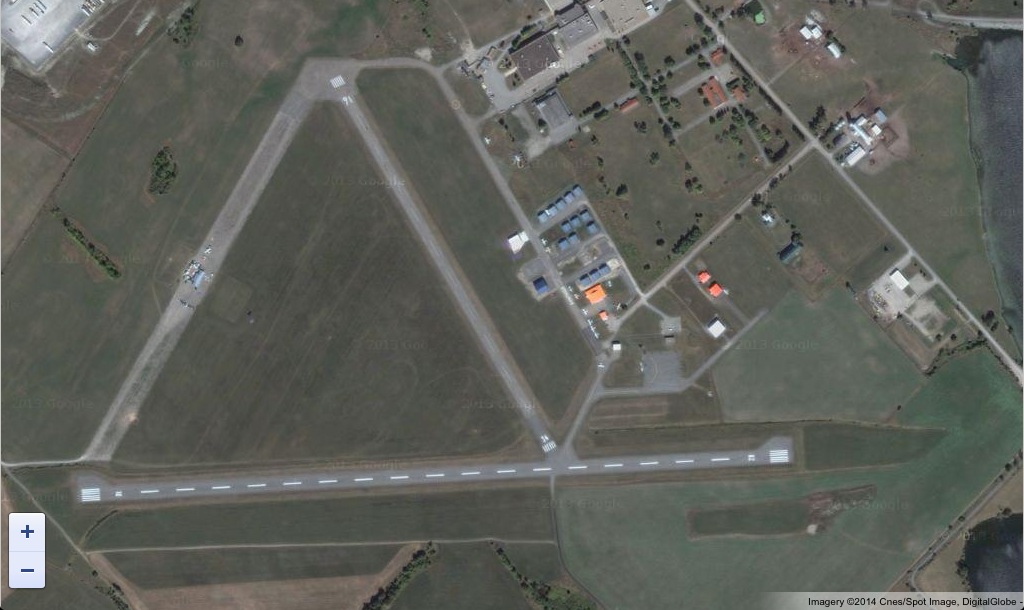
Aerial view of present day RCAF Arnprior air base. It is currently a public airport.

Aerial view of present day RCAF Arnprior air base. It is currently a public airport.

What happened to it after 1957 is a mystery. Was it sold to a local scrap metal dealer, taken to a salvage yard? No one seems to know the final fate of this highly advanced rocket plane..maybe it still exists somewhere in Arnprior, waiting to be discovered.

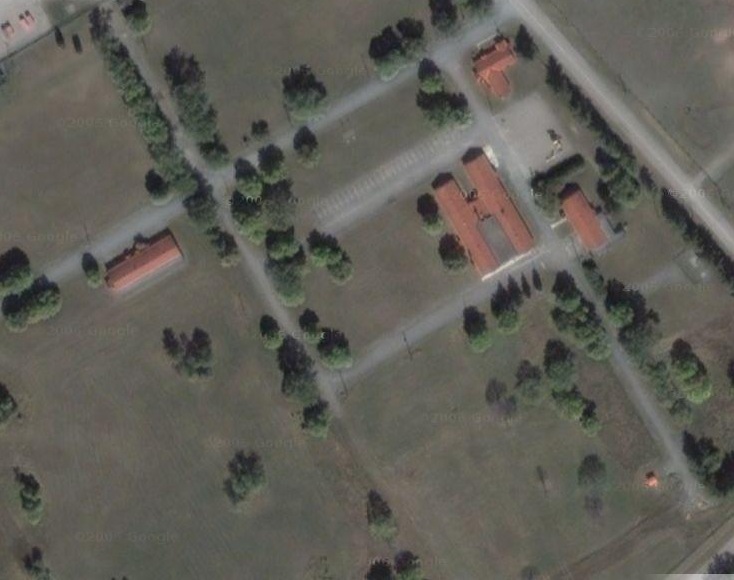
The only remaining WW2 RCAF buildings at Arnprior airport. They have since been demolished after this photo was taken.

The only remaining WW2 RCAF buildings at Arnprior airport. They have since been demolished after this photo was taken.

There is a nearby scrap yard that may provide some clues to this mystery, but I will wait until the spring when the snow melts and the sun is warm before investigating further. Until then, any further info on this interesting piece of aviation history is welcomed.

Photo/info sources:

http://robdebie.home.xs4all.nl/

Wikipedia

Bing Maps

Canadian Aviation and Space Museum