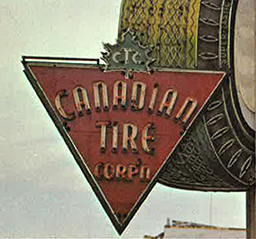
The Bermuda Triangle is a legendary triangular region of the Atlantic Ocean where hundreds of ships, planes and people have disappeared through mysterious circumstances. A far less studied triangle exists in our northern hemisphere, a triangle with its own special powers. Like a glowing, hot branding iron that has been burned into our inner retinas after leaving the womb, it is the image of the Canadian Tire triangle.

The inverted red triangle with a green maple leaf logo on top is just about as Canadian as a ketchup chip dipped in maple syrup, yet many don’t realize the story behind this simple Canadian icon.
When the two brothers Alfred and John Billes opened the first Canadian Tire store in 1926, the company’s logo was a rather bizarre cartoonish rubber tire wearing elven booties dragging behind a coin character wearing the same medieval footwear. Under the slogan “The Longest Run for Your Money”, this logo of the Canadian Tire Corporation would carry on until the 1940’s when a red wax seal and ribbon logo appeared in their advertising and catalogues. This common “seal of approval” motif would continue until something happened that would live on into our subconscious: a red triangle.

THE RED TRIANGLE
Appearing around 1950, the inverted red triangle with a green maple leaf would appear and remain a symbol for the Canadian Tire corporation for 66 years, and will probably continue for many more. The original red triangle was outlined in green and included the word “corporation” shortened to “CORP’N”. In 1958 our famous collected currency known as “Canadian Tire Money” appeared at a Canadian Tire gas bar at Yonge and Church St. in Toronto. Yet it would not be the new red triangle symbol that would be the logo on the bills, but rather the original elven socked “running tire and coin” image that started with the company 32 years earlier.
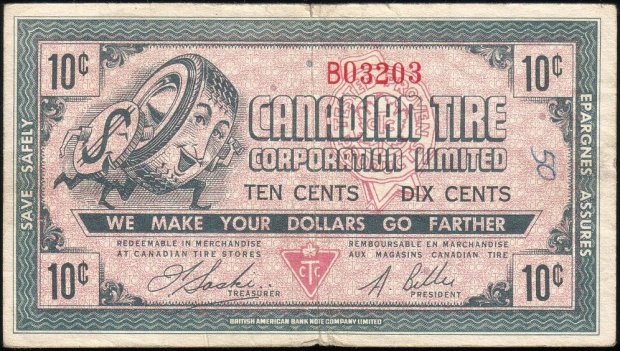
When first introduced in 1958, the CT money used a slightly updated “tire & coin” logo. The red triangle and seal are also displayed.
The now famous “Scarfed Scotsman”, Sandy McTire, who symbolized the thrifty shopper, showed up on CTC money in 1961 and continues to appear on the bills today. At one time, Canadian Tire money was manufactured at the BA BankNote company here in Ottawa, right alongside our actual Canadian currency bills, using the same inks and paper, resulting in a durable currency bill that many still have and use to this day.
THE CHALICE
The inverted triangle symbol used by CTC is actually an ancient symbol with a very unique meaning behind it. It has been the representation of the earth and water. The downward pointing triangle is also an ancient symbol of femininity, being a representation of the female womb, or a chalice…”the giver of life”. One of the four alchemical elements, water symbolizes intuition, the unconscious mind, and the enclosing, generating forces of the womb. It also represents the force of Earth or gravity, or Mother Earth. In developing countries, the inverted Red Triangle is the symbol for family planning health and contraception services, again part of the “womb” symbology mentioned earlier.


This inverted red triangle of Canadian Tire was streamlined in the late 1960’s with the company name placed inside the triangle. This would be the everlasting symbol for the company that would be emblazoned into the psyche of every Canadian.
But why a red inverted triangle? According to the Canadian Tire website, the triangle holds a “98% instant recognition among Canadians. That’s the power of the Canadian Tire triangle.” In 2012 Canadian Tire finally revealed the secret behind the instantly recognizable triangle; in a single Twitter statement they said it was chosen by the founder, Mr. Gilles:
“Chosen because our founder needed one for the front of an oil can. A triangle was a simple, easy to recognize symbol.”
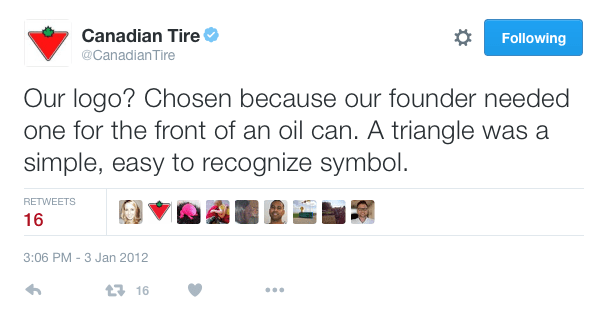
The secret behind the Canadian Tire logo revealed on Twitter in 2012.
Perhaps not as mysterious as the Bermuda Triangle, but our Canadian Triangle possesses its own, shall we say, “magnetic properties”.
Andrew King, October 2016
SOURCES
http://www.autofocus.ca/news-events/auto-retro/a-brief-history-of-canadian-tire
http://www.steelart.com/about.html
https://en.wikipedia.org/wiki/Canadian_Tire
http://www.canadiantire.ca/en.html
http://symboldictionary.net/?tag=triangle
http://www.thefullwiki.org/Red_Triangle,_Family_Planning
















 On November 5 1970 Led Zeppelin released the “Immigrant Song” on Atlantic Records, written during Led Zeppelin’s tour of Iceland, Bath and Germany in the summer of 1970.

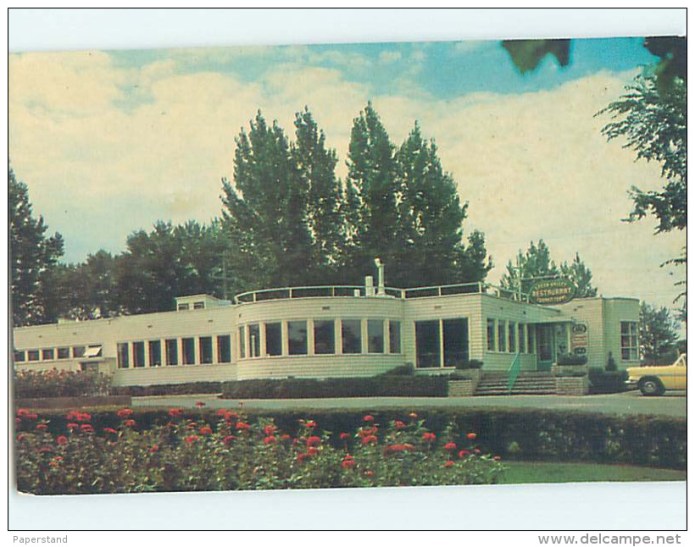
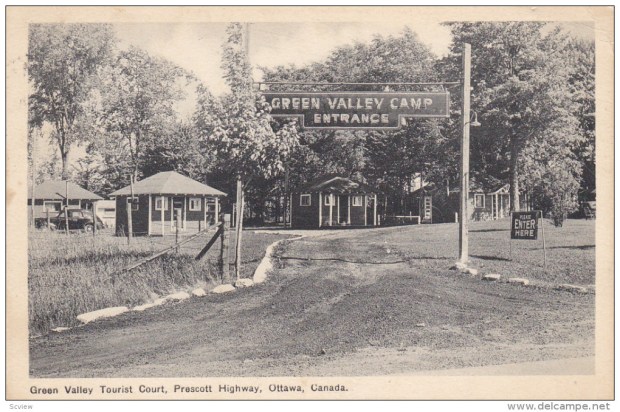
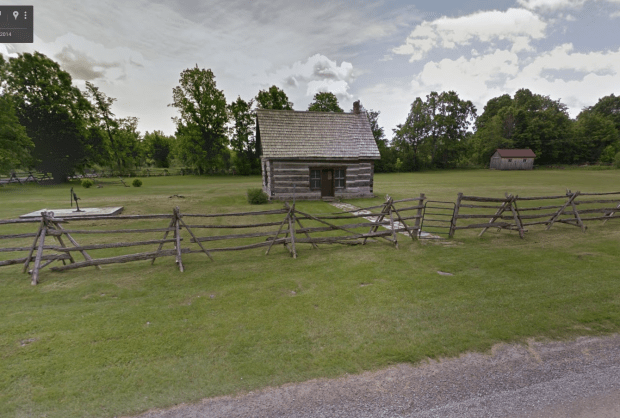
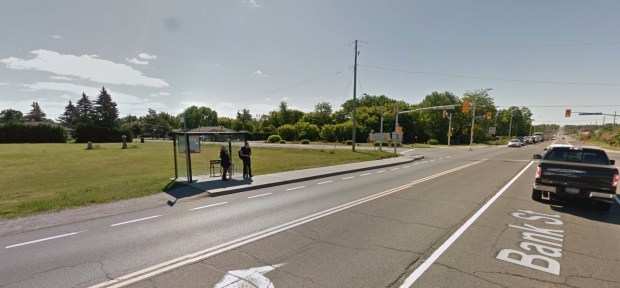
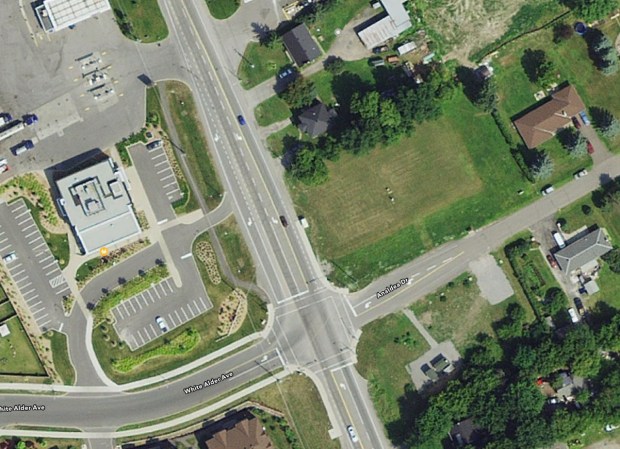
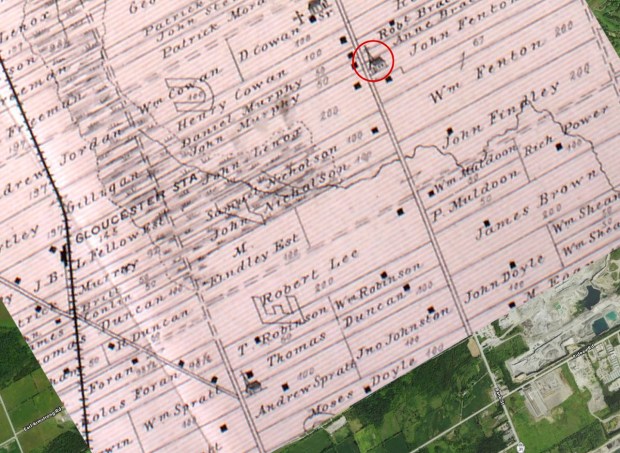
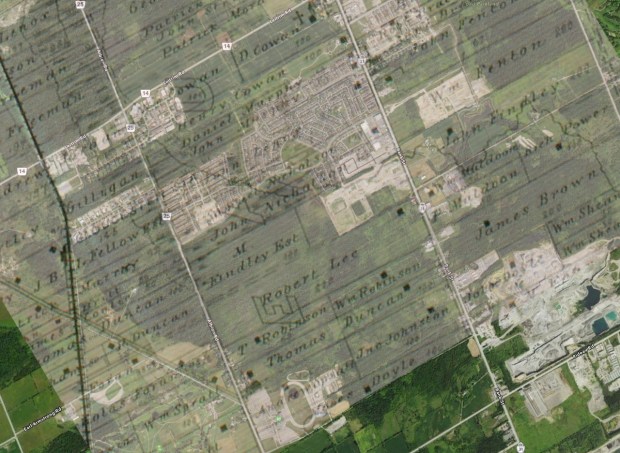
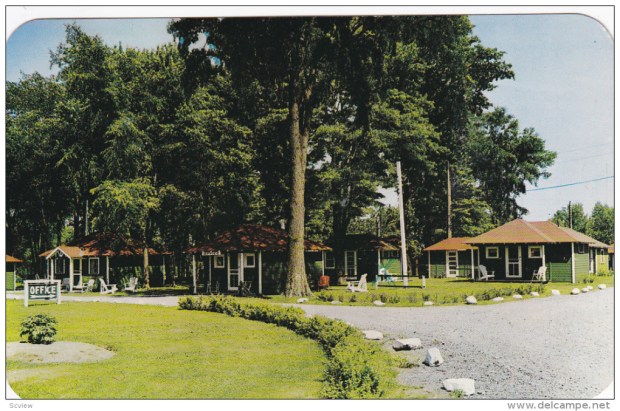
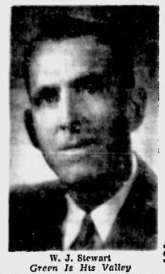 In 1933 Waldorf Stewart moved to a remote wooded property on the old Prescott Highway near Ottawa where he built a play cabin for his daughter near his new home. The rustic cabin was soon visited by uninvited guests who were tourists passing by thinking it was a Motor Court cabin rental, a type of accommodation that was springing up all over North America as more and more tourists traveled by car. Stewart realized an opportunity when he saw one, and built a few more cabins and opened the Green Valley Tourist Court with cabins to rent for tired travellers on their way into the Nation’s Capital.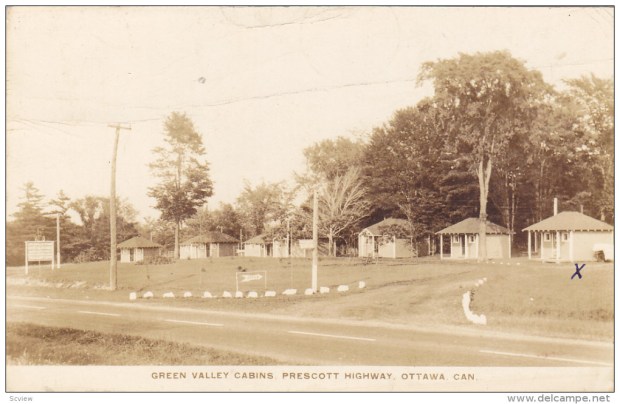
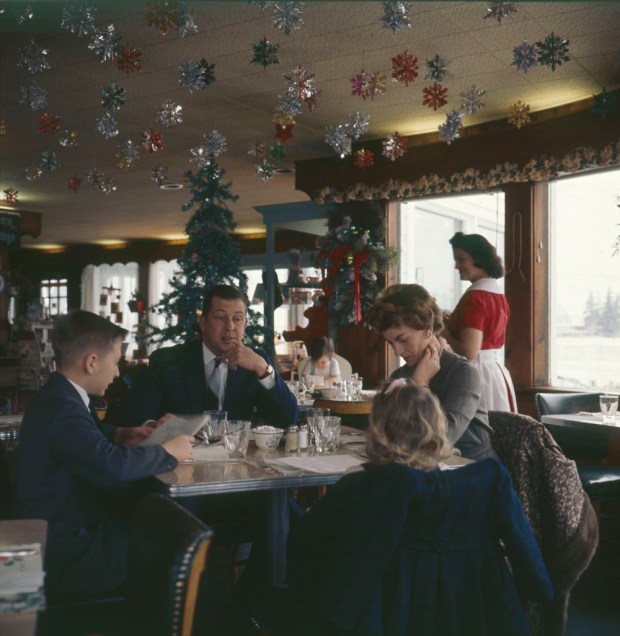
 The restaurant was expanded three times and included a gift shop called the ‘Then and Now Shop’ where visitors could purchase toys, souvenirs and curious gadgets. Kids especially enjoyed the “Mickey Mouse” sundaes that the restaurant served to its younger diners which was a cartoon dessert; a scoop of ice cream with wafer ears and pistachio eyes. Many Ottawa residents will remember going there with grandparents or on special occasions, as it was a treat to be treated to the Green Valley Restaurant back in the day.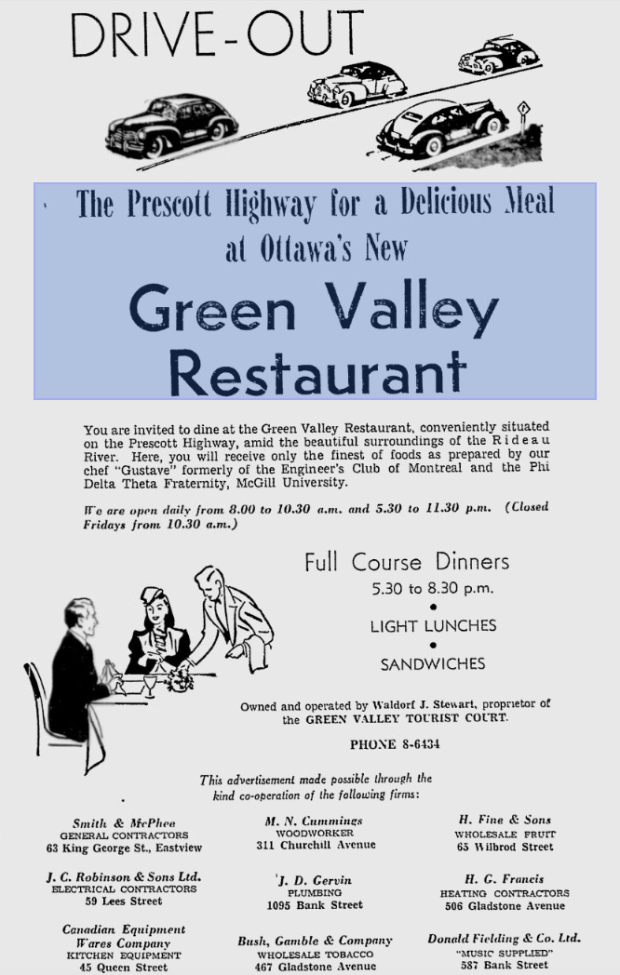
 I remember when I received my first paycheque from my first full time job and I wanted to treat myself to a nice dinner. So I picked the place I saw when I first drove into Ottawa a few years earlier, the Green Valley. It was 1995 and I remember the place looked like it was trapped in 1955, with a musty smell reminiscent of an old landmark dame that now sat tired, empty and staffed by elderly servers who had probably worked there when it first opened and still wore their original uniforms. The furniture was worn, the food was bland, and the place had a very “The Shining” feel to it. Nevertheless you could sense it was once “THE” place to eat in Ottawa, but with the Lone Star opening up down the road, and other restaurants emerging, the Green Valley was left behind, its grandeur tarnished by the hands of time.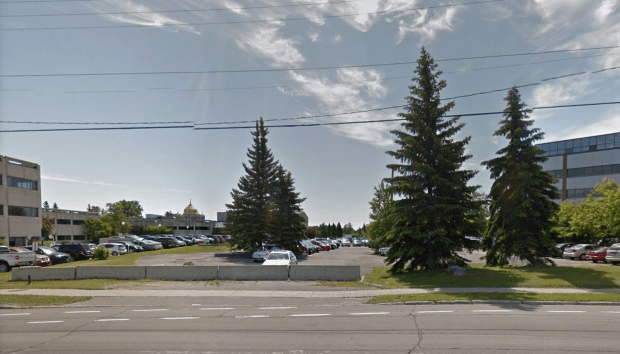





 OTTAWA REWIND