The Knights Templar and Canada’s Parliament Buildings

churchcomp3

The Nation’s Capital contains some of the most stunning architecture in the country, most notably the Parliament Buildings. These prominent structures were designed by an architect by the name of Thomas Fuller. In studying Fuller’s work and his buildings, there is a recurring theme and design style that I believe are reminiscent of another style of architecture..that of The Knights Templar.

Could there be a possible connection between the ancient and mysterious Knights Templar and our city’s most prominent buildings? Is it mere coincidence many of Ottawa’s buildings share features of those built by a medieval order of knights known as the Templars? Well with a grain of salt let’s take a look and see what we can find…

The Knights Templar
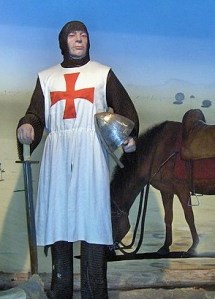
A Templar knight with the distinctive cross on the tunic.

A Templar knight with the distinctive cross on the tunic.

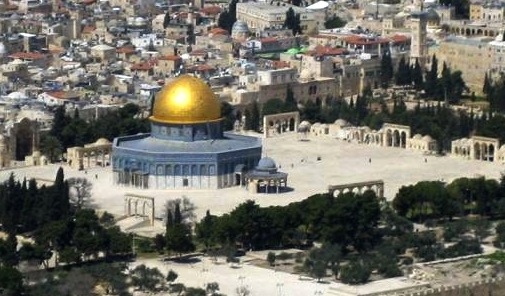
Formed in 1120, the Knights Templar were created to protect pilgrims to the Holy Land of Jerusalem. It began with nine knights, but quickly grew under the order of the King of France and the Pope of that time. They built their domed headquarters on what was supposedly the ruins of King Solomon’s temple in Jerusalem, forming their name the Knights of the Temple or “Knights Templar”.
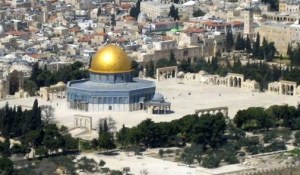
The original Knights Templar domed headquarters in Jerusalem.

The original Knights Templar domed headquarters in Jerusalem.

Templar knights, in their distinctive white cloaks with a red cross were among the most skilled fighting units of the Crusades and the non-combatant Templars managed a large economic infrastructure throughout Christendom, innovating financial techniques that were an early form of banking and building fortifications and churches across the Holy Land.
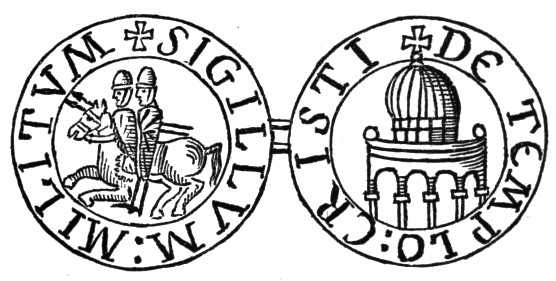
The original seal of the Knights Templar. Their Temple on right.

The original seal of the Knights Templar. The domed Temple on right.

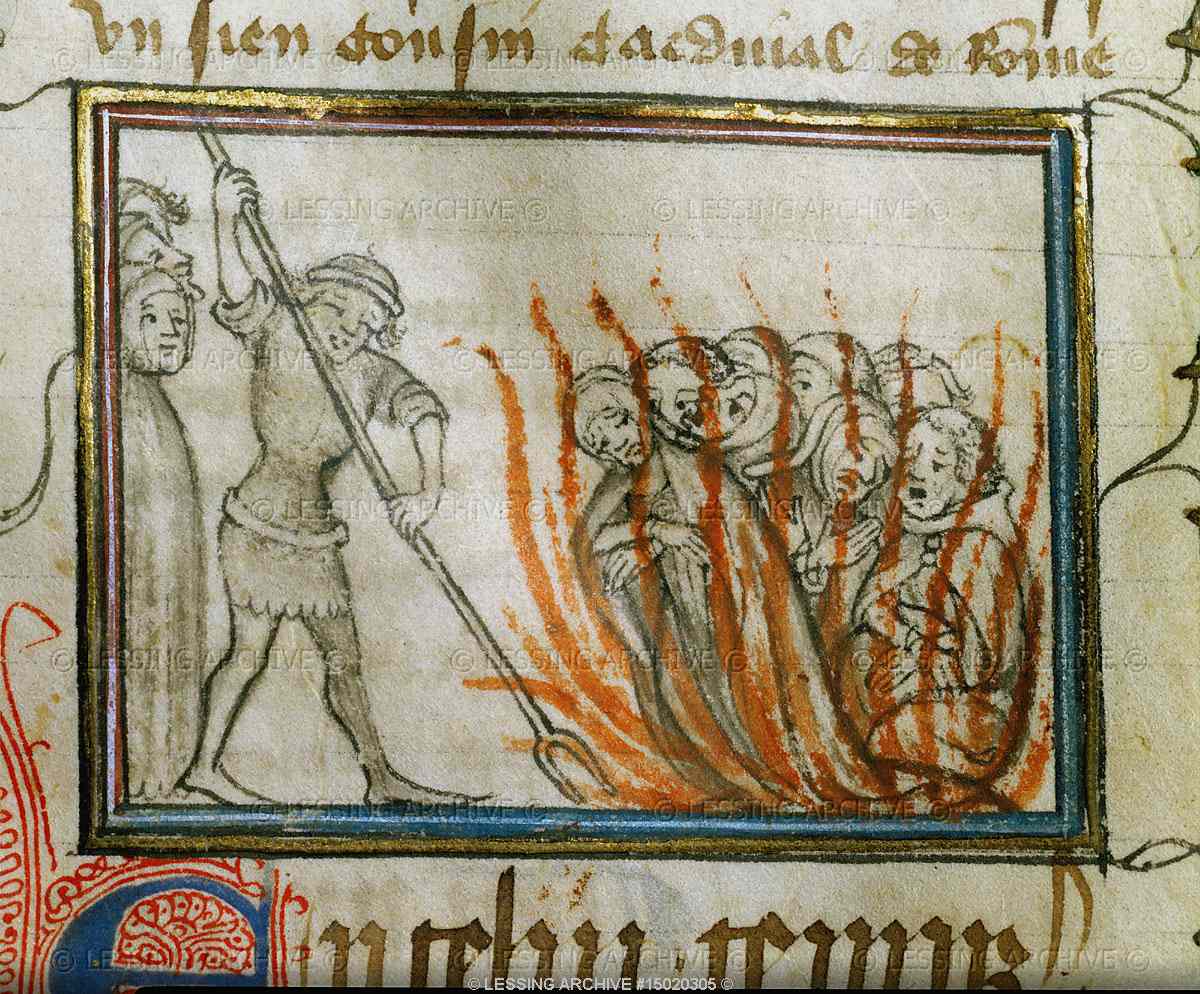
When the Crusades ended and the Holy Land they were sworn to protect was lost, the Knights Templar fell under suspicion by the King and the Pope of that time, the two figures who created the order in the first place. By 1307 mistrust of the Knights grew based on the Knights odd initiation rites and “un-Christian Practices”. King Philip IV of France and Pope Clement soon had the Knights Templar arrested, tortured then burned at the stake. On Friday the 13th of October 1307, many Knights Templar were rounded up and executed by the King under orders of the Pope. This is a popular reason Friday The 13th is regarded as an “unlucky day”.
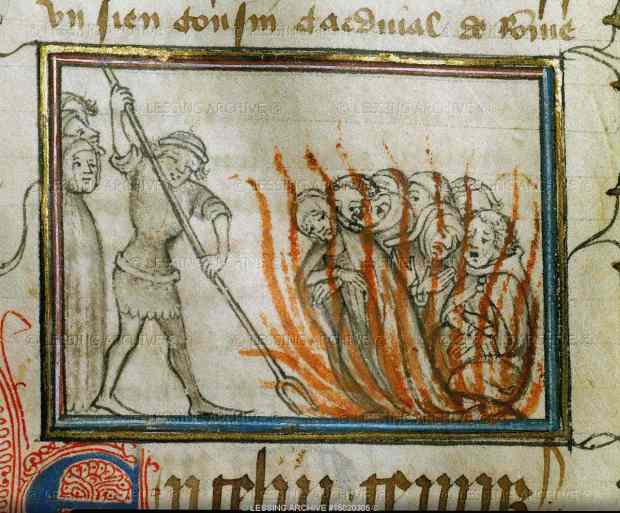
Knights Templar being burned at the stake on Friday the 13th 1307.

Knights Templar being burned at the stake on Friday the 13th 1307.

Escaping persecution, hundreds of remaining Knights Templar knew that their fate was sealed and began to pack up their hordes of treasures, including what many believe to be the Holy Grail and other religious relics and loaded them onto a fleet of ships in the Mediterranean. The Templar ships left at midnight from La Rochelle, France and reportedly headed to where they were given asylum and refuge: Scotland.

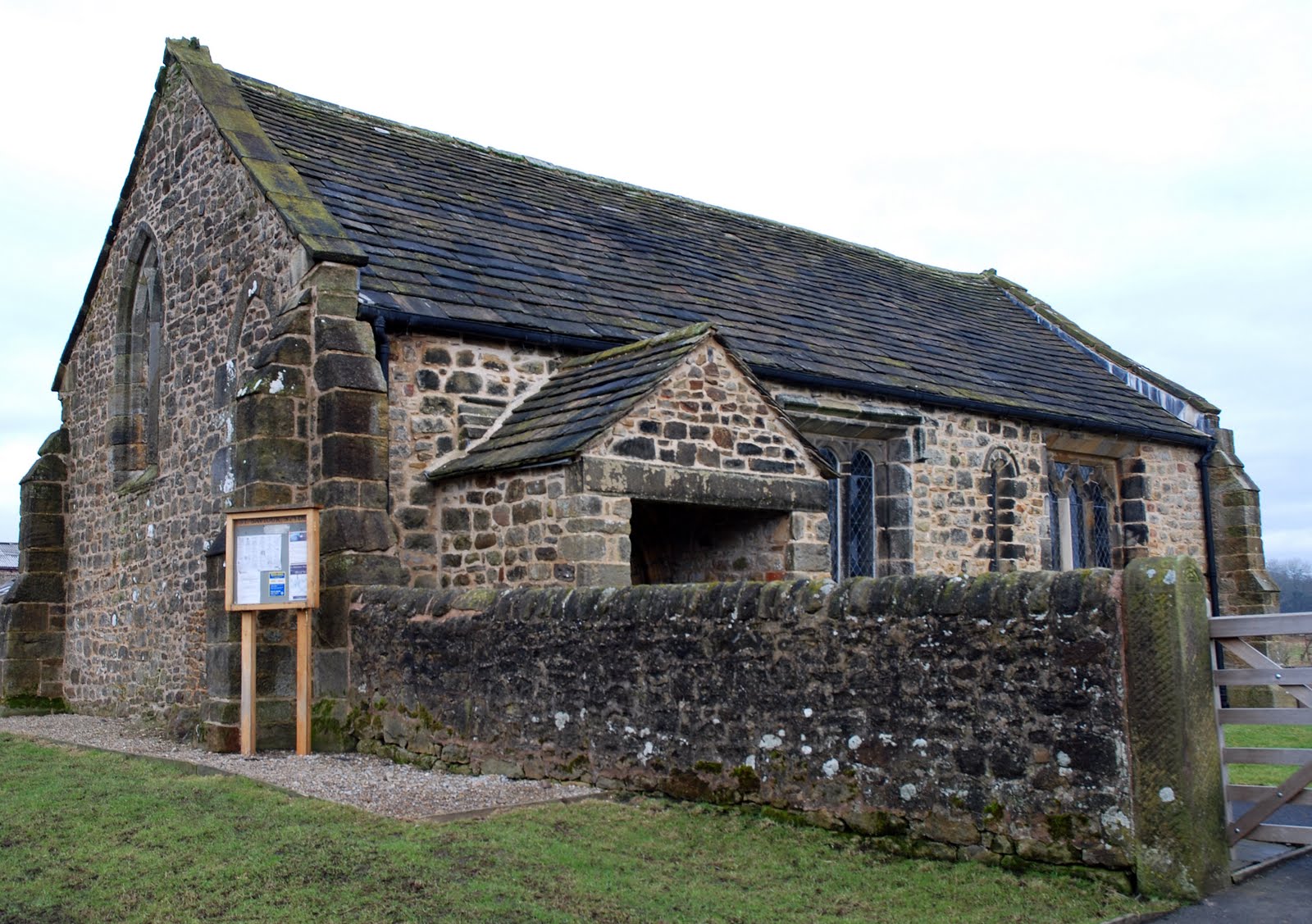
It seems Robert The Bruce of Scotland gave the Knights Templar refuge in his land, having been excommunicated by the same Pope a year before the Templars were persecuted. Unloading men, treasures, and wealth into Scotland, the Knights went into hiding, taking their secrets and their myriad of skills with them. Their advanced skills in masonry, architecture and design can be seen in various church structures throughout England and Scotland to this day.
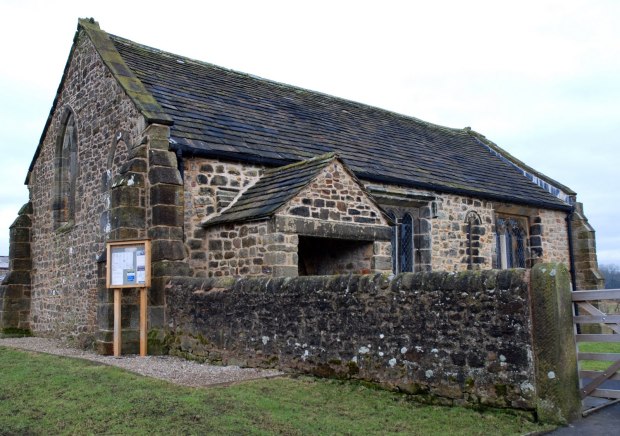
A medieval Templar church in the United Kingdom.

A medieval Templar church in the United Kingdom.

 Templars as Freemasons

After almost 500 years of hiding from the Catholic Church, the order of the Knights Templar was resurrected in 1790 by Alexander Deuchar in Scotland under a new name: Freemasonry. Since at least the 18th century Freemasons have incorporated Templar symbols and rituals. The Freemasons have five separated degrees or orders: The Entered Apprentice, The Fellowcraft, The Master Mason, The Royal Arch and finally: The Knights Templar.

FULLER THE FREEMASON
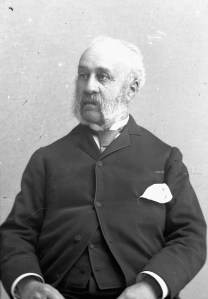
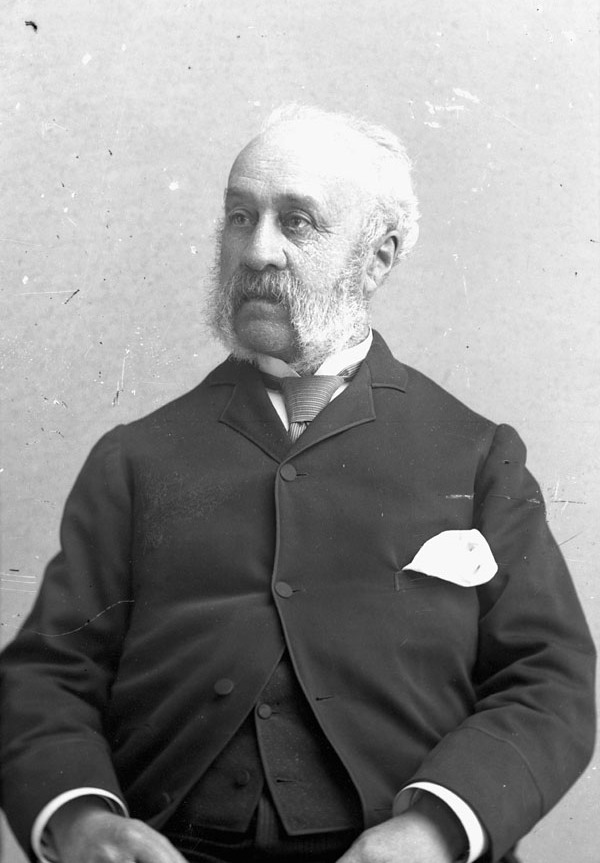
Thomas Fuller, architect of Canada's Parliament Buildings and numerous churches in the Ottawa area.

Thomas Fuller, architect of Canada’s Parliament Buildings and numerous churches in the Ottawa area.

Freemasonry began to grow with prominent men of society from the 1800’s onwards, and our architect Thomas Fuller was most definitely associated with them. Fuller was born in England and came to Canada in 1857 to set up an architecture firm specializing in stone buildings. Two years later he became Canada’s most important and large scale architect of some of our area’s most important buildings. The Fuller list of buildings he designed is extensive and all seem to be contracted in a short span of 15 years between 1860 and 1875 and all have some kind of Freemasonry association.
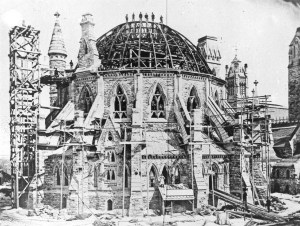
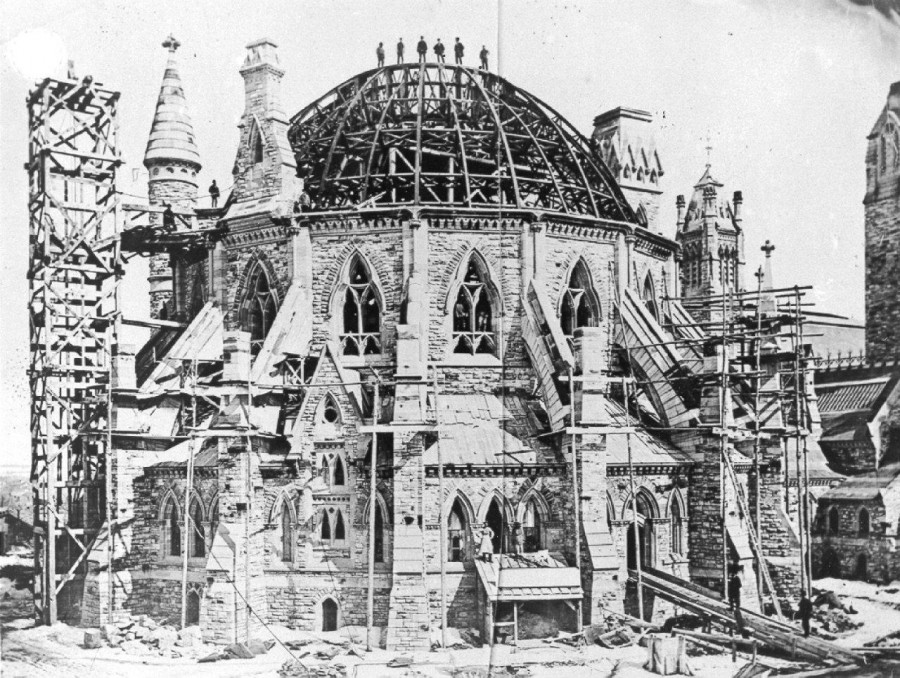
Fuller's Library Of Parliament under construction 1860s.

Fuller’s Library Of Parliament under construction 1860s. Note dome similar to original Templar headquarters at the Solomon Temple.

A relative newcomer to the country, Fuller was awarded the contract to design Canada’s Parliament Buildings in 1859. Here are the other buildings he designed:

1859 – Parliament Buildings (burned 1916) Library (remaining), Ottawa

1889 – Langevin Block, Ottawa

1861 – St. James Church, Perth

1862 – St. Paul’s Church, Almonte

1866 – St. Alban’s Church, Ottawa

1866 – St. James Church, Hull (burned 1900)

1866 – All Saints Church, Westboro

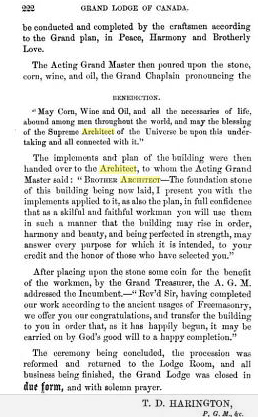
The ceremonies of laying the corner stone for these buildings were performed in full Masonic style, as outlined in this excerpt from the 1866 laying of the cornerstone of a church Fuller designed in Hull. An unusual and ritualistic ceremony that dates back to the time of the Templars.
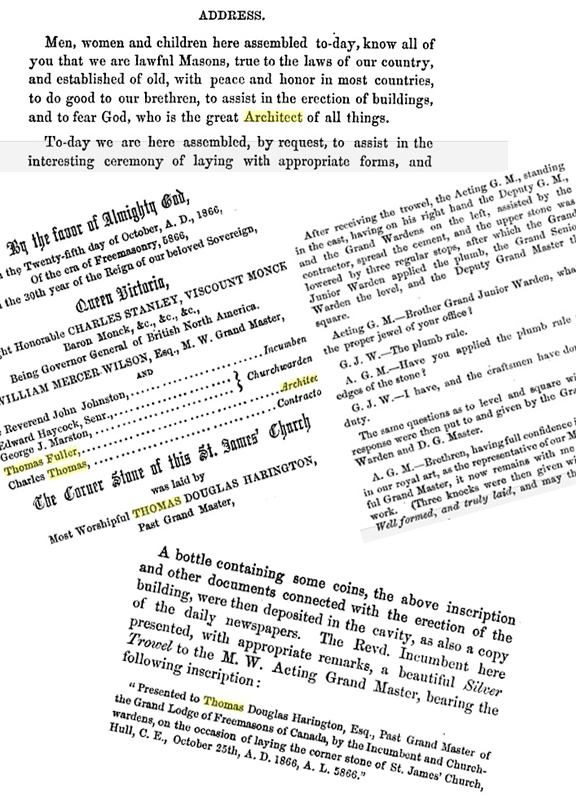
A record of the unusual Masonic rituals that accompanied the laying of the cornerstone for Fuller's buildings...this one a church in 1866.

A record of the unusual Masonic rituals that accompanied the laying of the cornerstone for Fuller’s buildings…this one a church in 1866.
freemason7

LOOKING AT FULLER’S TEMPLAR/FREEMASON STYLE AND SYMBOLS

I leave it up to your own discretion and opinion, but I thought it would be interesting to compare what I think is a predominant Templar design style in Fuller’s buildings, an order he was associated with through his continuing work with the derivative Freemasons.

 THE PARLIAMENT BUILDINGS – Library

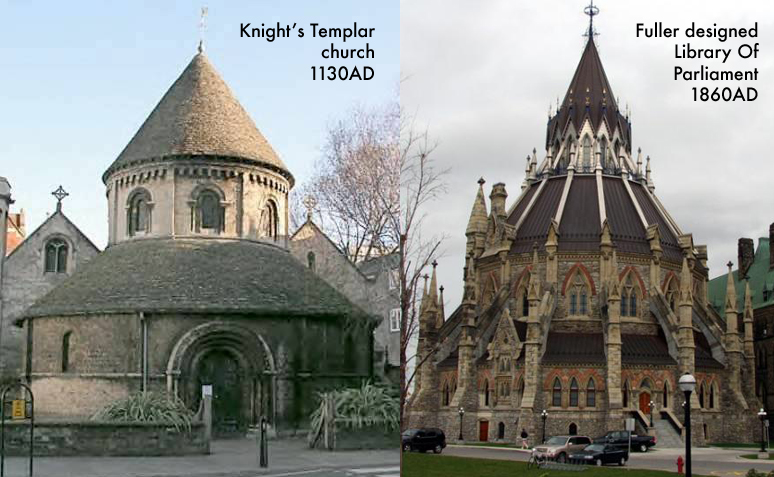
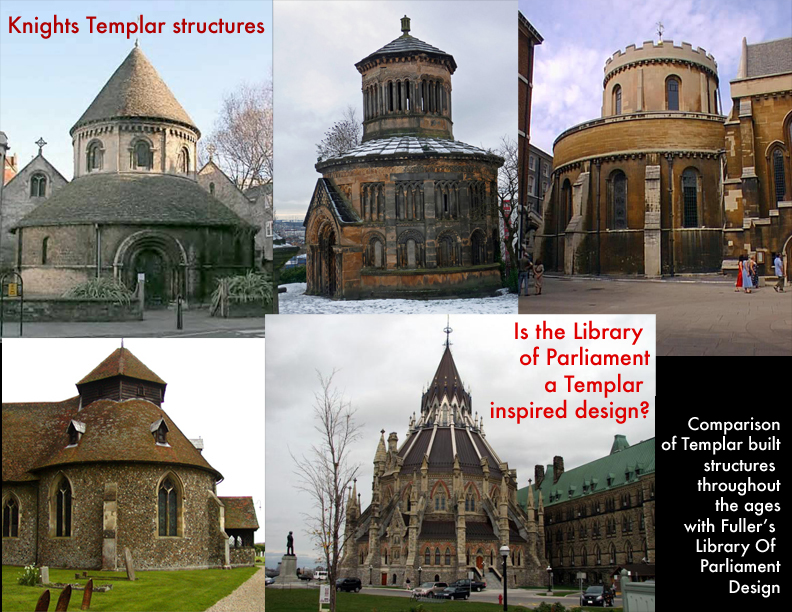
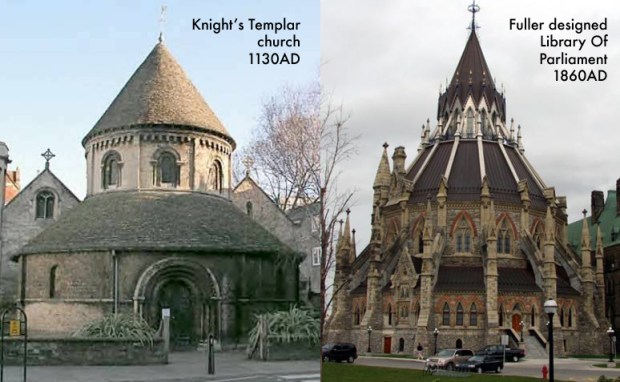
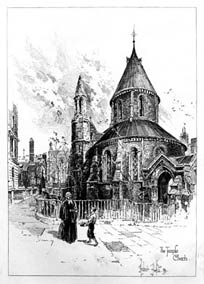
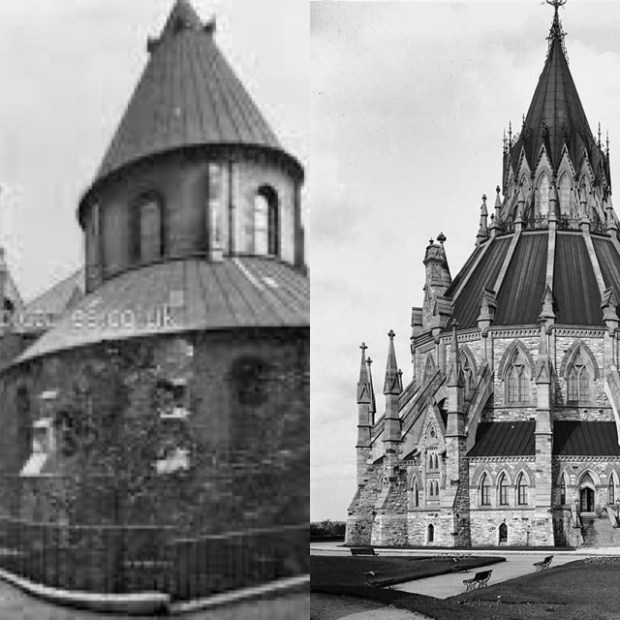
The Parliament buildings originally designed by Fuller were destroyed by fire in 1916 with the only remaining example of his work being the Library of Parliament. It was opened on February 28, 1876, and its similarities to the Templar churches of medieval times seems just too similar to be just a coincidence.
temple-church-1892

The Temple Church in 1892. (image Wikipedia)
img_2711

The original Temple Church in London, England (photo from late 1800s)  built by the Templar Knights in 1180s in comparison to Ottawa’s Library of Parliament. 
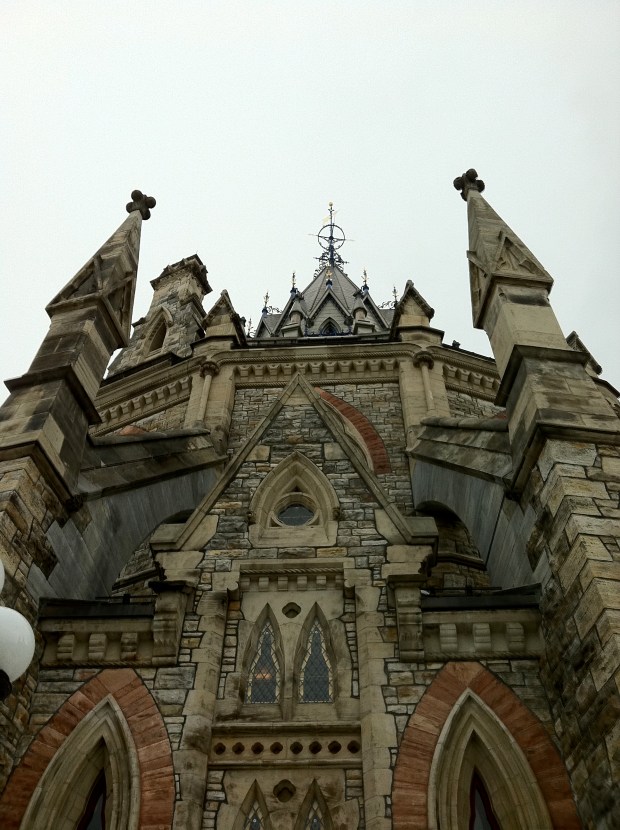
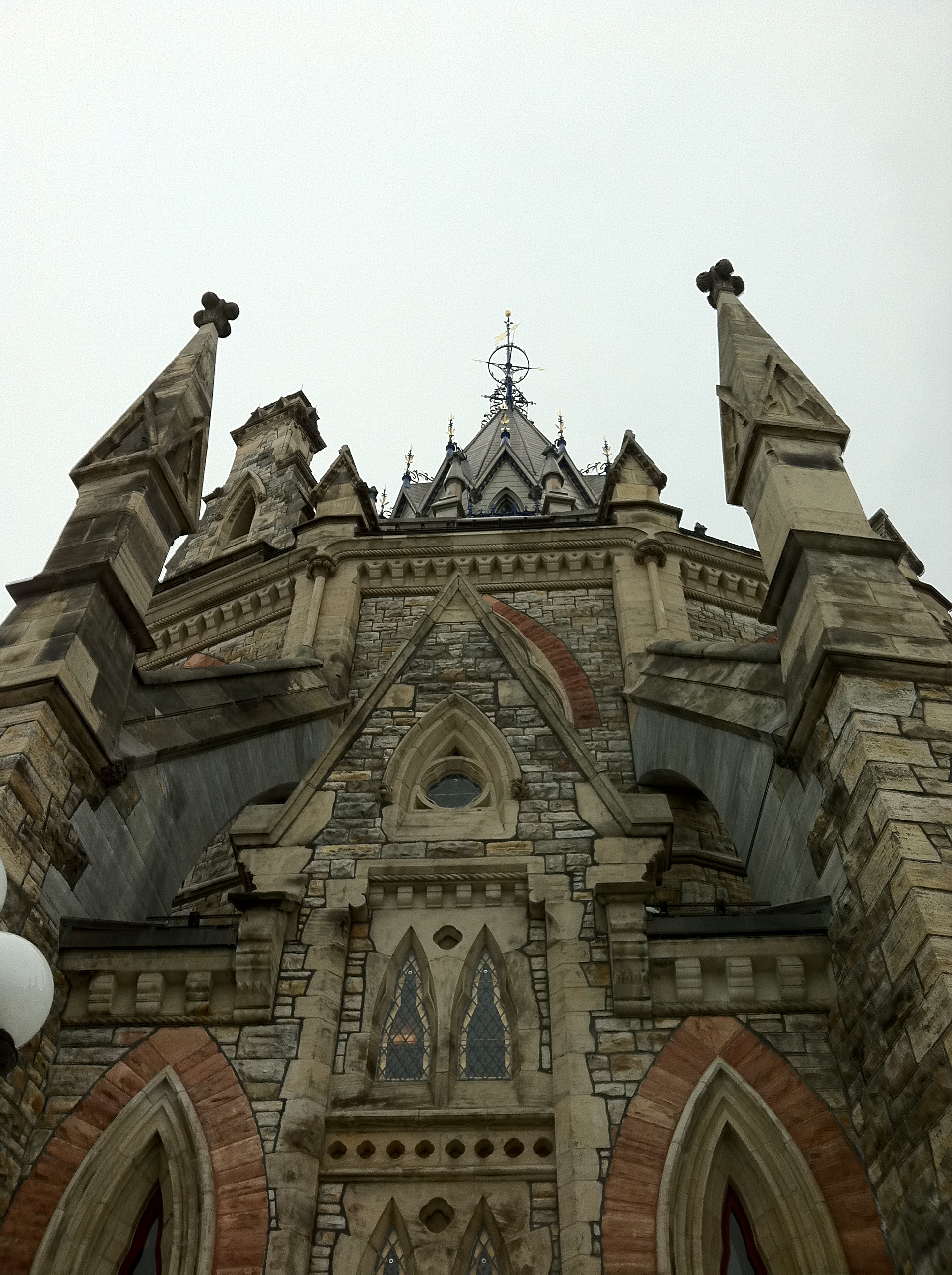
Detail of the Library of Parliament.
Detail of the Library of Parliament.

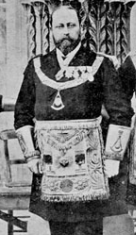
The Prince Of Wales, Albert Edward here seen in full Freemason attire.

The Prince Of Wales, Albert Edward here seen in full Freemason attire.

Templar architecture has a predominant rounded temple relating to their original Solomon’s Temple structure. This can also be found in the parliament buildings with the library building in the rear.  Circular and buttressed walls are also similar in both designs.

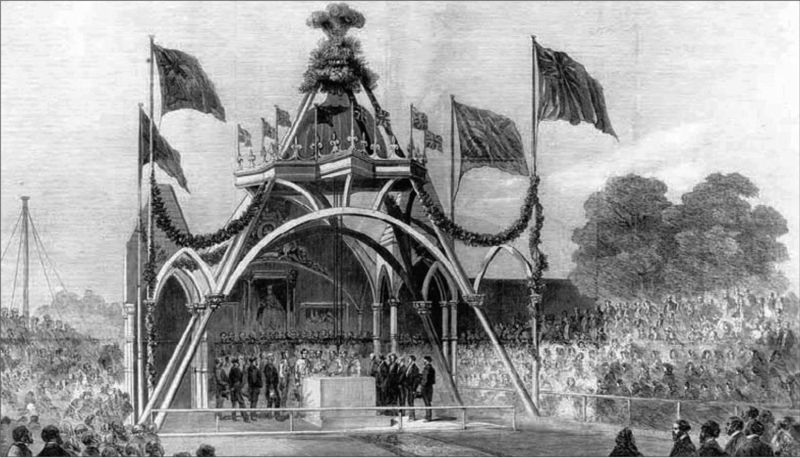
On September 1, 1860, The Prince Of Wales, Albert Edward, a known member of Freemasonry, presided over the Masonic ritual of laying the cornerstone of the Parliament Buildings. The Masonic Ceremony included The Prince Of Wales and Fuller exchanging Masonic vows while lowering the ceremonial stone. In 1875 Albert Edward became Grand Master of the Convent General of the Knights Templar.
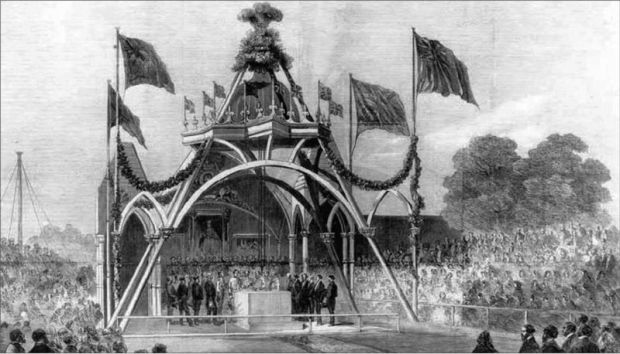
The cornerstone of the Parliament Buildings being laid under Freemason ceremony on Sept. 1 1860 by Fuller and the Prince Of Wales.

The cornerstone of the Parliament Buildings being laid under Freemason ceremony on Sept. 1, 1860 by Fuller and the Prince Of Wales, soon to be Grand Master Of The Convent General Knights Templar in 1875.
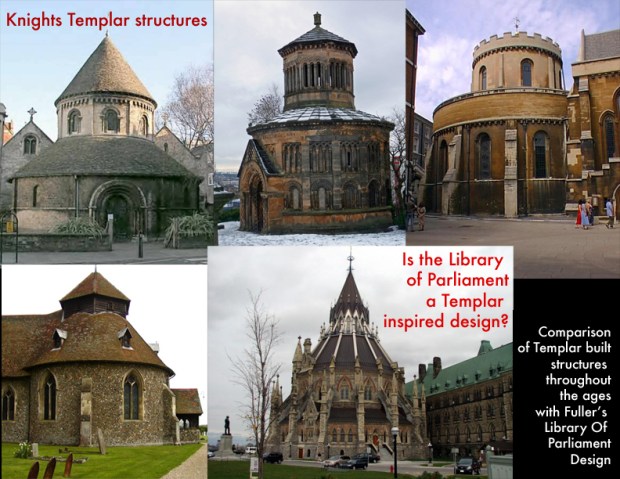
Comparison of Knights Templar structures and Ottawa's Library Of Parliament.

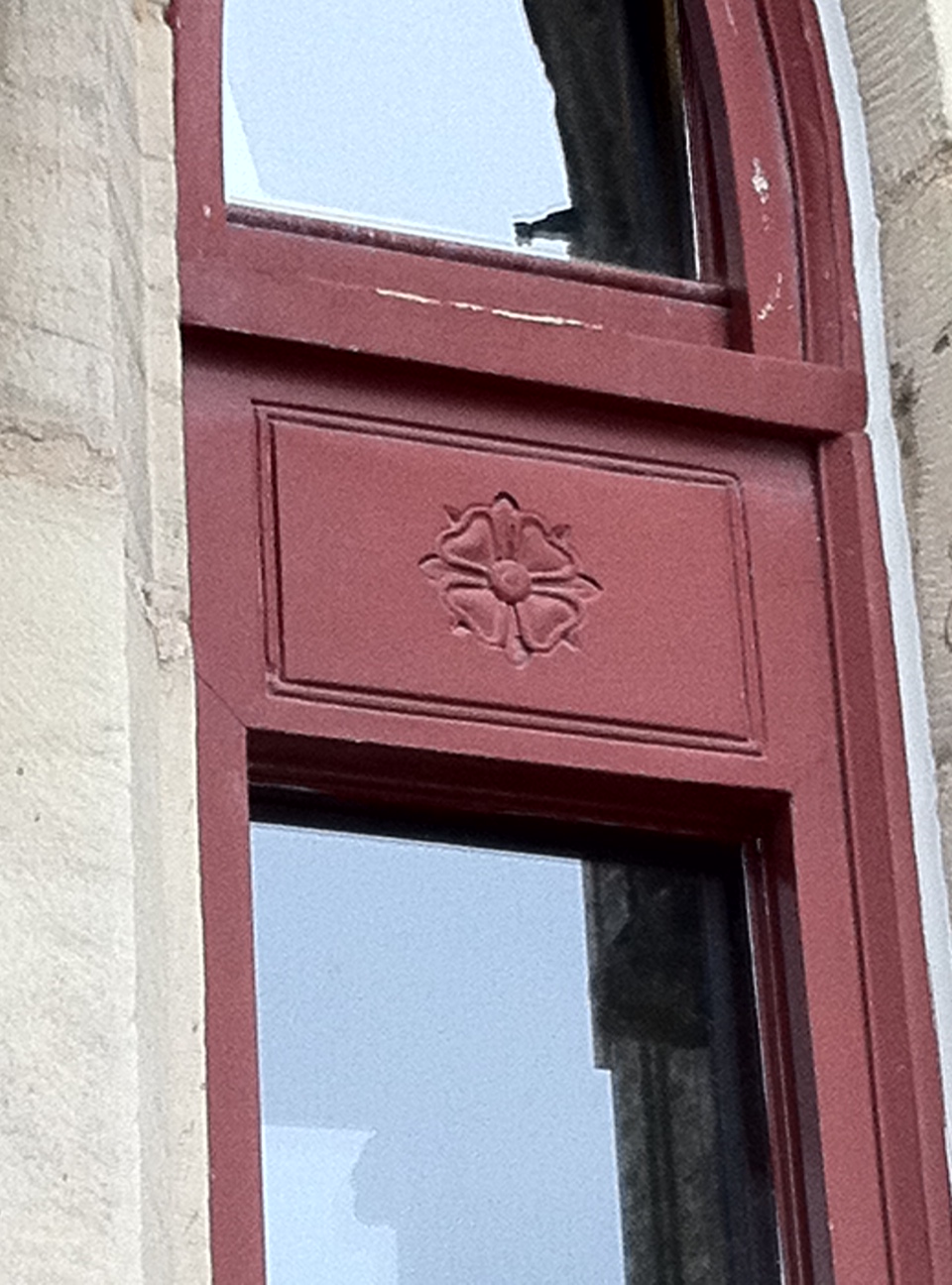
Also, Fuller’s library structure is adorned in a “rose” motif, a symbol in both Templar and Freemason beliefs often used in ceremonies and rituals. The rose was anciently a symbol of Dawn, of the resurrection of Light and the renewal of life. In the Scottish Rite of Masonry the rose has special connections where the rose has taken on the meaning of immortality.
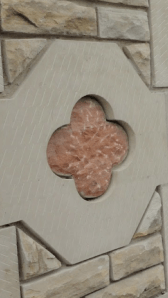
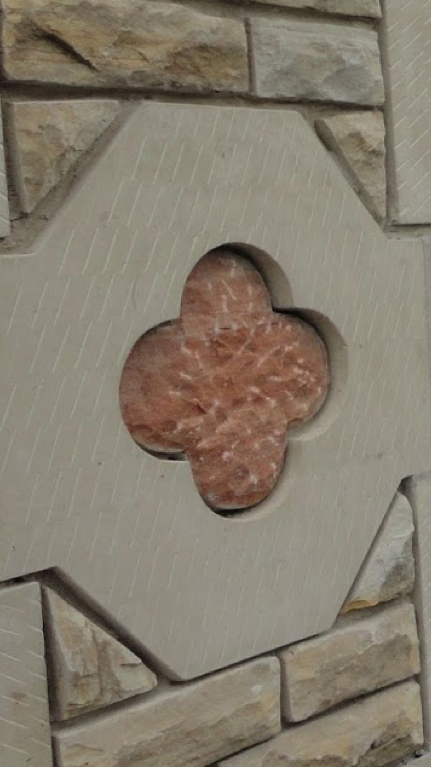
Detail of the 4 petal rose symbol" seen around Parliament, including the door handles.

Detail of the 4 petal rose symbol seen around Parliament, including the door handles.

The rose carved into every window of the library is a four-petalled rose, like the Templar cross, a cross of equal lengths to denote balance. The Templar cross can also be seen in the space between the petals.
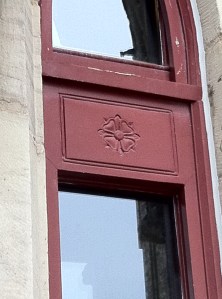
Every window of the Library is emblazoned with the symbol of the 4 petal rose.
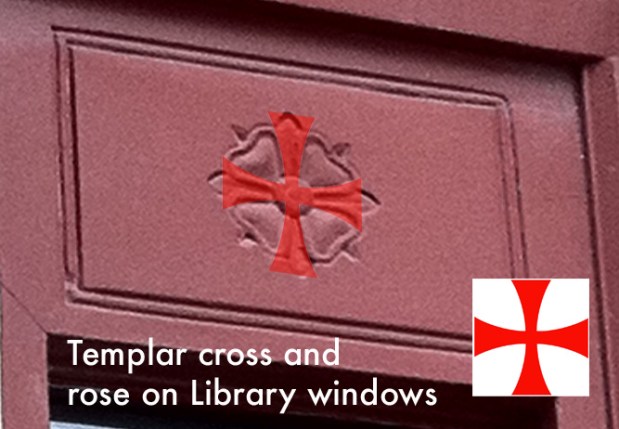
Every window of the Library is emblazoned with the symbol of the 4 petal rose.

Note the hidden Templar cross that sits perfectly in the negative space of the rose symbol on the Library.

Note the hidden Templar cross that sits perfectly in the negative space of the rose symbol on the Library.

In an interesting continuance of the Fuller legacy, Thomas Fuller’s great grandson, William Fuller of Thomas Fuller Contracting Ltd. was awarded the contract to restore the Library of Parliament in 2002.

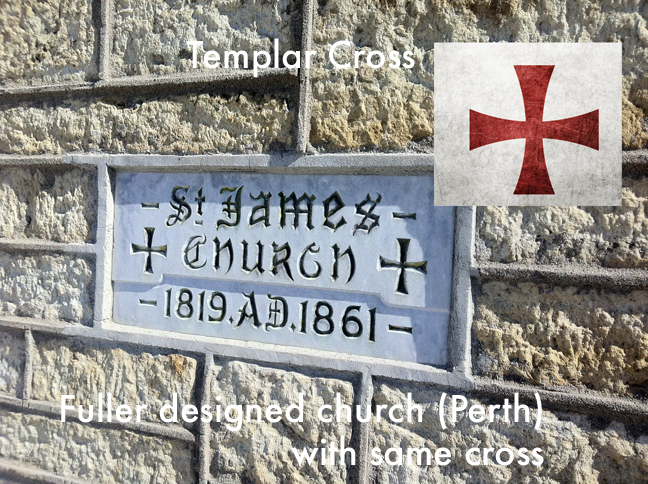
St. James Church, Perth, On
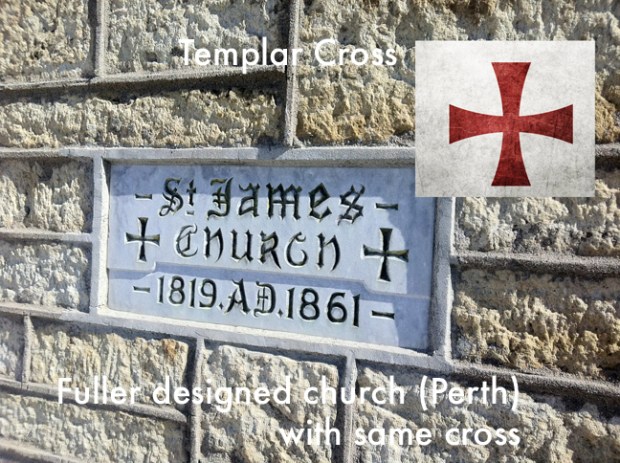
templar cross

Built by Fuller as a garrison church, or military defensive building in 1861, the side walls were prominently buttressed for added strength and a tunnel was constructed to connect the church to the adjacent Court House. The cornerstone has the Knights Templar cross inscribed with the date. The church is designed in typical Fuller fashion, buttressed walls, low roofline and medieval castle style details, such as the elongated “arrow loop” windows.
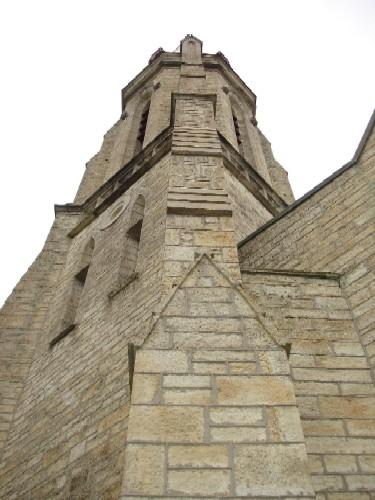
Fuller's chracteristic medival Templar style on the Perth church.

Fuller’s chracteristic medival Templar style on the Perth church.

 St. Alban’s, St. Paul’s & Westboro Churches
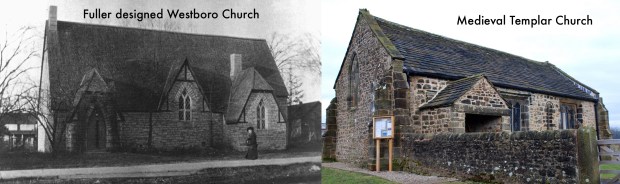
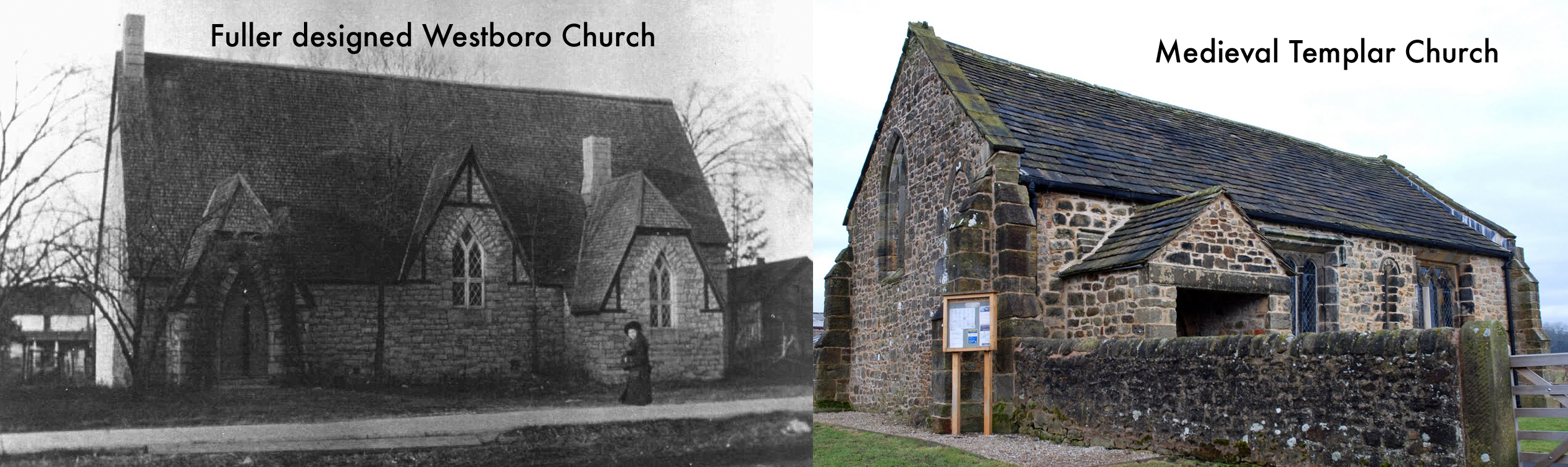
Comparison of Fuller's Westboro church to a Templar church.

Comparison of Fuller’s Westboro church to a Templar church.

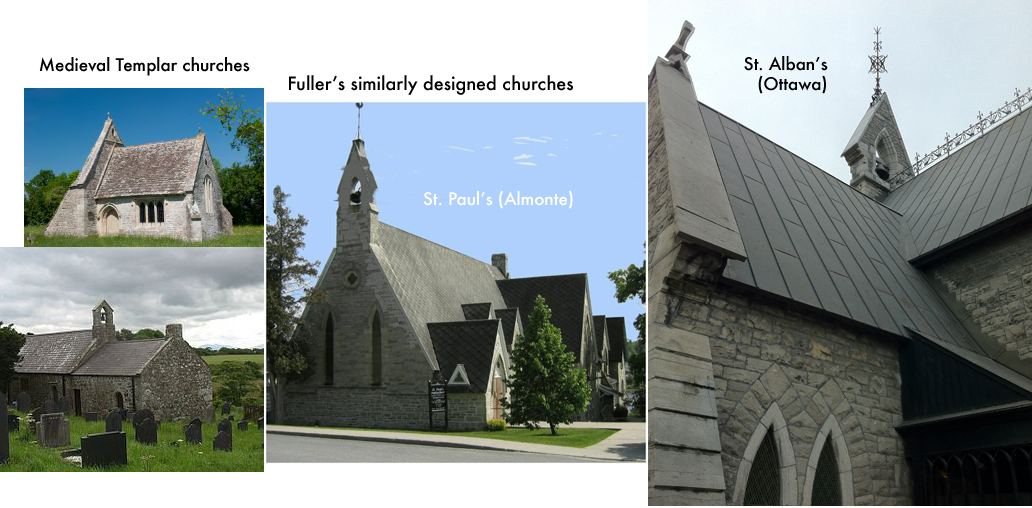
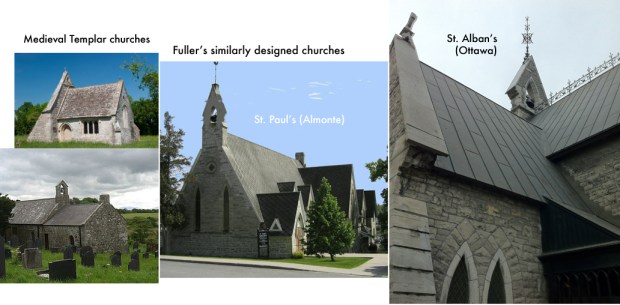
Fuller designed these churches all at the same time in his signature style paying homage to the English medieval churches he was fond of and used as inspiration for much of his work.
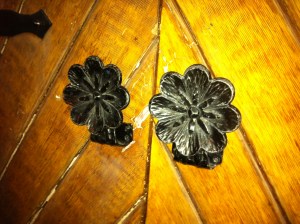
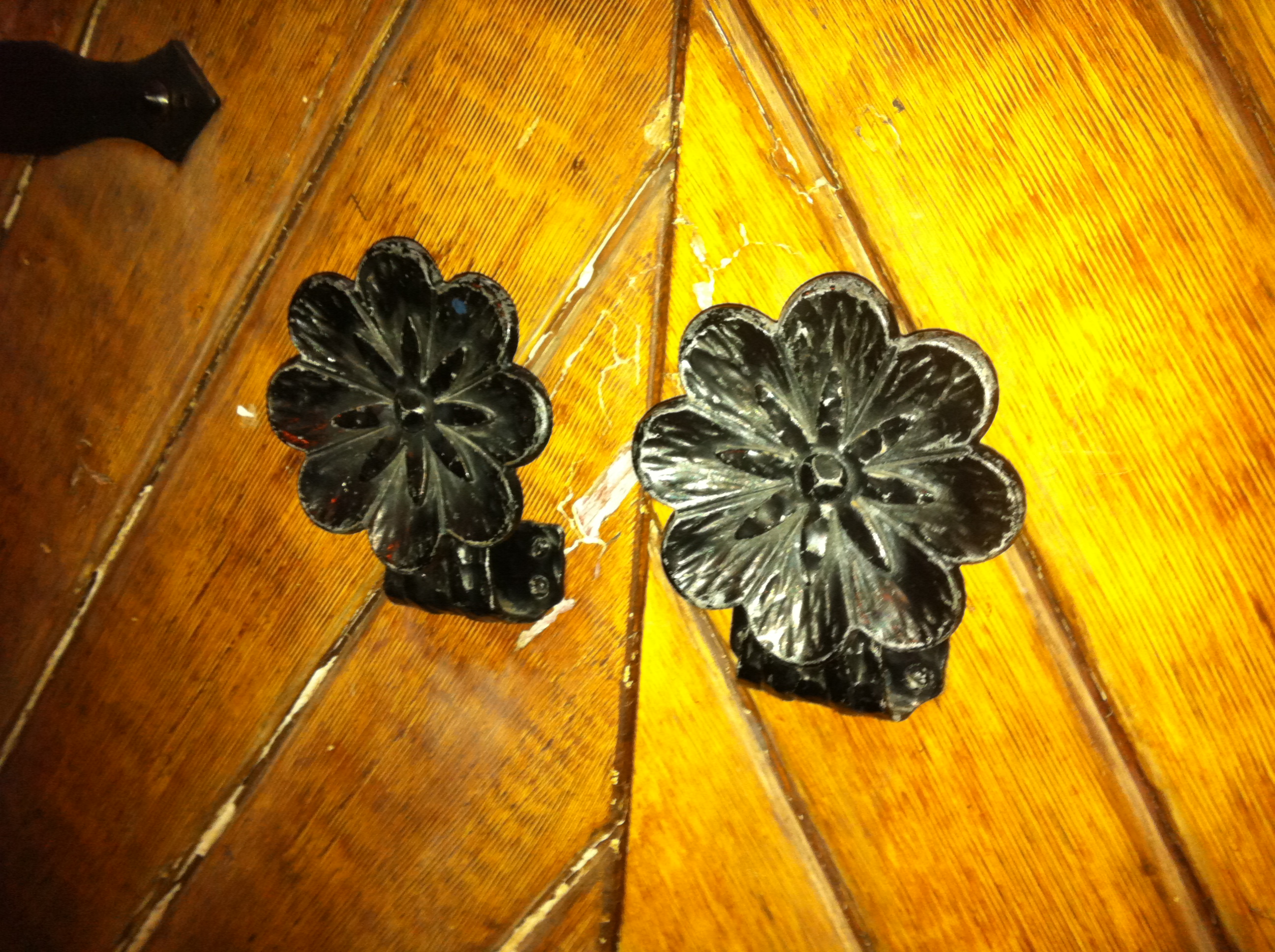
Rose door handles of Westboro church.

Rose door handles of Westboro church.

Medieval castle features such as arrow slits were implemented in his church designs as tall, thin windows. Low rooflines and buttressed side walls were used in all designs. The structures also contain many rose motifs.
churchcomp2

ARCHITECT OF CANADA

From 1881 to 1896, Fuller was appointed Chief Dominion Architect for the Government of Canada, during which time he played a role in the design and construction of every major federal building.
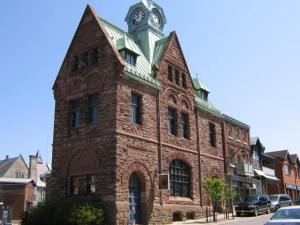
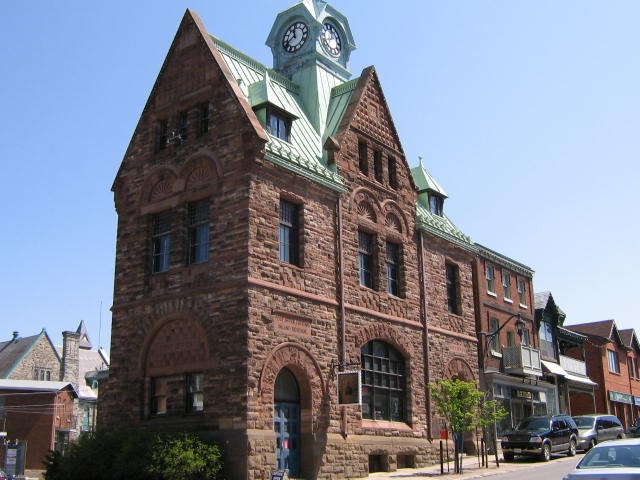
A Fuller designed Post Office in Almonte, ON.

A Fuller designed Post Office in Almonte, ON.

The Minister of Public Works appointed Fuller Dominion Chief Architect. He wanted high design standards and to create an imposing government presence across the country. Fuller excelled in the design of small to medium sized public buildings tailored to individual sites, perhaps best seen in the smaller individually designed post offices. Now cherished community landmarks these picturesque structures, sometimes asymmetrically designed, often feature a blend of Gothic and medieval elements. This work can be seen in almost every town and city in Canada through post offices and court houses built in this time period.

Fuller witnessed the construction of approximately 140 buildings nationwide, of these approximately 78 were federal buildings and post offices. These buildings created and consolidated a federal government presence across Canada in a unified and distinct style.

FINDING FULLER

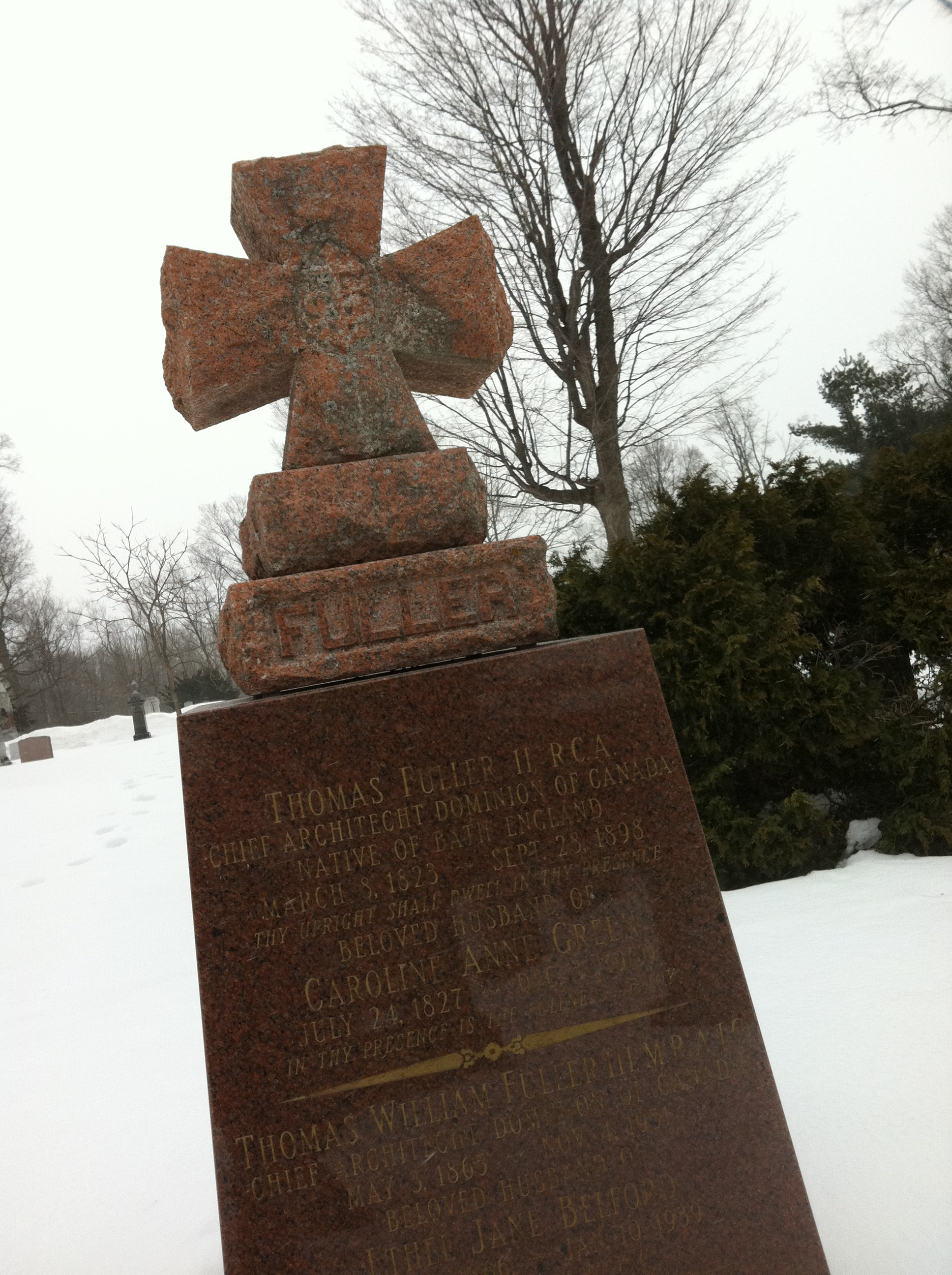
After studying the architecture of Fuller, I thought it would be best to confirm whether or not there was a Templar connection at his final resting place. Thomas Fuller died in 1898 and was interred in Beechwood Cemetery here in Ottawa. Through the help of the cemetery staff who brought up historical records and kindly provided me with a map, I located where Fuller was buried. If Fuller was indeed part of the Freemason or Templar movement, his gravestone would most likely have a symbol of that association inscribed upon it. Trudging through the snow I finally came upon his grave and sure enough, there above his name, was the Templar cross.
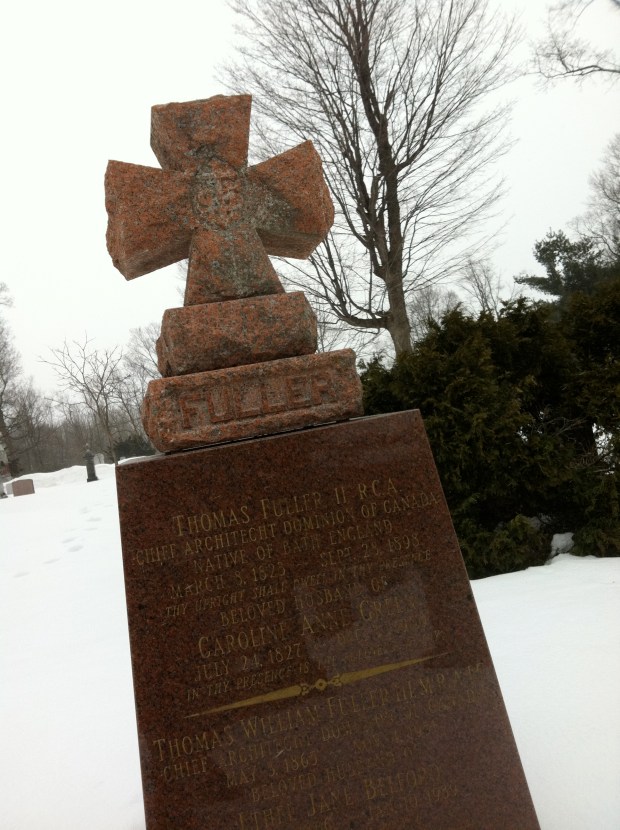
Thomas Fuller's gravestone monument in Beechwood Cemetery.

Thomas Fuller’s gravestone monument in Beechwood Cemetery.

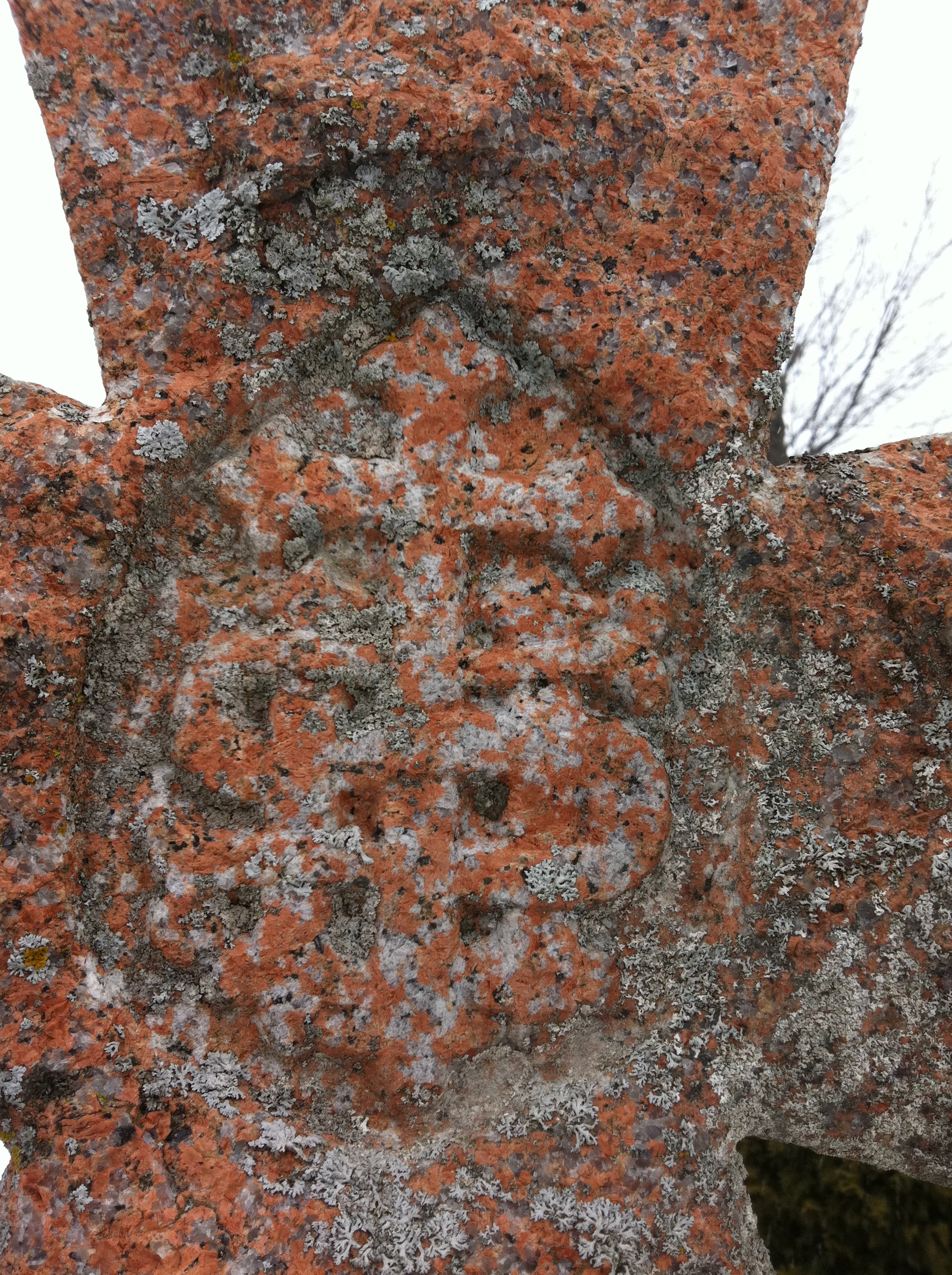
Inside the cross was an unusual symbol.
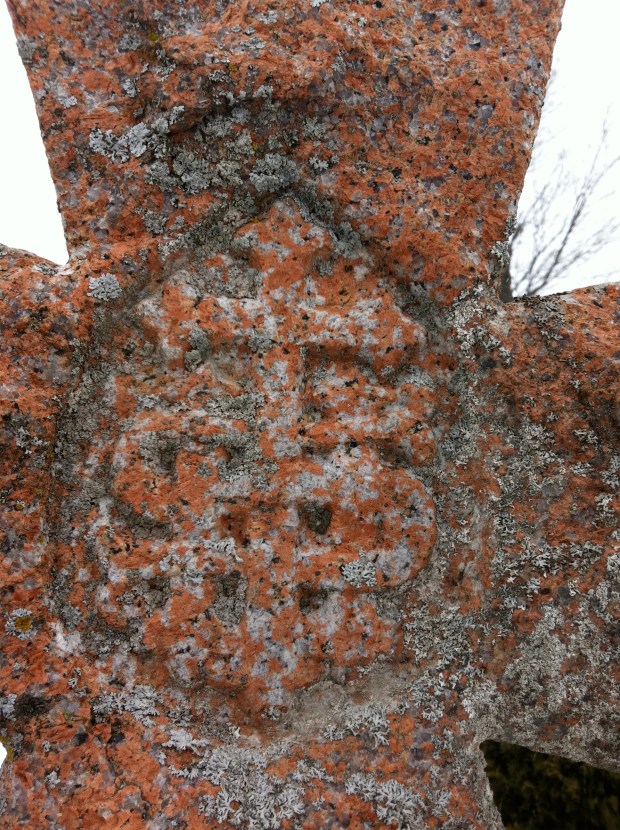
The symbol of "IHS" in the centre of the cross.

The symbol of “IHS” in the centre of the cross.
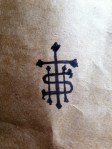
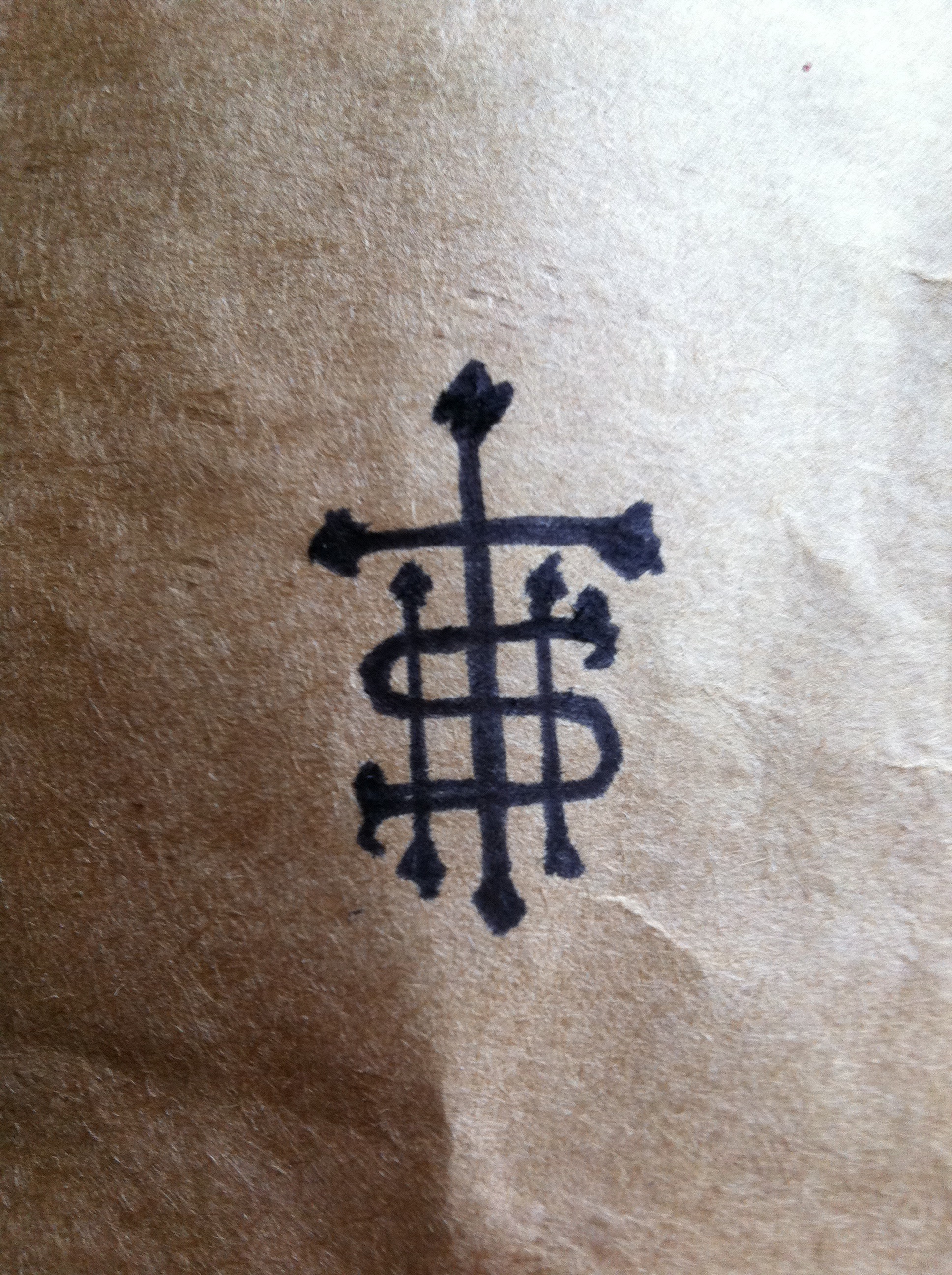
I made a clearer sketch of the symbol to help determine what it meant.

I made a clearer sketch of the symbol to help determine what it meant.

Sketching the symbol out it was later determined that it was the symbol of the letters “IHS”.Asking for help identifying this symbol through Twitter and researching the letters IHS and the Freemason/Templars, it was determined from the Grand Lodge of Freemasonry Symbology website that it stands for “In Hoc Signo”, or translated, “By this sign you shall conquer” ….

The motto of the Knights Templar.

So there it was in plain site….The architect of Canada’s Parliament Buildings buried under the Templar cross with their motto “By this sign you shall conquer”…and conquer he did…140 buildings across the country all designed by Fuller, a member of the ancient order of Knights Templar. Countless courthouses and post offices in small towns across Canada are of his design. Next time you happen to see a stately building in your travels, look for clues to a Fuller/Templar connection and enjoy the stately architecture he so carefully brought forth from the days of the ancient Order.
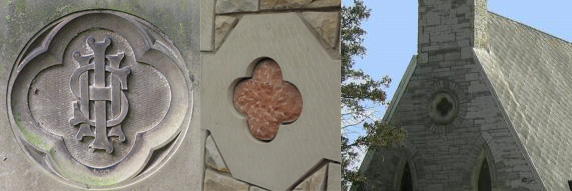
Comparison of the Templar IHS motto symbol, the 4 petalled rose and it in Fuller's work.

Comparison of the Templar IHS motto symbol in the rose cross shape and the symbol in Fuller’s work.

TEMPLARS IN OTTAWA TODAY

In addition to the work of Fuller, the Templar movement is still alive and well in Ottawa through the Order of Knights Templar…who have a website, you can visit here that states:

“Welcome to the Priory of Simon Peter, the Ottawa priory of the Knights Templar. Our official name is Ordo Supremus Militaris Templi Hierosolymitani

Our Order was founded on the principles first adopted by the original Templar Knights in the Year 1118 in their home in the Temple of Solomon in the Holy City of Jerusalem. In these modern times, we are international in nature with members from over 40 nations, ecumenical Christian in our religious beliefs welcoming Christian men and women on a basis of strict equality, having equal rights, opportunities and responsibilities. In the spirit of diversity and religious freedom, an “Order of Merit” is also offered as a form of membership to those of other faiths. We are focussed on matters of human rights, political and religious freedom, and humanitarian aid to the world’s less fortunate. We are officially recognized by the United Nations in Special Consultative Status and furnish official delegations to the United Nations in New York City, Vienna, and Geneva.

 Like the Knights Templar of old, we operate as a modern-day worldwide network of educated professionals in such widely diverse disciplines as government officials, Members of the Diplomatic Corps, clergy, serving and retired members of Armed Forces and Police Forces, physicians and surgeons, engineers, historians, and humanitarian aid caregivers.”

The Templar movement is alive and well in Ottawa through the architecture of Fuller, but also in an ancient order that operates among us everyday. Look beside you, the person next to you could very well be a knight…

Please note: The opinions and ideas expressed above are based on my own observations and are not meant to be used as academic fact. They are presented as theory based on compelling evidence gathered from my personal research and study.  

SUBMERGED FORTRESS OF DOOM: An island fort under the St. Lawrence River

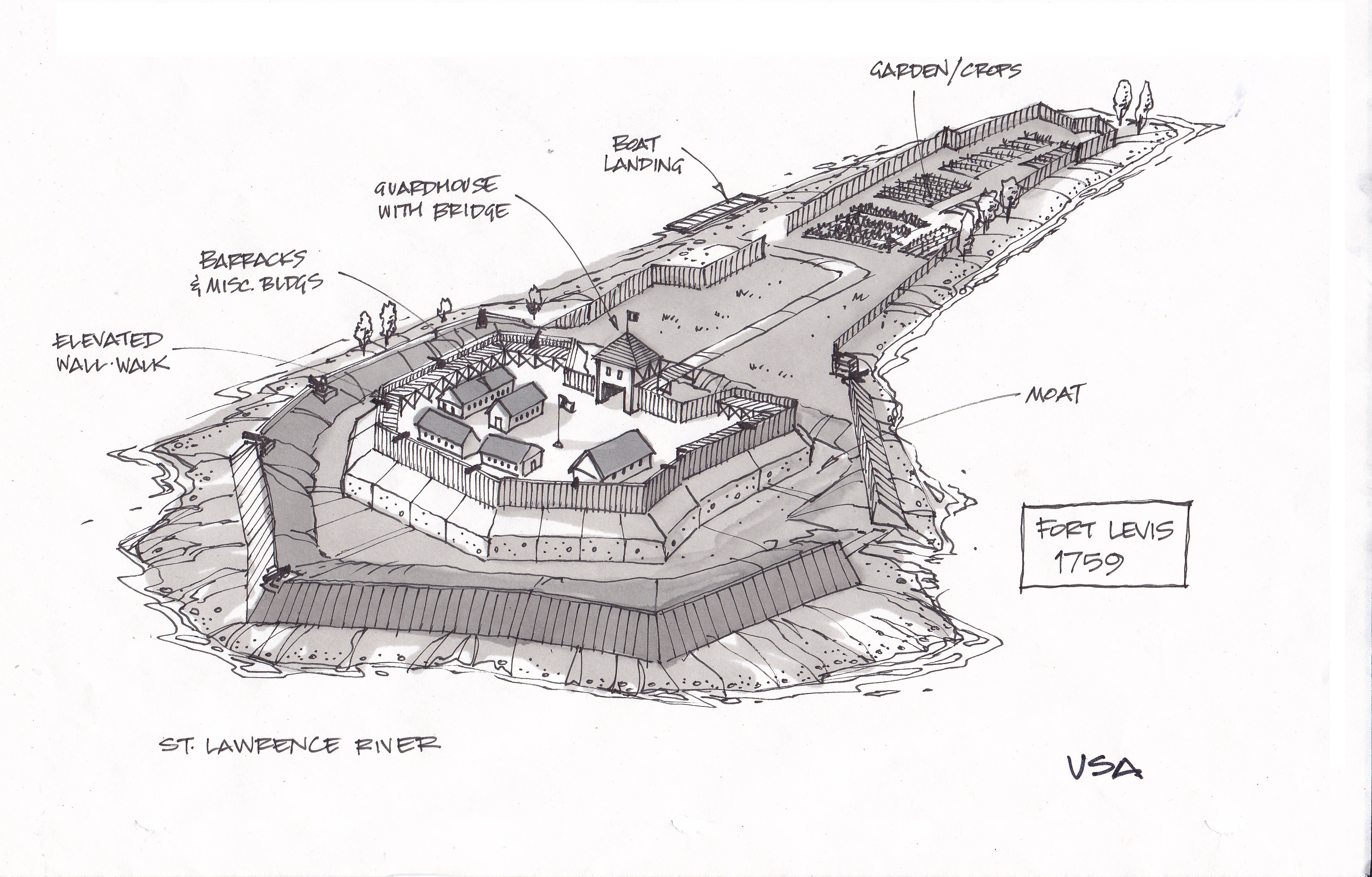
My concept sketch of how the fort would have looked on Isle Royale in 1759.

A concept sketch of how the fort would have looked on Isle Royale in 1759.

Flooded by the St. Lawrence Seaway project, the remains of the island fort are currently underwater.

Flooded by the St. Lawrence Seaway project, whatever remains of the 1759 island fort are currently underwater.

A 250 year old island stronghold underwater near Prescott, On

Driving south of Ottawa on the 416 for about an hour you can cross the border into the United States over a bridge which spans the St. Lawrence River near Prescott. Like thousands of others travelers, I’ve crossed the suspension bridge at a great height over the water and islands below, gazing in wonder at the mighty river that connects the Atlantic Ocean to the Great Lakes. But it is only now that I am discovering there is a submerged fortress island of great historical significance in the waters below.

wheremap

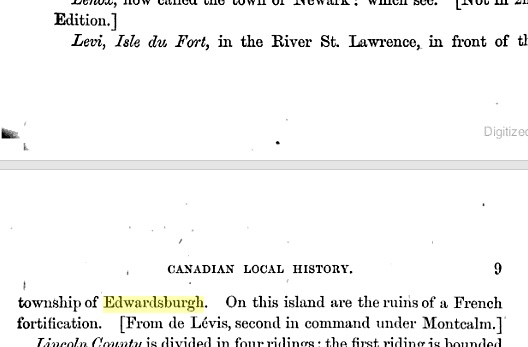
When you think about old forts in the area, you usually think of Fort Henry in Kingston, but there is a much older fort, and its remnants lie under the waves just an hour away. While doing some research on another topic I came across an excerpt from a 1876 book on forts. The old book mentions  ruins of a fort called “Fort Levis” near Prescott.

Excerpt from 1876 book mentioning ruins of a Fort near Prescott.

Excerpt from 1876 book mentioning ruins of a Fort near Prescott.

Upon further investigation it turns out this island fortress was the final stronghold for French forces during the Seven Years War with Britain in 1760 and was flooded out in 1959 along with countless other islands during the construction of the St. Lawrence Seaway. Today only a small portion of the island is visible above water. Most of it, including the fort area lies underwater. Let’s rewind time and take a closer look…
Flooded out in the 1950s, Chimney island was once Isle Royale.

Flooded out in the 1950s, Chimney island was once Isle Royale.

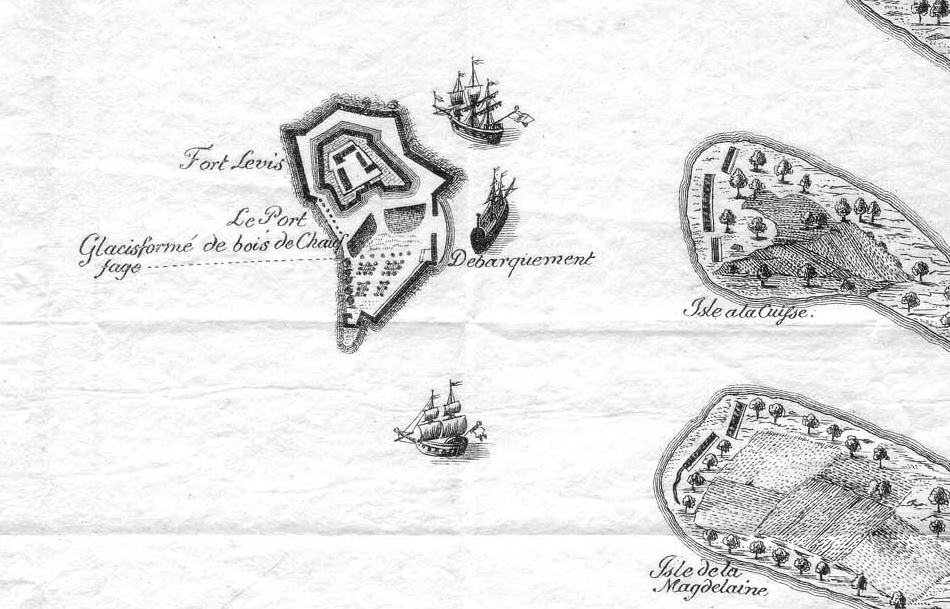
Called “Isle Royale” by the French in 1759, a decision was made to build a fortification on the 800 foot island in the middle of the St. Lawrence to repel any invading British ships making their way up the river from Kingston. Abandoning a previous fort near Ogdensburg the French built the island fortress as a last ditch effort against the advancing British ships trying to take Montreal. Armed with cannons, a moat, ramparts, palisades and other fortress features, it was called FORT LEVIS. The island army even grew a their own vegetables in a garden on the east end of the island.

A French map from 1759 indicates Isle Royale and Fort Levis built upon it.

A French map from 1759 indicates Isle Royale and Fort Levis built upon it.

Originally to be built of stone, plans changed due to time restraints and Fort Levis was built out of wood and measured about 350 square with bastions in each of the corners. A loading dock area for supplies was on the north shore facing the Canadian side of the river. French Commander Pierre Pouchot took command of the island fort and prepared to defend what was soon to be a short lived fortress.

Sketch showing the island as it appeared in 1759 with the defensive features of Fort Levis.

Sketch showing the island as it appeared in 1759 with the defensive features of Fort Levis.

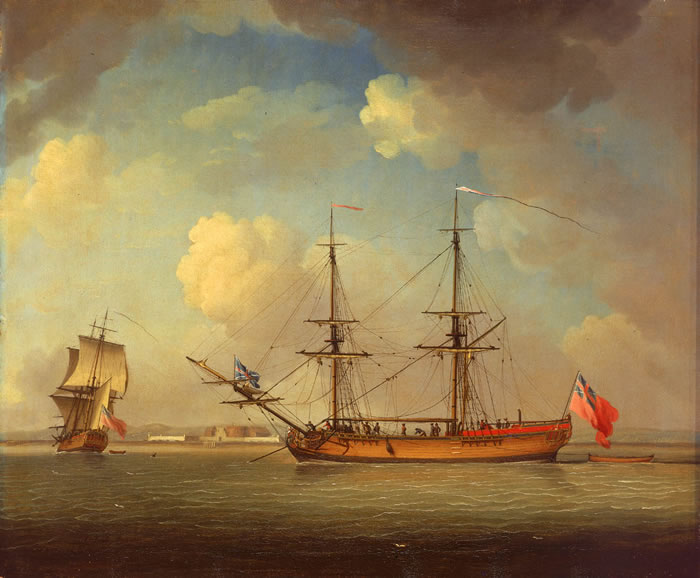
It didn’t take the British long to begin their advance up the St. Lawrence River in their gunboats towards capturing Montreal so the fort was put into immediate action. French lookouts near Alexandria Bay saw two approaching British gunships, the Mohawk and Onondaga, and raced back to the fort and braced for impending attack.

British gunships, Mohawk and Onandaga advanced up the St. Lawrence through the 1000 Islands towards Fort Levis.

British gunships, Mohawk and Onondaga advanced up the St. Lawrence through the 1000 Islands towards Fort Levis.

The two British ships got lost in the maze of the Thousands Islands for a week, giving the French time to prepare for battle. The British ships managed to capture a French gunboat along the way, hoisting a British flag and re-naming it the Williamson and adding it to its fleet of now three ships to take on the newly constructed Fort Levis ahead. Surrounding the island fortress were other islands, now held by the British with cannons stationed and aimed at the French fort. Under the command of Major-General Amherst, the three British ships arrived at Fort Levis on August 19 1760 and a fierce Battle Of The Thousand Islands began.

The island fortress threw everything it had against the looming British trio of ships, blasting the newly captured Williamson 48 times with cannon fire. Amherst called a ceasefire and retreated for the night. At dawn the fort once again rained cannon fire upon the British ships while also repelling invading troops trying to storm the shores of the island. During the skirmish the fort managed to sink both the Williamson and the Onondaga to the bottom of the St. Lawrence. The island fort did not let up its defensive attack and Commander Pouchot pummeled the remaining ship, the Mohawk, with cannon fire, sinking it also. Three ships sunk. The British had nothing left to attack the fort with except their island cannons surrounding Fort Levis.

A British map from 1760 shows the captured French fort they later re-named "Fort William Augustus"

A British map from 1760 shows the captured French fort they later re-named “Fort William Augustus”

Surprised at the unbelievable tenacity of the island fort to protect itself from all angles, Amherst gave the go-ahead to switch the cannons to “hotshot”, balls of fire that would set ablaze whatever they impacted. British hotshot rained down on Fort Levis, and with the fort on fire and having exhausted all their ammo, Pouchot finally surrendered the besieged island to the British. Originally armed with 300 soldiers, the French lost 275 men during the battle. The British lost 26 men. The fierce week long island battle was to be a decisive and final fight between French & British troops on the continent. The island fort was rebuilt and renamed Fort William Augustus under the British, with Amherst carrying on to join other British troops that surrounded Montreal. On September 6, 1760 Montréal was surrendered by New France’s governor, the Marquis de Vaudreuil which brought an end to the French empire in Canada. The island fort was the last stronghold for the French and its loss to the British signaled the end to the war.

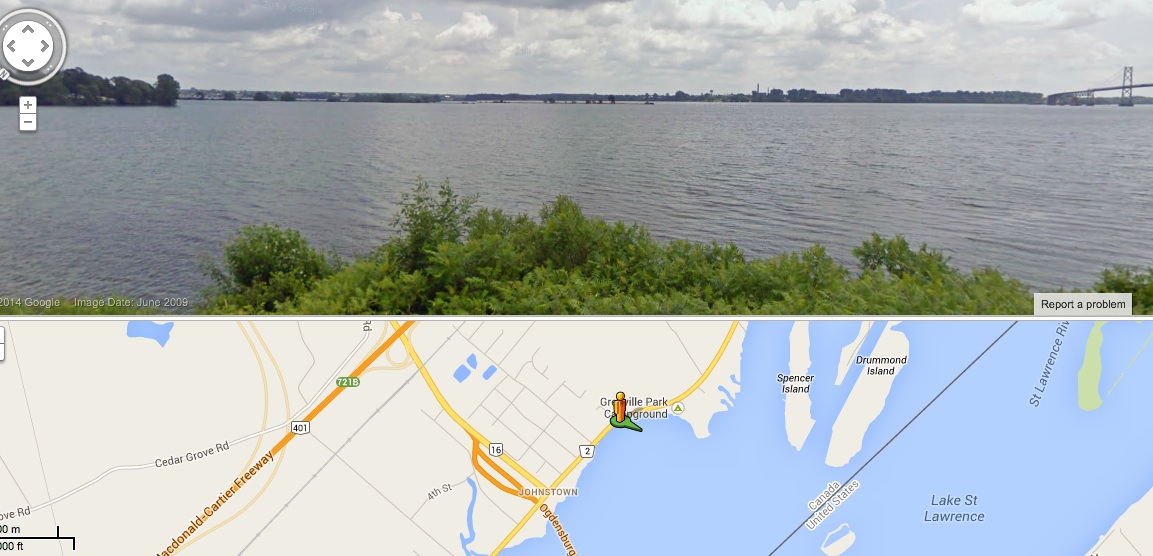
It is unclear what happened to the fort between 1760 and 1950 when the St. Lawrence Seaway began construction.  A study of aerial images produced in 1954 reveals the outline of the fort ruins were still visible on the island before it was submerged. Whatever remained of the original fort slowly slipped underwater in 1959 when flood waters raised levels for the new seaway.

Comparison of the island then and now.

Comparison of the island fortress then and now.

mapstreetviewjp

All that remains today of this important and decisive piece of Canadian history is a small patch of rock and grass now called Chimney Island which can be seen just east of the Prescott International Bridge. Whatever remnants of this 250 year old island fortress and its fierce past now rests quietly under the waves of the St. Lawrence River.

SOURCES:

http://en.wikipedia.org/wiki/Fort_Lévis

http://en.wikipedia.org/wiki/Battle_of_the_Thousand_Islands

http://www.ogdensburg.info/maps/maps.html

http://en.wikipedia.org/wiki/Snow_(ship)

Google Maps

Bing Maps

ANCIENT OTTAWA: Lost Relics From 500BC Found At Constance Bay

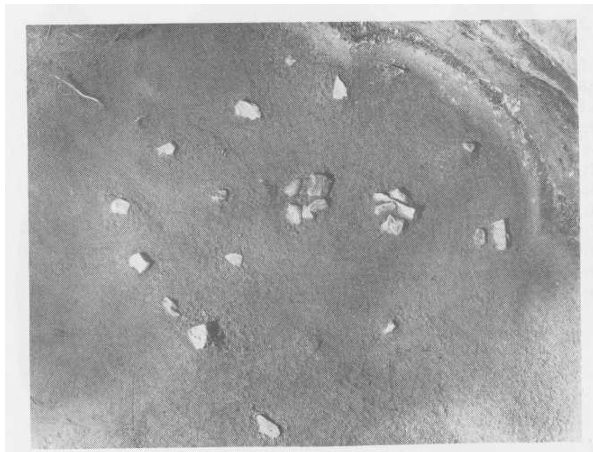
An ancient petroform, or formation of stones, was uncovered at Constance Bay in 1970.

An ancient petroform, or formation of stones from 500BC was uncovered at Constance Bay in 1970.

When you think of Ottawa history, you probably think of the early 1800’s, the days when logging was a booming industry and the Rideau canal was being constructed. While most of Ottawa’s history is relegated to only the last 200 years, there is a relatively unknown history to this region that far surpasses that timeline by thousands of years. A history that includes an ancient civilization that flourished along the shores of the Ottawa River. Remnants of their existence are still out there waiting to be found. Objects used by this civilization represent a fascinating and overlooked part of our area’s rich and unexplored history.

cbaymapcb

Ancient pots have been found just sitting in the crevices of Luskville cliffs, forged copper weapons from 6,000 years ago have been found on an Ottawa River island near Pembroke. Area artifacts slowly being uncovered show a vast ancient trade network with distant regions that seem weirdly unlikely. Exotic materials in these objects show them originating from as far away as the tip of Labrador and the far reaches of a Lake Superior island where an ancient copper mine produced 99% pure copper to a widespread group of ancient civilizations in the Americas.

A 2,000 year old knife found near Ottawa was was made from a type of stone only found in Ohio, USA. Granted, the Ottawa area provides water access to a variety of areas through the Rideau river, the St. Lawrence, the Great Lakes and beyond. Likewise, visitors from those places could have visited the Ottawa area.

One such example of this ancient past is the the accidental discovery of relics from the period of 500BC during the summer of 1969 near Constance Bay. Yes, 500BC…2,500 years ago.

cbayarea

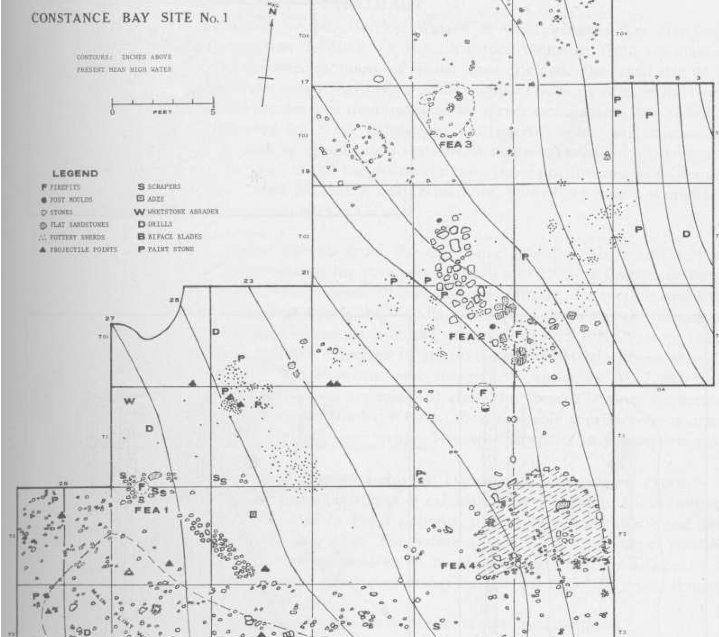
It happened when a cottage was being built on the shores of the Ottawa River, unearthing objects that led to an archeological excavation in 1970. I came across the original archeology report of this ancient find and what it revealed is a unique and compelling history of our area. You can read the entire 1970 archeological report on this extraordinary find here.

The original 1970 archeological sketch of the Constance Bay site.

The original 1970 archeological sketch of the Constance Bay site.

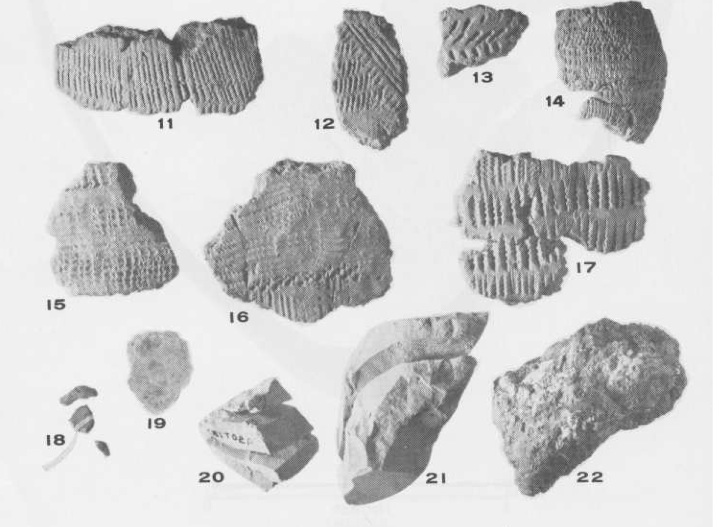
A sample of the items recovered from the 500BC site.

A sample of the items recovered from the site.

The ensuing dig in 1970 produced ceramics, stone tools, fragments of copper, galena, mica and bone, hearth features, and an apparent red-ochre burial site marked by a possible petroform (arranged stone formation). The radiocarbon dating of charcoal found at the site place the site and its relics around 490 B.C. ± 75 , when Middle Woodland tribes were congregating along the waterways of what is now Ontario and Quebec.

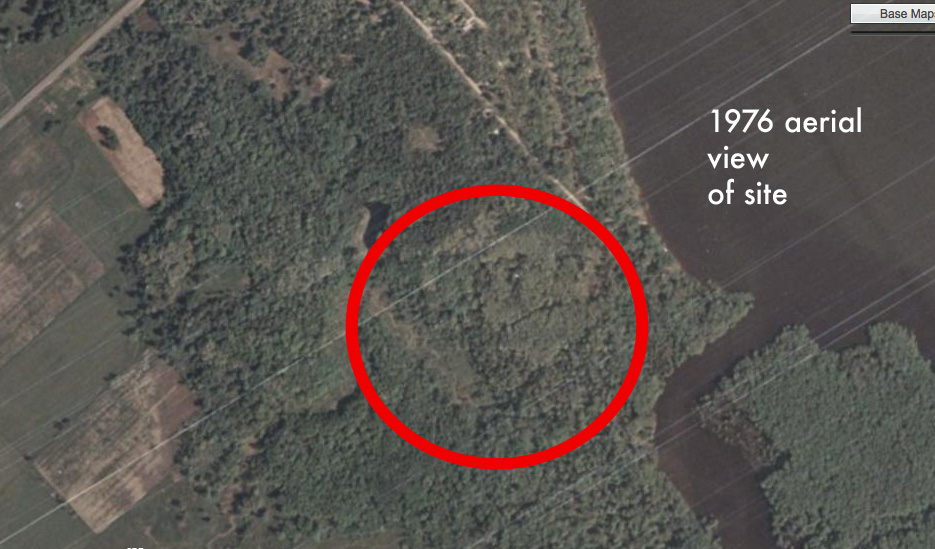
cbaymap51976

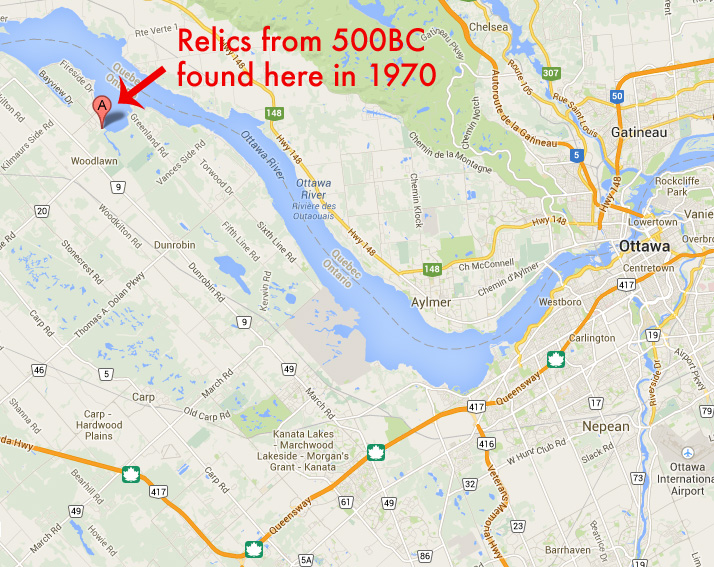
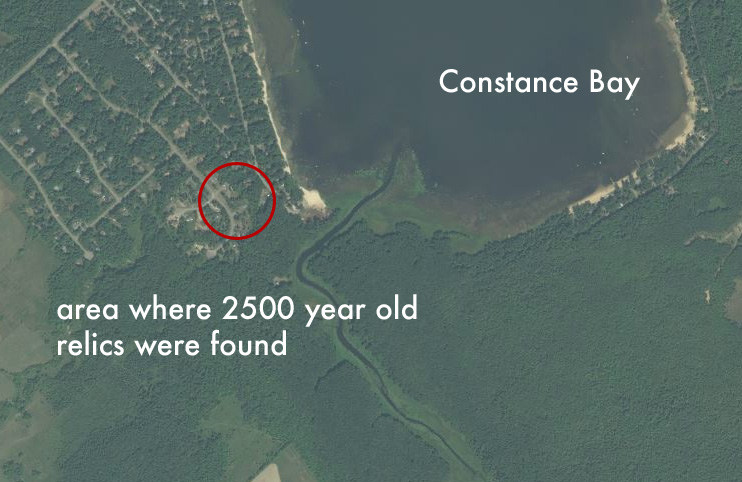
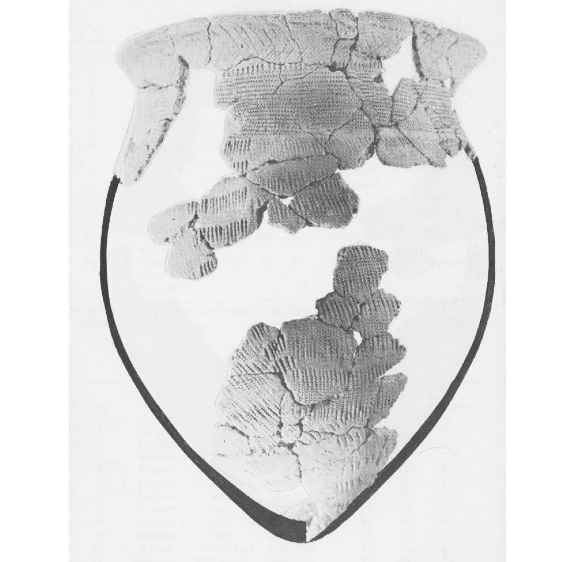
Our ancient site is located at the tip of Constance Bay where it meets a small creek, only about 40km west of Ottawa. This area has been linked to other historical artifacts, such as bayonets and cannons from the 17th century along with other post-contact native artifacts. Located a few metres from the sandy beach area of the bay, archeologists in 1970 surveyed and studied the site, noting hundreds of relics that were found in the vicinity of the camp, including shards of marked pottery that were used to recreate how an archaic vessel, over 2500 years old, would have looked.

Pottery fragments from a 2,500 year old vessel found in 1970.

Pottery fragments from a 2,500 year old vessel found in 1970.

Of particular interest, a petrofrom, or an arrangement of stones that denote a special use area, was also uncovered. Speculation that is may have been part of a burial ritual was substantiated by the discovery of mica dust and red ochre, sprinkled over the buried dead and the remains of organic material in the area. This mysterious stone formation and the ancient site has since been subject to development and remains once again lost in time.

An ancient petroform, or formation of stones, was uncovered at Constance Bay in 1970.

An ancient petroform, or formation of stones, was uncovered at Constance Bay in 1970.

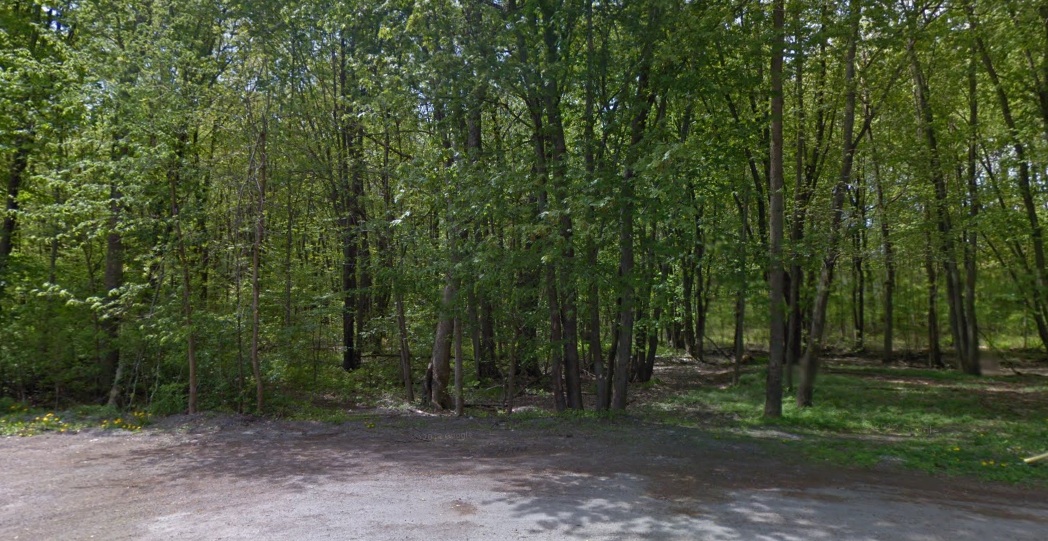
I drove out to visit the site and was met by cottages and monster homes that cover the area where the 2,500 year old site would have been. Discovered only 45 years ago, the site seems to be lost once again into the depths of time, without any plaque or indication of the fascinating history that once occurred there.

Do more of these ancient sites exist in the area? Perhaps there are more mysterious stone formations and relics waiting to be found in the woods and shorelines of the Ottawa Valley, secrets to an ancient past that may someday be uncovered in our own backyards.

The ancient site area as it looked in 2013.

The ancient site area as it looked in 2013.

Sources:

http://www.ontarioarchaeology.on.ca/publications/pdf/oa18-1-watson.pdf

http://www.ottawariver.org/pdf/04-ch2-2.pdf

Google Maps

Bing Maps

Vanier Mystery Chamber

A mysterious concrete structure lies in the woods of Vanier.

A mysterious concrete structure lies in the woods of Vanier.

There is an interesting video on YouTube filmed by someone who goes by the name of “Bloeski’s Wrecking Crew” who inserted a video camera into an unusual concrete structure dated “1944” in Vanier. The video explores inside this odd “bunker” located in the woods of Richelieu Park in Vanier. It shows a mound with a concrete wall and sealed off entrance to what looks like some kind of military bunker. The video captures what’s inside and shows a vast room with pillars and other structures but there is no definitive answer as to what the structure was. You can view this video on Youtube here.

Having seen the video back in the fall, I finally got the chance to visit the structure in person and check it out and see what it could possibly be. Here is what I found.

IMG_0158

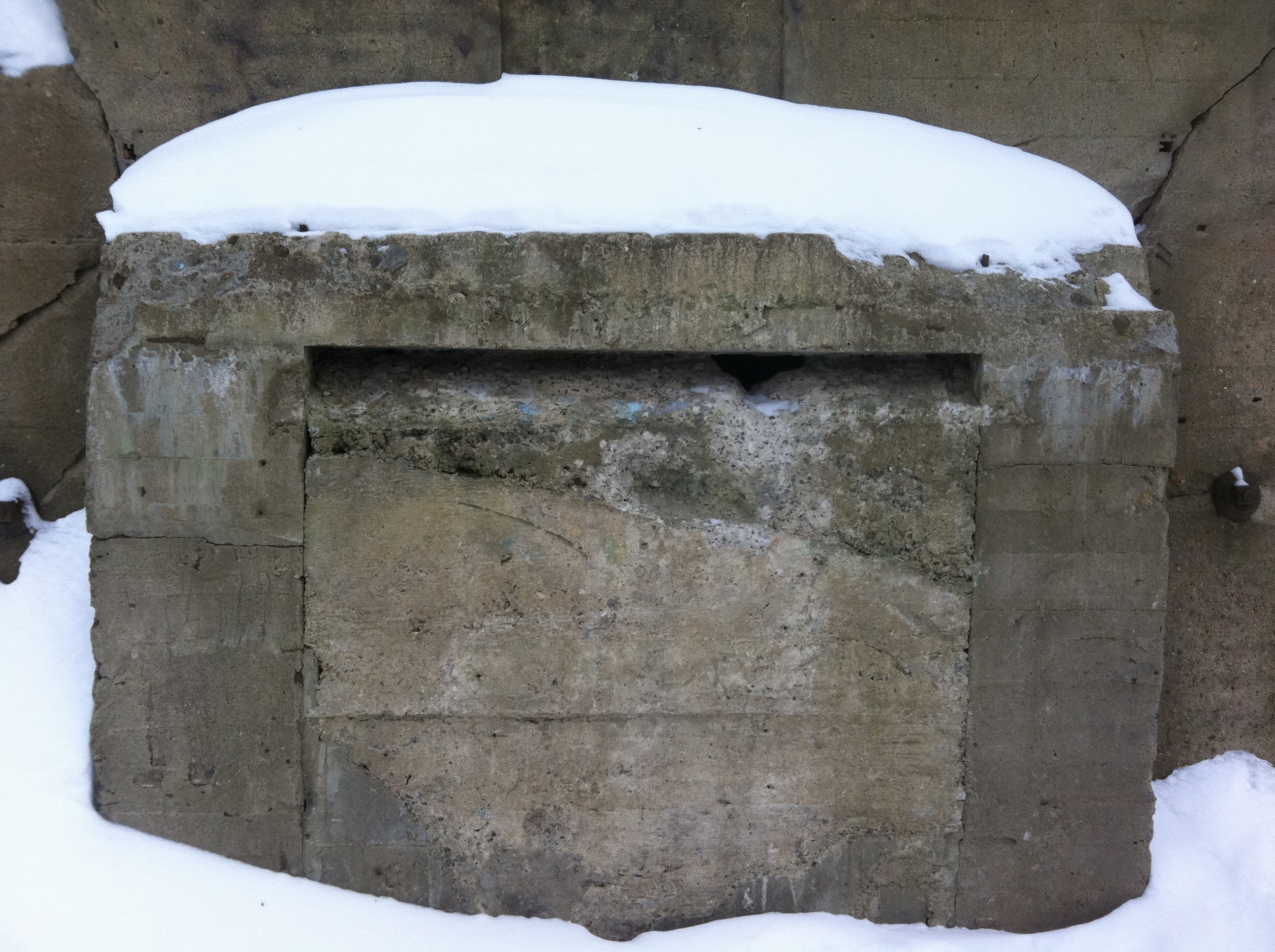
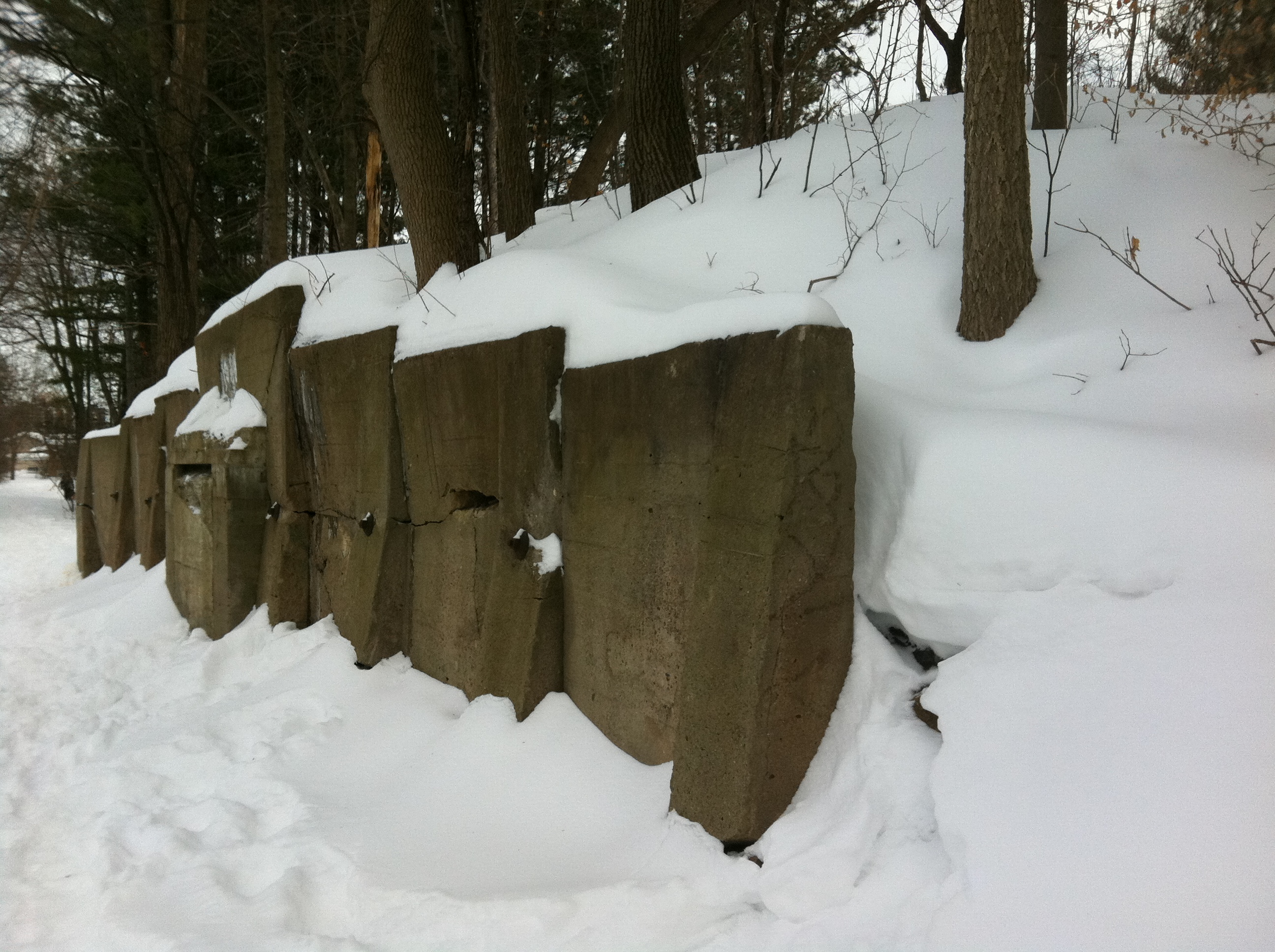
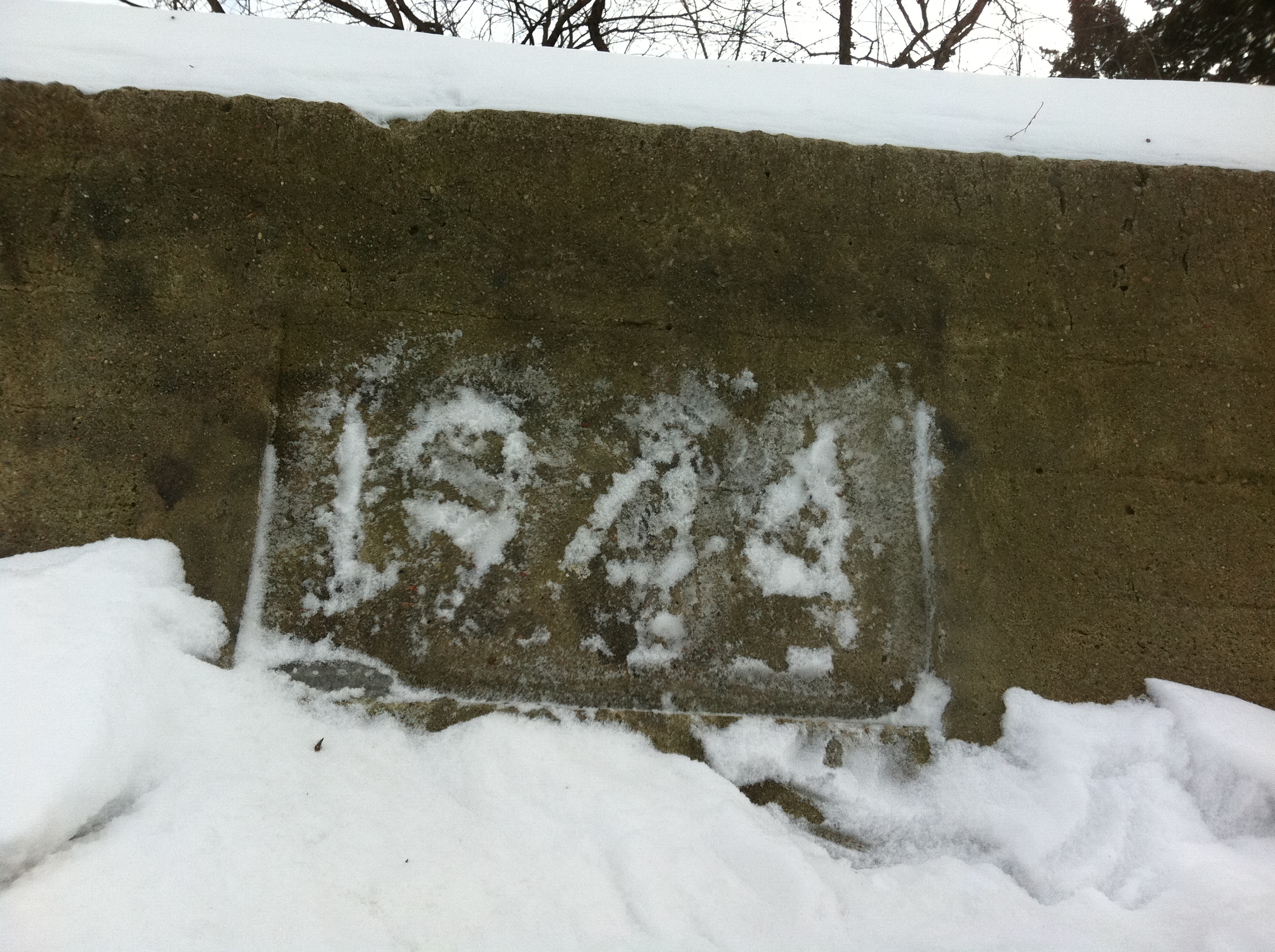
The structure is located in Richelieu Park in Vanier and is easily accessible. The area is well used by dog walkers and a walking trail runs directly in front of the “bunker”.  A buttressed concrete wall about 40-60ft in length runs along the north face of a 12 foot high mound. There is an entrance portal with an eroded date marked “1944” that only became visible when snow was rubbed across the surface of the inscription.

A date became visible when snow was rubbed across an inscription above the sealed entrance.

A date of “1944” became visible when snow was rubbed across an inscription above the sealed entrance.

The concrete walls are decaying and there are iron support tie-rods visible along the wall. A small crevice has been chipped away by curious onlookers but nothing is visible without inserting a lit camera into the room. Again, check out the YouTube video to see what is inside this mysterious chamber.

There is a 12 foot high mound surrounding the concrete wall.

There is a 12 foot high mound surrounding the concrete wall.

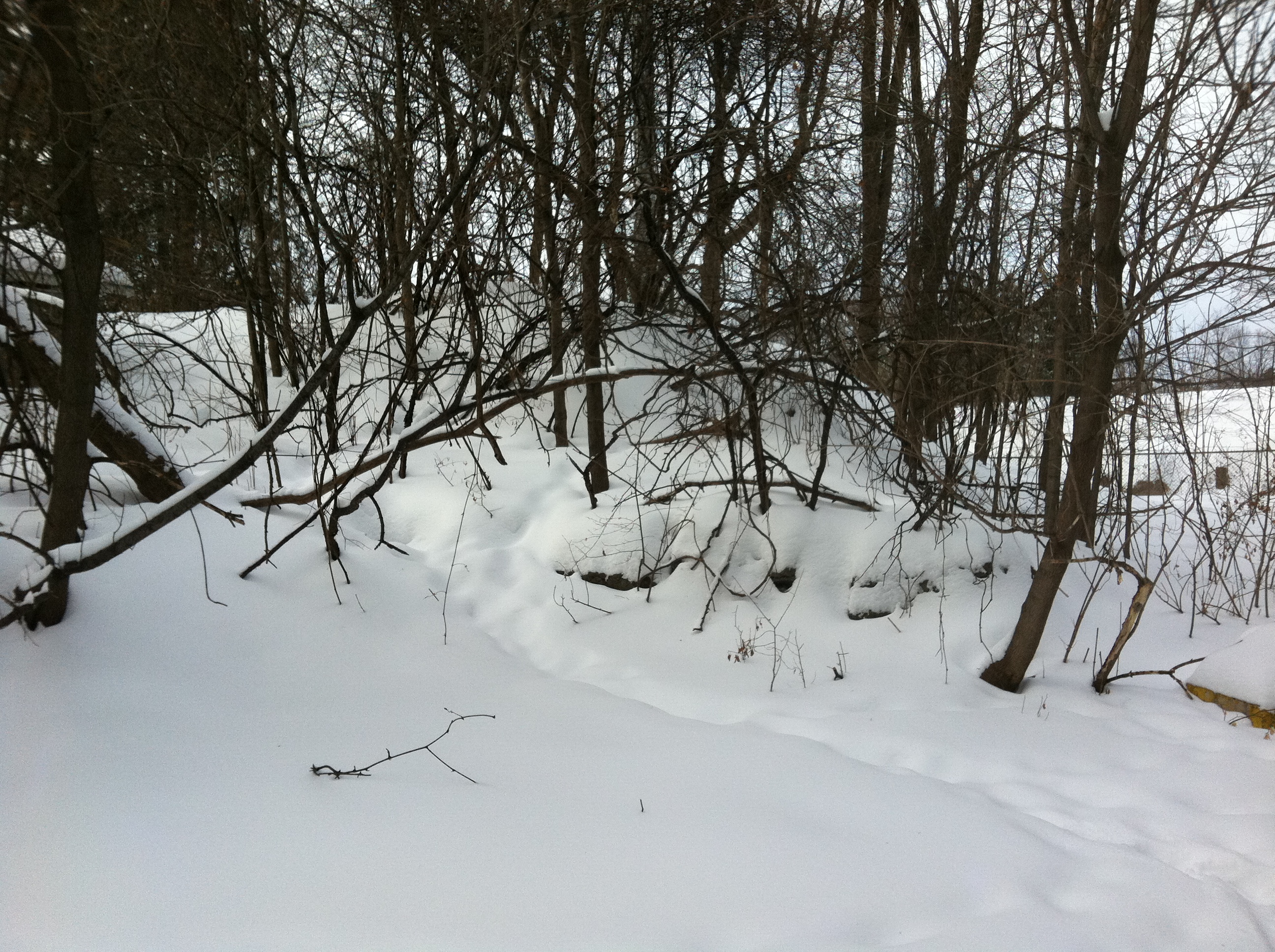
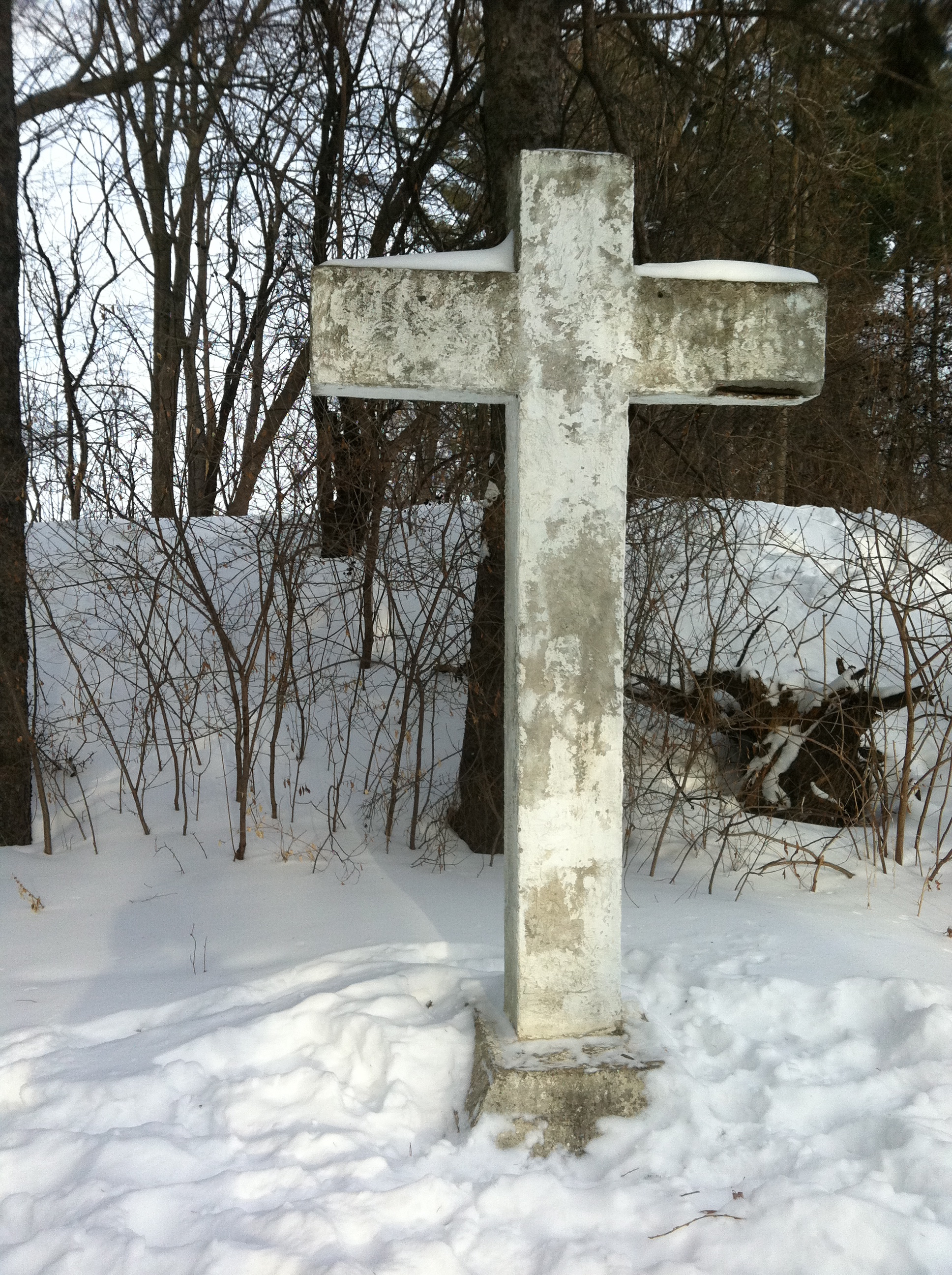
The mound surrounding the entrance seems to be about 50-60 feet square in dimensions and is approximately 12 ft in height. A cement cross is also located at the southeast corner of the mound.

A cement cross sits on the southeast corner of the mystery mound.

A cement cross sits on the southeast corner of the mystery mound.

So what is it?

A nearby fence separates the bunker from Beechwood Cemetery, and Beechwood Cemetery is the site of the National Military Cemetery of the Canadian Forces, purchased by the Department of National Defence in 1944 for interment of veterans of the Canadian Forces. Was it possibly be a crypt or mausoleum used by the cemetery during the 1944 time period, and has since been abandoned?

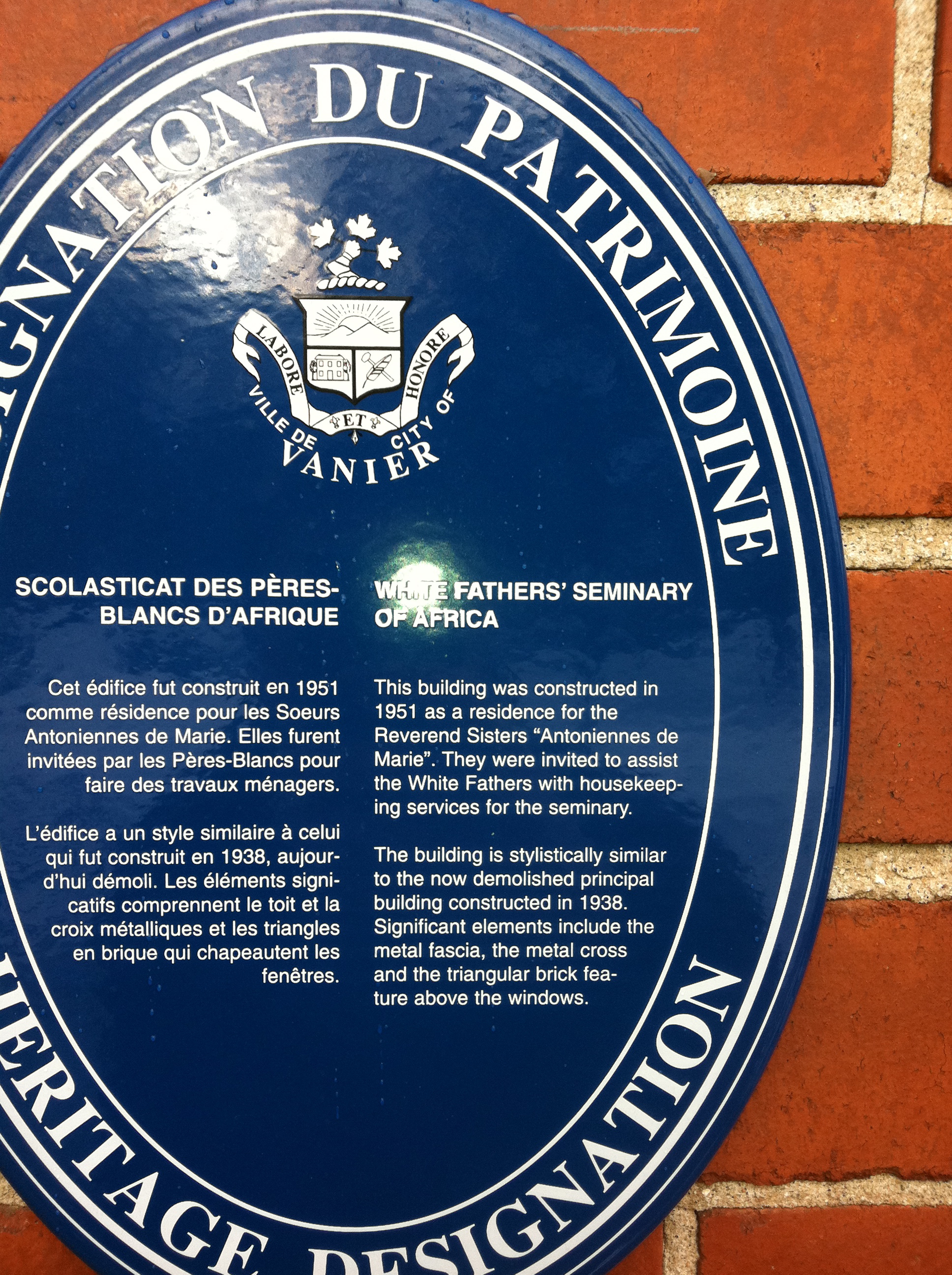
A clue found on a plaque mounted on a building near the bunker.

A clue found on a plaque mounted on a building near the bunker.

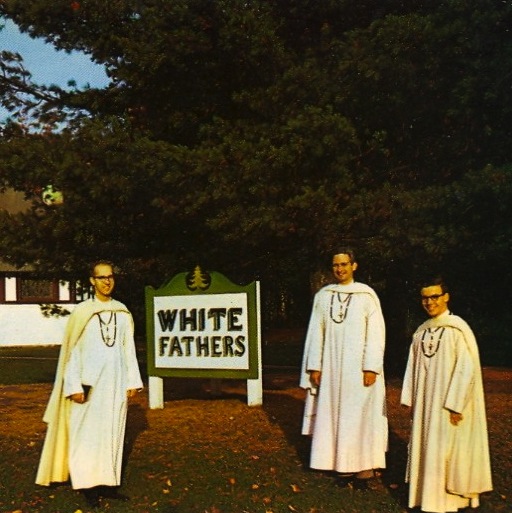
Further exploration of the property reveals that the area was once used by the missionary society known as “White Fathers” , a Roman Catholic Society of Apostolic Life founded in 1868. They used the property to train missionaries headed to Africa and built a number of structures on the property including North America’s only operating urban maple sugar shack. (this will be working in the spring!). They owned the land from 1938-1976 and it is now owned and operated by the City Of Ottawa.

photoThese White Fathers were missionaries whose outfits resembled the white robes of the Algerian Arabs and consists of a cassock, and  burnous. A rosary and cross are worn around the neck in imitation of the mesbaha of the marabou.

Searching further into the history of the White Fathers finally reveals the answer to this mysterious structure, as explained from the website, museoparc.ca

 “Another construction, somewhat more mysterious, is also present behind the cross, in the forest. Along the path, a shelter was dug in the solid rock and solidified with concrete and steel cables. This construction served as a root cellar for the White Fathers’ crops. Like many other religious orders, the White Fathers cultivated the land and this cellar allowed them to store their harvests during the cold winter months as well as during the summer months. Construction of the cellar began in 1943 by digging with an excavator in the rock. The White Fathers completed the work in November of 1944 by covering the cellar with soil using a bulldozer.”

So there you have it. A Missionary root cellar. I guess you could say they did it Missionary style.

It is an unusual structure and an interesting piece of Ottawa history that is  definitely worth checking out if you happen to be out in Vanier.

AREA 9 – Ottawa’s Abandoned Cold War Spy Station

titlephoto

Area 9

Driving aimlessly along country roads you never know what you will come across, and earlier this week while looking for visiting snowy owls, we came across something that seemed worthy of investigation. A lone government sign in a farmer’s field north of Richmond, simply labeled “Area 9” with a locked gate to a long abandoned road.

An abandoned road with a locked barbed wire encrusted gate sits north of Richmond, On.

An abandoned road into Area 9 with a locked barbed wire encrusted gate sits north of Richmond, On.

An internet search of the sign that was marked “Department Of Communications – Area 9” lead to a website explaining that the Department Of Communications was established by the Department of Communications Act in 1969 and was “responsible for fostering the orderly operation and development of communications in Canada, the powers and functions of the minister extended to telecom, national communications policy, broadcasting policy, radio and radar research, and actions necessary to secure the international rights of Canada in communications.” It was also responsible for satellite communications and supporting the Canadian space industry. Departmental restructuring in 1993 eliminated the department as a government entity and absorbed into other government departments in 1993.

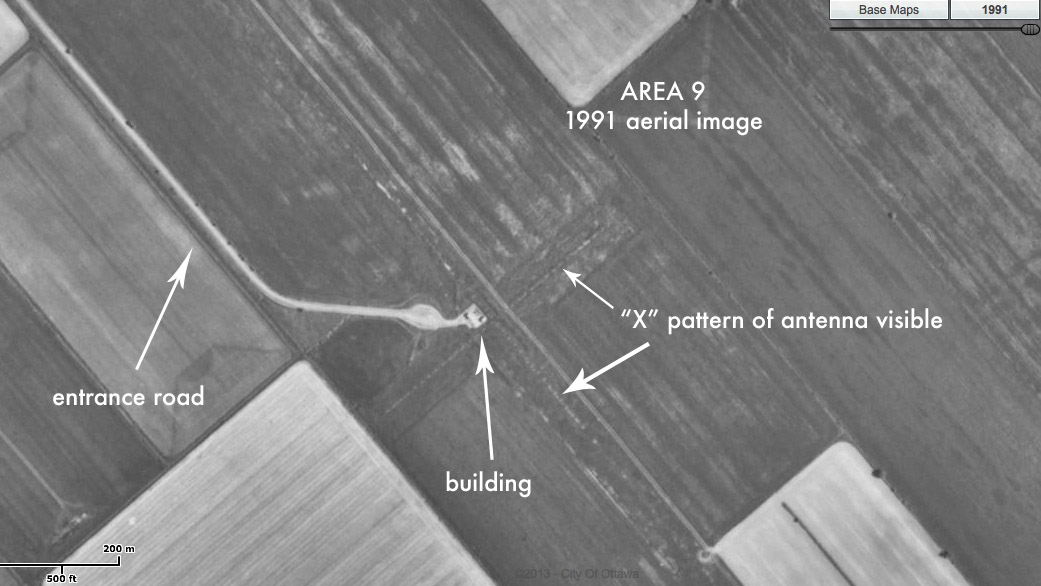
Likely part of some radio transmitter or receiver site, further searches for Area 9 info provided no results so a question was presented to my trusty Twitter followers to see if they knew anything about “Area 9”. Remarkably, the answer came in quickly and with interesting results. One person provided me with an aerial map from 1976 and 1993 showing the facility. A building, an “X” pattern and some equipment were clearly visible. But what was all this for?

a 1991 aerial image showing Area ( and what was there at the time.

A 1991 aerial image showing Area 9 and what was there at the time.

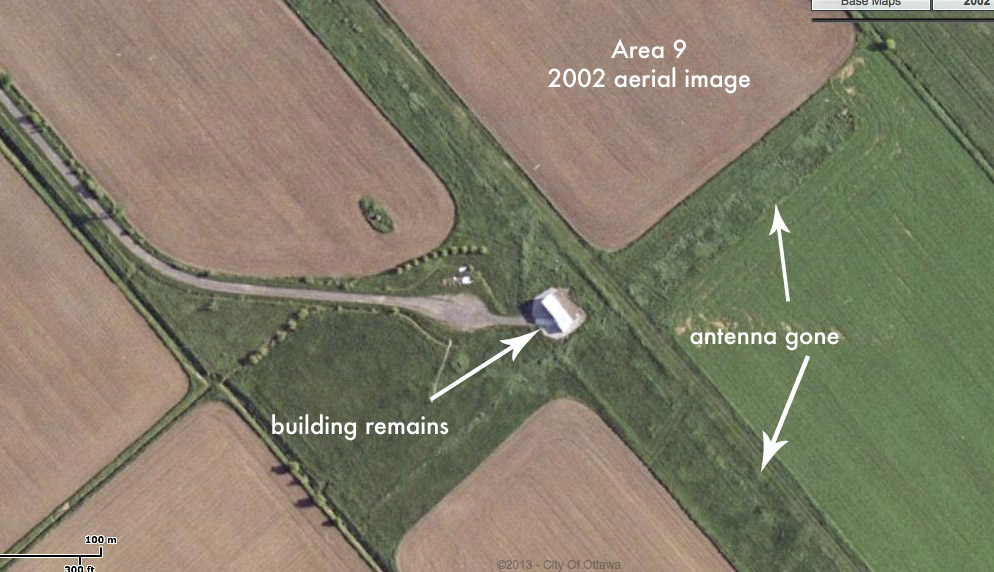
A 2002 aerial image shows that Area 9 has changed with farm fields taking over.

A 2002 aerial image shows that Area 9 has changed with farm fields taking over.

A second person privately messaged me with some information that provides one explanation as to what Area 9 may have been used for. Whether this information is accurate or not is hard to verify without a credible source, but here is the explanation I was given below:

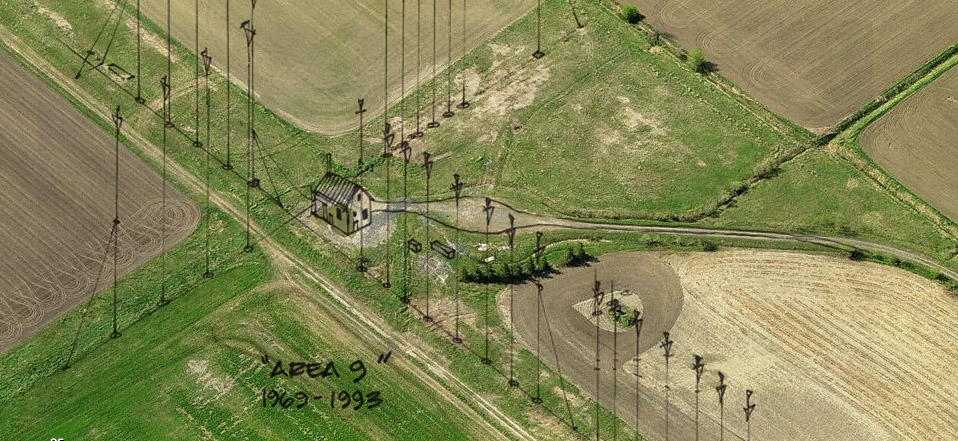
“The site was part of a Cold War Project for over the horizon radio detection finding, likely used to listen to embassy communications. It consisted of a very large array of receiver antennas laid out in a NS and EW axis. The array was almost a mile long and antennae wiring fed back to a building south along the lane-way.”

A concept sketch showing how Area 9 may have looked when in operation overtop the area as it looks today.

A concept sketch showing how Area 9 may have looked when in operation overtop the area as it looks today.

A Cold War radio transmission interception facility. With all the embassies located in the Nation’s Capital it makes sense our government during the Cold War was doing their best to monitor radio activity being transmitted out of them and back to their home countries. Likely in operation from 1969 when the department was formed, until the Department Of Communications was disbanded in 1993, it represents an era of espionage that has since evolved into more advanced technologies.  Aerial photos show the facility still standing in 2002 but removed in 2008 with only the outlines of the previous buildings and antennae remaining today.

A recent aerial image of how Area 9 looks today.

A recent aerial image of how Area 9 looks today.

A ghost of Ottawa’s Cold War past, currently owned by Industry Canada, Area 9 now sits empty, receiving only the calls of visiting snowy owls.

Special thanks to Shawn Hooper, Brad Clarke, and Jim “LumberBarons”.

SOURCES

Google Maps

Bing Maps

http://maps.ottawa.ca/geoOttawa/

http://www.thecanadianencyclopedia.com/en/article/department-of-communications/

The Hudson Stone: A clue to a 400 year old mystery in the Ottawa Valley

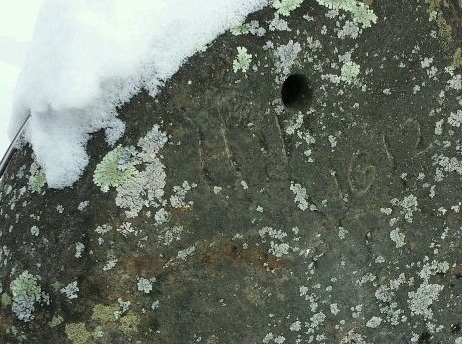
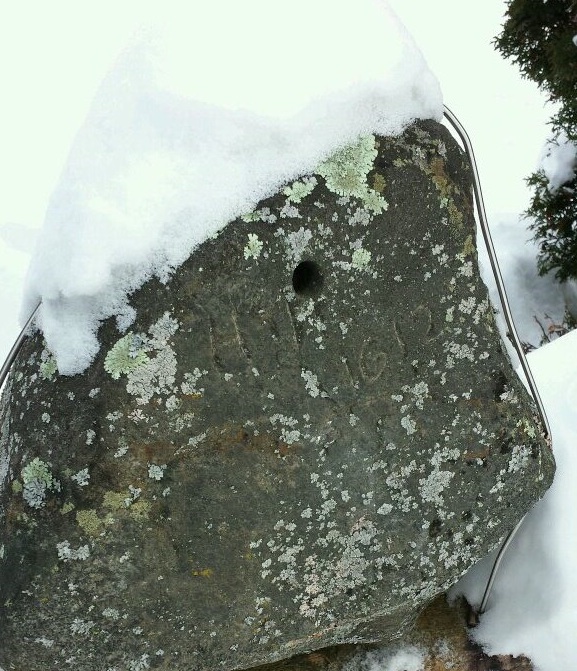
A stone inscribed with "HH 1612 CAPTIVE" found near Chalk River in 1959 may hold the key to solving a 400 year mystery of what happened to the ill-fated explorer Henry Hudson.

A stone inscribed with “HH 1612 CAPTIVE” found near Chalk River may hold the key to solving  the 400 year mystery of what happened to the ill-fated explorer Henry Hudson. (photo D.Pilgrim)

A new look at a 400 year old mystery.

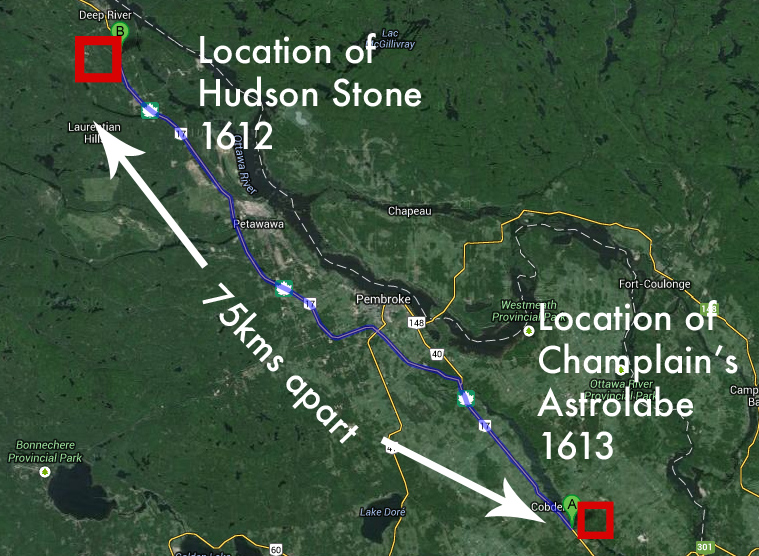
Only 75kms away from where Champlain apparently lost his astrolabe in 1613, in the town of Chalk River, ON, there is a rock with carved markings that read “HH Captive 1612”.  Found in 1959 when a road worker re-paving Highway 17 came across it, this stone could help solve the mystery of what happened to the famous explorer Henry Hudson after his crew sent him adrift from his ship in a 1611 mutiny on James Bay. Does the carved “HH” represent “Henry Hudson”, held captive, a note left for someone to find and help him escape? Towns, bridges, rivers, bays, and retail stores  are all named after him but he remains a mystery, a character lost in time with no final resting place as a landmark like the many places that display his name. The intrepid explorer Henry Hudson vanished into history, his legacy fading into the Canadian wilderness, but now there may be an answer.

HENRY HUDSON – Man of many places

On June 23, 1611, in an attempt to find the Northwest Passage, a mutiny aboard his ship Discovery left Henry Hudson adrift on what is now Hudson Bay, never to be heard from again. Before his mysterious disappearance this famous British explorer entered what is now New York state’s Hudson River in 1609, with the river being named after him in 1900. He founded Manhattan for the Dutch who he was employed by at the time. Entering New York City harbour, Hudson sailed 240 kilometres north on what the Native Americans called Muhheakantuck, now the Hudson River, exploring its shores all the way up to what is now Albany, NY.

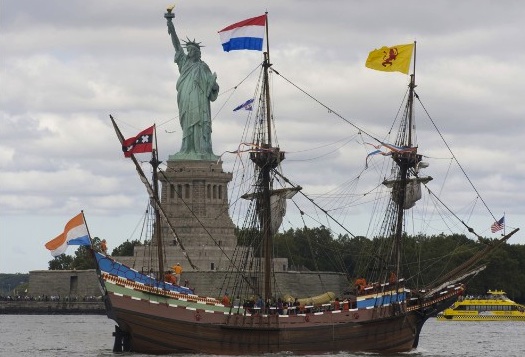
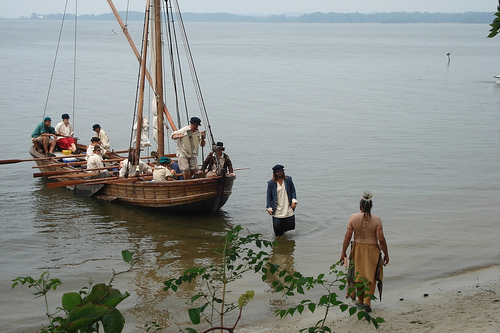
A replica of Henry Hudson's 1609 ship "Half Moon" sails into New York City harbour during 2009 celebrations.

A replica of Henry Hudson’s 1609 ship “Half Moon” sails into New York City harbour during 2009 celebrations.

Also named after him is the huge saltwater bay, Hudson Bay, bordered by the provinces of Quebec, Ontario, Manitoba and Nunavut. The second-largest bay in the world, the bay connects to the Atlantic Ocean via the Hudson Strait, also named after him. The Hudson’s Bay Company, the oldest commercial corporation in North America (in continuous operation for over 340 years) and one of the oldest in the world, also carries the explorer’s name. A large toll bridge that connects Manhattan to the Bronx in New York City, the Henry Hudson Bridge was opened in 1936 near the site that Hudson first dropped anchor in 1609. The quaint tourist town of Hudson, NY is also named after Captain Hudson. Obviously this is someone of great importance to have so many prominent, historical landmarks named in his honour. But why has nobody ever tried to find out what happened to him?

A few books have been published about the disappearance of Henry Hudson, with many speculations made about his death. Some say he was murdered on his ship and cast overboard by his mutinous crew, others say he was sent off his ship with his son and 7 others in a small boat only to die floating across the icy arctic waters. Another story states that Hudson, his son and the 7 crew members loyal to him made it to shore and joined a group of area natives where they lived out the rest of their lives. Other legends have Hudson sailing back to Britain, or joining a native tribe, fathering children with a a female tribe member and living out his days happily as a family man in the Canadian wilderness.

A startling clue discovered only a two hour drive west of Ottawa may now help trace what really happened to Henry Hudson.

AN ICY JOURNEY

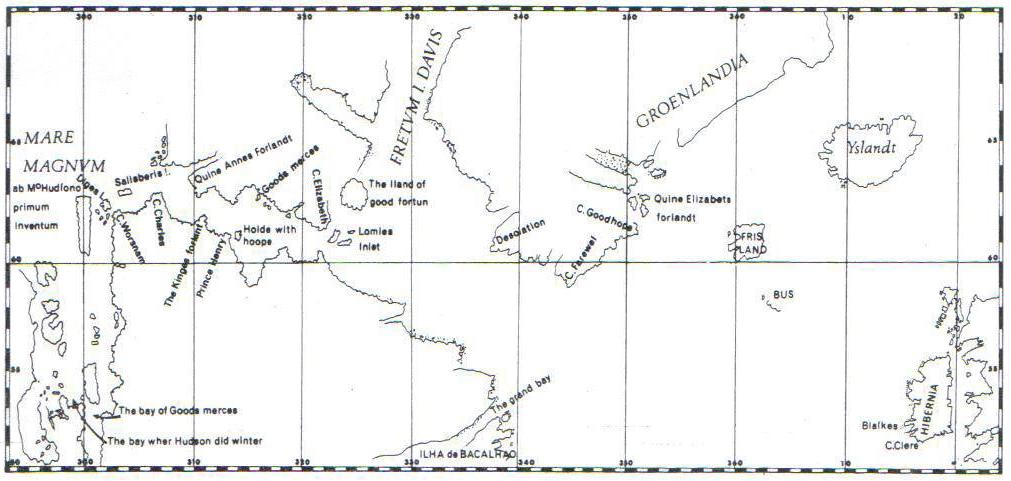
Henry Hudson's map showing his 1610 arctic journey into Hudson's Bay.

Henry Hudson’s map showing his 1610 arctic journey into Hudson’s Bay.

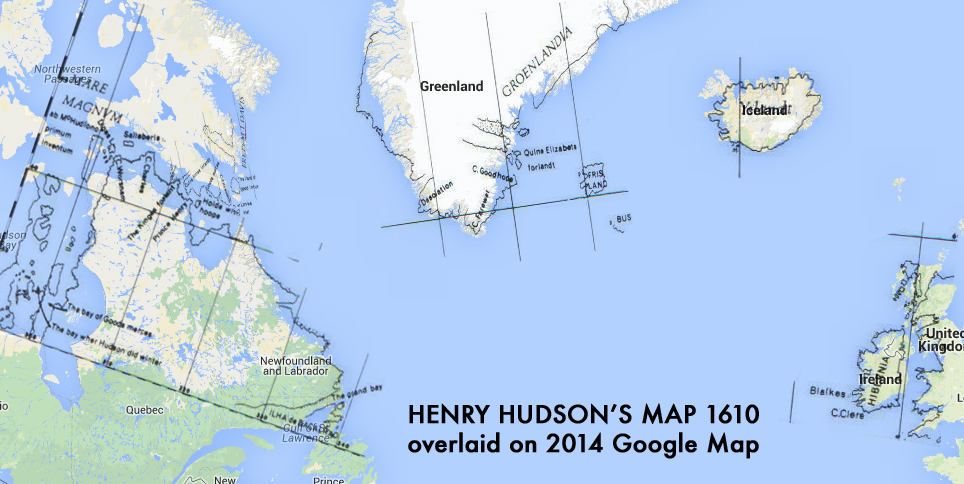
In hopes of finding the Northwest Passage to the Orient, and with the backing of the Virginia Company and the British East India Company under the English flag, Hudson took the helm of his new ship, the Discovery in April 1610. A  70 ton ship that was to sail across the North Atlantic with a crew of 22 men, including his teenage son. Departing England in April, Hudson arrived in Iceland on May 11 where he continued towards the south of Greenland rounding the southern tip in June. Hudson’s cartography skills were very accurate as his his map of the voyage (scale notwithstanding) compares well to a present day Google map of the area.

Hudson's quite accurate 1610 map overlaid on a current Google map of the same areas.

Hudson’s quite accurate 1610 map overlaid on a current Google map of the same areas.

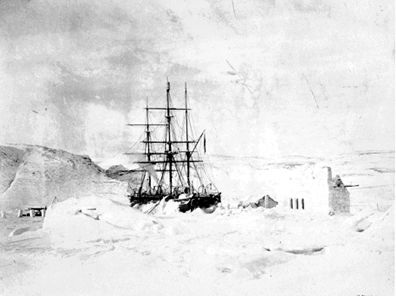
Henry Hudson entered Hudson Bay in August 1610 and continued along the eastern coast of the bay entering what is now James Bay. In a desperate search for the legendary passage to the Orient, Hudson zigzagged his way through James Bay in hopes of discovering the fabled passage. The icy grasp of the Arctic was soon to take hold of the Discovery and its crew. On November 1, 1610, the Discovery sailed close to shore but by November 10 they were frozen in. With only enough supplies to last the winter, there was not enough to get them back to England.

Hudson's ship "discovery" trapped in James Bay ice November 1610.

Hudson’s ship “Discovery” trapped in James Bay ice November 1610.

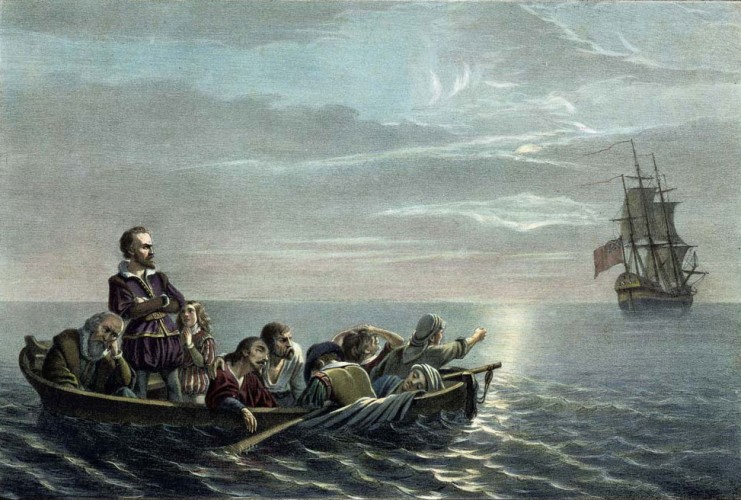
Hudson started rationing food which started a division between the crew that was the beginning of the end for Hudson. Hudson had a difficult time keeping order among his surly, sick, cold crew. With scurvy affecting many, members of the expedition began to die and resentment towards the determined Captain grew. A plan to mutiny was formed and when the winter ended and the ship was free from the winter ice, they began the voyage home. The voyage did not get far before the mutiny occurred. Hudson was ambushed, along with his son, the ship’s carpenter and those loyal to him. The ship’s shallop (a 20-30 foot boat with oars and a sail) was brought alongside the Discovery and the nine rope-bound men were loaded aboard the small boat with supplies, food, tools and blankets.

A depiction of the mutiny by Francis Davignon.

A depiction of the mutiny by Francis Davignon.

The Discovery’s turncoat crew released the shallop’s rope, setting Hudson and the 8 men adrift and the Discovery sailed away back to England. The famous explorer and his companions were never heard from again. No trace of Hudson or the 8 men have been ever been found to this day.

A THEORY

Now let’s look at some facts about the situation before we settle on the theory that he just died and vanished into the icy waters of James Bay like the history books tell us.

– Henry Hudson was an experienced sailor, explorer and cartographer who had successfully completed four arduous voyages to the New World.

Hudson was determined, tough and not one to give up.

– Hudson had with him a carpenter aboard a boat equipped with oars and most likely a sail with supplies and equipment.

A typical early 1600's shallop, equipped with sail and oars.

A typical early 1600’s shallop, equipped with sail and oars.

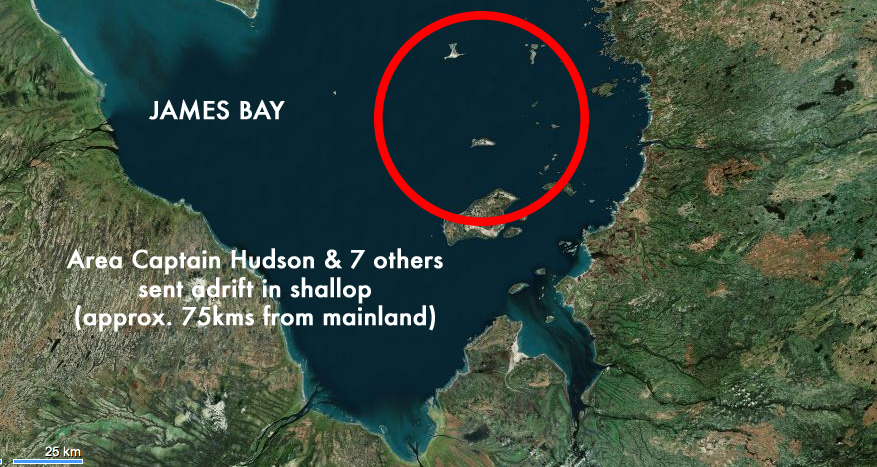
– Hudson and crew were at MOST 75kms from the shore of James Bay when they were released in the shallop from Discovery.

Area where and Hudson was sent adrift in June 1611.

Area where and Hudson was sent adrift in June 1611.

– It was June 23 when he was set adrift. The summer was just beginning.

A recent book called “God’s Mercies: Rivalry, Betrayal and the Dream of Discovery”, has author Douglas Hunter describing how another famous explorer, Samuel De Champlain, found out that some Algonquins had enslaved an English youth. Champlain made his first trip up the Ottawa River in June 1613. Champlain travelled with Nicholas de Vignau, a man who had lived with the Algonquin people on the Upper Ottawa. Vignau told Champlain that he had visited the “Northern Sea,” or Hudson Bay/James Bay. Henry Hudson was there just TWO YEARS EARLIER. Champlain now was on the Ottawa River, hoping to visit this northern sea himself, the very sea that Hudson was trying to escape from.

Champlain's astrolabe he allegedly dropped near Cobden, On in 1613 on his journey up the Ottawa River.

Champlain’s astrolabe he allegedly dropped near Cobden, On in 1613 on his journey up the Ottawa River.

In fact, Champlain apparently dropped his astrolabe compass on the journey up the Ottawa River in an area that is now Cobden, ON. It was unearthed in 1867 by a farmer’s son and the Champlain astrolabe now rests in the Canadian Museum Of History. (Some question its authenticity)

Now this is where it gets interesting…

The Hudson Stone as photographed on February 5th 2014. Inscribed with "HH 1612 CAPTIVE". No forensic archeologic studies have been done on the artifact. (Photo courtesy D.Pilgrim)

The Hudson Stone as photographed sitting in Chalk River on February 5th 2014. Inscribed with “HH 1612 CAPTIVE”. To date, no forensic studies have been done to verify the artifact. (Photo courtesy D.Pilgrim)

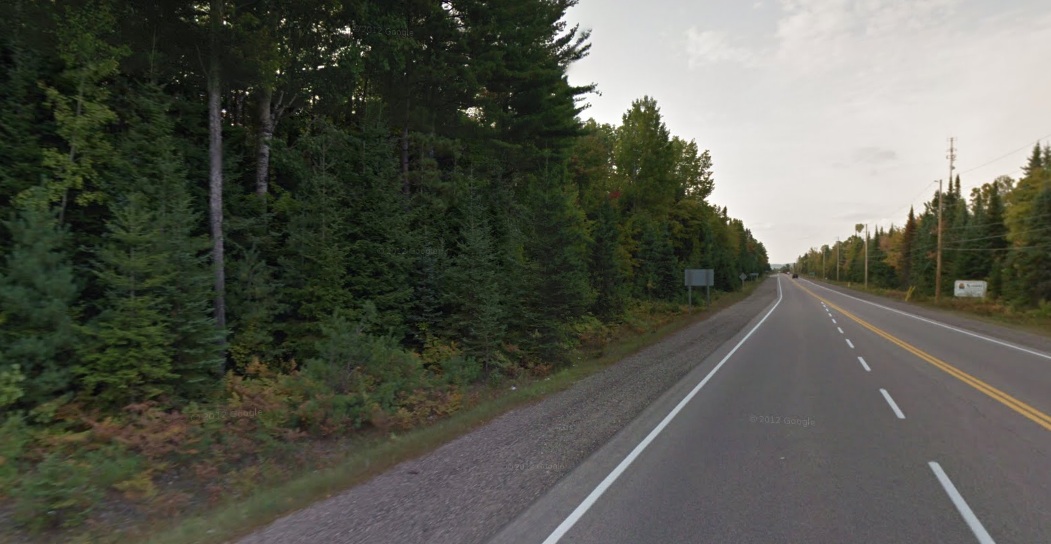
A stone was found by a construction worker while re-paving Highway 17 near Chalk River, ON in 1959 with unusual markings on it. Inscribed on the rock surface is “HH 1612 CAPTIVE”. For reasons unknown there has never been an official archaeological confirmation of the stone’s authenticity. Some say it was improbable Henry Hudson could have made it as far south as the Ottawa River. Also thought improbable was that Vikings made it to Canada 500 years before Columbus but now it is a proven fact they actually did. (L’Anse Aux Meadows, Newfoundland).  Should we not study this rock that is supposedly insribed by Hudson and find out if it really is genuine and the solve a 400 year old mystery? Sitting in a small park in Chalk River, this rock could hold the key to what really happened after Hudson was sent adrift and end the mystery. Did Hudson and his men reach the shore of James Bay and journey south only to be captured by the Algonquins with Samuel DeChamplain en route to save them? The plot thickens, so let’s dig a little deeper…

THE ESCAPE 

Now let’s take all those details mentioned above into consideration for a moment. What if Hudson and his men after being sent adrift pulled themselves together and rowed and/or sailed their shallop the 75kms to the shore of James Bay? A “shallop” is a 20-30 vessel equipped with oars and a sail.  In fact, in 1608, Captain John Smith and fourteen English colonists set out from Jamestown in a 30-foot shallop to explore and map the Chesapeake Bay. They traveled over 1,700 miles in three months. Hudson and his crew were cast off from Discovery in an identical type of boat. They were released in their equipped shallop near the tip of James Bay, close to a number of rivers that enter the area, most notably the Harricana River. This 533km long river was first used by the Algonquins as a river route and its name originates from the Algonquin word Nanikana, meaning “the main way”. The Algonquins also use the name Inikana, meaning “river route”. A segment of the river was called Wajaha Sibi, which means “river to the bay”…James Bay.

Now let’s say Hudson makes his way to the Harricana River and continues south on it. It’s summer, they have some equipment and a carpenter to fashion shelters, hunt for food and survive during the warm months of summer. Completely feasible the shallop could make its way south along the Harricana River.  Now it is a fact this river is also used by the Algonquins who use it as a “main way” and a “river to the bay” as previously mentioned.

What if Hudson and his men are captured by the Algonquins and taken south through the Harricana River system, over a 10km portage at Lac Mourier where the Harricana begins/ends and connects to Lac Simard where the Ottawa River begins/ends? Now on the Ottawa River, Hudson and whoever has survived along with him are traveling south with the Algonquins. Word spreads that “white men” (remember how Samuel De Champlain found out that some Algonquins had enslaved an English youth?) are captive and are making their way south along the Ottawa River.

.

maproute

Hudson, now captive, a year after his being abandoned in the shallop in 1611, has arrived near Deep River in 1612 with the Algonquins. The timeline makes sense. Traveling the Harricana River from James Bay down the Ottawa River to Deep River would most likely take a few months putting Hudson into 1612. In a desperate attempt to signal any possible rescuers of his dire situation he carves into a rock “HH 1612 CAPTIVE”, which remained there until it was discovered in 1959.

champ-hudsonmap

Samuel Champlain is making his way north up the Ottawa River at about the same time, allegedly dropping his astrolabe only a mere 75kms south of the Hudson Stone in 1613. Did these two famous explorers unknowingly cross paths traveling in opposite directions along the Ottawa River? Hudson in Deep River, captive with the Algonquins in 1612, and Champlain there just a few months later in roughly the same place?

Approximate area where the Hudson Stone was recovered during construction of Highway 17 in 1959.

Approximate area where the Hudson Stone was recovered during re-paving of Highway 17 in 1959.

Perhaps by the time Champlain heard that the Algonquins had enslaved an English youth (most likely Hudson’s teenage son), Henry Hudson was dead, since Champlain was exploring the Ottawa River in 1613, and Hudson’s desperate carving was made a year earlier in 1612. Did the Algonquins kill him or did he die of illness after the carving was made in 1612 with only his son surviving out of the 9 men originally set adrift? Perhaps the remains of Henry Hudson lie buried somewhere between his carved message in Chalk River and Ottawa, narrowly missed by Champlain on his route in the other direction trying to find the northern sea where Hudson had originally started his fateful journey. Two famous explorers crossing paths, one trying to escape the cold, icy of waters of the arctic, the other trying to find it.

We may never know what really happened to Henry Hudson, his son or his loyal crew, and until we study the Hudson Stone in greater detail, we can only imagine how the final days played out for the explorer whose name adorns some of North America’s most notable landmarks.

SOURCES

http://en.wikipedia.org/wiki/Henry_Hudson

http://www.ianchadwick.com/hudson/hudson_05.htm

http://www.findingdulcinea.com/news/on-this-day/May-June-08/On-this-Day–Henry-Hudson-Set-Adrift-by-Mutineers.html

http://getawaytips.azcentral.com/landmarks-named-after-henry-hudson-3000.html

https://suite101.com/a/mysterious-disappearance-of-henry-hudson-a174487

http://books.google.ca/books?id=YGFLAQ-Cu6sC&pg=PA68&lpg=PA68&dq=henry+hudson+stone&source=bl&ots=TK8-_veGQM&sig=1Q81TfGClWN1yn8n9afB6AK0okE&hl=en&sa=X&ei=l7rqUpi9D_LNsQT-_oCwBQ&ved=0CGMQ6AEwCw#v=onepage&q=henry%20hudson%20stone&f=false

http://www.theglobeandmail.com/arts/hudson-at-bay/article1344733/

A 400-year-old shallop built and sailed again

THE JEAN-RICHARD: OTTAWA’S HIDDEN SHIPWRECK

combo

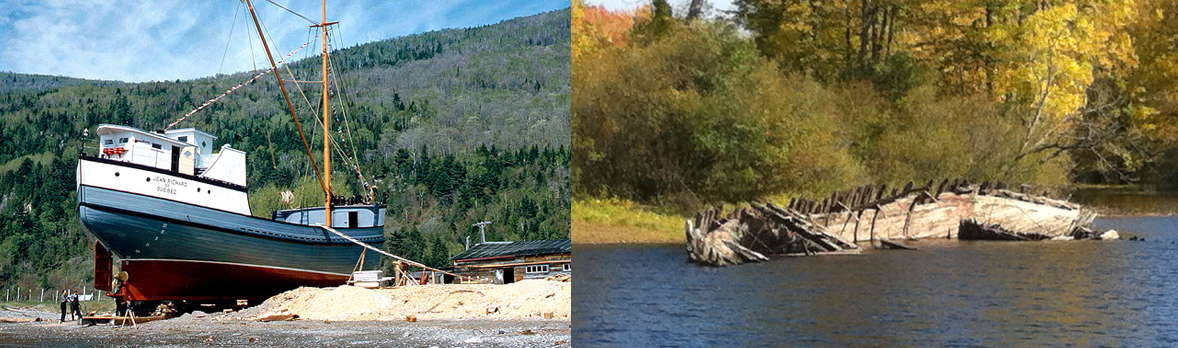
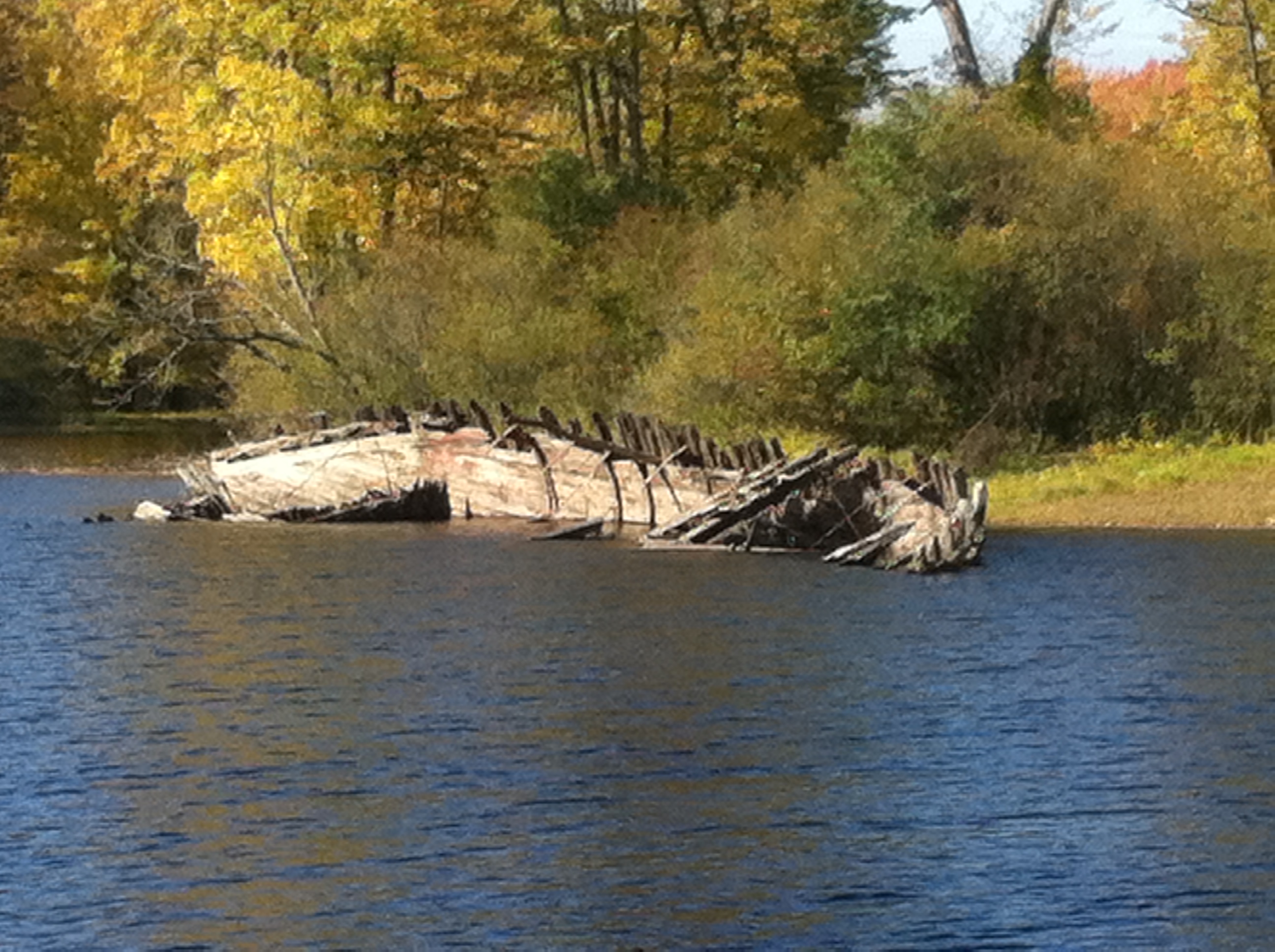
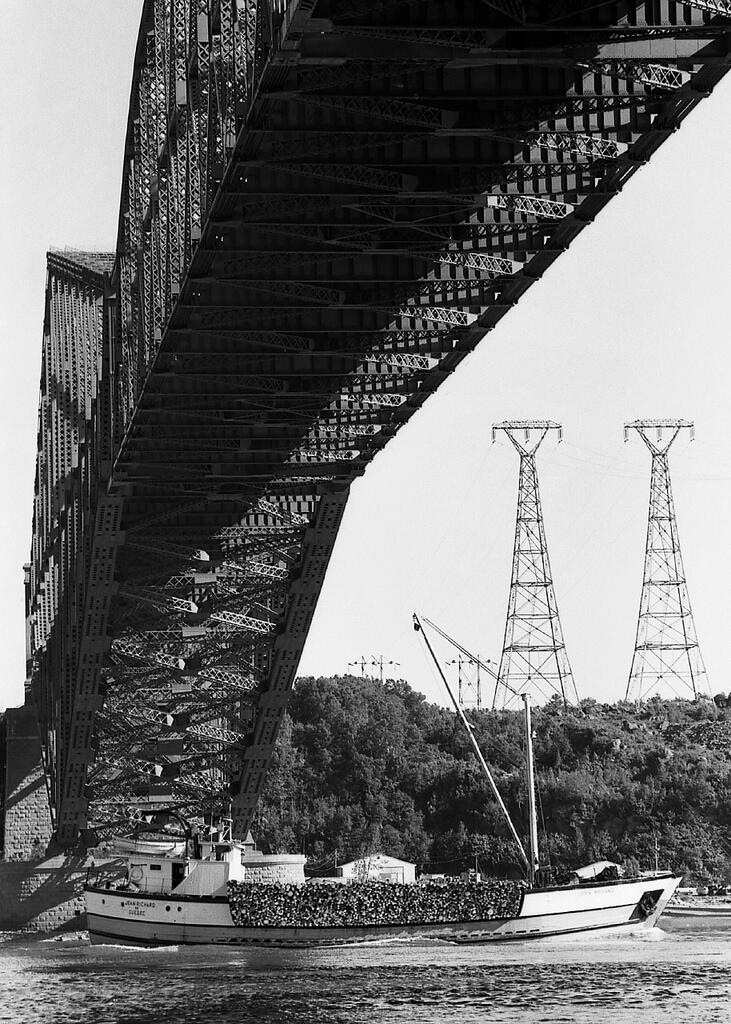
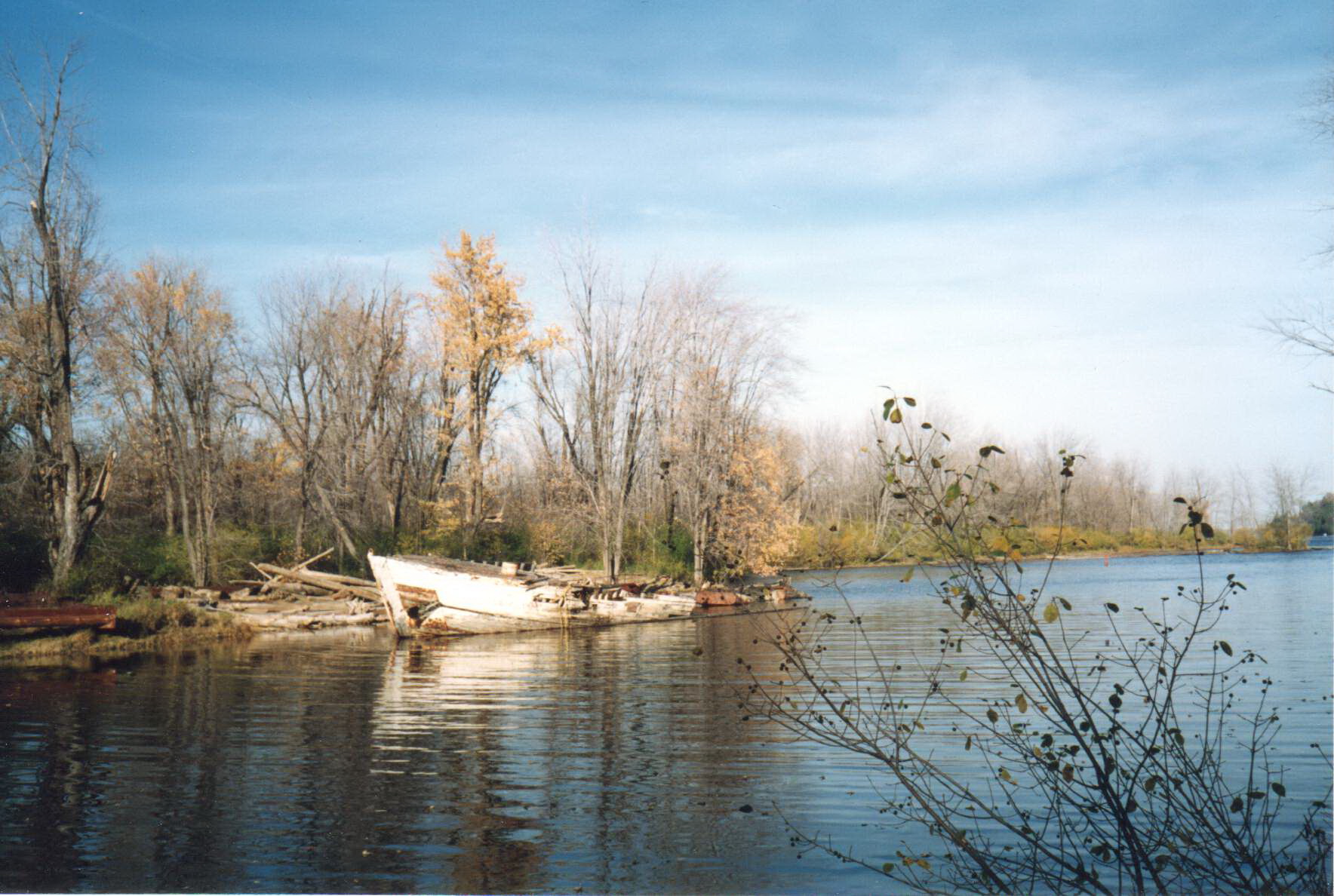
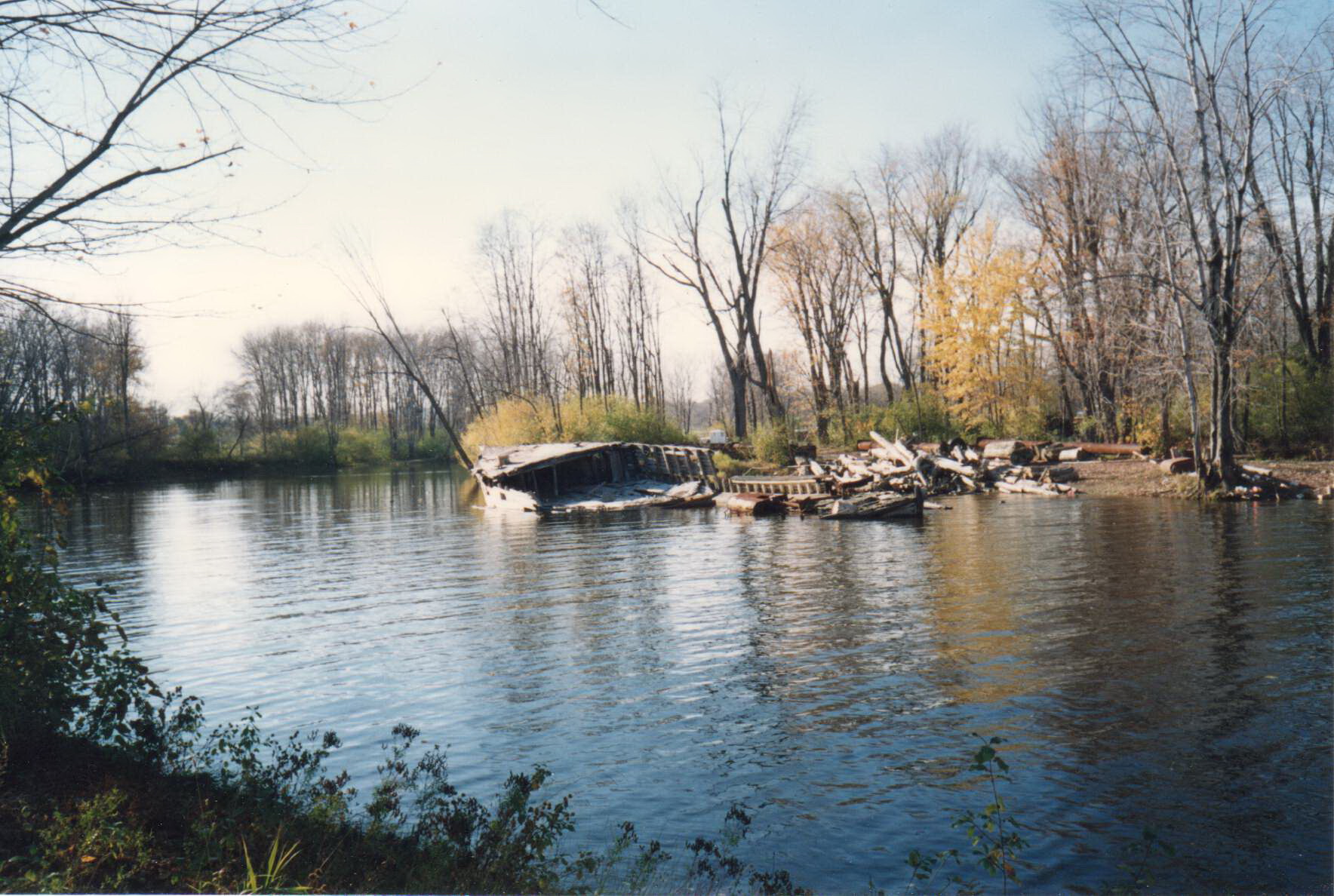
Once the subject of a 1959 National Film Board documentary, the Jean Richard now lies shipwrecked in the Ottawa River.

DISCOVERING THE WRECK

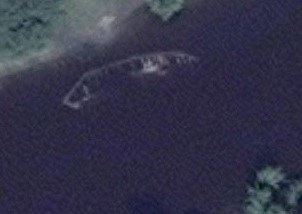
I am fascinated by maps. Maps can reveal a great many things about our region’s history, especially if you study them closely enough. Current satellite maps, old maps of the city and vintage road maps all reveal details we may otherwise miss from a ground perspective. After scanning an aerial photo of downtown Ottawa I noticed what appeared to be the outline of a ship’s hull along the shore of the Ottawa River.

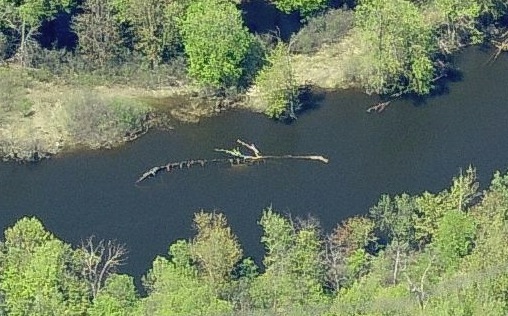
Satellite image showing what appears to be the submerged hull of a ship.

Satellite image showing what appears to be the submerged hull of a ship.

With the Ottawa River being a major supply route for hundreds of years, I’ve heard of many shipwrecks lying below the river’s surface so I thought this could possibly be one of them. Aerial maps can be deceptive, but this clearly looked like a ship half submerged in the water, so I decided to see what was actually there and confirm if it really was the remains of a ship. The only way to find out was to pack an adventure bag, a lunch, and call the girlfriend to see if she wanted to join me in finding shipwreck.

Another map "bird's eye" view shows a possible ship's hull submerged in the Ottawa River.

Another map “bird’s eye” view shows a possible ship’s hull submerged in the Ottawa River.

INTO THE WOODS

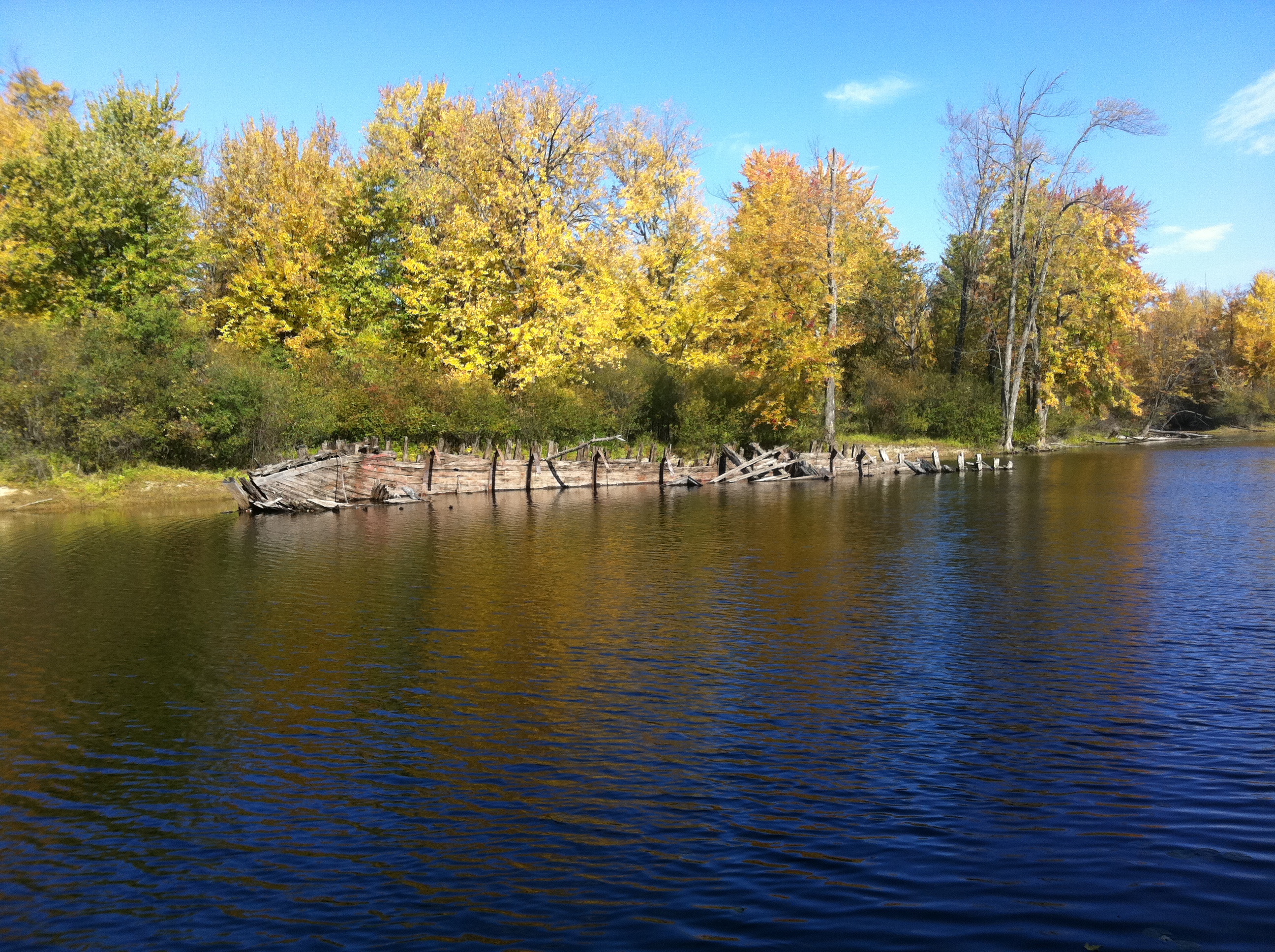
Heading into the woods near the shore of the Ottawa River we used an iphone mapping system to pinpoint where the remains of this possible wreck would be. A gorgeous, sunny warm fall day, we trudged through thin brush and following a small path, hiked in about 20 minutes from the nearest road. Pushing aside some branches at the river’s edge we stumbled across a magnificent scene….a half submerged, 100 foot wooden hulk of a shipwreck.

After a short hike we parted the trees and sure enough, there was a shipwreck.

After a short hike we parted the trees and sure enough, there was a shipwreck.

EXPLORING THE WRECK

In awe that there was a large shipwreck sitting in about 8 feet of water in a hidden inlet off the Ottawa River, I quickly changed into swim trunks, grabbed the camera and climbed aboard to record this amazing find. Obviously I was not the first one to know about this wreck, as a bike path is nearby and remnants of field parties were strewn about the area.

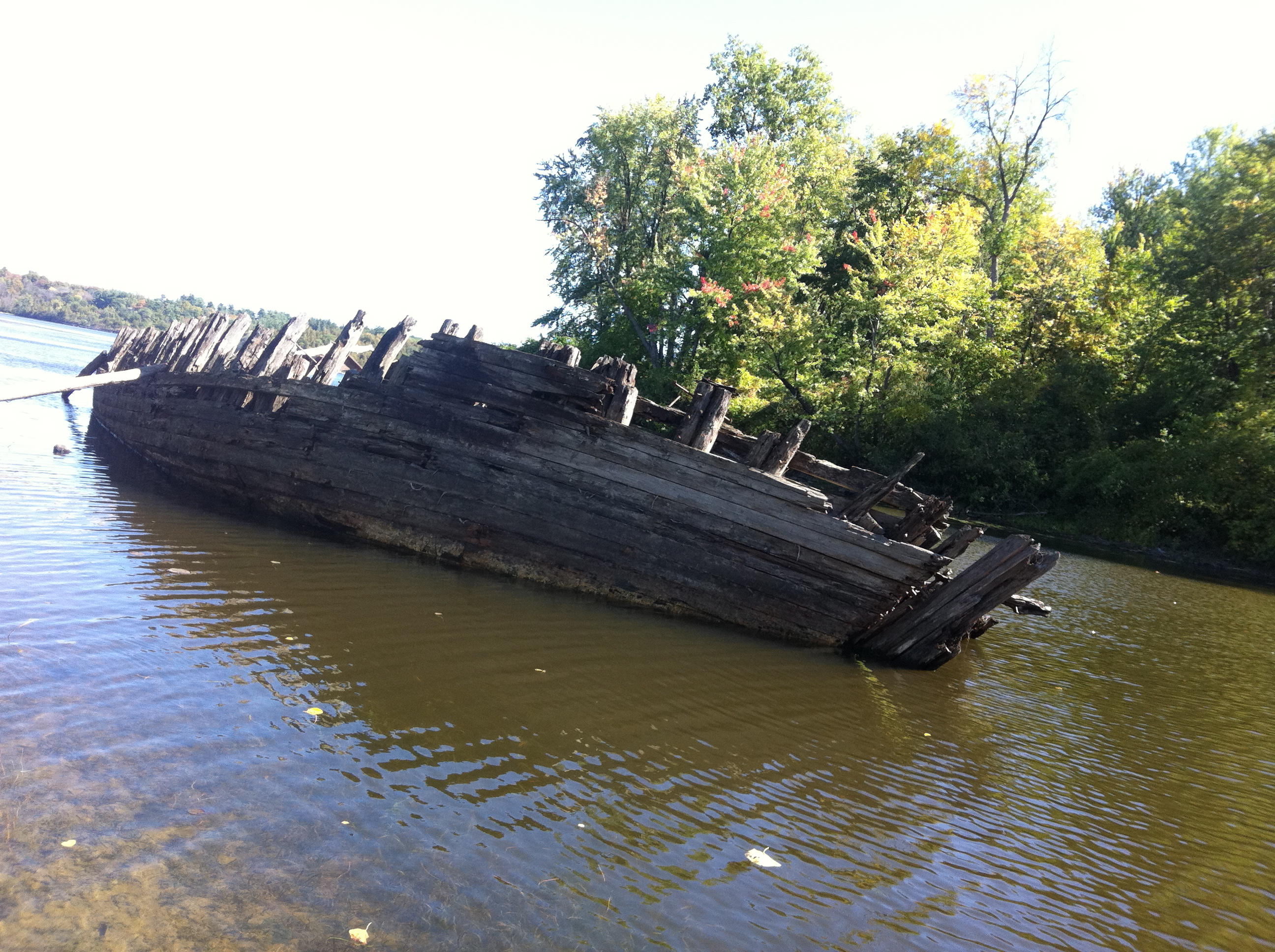
The wooden hull listed to one side in about 8 feet of water.

The wooden hull listed to one side in about 8 feet of water.

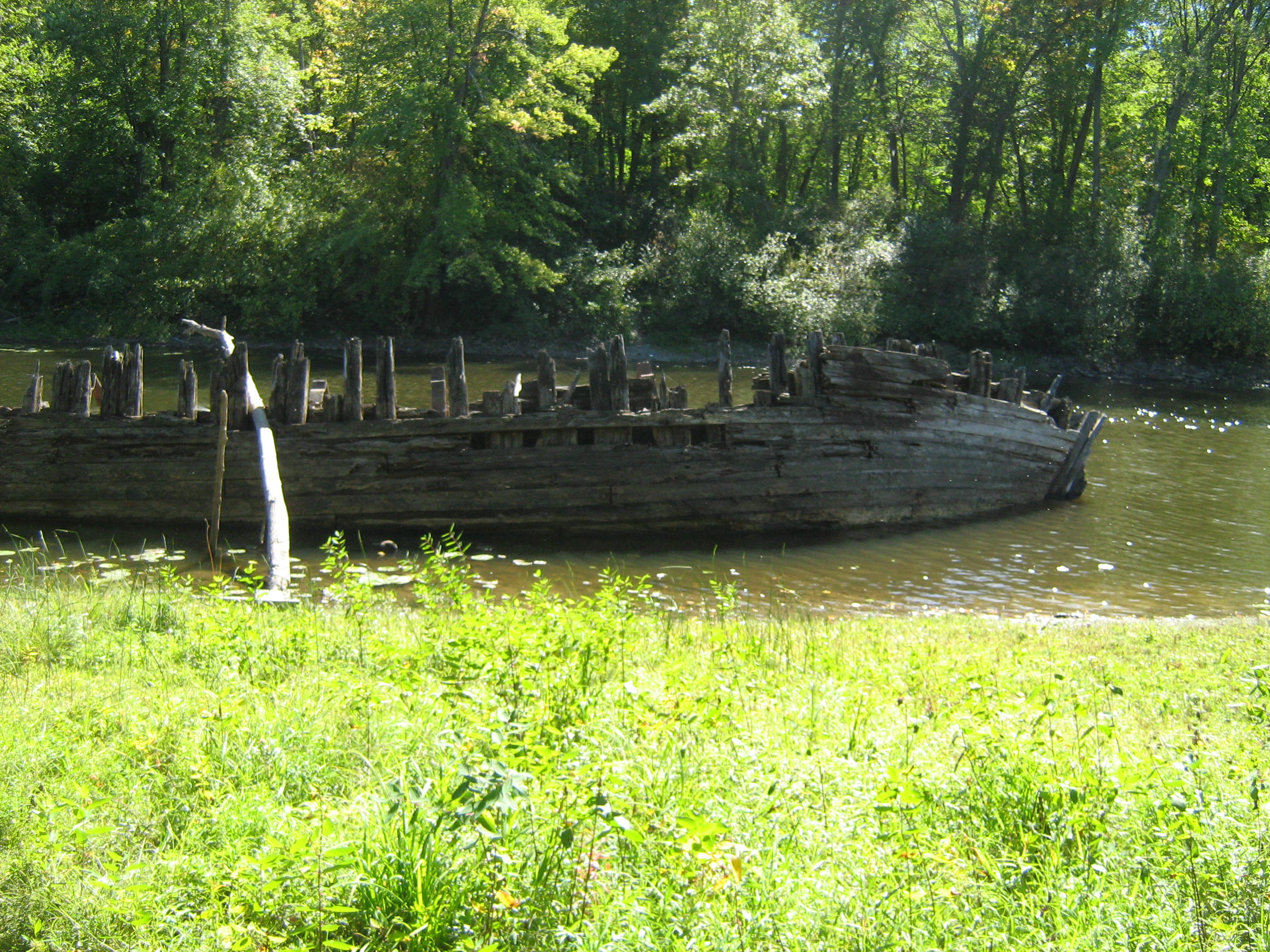
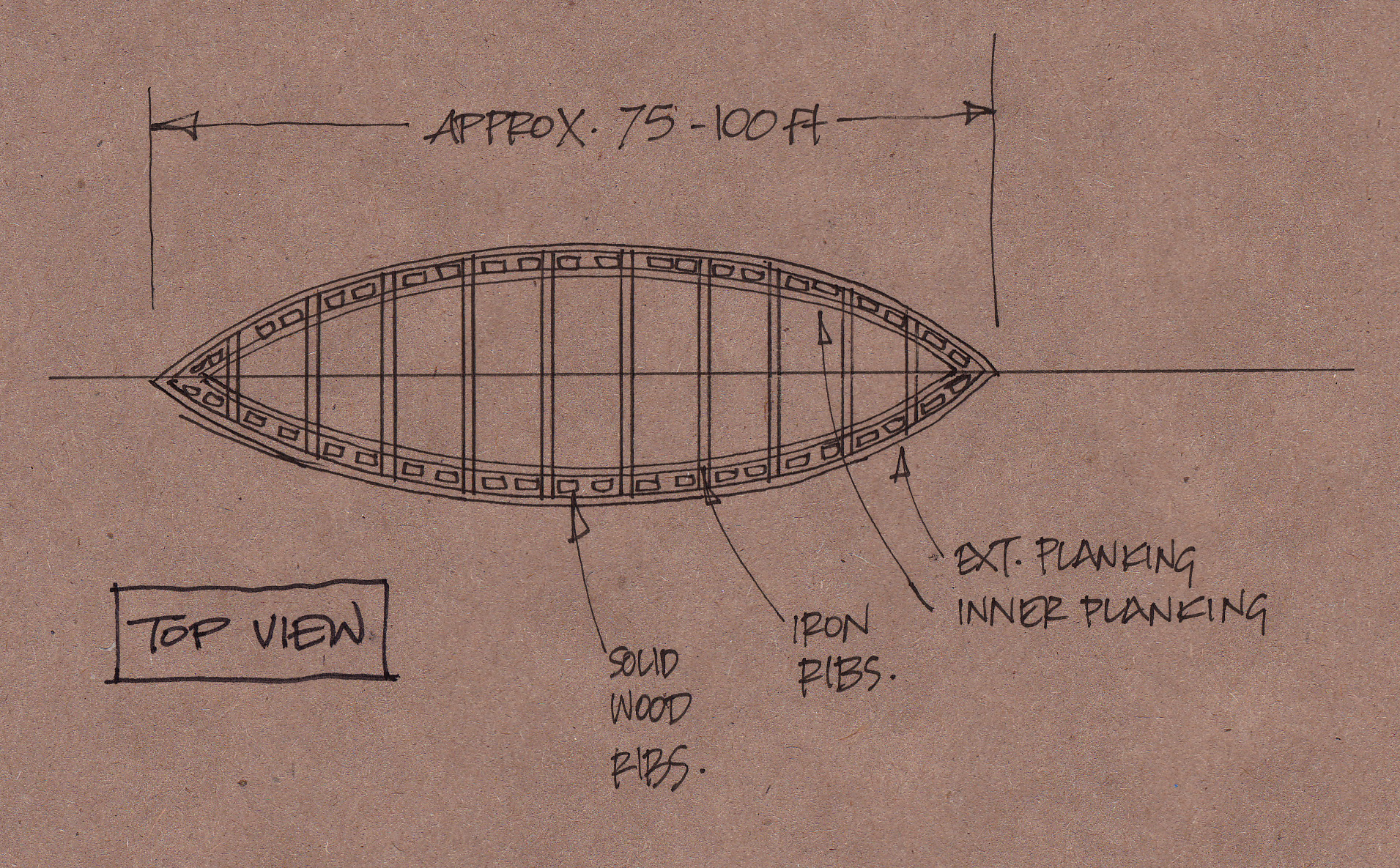
Approximately 100 feet long and using wooden timbers and what seemed like ship building techniques from the 1800’s, the shipwreck was miraculously well preserved sitting in the water.

Looking at the bow of the ship.

Looking at the bow of the ship.

A sketch showing the hull shape and overall dimensions.

A sketch showing the hull shape and overall dimensions.

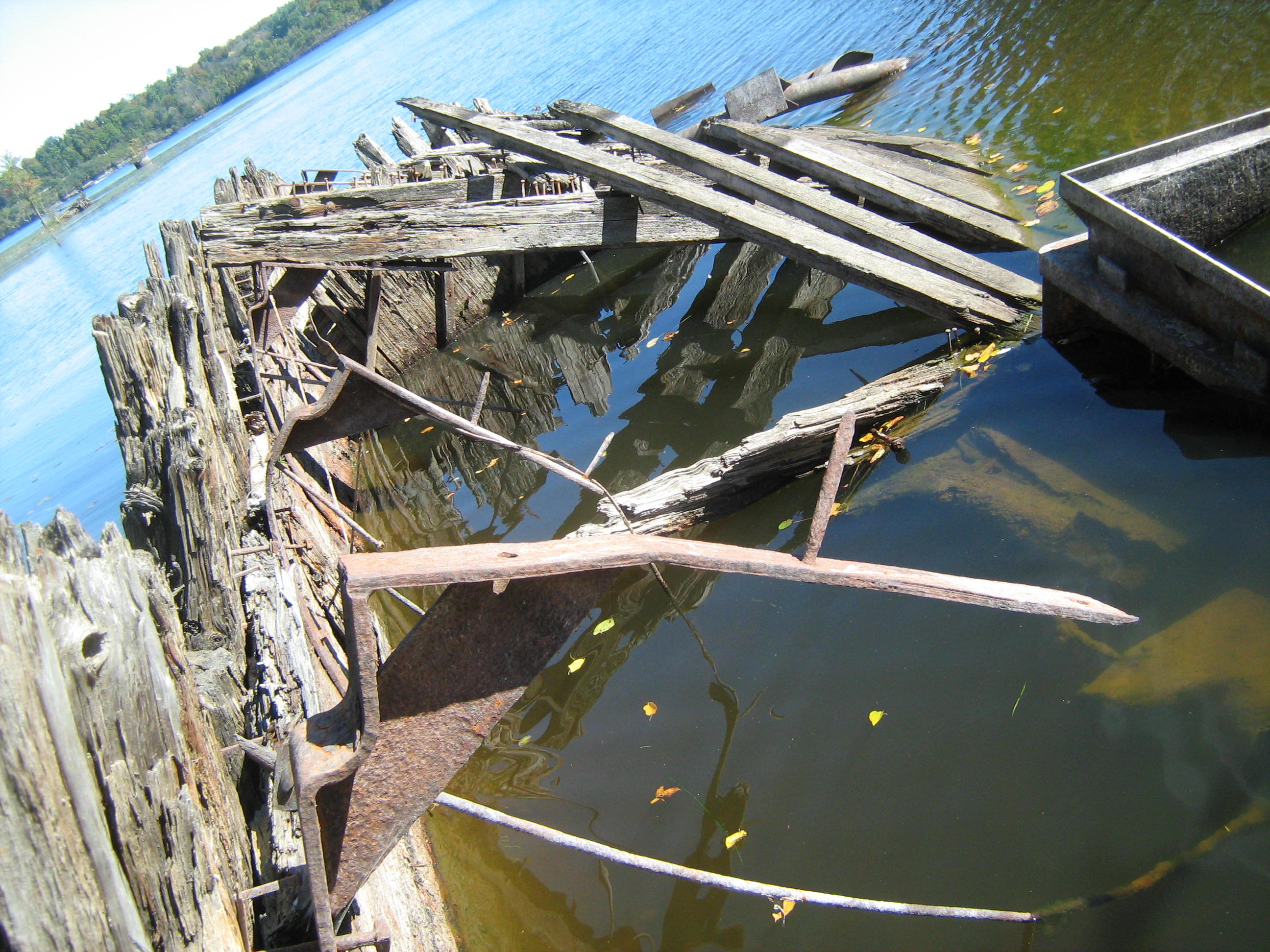
Interior of the shipwreck showing ribs, deck planks.

Interior of the shipwreck showing ribs, deck planks.

At almost 100feet long, the wreck is an impressive sight in the water.

At almost 100feet long, the wreck is an impressive sight in the water.

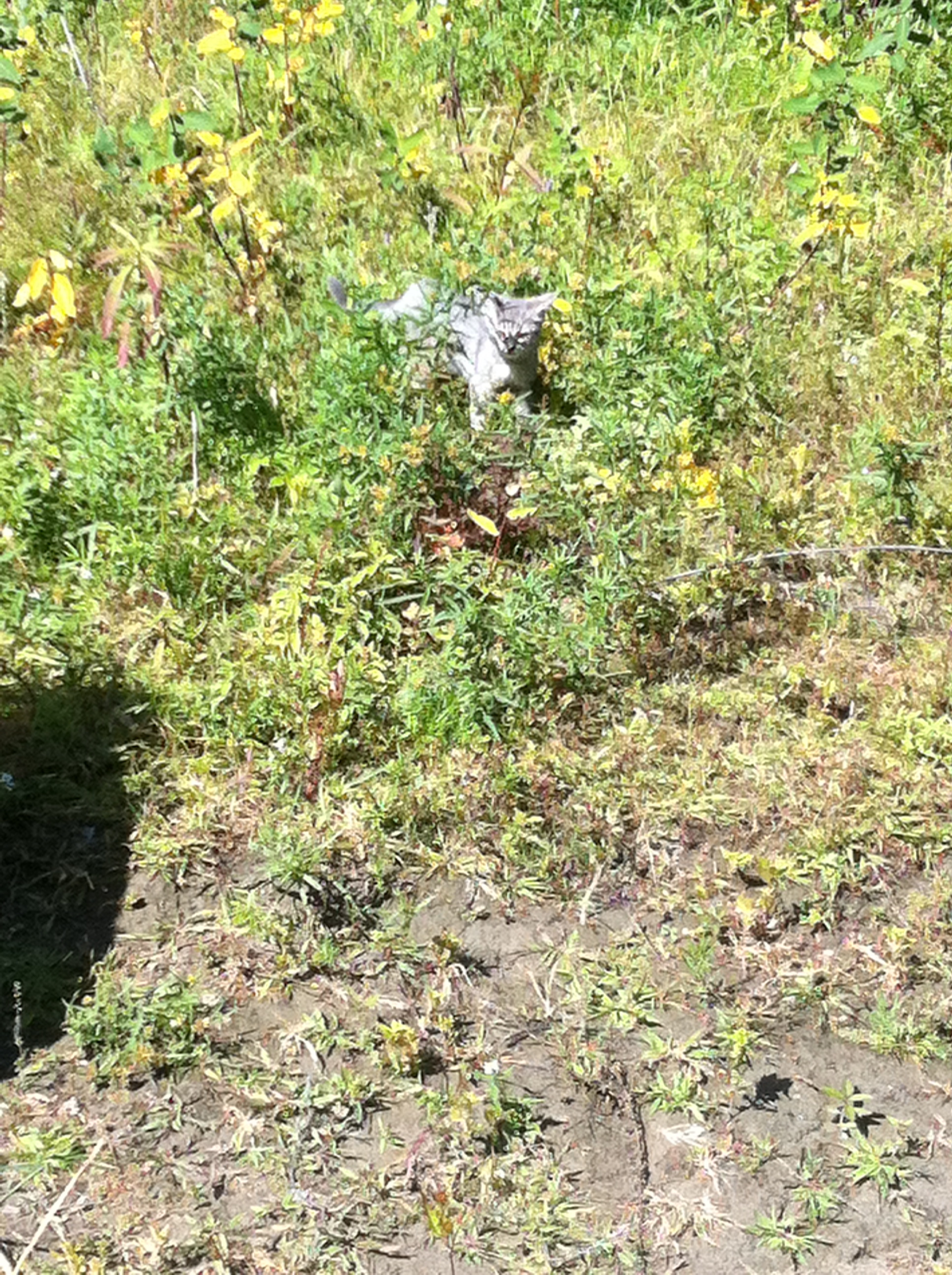
I sketched and measured the ship’s hull shape and filmed whatever I could to determine later what this shipwreck was and why it is just sitting here in the Ottawa River.  As we took a break to eat our packed sandwiches, a muffled animal sound came from the woods and a starving, abandoned kitten appeared.

a starved, abandoned kitten appeared as we ate our packed lunch.

A starved, abandoned kitten appeared as we ate our packed lunch.

We fed the emaciated little kitten some sandwich cheese and packed up our gear; me with tons of photos and questions, my girlfriend with a new kitten.

WHAT IS THIS SHIPWRECK?

After scouring the internet, books, and libraries trying to find out what this shipwreck was, I contacted my good friend Glen over at OttawaStart about the shipwreck. Always one to help out and promote local history, Glen made sure to spread the word through his popular website in a bid to gather more information from readers who may know more about the wreck and why it’s sitting in the shallows of the Ottawa River. The Ottawa Citizen and CBC News caught wind of the wreck story and proceeded to do their own research, even calling in a representative from the Eastern Ontario Chapter of “Save Our Ships” which has an extensive catalogue of recorded shipwrecks. The story was deemed a dead end for the media, and the shipwreck remained a mystery. I contacted the Great Lakes Maritime Museum in Kington, On to see if they had information on our Ottawa shipwreck but received no response to my requests. The ship seemed doomed to remain a mystery….that is, until this week.

IT’S ALL IN THE NAME

Almost four months after the initial discovery of the shipwreck I received a Twitter message from Glen that included an old map he had found showing various shipwrecks in the Ottawa River. Composed by the Underwater Society Of Ottawa, the map shows many shipwrecks that lie at the bottom of the river, and miraculously, the shipwreck we had come across four months earlier was clearly marked. THE JEAN RICHARD.  We now had a name to our ship. The research into the Jean Richard could now begin…

THE JEAN RICHARD

It turns out this ship has quite an interesting past and that the Jean Richard has a special place in Canadian history.

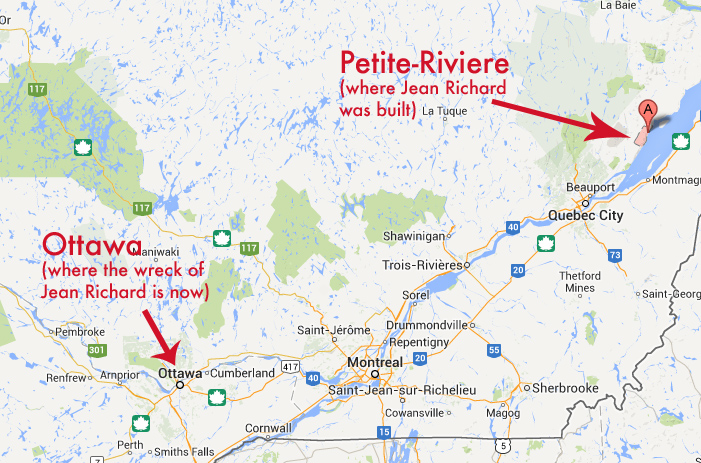
At Petite-Rivière in Quebec on May 23, 1959, St. Lawrence sailors launched their last wooden schooner, the Jean Richard. It was built by Philippe Lavoie, carpenter, Paul-Émile Square Port-au-Persil.

map1

With most of the wooden ship building techniques giving way to the longer lasting and easier to maintain steel hulled ships, Petite-Rivière wooden ship builders knew their boat building techniques was coming to an end after almost 200 years. The National Film Board also knew this was a dying craft, and in 1959 sent a film crew to record the building of the regions’s last wooden schooner, The Jean Richard.

A small riverside village approximately 100kms upriver from Quebec City in the Charlevoix region, it was responsible for building the majority of the wooden schooners, freighters and other ships that travelled throughout the St. Lawrence river from the 1800’s to the early 1960s.

THE NATIONAL FILM BOARD

Produced by Ottawa’s very own production company, Crawley Films, a film crew set off to document the centuries old construction process of building the region’s last wooden freight schooner. Known as a “goélette” in French, these wooden boats were being replaced by steel ships and the NFB wanted to record this important part of our Canadian heritage for future generations.

The NFB kindly couriered a copy of their film featuring the ship Jean Richard.

The NFB kindly couriered a copy of their film to me featuring our ship, the Jean Richard.

I quickly contacted the NFB head offices in Montreal to see if they had a copy of this film, and they courteously couriered the film to me which I immediately watched, studied and compared to the Ottawa shipwreck photos.  It was indeed a match. The 96 foot long, 28 foot wide Jean Richard, shown in construction in this film was built with true old world techniques and pride of craftsmanship.

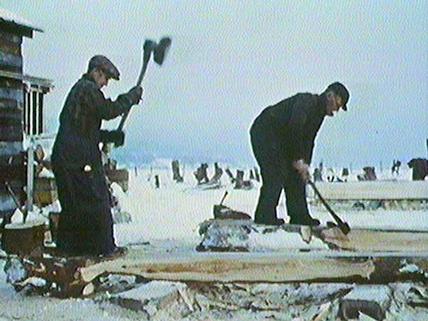
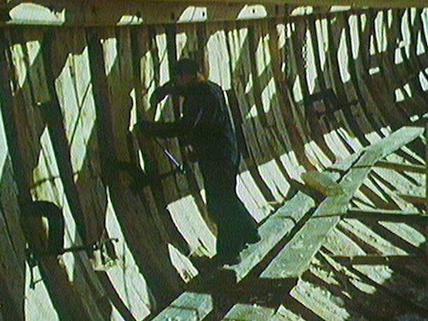
A still from the NFB film "jean Richard" showing workers using adzes to shape the timbers for the ship's hull.

A still from the NFB film “jean Richard” showing workers using adzes to shape the timbers for the ship’s hull.

An annual event where the fisherman in the village gather to build a ship, the JEAN Richard is shown being built from its inception as logs chopped down in a hillside forest. Then, using axes, adzes and steam boxes to shape the timbers in the same way they built ships over a century ago. All the ship’s details observed on the wreck were clearly shown in the film.

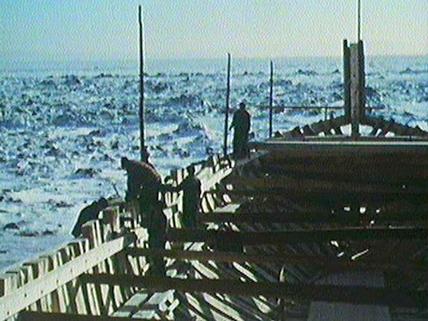
Building the hull of the Jean Richard in the winter of 1959.

Building the hull of the Jean Richard in the winter of 1959.

Inside the hull of the Jean Richard attaching hull planking.

Inside the hull of the Jean Richard attaching hull planking.

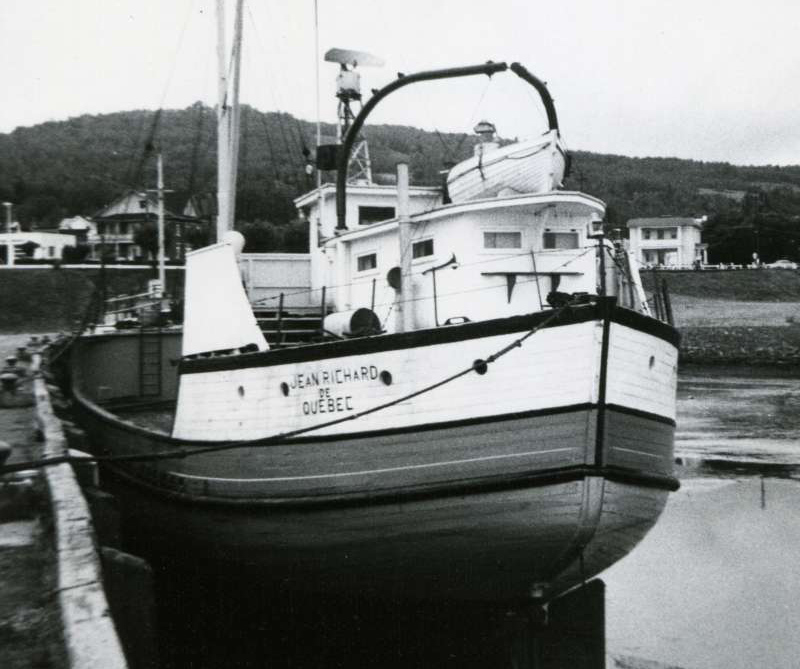
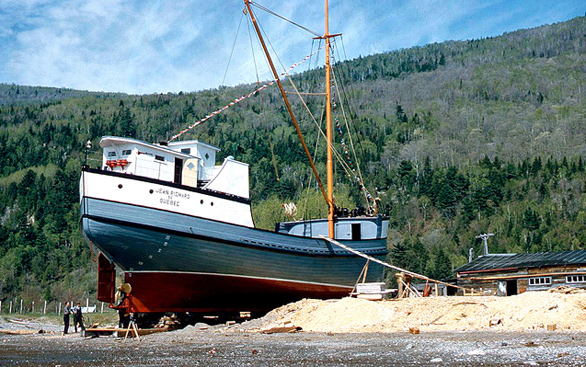
The finished Jean Richard s documented by the NFB in 1959.

The last wooden schooner made in Petite-Riviere, the Jean Richard was documented by the NFB in 1959, and released as short film in 1963.

The 30 minute film ends with an all night party and the Jean Richard is launched at dawn into the St. Lawrence to serve the sailors who ply its waters carrying cargo, fish, and other supplies up Canada’s arterial waterway.

To OTTAWA

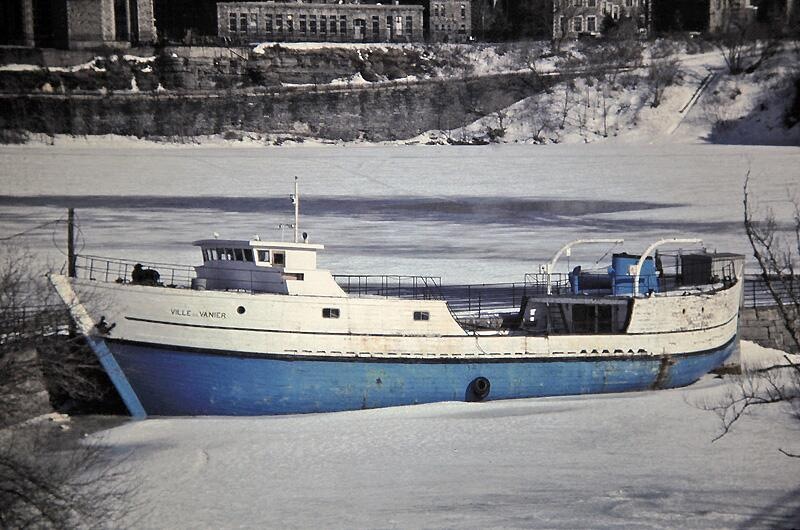
After it was launched in 1959 the Jean Richard served for almost twenty years on the St. Lawrence then brought down the Ottawa River and converted into a cruise ship and renamed “Ville de Vanier”.

The Jean Richard sailed to Ottawa and was re-named "Ville De Vanier" in 1976 when it became an Ottawa River cruise ship.

The Jean Richard sailed to Ottawa and was re-named “Ville De Vanier” in 1976 when it became an Ottawa River cruise ship.

Operating out of Ottawa/Gatineau waters from 1976 onwards, the Jean Richard was then converted into a floating cottage. A fire is said to have scorched the wooden ship in 1987. Its charred, lifeless hulk was hauled off to rot in a concealed inlet off the Ottawa River, abandoned and left to decay into history where it now lies.

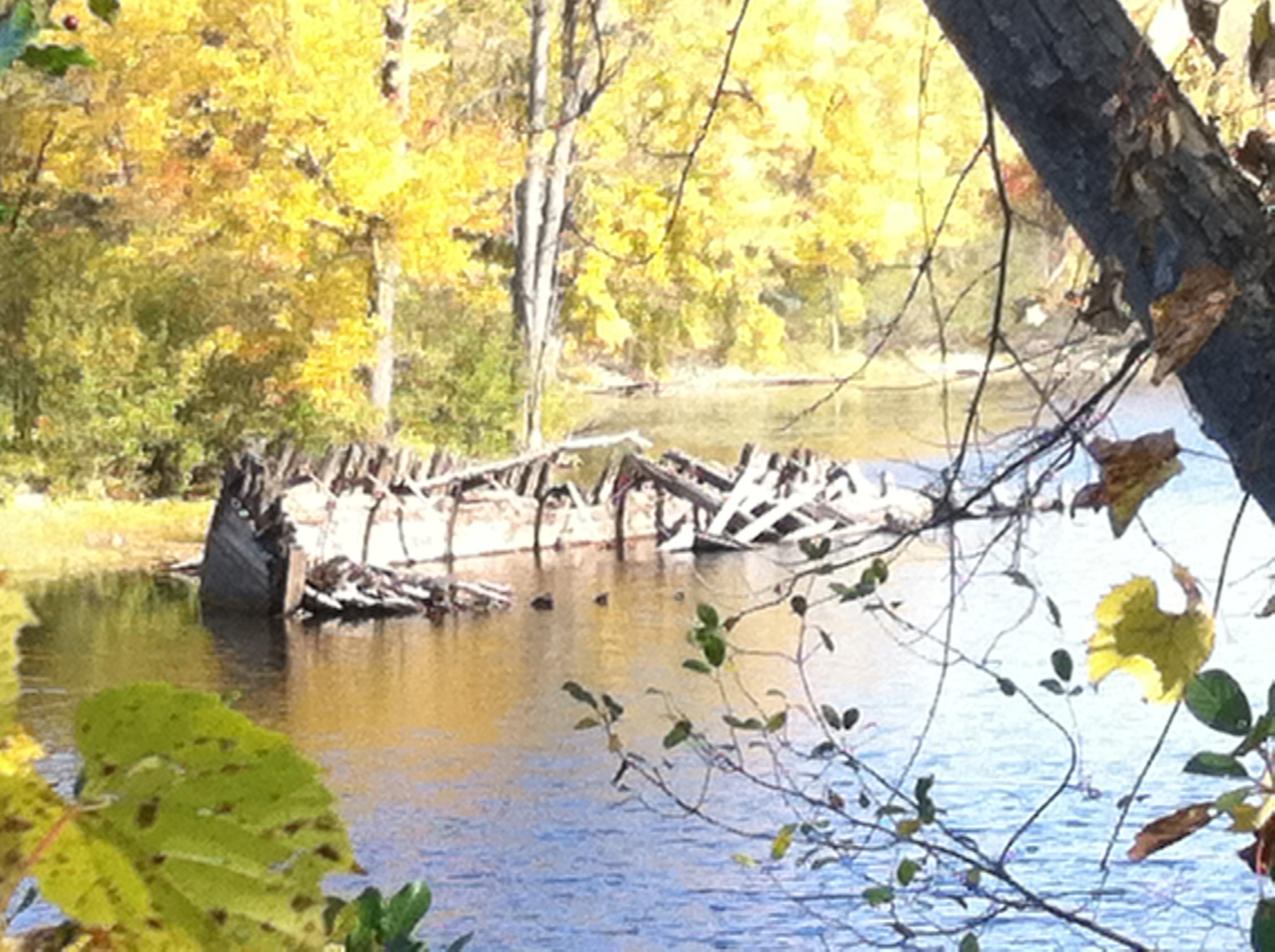
After being abandoned in the Ottawa River, the once cherished subject of an NFB film now lies in decay on the shores of the Ottawa River.

Once the cherished subject of an NFB film, the Jean Richard now lies in decay on the shores of the Ottawa River.

This once glorious old ship was the last of its kind, worthy enough to be documented by the NFB 55 years ago, a vessel that is an example of old world Canadian ship building techniques that have since been lost in time. A wreck of great nautical importance now lies decaying slowly in 8 feet of water, half submerged in the Ottawa River only five minutes from downtown Ottawa. It needs to be saved, recognized and preserved for the sake of future generations much like the NFB did when they filmed it being built long ago.

UPDATE: February 1 2014

Thanks to the great work by fellow shipwreck enthusiasts Glen Gower, Christopher Ryan and Ian Brown, who have done extensive research into the Jean Richard. Thanks to them and other readers, we have some new info and photos.

Also, the Ottawa Citizen covered the story of our shipwreck in the Jan.31 edition of the paper: http://www.ottawacitizen.com/technology/Mystery+Ottawa+River+shipwreck+revealed/9450569/story.html

The Jean Richard in action sometime in the 1960s on the St. Lawrence River (photo Claude Robillard)

The Jean Richard in action sometime in the 1960s on the St. Lawrence River (photo Claude Robillard)

Thanks to OttawaStart.com we now know the following:

The Jean Richard in 1982 after it was re-named Ville De Vanier with major alterations having been done to it. (photo Robert Dejardins)

The Jean Richard in 1982 after it was re-named Ville De Vanier with major alterations having been done to it. (photo René Beauchamp)

Ottawastart: “Robert Desjardins, a researcher runs the excellent website “Les Voitures d’Eau: Le cabotage artisinal sur le Saint-Laurent”.  It’s full of research and photography about Quebec’s boating heritage.  He provided some additional information and corrections/clarifications:”
  • The Jean-Richard had a series of owners.  The original owner was Paul-Émile Carré, who owned it from its launch in 1959 until he died 1963.  Guy Gagnon from La Malbaie owned it from 1965-1971. From 1971-1974 it was owned by the Banque d’expansion industrielle / Transport Maritime St-Bernard Ltée. Claude Longrin of Montreal owned it from 1974-1975, then Jean Fournier owned it from 1975-1977.
  • Jean Fournier, was from Ville de Vanier near Quebec City (actually now a part of Quebec City.)
  • Desjardin’s records show that the boat was re-christened “Ville de Vanier” in 1977 beforeit arrived on the Ottawa River.  The boat had major modifications done in 1976 (at Bassin-Louise, Quebec City).
  • It was owned by Enteprises Maritimes Vanier Inc. at Ville de Vanier, Quebec from 1977-1979.
  • It was eventually sold to Jean-Paul Barette of Hull in 1979, where it operated as a pleasure craft.
  • Desjardins’ notes indicate that the boat was abandoned in 1985 after a fire near Gatineau Boom Co., and was destroyed in 1986.
  • Mr. Desjardins also suggests that we should not be using the term “goélettes”, which should only be used to refer to boats that use a sail.  He prefers the term “caboteur en bois”.

The Ville De Vanier operated as a “disco-casino” party ship on the Ottawa River, based in Gatineau. Local personality John Turmel was reportedly a frequent passenger aboard the ship during this time in the late 1970s.

The Jean Richard/Ville De Vanier in 1990 only three years after being abandoned. (photo Jane Morris)

The Jean Richard/Ville De Vanier in 1990 only three years after being abandoned. (photo Jane Morris)

Another 1990 view of the ship. Note ship's contents and equipment strewn on shore. (photo Jane Morris)

Another 1990 view of the ship. Note ship’s contents and equipment strewn on shore. (photo Jane Morris)

A marine museum in Charlevoix has been contacted and hopefully we can move forward with preserving what’s left of the ship and its unique history.

SOURCES

National Film Board of Canada

http://goelettesduquebec.ca/

http://www.encyclobec.ca/main.php?docid=55

http://affairesmaritimes.org/en/shipwrecks

http://www.shipspotting.com/gallery/photo.php?lid=1071354&sort_comments=2

SIDENOTE - The starved little kitty found at the site of the shipwreck has a warm and loving new home where she is aptly named..."Shipwreck".

SIDENOTE – The starved little kitty found at the site of the shipwreck has a warm and loving new home where she is aptly named…”Shipwreck”.

Ottawa’s Abandoned 1,200 Seat Downtown Movie Theatre

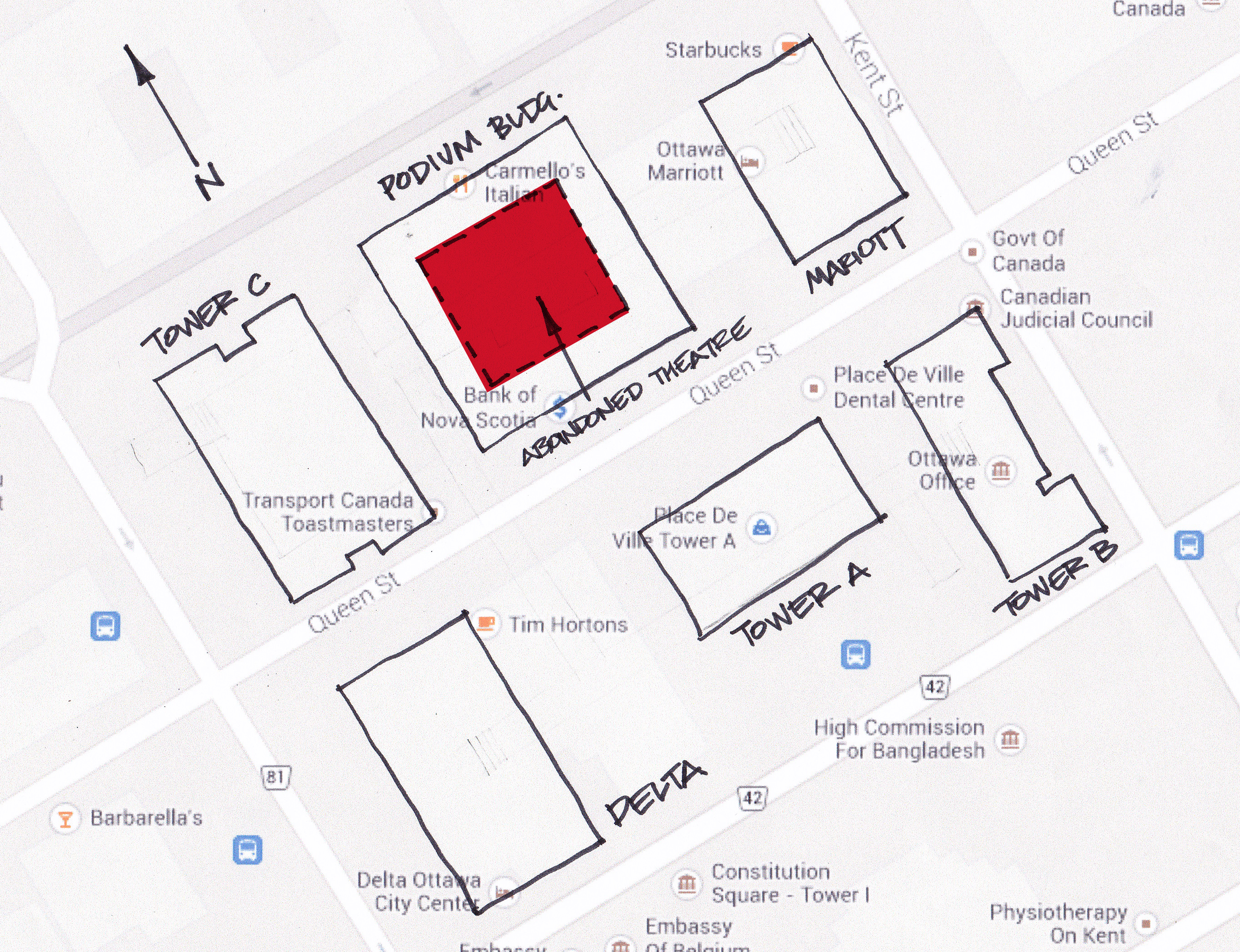
Map showing the location of the concealed 1,200 seat movie theatre in downtown Ottawa.

Map showing the location of the concealed 1,200 seat movie theatre in downtown Ottawa.

Exploring Ottawa’s Hidden 1,200 Seat Theatre

With the closure of the World Exchange Plaza Cinemas, Ottawa says farewell to its last downtown movie theatre. There once was a time when there was a theatre on almost every downtown street corner, but that era has come to an end, with all first run movie theatres now being relegated to the outskirts of the city in large megaplex cinemas.

The majority of these old theatres have been torn down, replaced by more lucrative office and retail space. The cinemas of the past are but a distant memory, with all traces being eradicated from the downtown core. A few remain as second-run theatres, such as the well preserved and vibrant Bytowne and Mayfair theatres, and the converted Imperial Theatre which is now Barrymore’s night club.

There is however another theatre that remains intact, sitting vacant and abandoned for almost 20 years, concealed from view behind a facade of government offices. This dormant 1,200 seat theatre remains one of the largest theatre spaces in the city. It is the former Place De Ville Theatre located at 300 Sparks St.

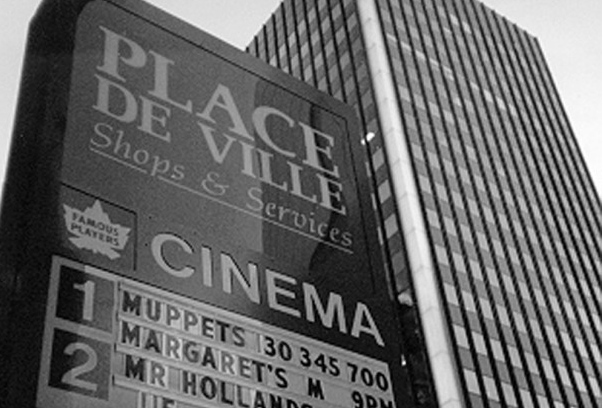
The theatre's marquee sign on its last day March 18 1996.

The theatre’s marquee sign on its last day March 18 1996.

The Place Of The City

Opened by Famous Players on April 1, 1971 the Place de Ville Cinema was one of the few piggy-back cinemas in Canada. It was part of an ambitious plan by developer Robert Campeau to regenerate the downtown core with a massive shopping, retail and office district utilizing the most modern of 1970s amenities. For almost a century the area had been home to the city’s streetcar garages, but with their removal from Ottawa streets in 1959,  the land was purchased by Robert Campeau. He constructed towers on the site named “ A, B, and C, and the ‘Podium’ building, two large hotels, the Ottawa Delta City Centre (411 rooms) and Ottawa Marriott Hotel (487 rooms) as well as the city’s largest underground parking garage with space for 974 cars. Within this complex was also constructed the Place De Ville cinema.

 CONSTRUCTION

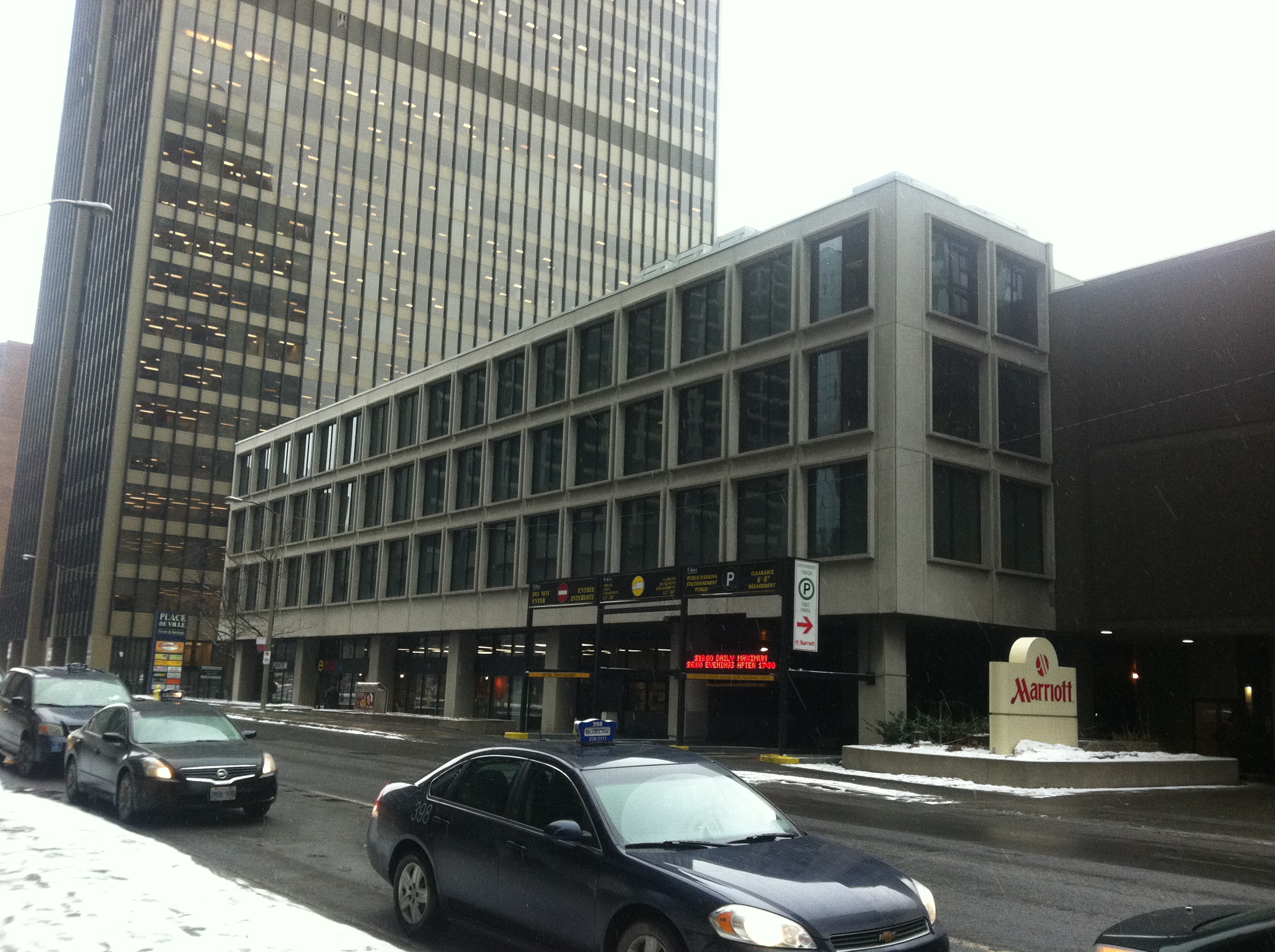
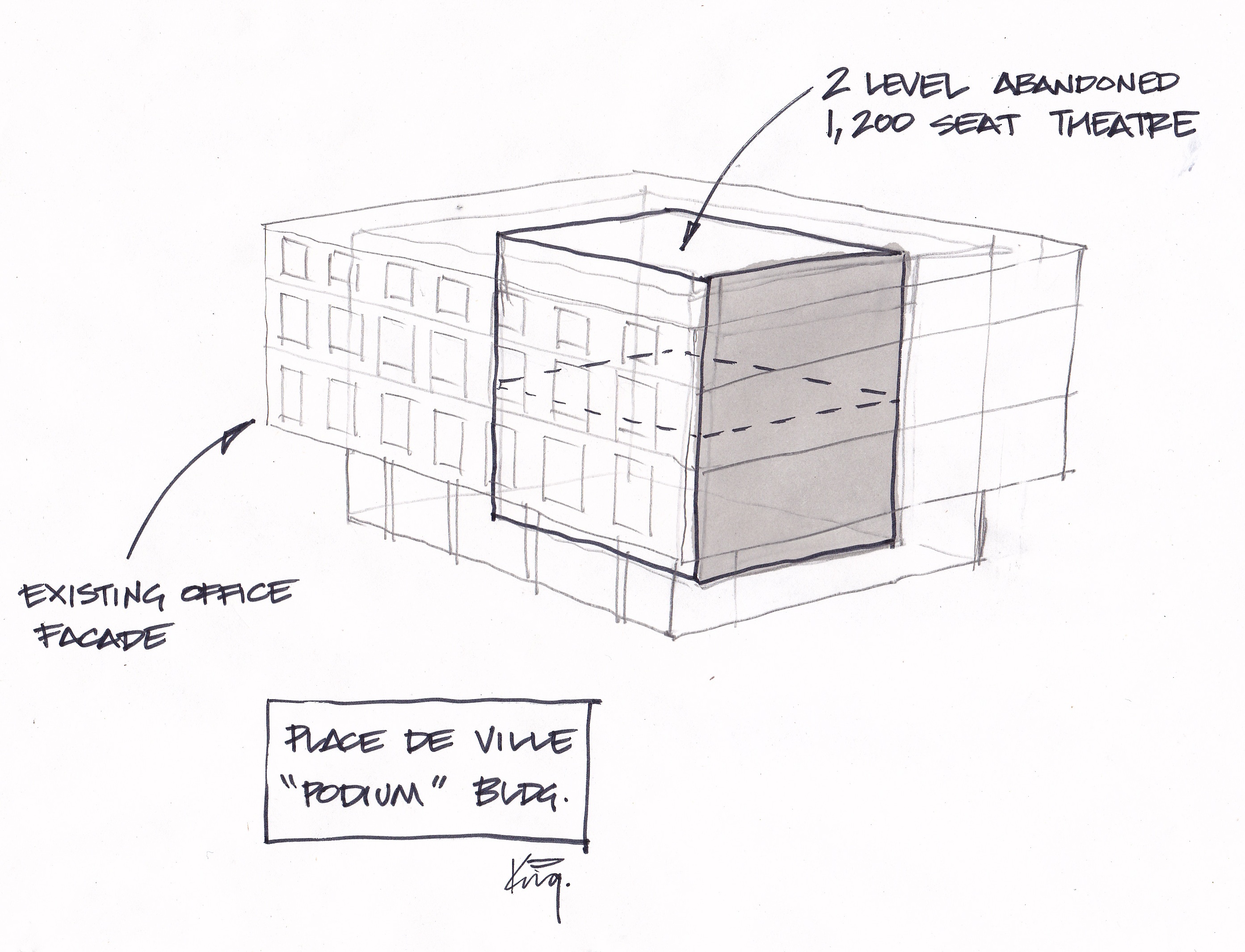
The theatre space was hidden from view and surrounded by office space in the “Podium” building, a 4 story building between the Mariott hotel and Lyon Street.

The Podium building today as seen from Queen Street. The abandoned theatre is in the centre of the building surrounded by the offices.

The Podium building today as seen from Queen Street. The abandoned theatre is in the centre of the building surrounded by the offices.

It was essentially a giant concrete box in the middle of the Podium building, encased with offices around it. Two cinemas were stacked on top of one another, with a massive lobby and escalators to take customers from one level to another. The lobby included a giant mural of the grand old Capitol Theatre that was demolished in 1970. Lush carpeting and the latest in cinema technology was incorporated into the new Place De Ville cinemas. A special elevator was installed for the projectionist to travel from one cinema to the other. Cinema 1 boasted 751 seats and Cinema 2 had 437 seats for a total of 1,228 seats.

quick sketch showing how the theatre sits inside the Podium buildings, shielded by an exterior shell of government offices.

Quick sketch showing how the theatre sits inside the Podium buildings, shielded by an exterior shell of government offices.

With just the one cinema at 751 seats, this makes the Place De Ville the largest still standing single theatre space downtown. For comparison, the Bytowne has 650 seats, Mayfair – 325 seats.

HISTORY

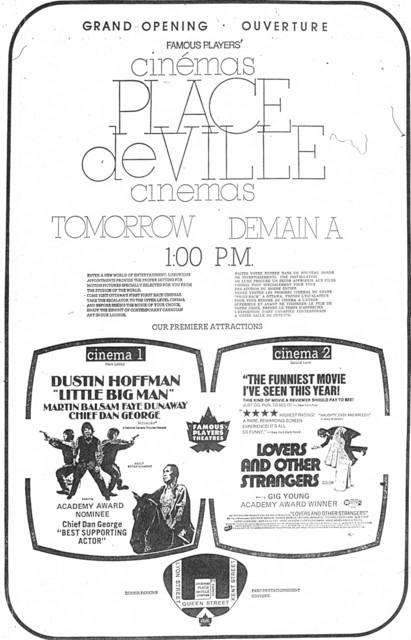
After its grand opening on April 1 1971 with “Little Big Man” and “Love and Other Strangers” the Place De Ville cinema operated until 1996 when it closed its doors on March 18 with “Mr Holland’s Opus” and “Muppet Treasure Island”.

Newspaper ad for the grand opening of the new Place De Ville Cinema April 1 1971.

Newspaper ad for the grand opening of the new Place De Ville Cinema April 1 1971.

With 25 years of operation that theatre saw some notable figures pass through its doors, including former Prime Minister Pierre Trudeau who lined up to see The Godfather there in 1972. Singer Tom Jones once rented the entire theatre to himself to also watch The Godfather when he was performing in Ottawa.

Both Trudeau and Tom Jones graced the theatre with their presence to watch "The Godfather" when it opened in theatres in 1972.

Both Trudeau and Tom Jones graced the theatre with their presence to watch “The Godfather” when it opened in 1972.

Shuttering its doors in 1996, the theatre was left abandoned, sealed up inside the Podium building behind a shield of government offices, left dormant, and still remains that way to this day.

FINDING THE THEATRE TODAY

Even when it was open, the Place De Ville theatre was hard to find, hidden within the Podium building, so finding it today proved even more difficult but it is in fact still there.

Follow the photo exploration below to learn more about the theatre as it looks today….

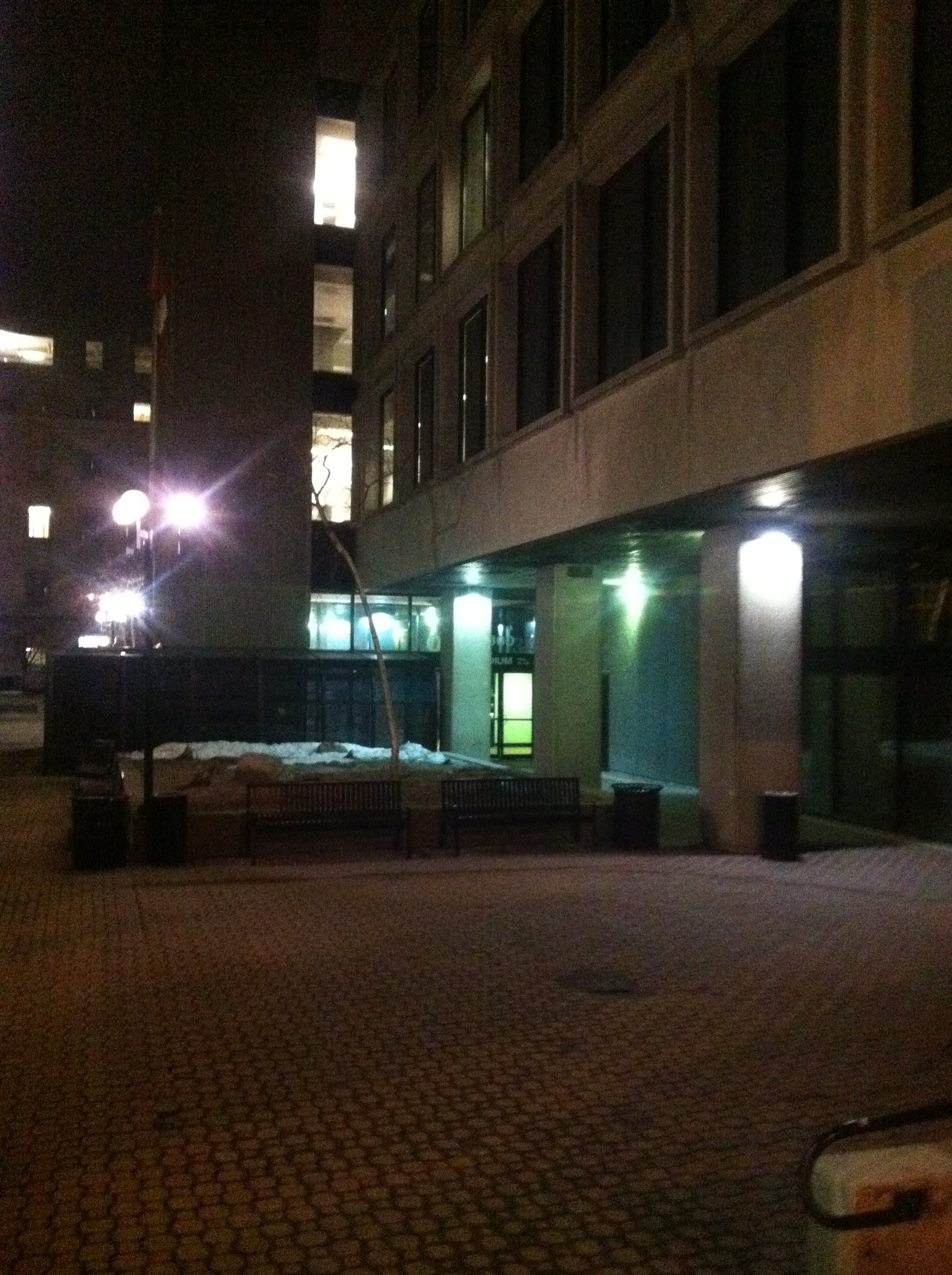
The very hidden main entrance to the theatre...I wonder why they made it so unbelievable hard to spot from the main street?

The very hidden main entrance to the theatre…I wonder why they made it so unbelievable hard to spot from the main street?

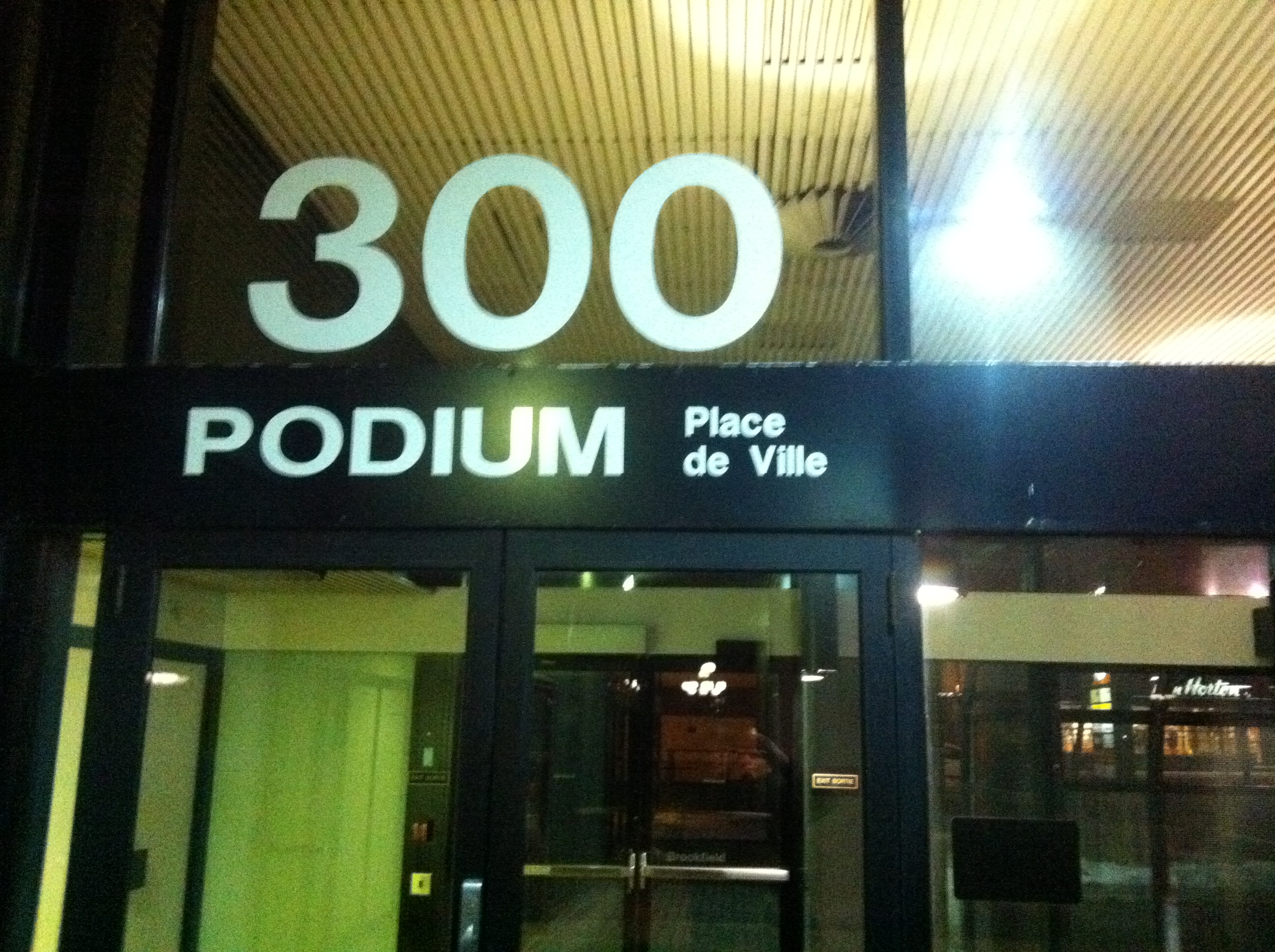
View of the main entrance to the theatre from Sparks Street. A typically bland, emotionless, devoid of any style entry that was prevalent during early 1970s buildings.

View of the main entrance to the theatre from Sparks Street. A typically bland, emotionless, devoid of any style entry that was prevalent during early 1970s buildings.

The original main entrance to the Place De Ville theatre. Now boarded up, these doors lead to the main lobby area and escalators to the second level cinema.

The original main entrance to the Place De Ville theatre. Now boarded up, these doors lead to the main lobby area and escalators to the second level cinema.

Abandoned theatre lobby area, stairs into the theatre shown. Main entrance doors would have been to the left, around the corner. Escalators to second level cinema to the right (offscreen).

Abandoned theatre lobby area, stairs into the theatre shown. Main entrance doors would have been to the left, around the corner. Escalators to second level cinema to the right (offscreen). (The theatre was up the stairs but I did not go in but I did see the vast theatre space from the doorway)

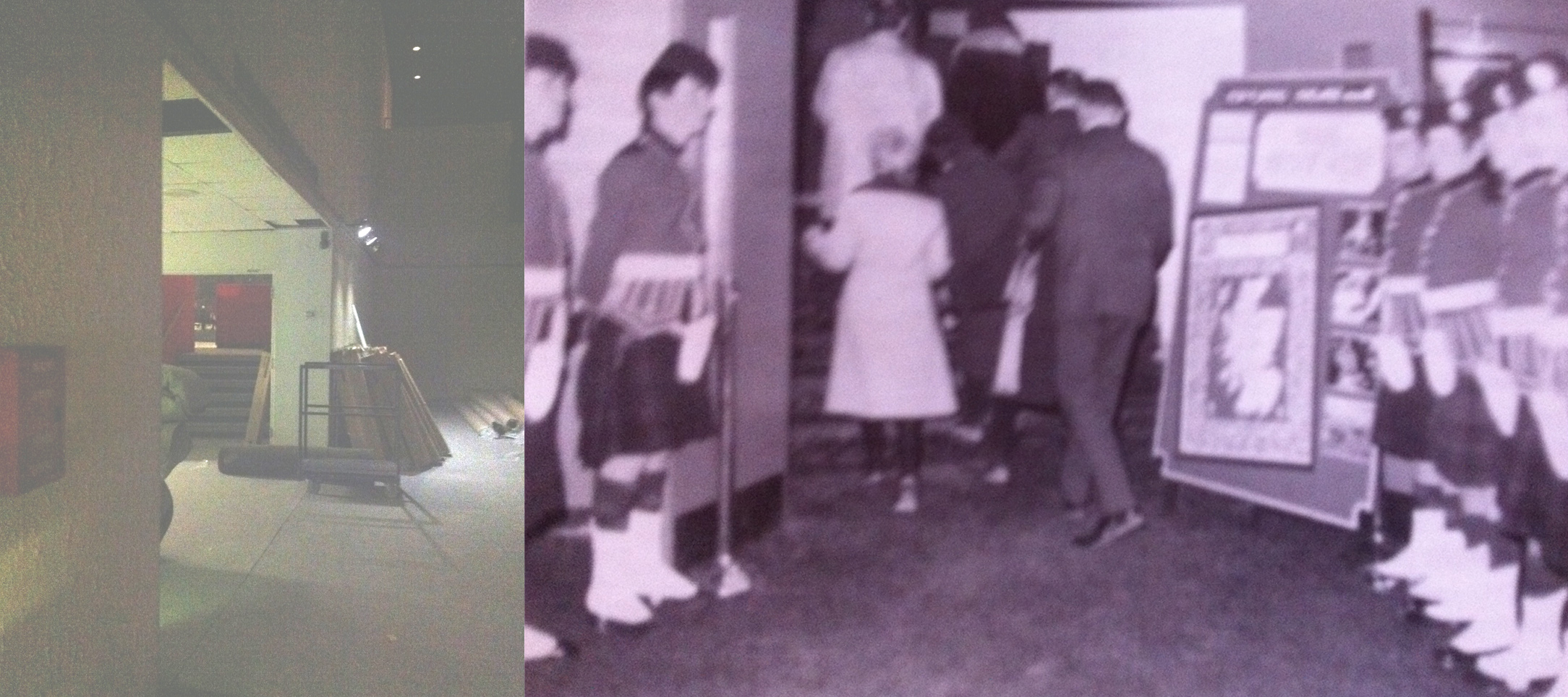
Theatre lobby area, then & now....Patrons enter the theatre on opening day (right) up the stairs that are shown in the present day photo (left).

Theatre lobby area, then & now….Patrons enter the theatre on opening day (right) up the stairs that are shown in the present day photo (left).

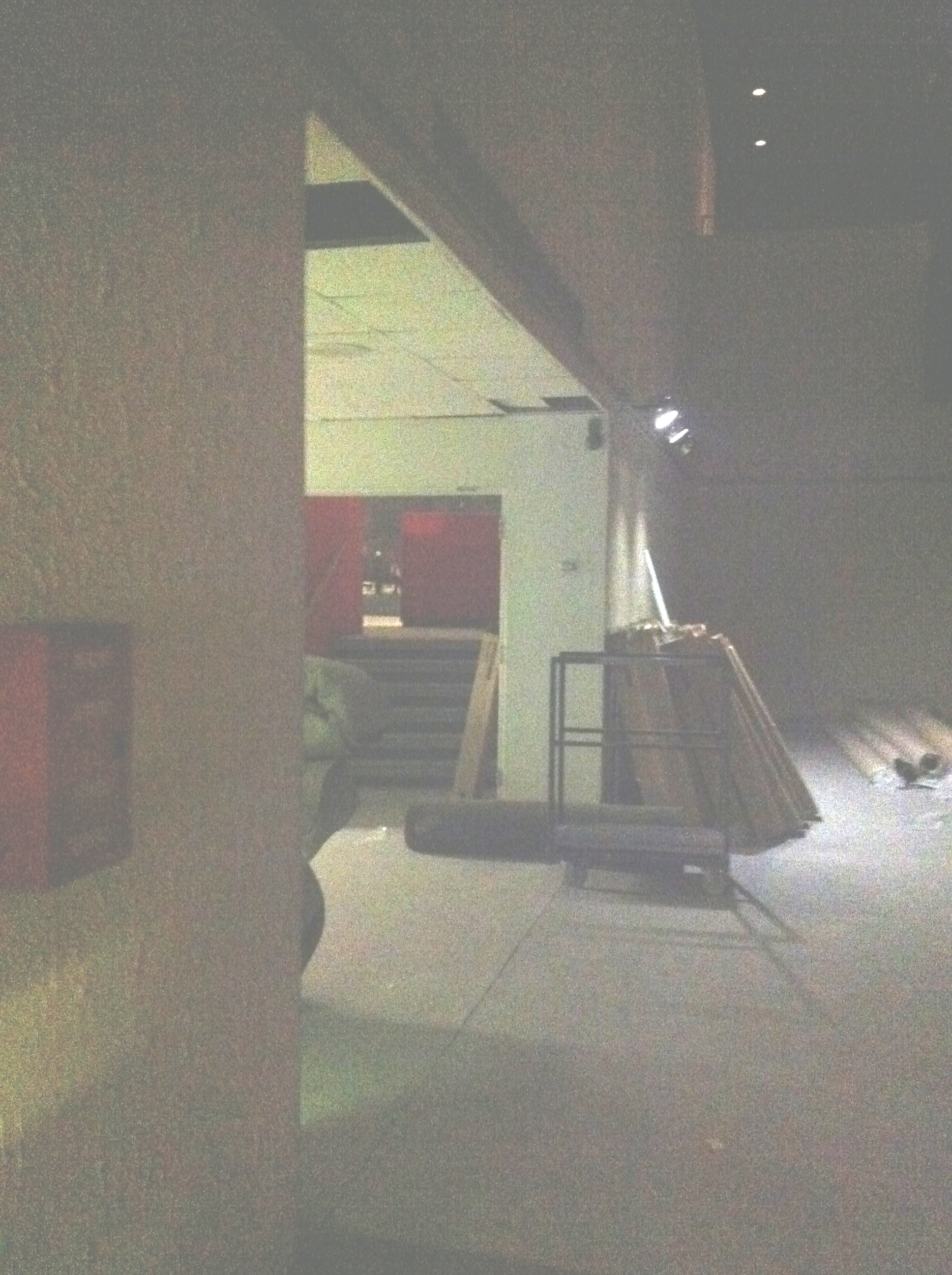
Abandoned theatre lobby, escalators to second level cinema. Mural of Capitol Theatre seems to have been removed.

Abandoned theatre lobby, escalators to second level cinema. Mural of Capitol Theatre seems to have been removed. (apologies for poor picture quality, a zoomed iphone photo taken from doorway)

The Podium building's exit stairwells from the theatre to street level.

The Podium building’s theatre exit stairwell to street level.

Rear of the Podium building showing the emergency exits from the theatre.

Rear of the Podium building showing the emergency exits from the theatre.

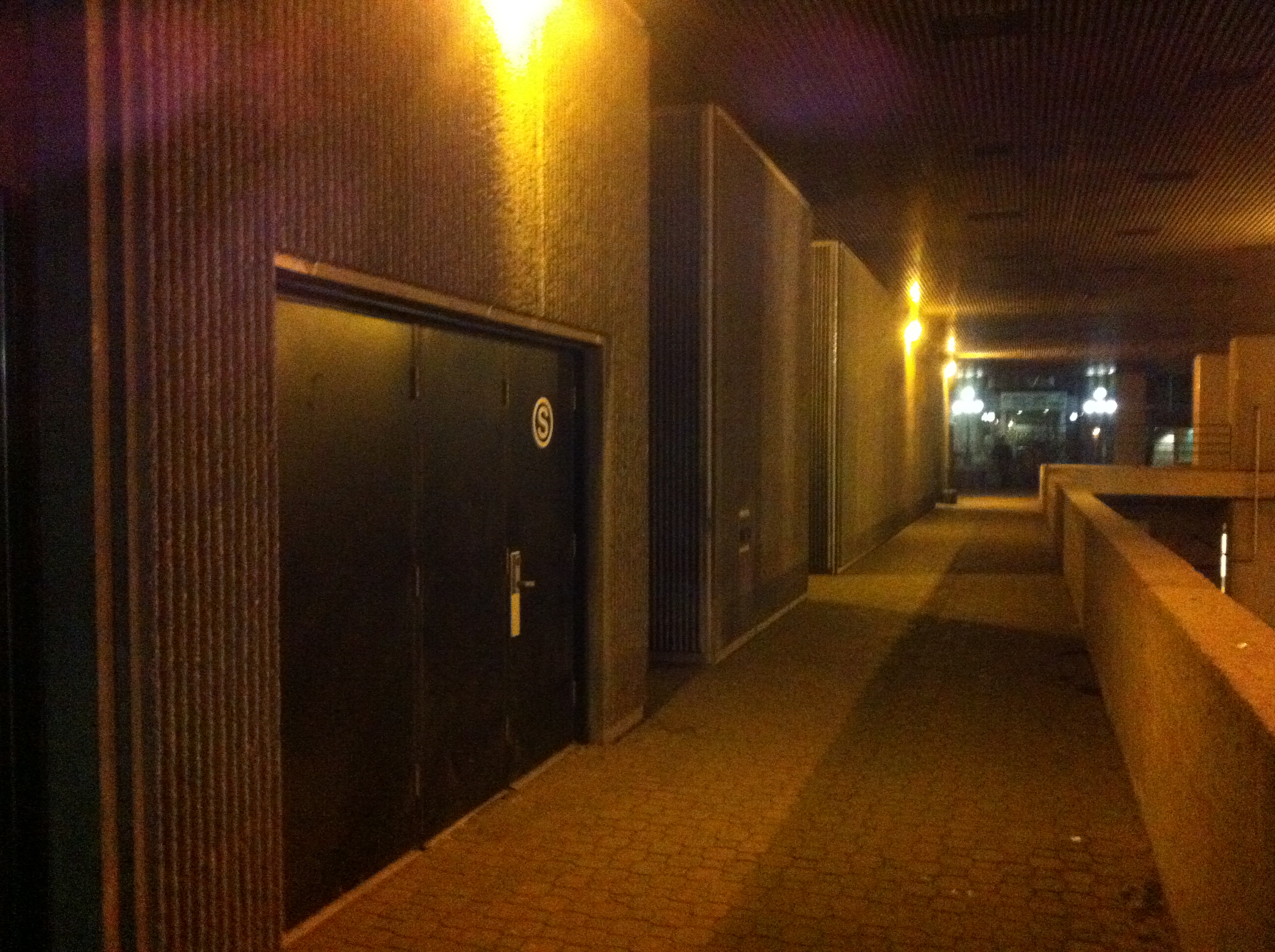
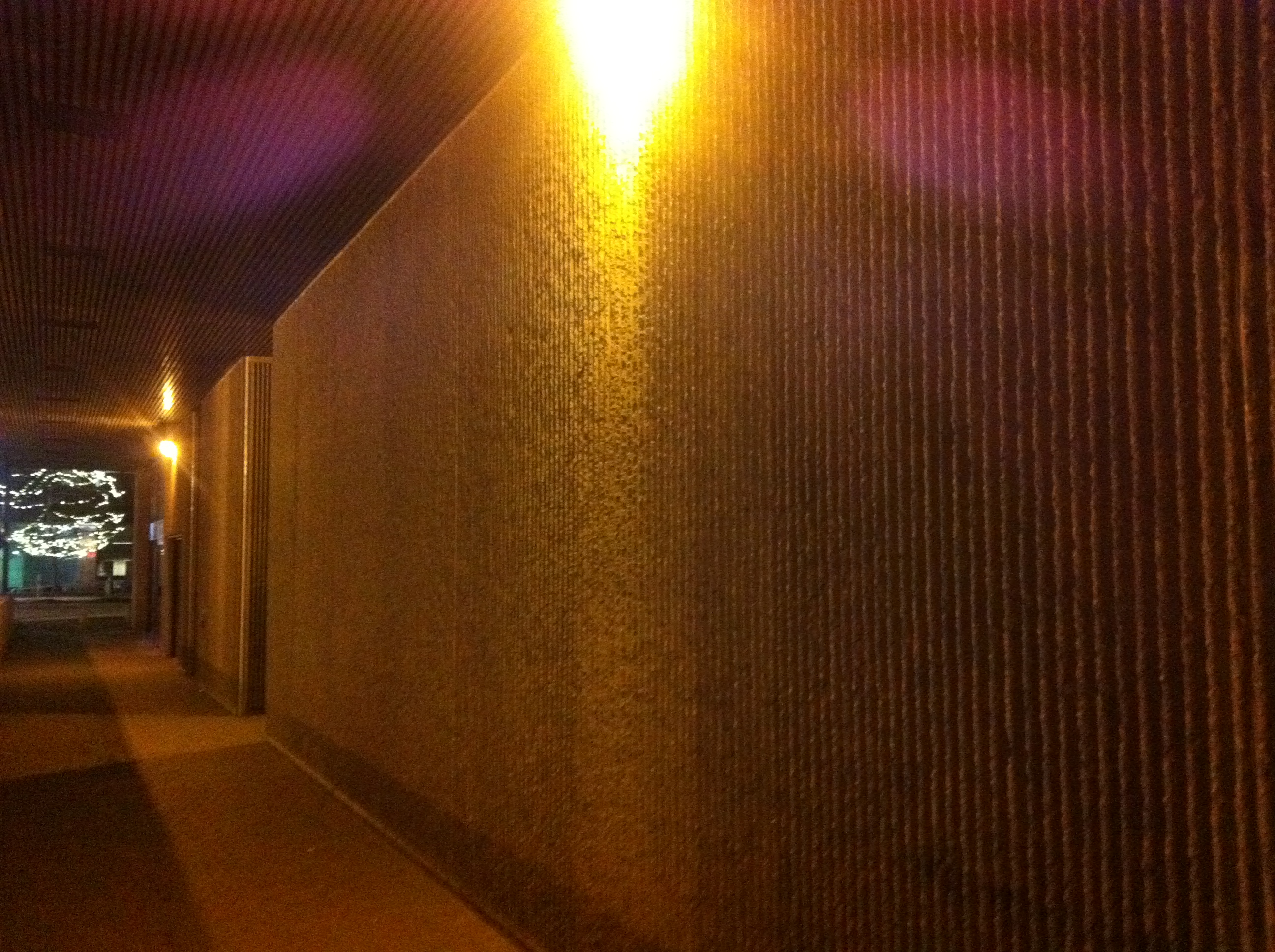
Rear view of Podium Building. A popular architectural style of the early 1970s era was poured, ribbed, rough concrete, identical to the construction technique of the NAC built in the same year.

Rear view of Podium Building. A popular architectural style of the early 1970s era was poured, ribbed, rough concrete, identical to the construction technique of the NAC built in the same year.

Theatre’s Future

Place De Ville was sold by Campeau to various companies and is currently owned by Brookfield Properties. Plans have been filed with the City of Ottawa to replace the 4 story ‘Podium’ building that contains the old theatre with a 19 floor office tower. This new development connects with the construction of Ottawa’s Confederation Line which will have a subway station at Place de Ville. The fate of this once “modern” downtown theatre has yet to be decided but it seems that its days as the largest downtown theatre space are numbered.

UPDATE

Since this post was published a special photo tour was arranged through CBC and Brookfield properties. You can view a collection of photos from this exclusive tour of the interior of the theatre at: http://www.cbc.ca/m/news/#!/content/1.2511978

SOURCES

“Where in Ottawa?”: a cinema, stripped bare

http://cinematreasures.org/theaters/20373

http://en.wikipedia.org/wiki/Place_de_Ville

Canada’s first “Air Force One”: Prime Minister Mackenzie King’s Silver Saloon

The "Silver Saloon" ...Canada's first "Air Force One" that flew Prime Minister Mackenzie King out of Ottawa around the world between 1945-48.

The “Silver Saloon” …Canada’s first “Air Force One” that flew Prime Minister Mackenzie King out of Ottawa and around the world between 1945-48. (At Rockcliffe airport)

During World War Two, Ottawa was home to 168 Squadron based in Rockcliffe, a special air transport group that was responsible for carrying mail back and forth between the troops serving overseas and home. This squadron of aircraft included converted B17 Flying Fortress bombers and later, B24 Liberators. (more info on these planes can be found at an earlier post here)

On June 30, 1944, the Rockcliffe aerodrome received a special aircraft delivered from the United States Air Force with serial number 44-10583. Built at the Consolidated Convair B24 factory in Fort Worth, Texas, this plane was immediately given a special designation: to become Prime Minister Mackenzie King’s personal transport aircraft.

The B24 was quickly modified for the special purpose of transporting the Prime Minister of that time and other dignitaries around the world. Modifications to this WW2 bomber included fitting it with a comfortable VIP interior that accommodated 10 passengers and a special office for the PM and his secretary. Windows were installed along the each side of the fuselage as well as an extra side door. A galley kitchen and washroom were also installed in the Prime Minister’s new aircraft. A special highly polished aluminum exterior finish and lightning bolt paint scheme was given to the PM’s new plane and by August 30, his Silver Saloon was ready for service.

Prime Minister Mackenzie King's newly modified B24 plane sporting a new interior Prime Minister's office, kitchen, washroom, new windows and a new paint scheme. 1945

Prime Minister Mackenzie King’s newly modified B24 plane with a new interior Prime Minister’s office, kitchen, washroom, new windows and a new paint scheme. 1945

Mackenzie King's plane sported a newly designed roundel that was to become the future symbol of the RCAF. The RCAF used this roundel on all their aircraft from 1946-48.

Mackenzie King’s plane sported a newly designed roundel that was to become the future symbol of the RCAF. The RCAF used this roundel on all their aircraft from 1946-48.

One of the first plane’s to sport a newly designed roundel on the fuselage (which later became the official RCAF symbol) B24-574 was ready to transport the Prime Minister of Canada and his staff anywhere around the world. This new “Royal Canadian Air Force One” soon prepared to take Prime Minister Mackenzie King on a very special journey to San Francisco. In June of 1945 the Prime Minister and his staff flew from Ottawa to San Francisco to help organize the newly formed United Nations. Representatives from 50 countries met at the United Nations Conference on International Organization to draw up the United Nations Charter. The Charter was signed on the 26th of June 1945 by representatives of the 50 countries, including Canada’s Prime Minster Mackenzie King who arrived at the signing in his new Silver Saloon.

Representatives from around the world gathered in San Francisco in 1945 to form the United Nations. PM Mackenzie King flew there in his new plane to sign the charter.

Representatives from around the world gathered in San Francisco in 1945 to form the United Nations. PM Mackenzie King flew there in his new plane to sign the charter.

RCAF-574 later carried the Governor General The Earl of Athlone and his family in March 1946, and then The Viscount Alexander of Tunis to Winnipeg in September 1946.

In 1947 it carried General H. D. G. Crerar on tour of the far east, flying across the Pacific to Hawaii, Johnston Island, Kwajalein, Tokyo, and Nanking. The Prime Minister continued to use the plane as his VIP transport, but when Mackenzie King retired in 1948, his plane was flown from its home in Ottawa to CFB Trenton where it was put into storage.

After only four years of service flying Canada's Prime Minister and other dignitaries around the world, the Silver Saloon was put into surplus storage in Trenton, On. 1948

After only four years of service flying Canada’s Prime Minister and other dignitaries around the world, the Silver Saloon was put into surplus storage in Trenton, On. 1948

Unused, and sitting in a Trenton hanger, the plane was sold as surplus to Chile in 1951. In Chile it was given a new paint scheme and operated under the Chilean designation “CC-CAN” with the “Air Chile” that operated there.

Purchased by the Chilean airline "Air Chile" in 1951, the Silver Saloon was put into airline service after being in storage at Trenton for 3 years.

Purchased by the Chilean airline “Air Chile” in 1951, the Silver Saloon was put into airline service after being in storage at Trenton for 3 years. (note new paint scheme)

Flying across Chilean skies for the better part of four years, the former PM’s plane was soon to make it’s last flight.

Local paper in Santiago, Chile reporting the crash of the former Canadian Prime Minister's plane after a landing gear malfunction.

A local paper in Santiago, Chile reporting the crash of the former Canadian Prime Minister’s plane in 1955 after a landing gear malfunction.

Landing at an airport in Santiago, Chile on February 21, 1955 the plane suffered a landing gear malfunction that resulted in it running off the runway. Local newspapers reported the crash of the former Canadian PM’s plane, and salvage crews were brought in to assess and possibly repair the damaged aircraft. Sadly, the plane was deemed beyond economical repair, and was dragged off to sit idle in storage.

Repair crews assess the damage to the former Pm's plane, but it was deemed to expensive to repair and was dragged away to sit idle for 4 years before being chopped up for scrap metal in 1959.

Chilean repair crews assess the damage to the former PM’s plane after the crash, but it was deemed to expensive to repair and dragged away to sit idle for 4 years before being chopped up for scrap metal in 1959.

Four years later the plane met its final fate when it was chopped up for scrap metal in 1959. Mackenzie King’s Silver Saloon was no more, and Canada’s first “Air Force One” disappeared into history.

Sources:

http://ww2talk.com/forums/topic/44844-the-canadian-pms-transport/

http://www.goodall.com.au/warbirds-directory-v6/consolidated.pdf

http://ivansiminic.blogspot.ca/2006/09/b-24-liberator-en-chile_24.html

German U-boat Near Kingston, Ontario?

photo2

German U-boat In St. Lawrence River? Solving the mystery of the Wahl Anchor

A Clayton, NY marina owner Wilbert Wahl says in 1942 at age 10 he watched American fighter aircraft sink a German U-boat in the St.Lawrence near Wolfe Island, just off Cape Vincent, about 20 km across from Kingston, On. During the 1960’s an area scuba diver in the area, Skip Couch, was told the story of this sunken U-boat and investigated the area.

Marina owner Wahl claims a German U-boat was sunk in 1942 off Cape Vincent, NY near Carleton Island.

Marina owner Wahl claims a German U-boat was sunk in 1942 off Cape Vincent, NY near Carleton Island.

Diving off Carleton Island near Cape Vincent, Couch retrieved an anchor, which is now on display at Wahl’s marina in Clayton, NY. This anchor has a very unusual and mysterious swastika marking on the fluke of the anchor, very similar to the swastika used by the Nazis during World War 2.

Wahl's recovered anchor he believes came from the submerged U-boat.

Wahl’s recovered anchor he believes came from the submerged U-boat.

Close up of Wahl's anchor clearly shows a swastika marking on it.

Close up of Wahl’s anchor clearly shows a swastika marking on it.

Did a German U-boat make its way down the St. Lawrence River to Wolfe Island before being sunk and now lies at the bottom of the river? With U-boats regularly patrolling the St. Lawrence River during WW2, they were spotted as far down as Quebec City, but none further than that…unless one made it it further south somehow.

Let’s investigate…

During the late 1800’s a British foundry, Byers, in Sunderland, England, made anchors. Turns out they had a very unusual corporate logo…

anchorswastj

W.L. Byers, the owner, was fascinated by the ancient discoveries in Troy, which included pottery found with the ancient swastika symbol on them…Byers made that his company symbol, and it was put on all the anchors his company produced from the late 1800’s until the 1920’s. Here is his anchor catalogue from the early 1900’s:

Byers Anchor Catalogue from the early 1900's with their logo clearly shown.

Byers Anchor Catalogue from the early 1900’s with their logo clearly shown.

Byers anchors from Sunderland used the swastika symbol on their anchors until the German Nazi Party made it their symbol in the 1920’s…and here is a Byers anchor clearly showing the Byers swastika marking:

Byers anchor very similar to the Wahl anchor in Clayton, Ny. Note similar swastika marking.

Byers anchor very similar to the Wahl anchor in Clayton, Ny. Note similar swastika marking.

…which is an almost identical looking anchor to what Wahl’s recovered “U-boat” Wolfe Island anchor.

Mystery solved…the Wahl Anchor is most likely an anchor recovered from an early 1900’s shipwreck that used a Byers forged anchor that sunk off Cape Vincent, later found by Skip Couch in the 1960’s.

So it looks like the U-boat story is merely an urban legend, although it does make for a good story around the campfire….

HOWEVER, it looks like a German U-boat actually did go down the St. Lawrence River past Kingston AFTER the war…Captured by the US during the war, German U-boat U-505 was towed down the St. Lawrence past Kingston, thru the Great Lakes to a museum in Chicago in 1954.

Captured German U-boat U-505 that was towed down the St. Lawrence River and through the Great Lakes in 1954 to Chicago.

Captured German U-boat U-505 that was towed down the St. Lawrence River and through the Great Lakes in 1954 to Chicago.

U-505 still resides in The Chicago Museum of Science and Industry where it is currently on display.


Photos/Info Sources

Google Maps

Wikipedia : U-505

http://schnorkel.blogspot.ca/2007/06/sunken-german-sub-in-st-lawrence-river.html

http://www.searlecanada.org/sunderland/sunderland212.html

Anchors: An Illustrated History By Betty Nelson Curryer  http://books.google.ca/books?id=MigKLVemmvEC&pg=PA124&lpg=PA124&dq=byers+anchors+swastika&source=bl&ots=-RwlJrPQkf&sig=N2Py_S0Xzsqol1emznjlq8uP48w&hl=en&sa=X&ei=b4HMUtH9F9OxsASCqYDQDg&ved=0CDEQ6AEwAQ#v=onepage&q=byers%20anchors%20swastika&f=false